Russia-Ukraine Crisis Affecting Demand For Nigeria’s Crude, Says NNPCL

Russia-Ukraine Crisis Affecting Demand For Nigeria's Crude, Says NNPCL

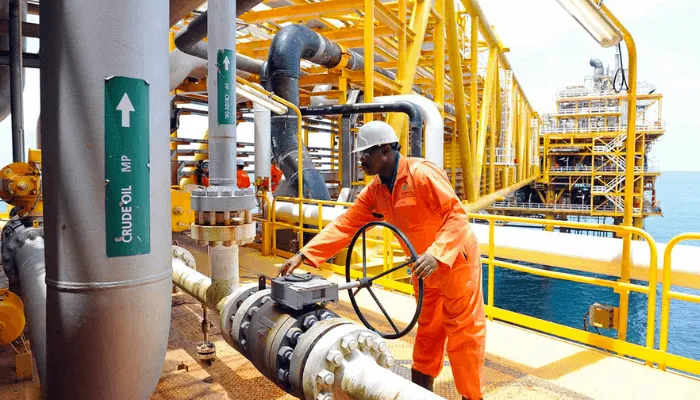
The Nigerian National Petroleum Company Limited (NNPCL) has provided insight into how the lingering conflict between Russia and Ukraine has impacted Nigerian crude oil inflows in the international oil market, leading to a dip in demand from the once-dependable Asian market at the onset of hostilities in the Eastern bloc. Maryamu Idris, Executive Director, Crude & Condensate, NNPC Trading Limited, who said this in a panel presentation at the Argus European Crude Conference in London, added that that the substantial price shocks impacting commodity and energy prices globally, the conflict between Russia and Ukraine has triggered a situation where India, a primary destination for Nigerian grades, increased its appetite for discounted Russian barrels to the detriment of some Nigerian volumes. “To illustrate the extent of this shift, Nigeria’s crude exports to India dwindled from approximately 250,000 barrels per day (bpd) in the six months preceding the February 2022 invasion of Ukraine to 194,000 in the subsequent six months afterwards. And so far, this year, only around 120,000 bpd of Nigerian crude volumes have made their way to India,” she said. On the other hand, she noted that the Nigerian crude flow to Europe has increased in a bid to fill supply gaps left by the ban on Russian crude, pointing out that six months before the war, 678,000 bpd of Nigerian crude grades went to Europe, compared to 710,000 bpd six months later and 730,000 bpd so far this year. “This trend makes it evident that Nigerian grades are increasingly becoming a significant component in the post-war palette of European refiners. Several Nigerian distillate-rich grades have become a steady preference for many European refiners, given the absence of Russian Urals and diesel. Forcados Blend, Escravos Light, Bonga, and Egina appear to be the most popular, and our latest addition — Nembe Crude – fits well into this basket. This was a strong factor behind our choice of London and the Argus European Crude Conference as the most ideal launch hub for the grade,” Idris also said. On production challenges, Idris remarked that, like many other oil-producing countries, Nigeria had faced production challenges aggravated by the COVID-19 pandemic, including reduced investment in the upstream sector, supply chain disruptions impacting upstream operations, ageing oil fields, and oil theft by unscrupulous elements. These factors, she said, contributed to production declines in the second half of 2022 and early 2023. Idris, however, noted that the challenges are fast becoming a thing of the past with the introduction and implementation of a new framework for the domestic petroleum industry (the PIA of 2021), rejuvenating the business landscape, and re-positioning NNPC Limited to adopt a more commercial approach to the management of the nation’s hydrocarbon resources. According to her, NNPC Limited has secured vital partnerships with notable financial institutions to promote upstream investments to restore and sustainably grow production capacity in the coming years. “NNPC Limited is championing concerted efforts in partnership with host communities and private stakeholders to address the security and environmental challenges in the Niger Delta to further fortify production growth. Suffice to say we have already begun seeing significant progress on the rebound. In September 2023, Nigeria recorded its highest crude oil and condensate output in nearly two years, reaching 1.72 million barrels per day. This, we believe, is just the beginning of our production rebound.” She affirmed that in addition to sustainably growing upstream production volumes, NNPC Limited is also increasing its participation in the downstream sector in line with a ‘wells-to-wheels’ approach, taking the country’s unique hydrocarbon molecules as close as possible to end-users. The vehicle for this, she said, is the restructured NNPC Trading Company, focused on growing NNPC’s presence in the global market for crude, condensate, gas, and petroleum products. The Argus Crude European Crude Conference Panel Session was held with the theme, ‘The Invisible Hand: How Are Shareholders and Asset Managers Meeting the Crude Industry? What Does This Mean for the Future of Crude in Europe?’ Vice President Crude of Argus, James Gooder, moderated the event.

Production Cut Pushes Oil Prices To $94.74

Production Cut Pushes Oil Prices To $94.74

Oil prices continued to climb in early trading on Monday as WTI rose to $91.60 while Brent traded at $94.74. Falling crude inventories and the continuation of the Organisation of Petroleum Exporting Countries (OPEC)+ cuts have sparked an oil price rally that is showing no signs of slowing. Analysts say prices hit the $100 marks. China’s latest stimulus measures have only added to bullish sentiment, with hopes rising that the Asian giant is set to get its economy back on track. Oil prices rose in early Asian trade on Monday, extending last week’s gains amid expectations of an increasingly tighter market and hopes that China’s latest stimulus measures would revitalize the economy.  WTI Crude prices were trading above $91 per barrel in early Asian trade on Monday, at $91.50, up by 0.85%. The international benchmark, Brent Crude, was above the $94 a barrel mark and traded 0.69% higher at $94.57. Falling global inventories amid a tightening market with the OPEC+ and Saudi production cuts have supported oil prices in recent weeks. One of China’s latest policy moves to jumpstart the economy has also made market participants and analysts more bullish on oil. Last week, China cut the reserve ratio for banks for a second time this year in a move to increase liquidity in the system. “China’s stimulus policy, resilient US economic data, and OPEC+’s ongoing output cuts are the bullish factors that support the oil market’s upside movement,” Tina Teng, a market analyst at CMC Markets, wrote in a note. Senior market analyst at OANDA, Ed Moya, said that “After a third week of gains, crude prices are not seeing the typical profit-taking as the short-term crude demand outlook gets a boost from improving US and Chinese economic data. “The oil market is going to stay tight a while longer, but we might need to see a fresh catalyst to send oil to triple digits,” Moya added.

Crude oil flies to $86bpd over Gabon coup concerns

Nigeria’s Underperforming In Oil, Gas Sector Due To Insecurity – Lokpobiri

The coup in Gabon has fueled a modest increase in the prices of crude oil due to threats to the country’s 200,000 barrels per day (bpd) of crude oil exports.  Gabon is the second-smallest OPEC producer. Earlier on August 30, a cohort of senior military officers declared that they had assumed control following the announcement by the state election body that President Ali Bongo had secured a third term. Bongo’s father Omar had ruled as president for 42 years. According to a report by Wall Street Journal, since Gabon’s coup announcement, global crude oil prices have seen a modest increase due to seeming threats to exports from the country. “The coup and the threat of disruptions to Gabon’s oil exports are supporting oil prices, but only modestly as the nation is a minor OPEC oil producer, DNB Markets analyst Helge Andre Martinsen says. Brent crude oil is up 0.3 per cent at $85.19 a barrel. “The nation’s output stands at a modest 190,000 barrels a day, but it has been the only African OPEC member to hit its production quotas. So far, there has been no sign of disruption to Gabon’s oil output. Still, the coup serves as a reminder of the geopolitical risk in the oil market, Martinsen says.” It is important to note that as of 12:50 PM (GMT+1) on Wednesday, August 30, Brent crude price was at $86 per barrel. The Gabon coup is raising supply concerns alongside Hurricane Idalia in the United States, which has raised oil supply concerns as well. Meanwhile, on Wednesday, Amena Bakr, OPEC’s chief correspondent posted on Twitter that so far, it appears that oil production from fields in Gabon is not affected by the military coup. Similarly, Assala Energy, which is wholly owned by Carlyle Group (CG.O), said its oil production in Gabon has been unaffected by the military coup in the country. “We can confirm that all our personnel are safe, our operations continue as usual and our production is not affected,” a company spokesperson said. The private equity fund’s non-U.S. energy arm first invested in Assala in 2017 when it acquired Shell’s (SHELL) ageing operations in Gabon for $628 million. However, earlier this month, Carlyle agreed to sell Assala to French producer Maurel & Prom which owns and operates oil and gas assets in Africa, Europe and Latin America, including three licences in Gabon, for $730 million.