Wike Promises C of O for Indigenous Communities in Abuja

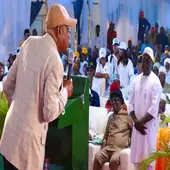
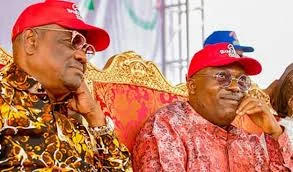
Minister of the Federal Capital Territory (FCT), Nyesom Wike, has pledged to issue Certificates of Occupancy (C of O) to indigenous people of the FCT who are living on their ancestral lands. Wike made the promise on Wednesday during a thank-you visit to residents of the Abuja Municipal Area Council (AMAC), where he emphasised the importance of giving indigenous communities a sense of belonging in the nation’s capital. According to the minister, the initiative is aimed at addressing long-standing concerns about land rights among the original inhabitants of Abuja. He acknowledged the emotional and cultural significance of ancestral land to the people and assured them that his administration would work towards making the issuance of the C of O a reality. “We must change the pattern of politics in Abuja; we must recognise that anywhere you go to, there are people there, and we must recognise them,” Wike said. The minister said he understood the pain of being displaced from ancestral land and stressed that protecting indigenous settlements was a priority for his administration. Wike explained that his visit to AMAC was also to express appreciation to the people for supporting candidates aligned with President Bola Tinubu during the Feb. 21 FCT area council elections. “I am here to thank you for the support you gave to all the candidates in the area council elections. They are all supporters of Tinubu,” he stated. He emphasised that political relationships should be mutually beneficial, describing them as symbiotic engagements between leaders and citizens. “Meaning you do for me, I do for you; you fall for me, I fall for you; you push me, I push you; you love me, I love you,” the minister said. Wike further promised to maintain close engagement with communities in the FCT, noting that President Tinubu had directed FCT ministers to regularly visit communities to better understand their needs. He also urged residents to support leaders who genuinely understand their concerns rather than politicians who only appear during election periods. Addressing the re-elected chairman of AMAC, Christopher Maikalangu, Wike called on him to prioritise the welfare of the people and ensure that their trust was not taken for granted. “Anything your people want, our doors are open for you. Come to us,” he said. “Please do not take their support for granted. Make sure we don’t disappoint our people and make sure all their efforts do not go in vain.” Earlier, traditional rulers in AMAC led by the Sapeyi of Garki, Usman Nga Kupi, commended the minister for ongoing development projects in the FCT and appealed for further action on land allocations and protection of indigenous communities. In his remarks, Maikalangu thanked Wike for supporting his re-election bid and expressed appreciation to residents of AMAC for renewing his mandate. He assured them that his administration would work diligently to meet their expectations and deliver on campaign promises.
FCT Council Polls: Between Political Triumph and Democratic Questions

The APC’s sweeping victory in the FCT area council elections has been hailed by Minister Nyesom Wike as proof of democratic renewal under President Bola Tinubu. However, critics argue the results raise deeper questions about political dominance, opposition strength, and the true state of democracy in Nigeria’s capital.
Amachree Petitions Tinubu, Warns of Rivers Instability

A petition accusing the Federal Government of destabilising Rivers State and shielding powerful officials has placed President Bola Tinubu under growing pressure, with analysts warning that silence could carry serious consequences for oil stability, regional peace, and Nigeria’s global standing.
Presidency Slams Wike’s Actions, Reaffirms Fubara’s Authority in Rivers

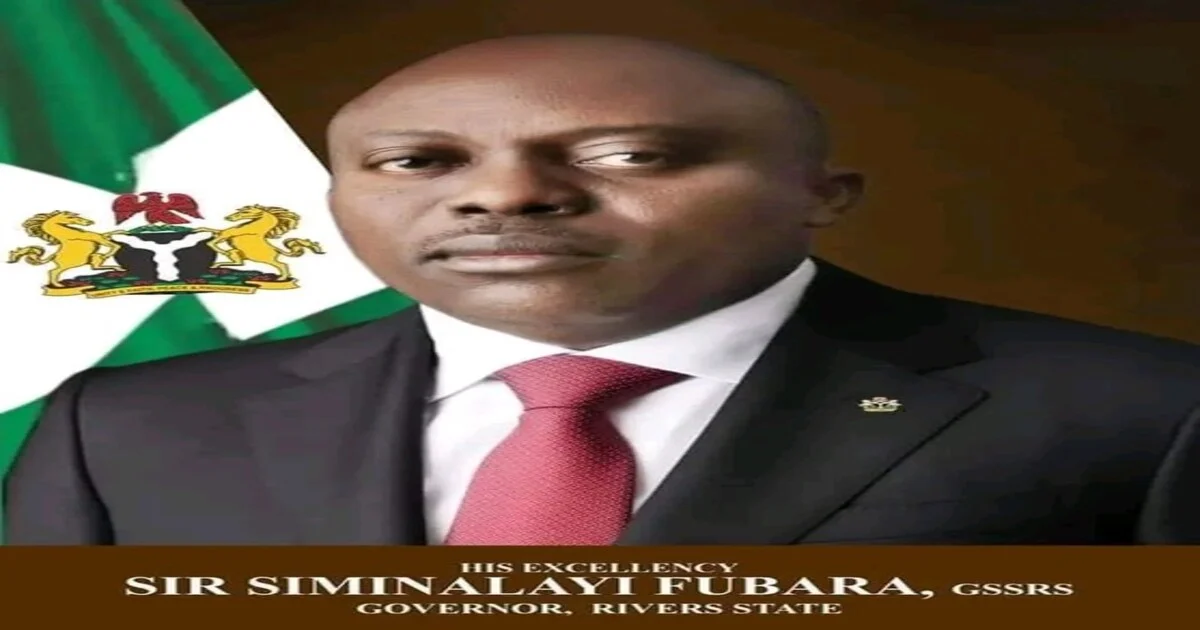
The Presidency has cautioned FCT Minister Nyesom Wike to back off from actions perceived as undermining Rivers State Governor Siminalayi Fubara, reaffirming the governor’s authority amid the ongoing political crisis.
Rivers Assembly Endorses Tinubu for Second Term Amid Criticism of “Sycophancy”

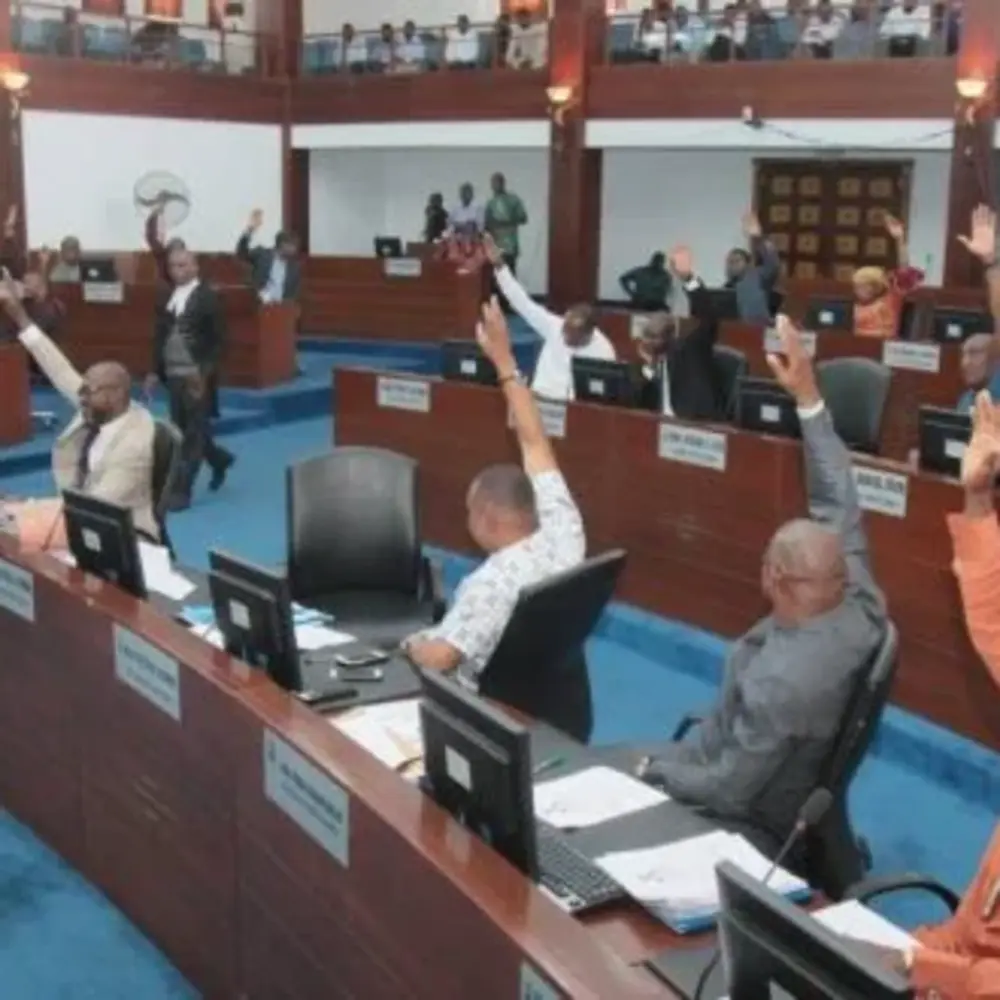
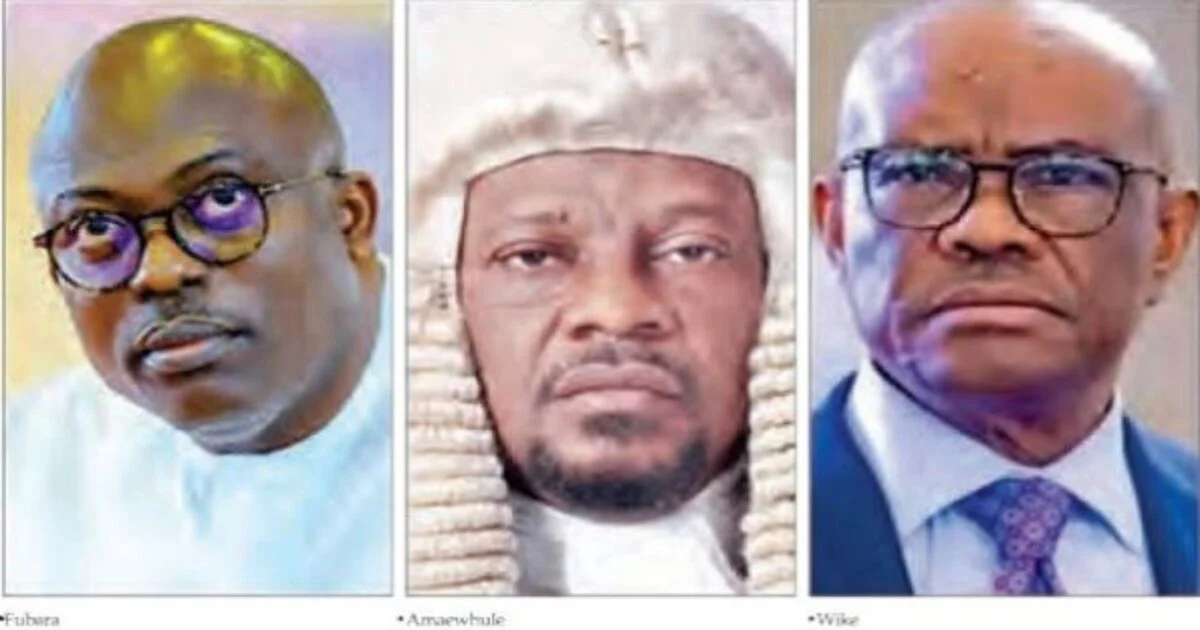
In a move many described as politically motivated, the Rivers State House of Assembly has endorsed President Bola Ahmed Tinubu for a second term in office. The endorsement, announced on Wednesday, was presented as a vote of confidence in appreciation of what the lawmakers called the “numerous Federal Government projects and interventions” in the state under Tinubu’s leadership. The motion, signed by 26 members and read by the House Leader, Mr. Major Jack (Akuku-Toru), claimed that Tinubu’s administration had demonstrated commitment to peace, stability, and development. In a controversial justification, the legislators cited Tinubu’s declaration of a state of emergency and the temporary suspension of the state legislature, moves widely criticized by Nigerians and international observers, as evidence of his “fatherly role” in restoring order. Speaker of the House, Mr. Martin Amaewhule (Obio/Akpor I), praised the president as a “compassionate father” working to reposition the nation for growth. He also lauded the appointment of Rivers indigenes into key federal positions, saying it reflected Tinubu’s inclusiveness and strengthened the state’s relationship with the Federal Government. The lawmakers further pledged loyalty to the Minister of the Federal Capital Territory (FCT), Nyesom Wike, and promised to mobilize grassroots support for Tinubu’s “Renewed Hope Agenda.”
Suspension of elected officials, a slap on the constitution-Dagogo

Dr Fara Dagogo, has described the declaration of a State of Emergency in Rivers State by President Bola Tinubu as a slap on the Constitution. Dr. Dagogo was a member of the House of Representatives member, (Degema, Bonny, Federal Constituency). The former legislator made the remark on Tuesday in a statement issued to newsmen in Port Harcourt while reacting to the emergence rule declared on Rivers. He said that the declaration was questionable under the 1999 Constitution of the Federal Republic of Nigeria (as amended). Dr. Fara added that Section 305 of the 1999 Constitution of the Federal Republic of Nigeria, 1999 (as amended) outlined the conditions under which the President might declare a state of emergency. According to Dagogo, specifically, Section 305(1), the President may, by instrument published in the Official Gazette, issue a proclamation of a state of emergency in the federation or any part thereof. ‘’Section 305(3) states that the President may only declare a state of emergency in a state if the Governor of the state, with a resolution supported by two-thirds majority of the House of Assembly, requests the President to do so; “If there is actual breakdown of public order and public safety requiring extraordinary measures; “Or If there is a clear and present danger of an actual breakdown of public order and public safety in the federation or any part thereof; “If there is an occurrence or imminent danger of invasion, war, or insurrection; or if there is a natural disaster or public health emergency; “Or if there is any other danger threatening the existence of the federation,”Dagogo explained. Dagogo said that President Tinubu admitted that the Governor and Deputy Governor did not request the proclamation (as required under Section 305(5). He said that the legal basis for the declaration rested on whether or not the public order and public safety had truly broken down, justifying the invocation of emergency powers. Speaking on legality of the Suspension of the Governor, Deputy Governor, and State House of Assembly, Dagogo said that the controversial aspect of the declaration was their suspension under the 1999 Constitution. According to him, the only legal way to remove a Governor or Deputy Governor is through impeachment by the State House of Assembly under Section 188. He stated that the Constitution does not grant the President the power to suspend or remove a Governor or Deputy Governor outside the impeachment process or a valid resignation. Dagogo said that section 11(4) and (5) stated that only the National Assembly could take over legislative functions of a state House of Assembly in cases where it could not function. It does not allow for the suspension of elected lawmakers. Dagogo explained that given the constitutional provisions, President Tinubu’s suspension of elected officials was unconstitutional, as there was no provision in the 1999 constitution granting such powers. “Even during a state of emergency, the Governor and Deputy Governor remain in office, unless removed in accordance with constitutional procedures,” he said. He said that the appointment of Vice Admiral Ibok Ette Ibas (Rtd) as the Administrator to govern Rivers State raised another constitutional issue. “The 1999 Constitution does not recognize the office of an “Administrator” in place of an elected Governor ‘’The constitution only provides for a Governor elected by the people (Section 176(1)), a Deputy Governor elected alongside the Governor (Section 186),” he said. Dagogo mentioned that the only situation where an unelected official could assume control of a state is under military rule, which was not applicable under a democratic system governed by the 1999 constitution. He noted the role of the National Assembly in approving the State of Emergency, saying that under section 305(2) and (6), the President must transmit the emergency proclamation to the National Assembly for approval within two days. “If the National Assembly does not approve it within 10 days, the proclamation ceases to have effect. Dagogo while giving the constitutional breaches in the proclamation of Judicial interpretation and possible legal challenges, said that there were strong grounds for legal challenges in court. “The Supreme Court’s pronouncement in A.G. Federation v. A.G. Lagos State (2013) LPELR-20974(SC) reaffirms the principle that the President must act within constitutional limits, even in extraordinary situations,” he noted. Dagogo stated that ‘’any action outside the scope of the 1999 constitution is illegal’’ and could be overturned by the courts.
Rivers Assembly issues impeachment notice to Gov, Deputy

The political crisis in Rivers State deepened this Monday as members of the State House of Assembly accused Governor Siminalayi Fubara of gross misconduct. In a notice to be published in three national dailies, the 27 state assembly members, accused the governor of violating the Nigerian Constitution and his oath of office. In a statement signed by multiple lawmakers, the assembly criticized the governor’s alleged disregard for constitutional provisions, citing a recent Supreme Court judgment in Suit No.: SC/CV/1174/2024, which condemned his actions. In the judgement under reference, the apex court ruled that “the 8th respondent’s fear of impeachment by the House of Assembly is no justification for his attacks on the House, the Constitution, the Government of Rivers State, and the rule of law.” READ ALSO: Rivers Group gives condition for Fubara’s impeachment The ruling further stated that political disagreements should not justify unconstitutional actions by a sitting governor. The statement was endorsed by several lawmakers, including: Rt. Hon. Dumle Mao (Gokana Constituency), Hon. Major Jack (Akuku-Toru Constituency), Hon. Linda Somiari Stewart (Okrika Constituency), Hon. Franklin Uchenna Nwabochiie (Ogba/Egbema/Ndoni Constituency), Hon. Christopher Ofiks Kagbang (Andoni Constituency) and Hon. Azeru Opara. The lawmakers declared that Governor Fubara’s actions have weakened governance in the state and called for accountability. Deputy Governor Served Notice of Allegations of Gross Misconduct Meanwhile, the Speaker of the Rivers State House of Assembly, Rt. Hon. Martin Chike Amaewhule, officially forwarded a notice of allegations of gross misconduct to the Deputy Governor, Prof. Ngozi Nma Odu. The notice, dated March 14, 2025, was signed by 26 lawmakers, meeting the constitutional requirement of, at least one-third of the Assembly’s membership, to initiate impeachment proceedings. In his letter to the Deputy Governor, Speaker Amaewhule referenced Section 188 (1) and (2) of the 1999 Constitution (as amended), stating that the allegations must be responded to within 14 days. The letter further reminded the Deputy Governor of Section 188(3), which requires the House to decide by motion whether the allegations should be investigated, regardless of whether a defense is submitted. The latest development signals an escalating power struggle within the Rivers State government, with implications for governance and political stability in the state.
Rivers group gives condition for Fubara’s impeachment

As a faction of the state assembly moves for his removal, the Rivers Restoration Movement (RRM) said another Ijaw must succeed him if Gov. Siminalayi Fubara is impeached. The group’s Director General, Johnson Georgewill, told journalists in Port Harcourt on Monday that the arrangement would ensure that the Ijaw people completed their tenure. He stated that replacing Fubara with another Ijaw governor would ensure equity and fairness for the Ijaw people. Georgewill noted that the RRM, loyal to FCT Minister Nyesom Wike, had worked tirelessly to ensure an Ijaw candidate emerged as governor in 2023. According to him, the Rivers State House of Assembly (RSHA) has a constitutional responsibility to exercise oversight over the Executive Arm of Government. “RRM believes that Gov. Fubara has committed several impeachable offences. “If the RSHA eventually decides to impeach him, we appeal to our leader, Wike, to consider another Ijaw man as governor. “This appeal is based on the principles of equity, fairness, and justice, ensuring that Ijaw people complete their tenure in office,” he said. Georgewill backed Wike’s position that it was unacceptable for individuals to threaten to destroy pipelines if Fubara were removed from office. He emphasised that Section 188 of the Nigerian Constitution empowers state Houses of Assembly to initiate impeachment proceedings against any governor found guilty of an impeachable offence. “Threats of violence and unguarded statements cannot override what the laws stipulates,” Georgewill added. The RRM director general further stated that, aside from Bayelsa, the Ijaw people could not singlehandedly produce a governor in Akwa Ibom, Delta, Edo, Ondo, and Rivers states. He praised the FCT minister for his unwavering commitment and contributions to the development of Rivers. “RRM stands 100 per cent in support of the statements made by the leader of Rivers State politics, Wike, during his recent media engagement,” Georgewill concluded.
Present budget in 48 hours – Rivers assembly orders Gov Fubara

The controversial Rivers State House of Assembly has given Governor Sim Fubara 48 hours to present the 2025 budget before the legislators. Another version of the state assembly, comprising about four members had deliberated and earlier passed the 2025 Appropriation Bill. READ ALSO: Labour calls for nationwide protest over telecom, electricity tariff hikes But upon convening this Monday in Port Harcourt, the Martin Amaewhule-led version of the assembly ordered Governor Siminlaye Fubara to lay the 2025 budget before them within 48 hours. Governor Fubara had on January 2nd, signed a ₦1.1 trillion 2025 Budget into law after presenting it to the Victor Oko-Jumbo-led lawmakers. But months after, specifically last week, the Supreme Court ordered Martin Amaewhule and the group of lawmakers he is leading to resume sitting as legitimate members of the Rivers State House of Assembly. That move ended months of tussle over the leadership of the Rivers State House of Assembly with two sets of lawmakers laying claim to the legislative body.
FCT Generates N43.8bn in January, Warns Tax Defaulters

Rather than commend the taxpayers, the Federal Capital Territory Internal Revenue Service (FCT-IRS) threatened defaulters after announcing a collection of over N43.8 billion in Internally Generated Revenue (IGR). The agency warned that it may take legal action against individuals and businesses that consistently fail to comply with tax laws. The Acting Executive Chairman of FCT-IRS, Michael Ango, revealed this during a public awareness campaign in Abuja. He explained that while the service encourages voluntary tax compliance, it is also prepared to enforce penalties on those who refuse to meet their tax obligations. According to Ango, the agency collected a total of N262 billion in 2024, surpassing its N250 billion target. With a strong start in 2025, the service remains committed to increasing revenue collection across various taxes, including personal income tax, capital gains tax, property tax, and entertainment tax. He noted that businesses that fail to file their tax returns for 2025 could face penalties starting from N500,000. The agency has already issued warning letters to some defaulting companies and plans to notify more soon. READ ALSO: Why Nigerians should not pat tax If payments are not made within two weeks, FCT-IRS will determine the next course of action, which may include prosecuting company executives. Ango stressed that tax payments are essential for public infrastructure, including roads, hospitals, and schools. He urged residents and business owners to fulfill their tax duties, warning that the agency will take strict action