Cargo diversion: NUPRC threatens denial of export permits

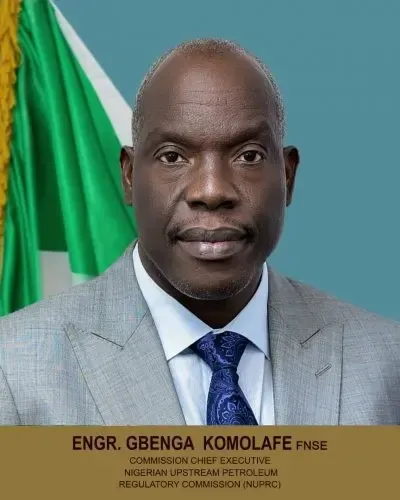
The Nigerian Upstream Petroleum Regulatory Commission (NUPRC) has threatened to deny export permits for crude oil cargoes intended for domestic refining, if oil companies do not fulfill their domestic crude obligations. The Commission Chief Executive (CCE), Mr Gbenga Komolafe, insisted that any changes to cargoes designated for domestic refining must receive express approval from the commission. Komolafe, in a letter dated Feb. 2, 2025, addressed to exploration and production companies and their equity partners reiterated that diverting crude oil meant for local refineries violates the law. At a recent meeting, attended by more than 50 critical industry players, both the refiners and producers blamed each other for the inconsistencies in the Domestic Crude Supply Obligation (DCSO) policy implementation. They, however, agreed that the regulator has put in place appropriate measures for effective implementation. The refiners had claimed that producers were not meeting supply terms and preferred to sell their crude outside, forcing them to look elsewhere for feedstock. READ ALSO: Security agencies profiling ‘pantaker’ market operators The producers countered that refiners hardly met commercial and operational terms, forcing them to explore other markets elsewhere to avoid unnecessary operational bottlenecks. Komolafe, therefore, cautioned against any further breaches from either party, and advised refiners to adhere to international best practices in procurement and operational matters. He reminded producers not to vary the conditions stated in the DCSO policy without obtaining express permission from the commission before selling crude outside the agreed framework, to avoid abuse. The executive secretary referenced Section 109 of the Petroleum Industry Act (PIA) 2021, which aims to ensure a stable supply of crude oil to domestic refineries and strengthen the nation’s energy security. According to Komolafe, the commission will henceforth strictly enforce the policy regarding implementation and defaults by oil companies. READ ALSO: Rural electrification agency gets new Chief Executive Officer He stated that significant regulatory actions have already been taken by the Commission, in line with the enabling laws, to enforce compliance with the Domestic Crude Supply Obligation (DCSO). “These actions include the development and signing of the Production Curtailment and DCSO Regulation 2023, as well as the creation of the DCSO framework and procedure guide for implementation. “Also, during monthly meetings with upstream operators, NUPRC monitors compliance with production metrics that provide insight into available crude volumes two months in advance, facilitating discussions regarding supply commitments to refineries,” he said. The NUPRC boss warned that it would not condone violation of the laws governing domestic crude supplies to local refineries, as such actions have implications for the country’s energy security.  “Kindly note that the diversion of crude cargo designated for domestic refineries is a contravention of the law and the Commission will henceforth disallow export permits for designated crude cargos for domestic refining,” he warned.

Local refiners got 3.6m barrels of crude in 2 years – NUPRC  

Local refiners got 3.6m barrels of crude in 2 years – NUPRC  

The Nigerian Upstream Petroleum Regulatory Commission (NUPRC) has said it delivered 3,614,936 barrels of crude to three local refineries between September 2021 and May 2023. According to the regulator in a statement Thursday in Abuja, only local refiners that complied with relevant requirements of Section 109 of the Petroleum Industry Act, 2021 are entitled to crude supply. NUPRC said the clarification became necessary due to insinuations from some operators that it had failed to supply them with crude oil. The Commission said, between January 2019 and August 2021 the period before the PIA came into effect, 1,726,049 barrels of oil were supplied to two refineries that met the requirements of the law at the time. The two refineries are operated by Walter Smith and NDPR. The post-PIA supplies were made to Walter Smith, NDPR, and OPAC refineries. It stated that the Commission recently granted approval for Millennium Oil and Gas Limited to supply by trucking 60,000 barrels of crude oil at the rate of 20,000 barrels per month for three months to OPAC and Duport refineries in Edo State. In addition, alternate evacuation routes such as trucking of crude oil to refineries have been approved to forestall potential downtime during refinery operations which might arise due to non-availability or vandalism of pipelines. It was emphatic that the Commission remains steadfast in delivering on the mandate stipulated by the PIA and will not relent in ensuring that a conducive and suitable supply of feedstock to all licensed refineries operating within the country is sustained. It further stated that any refinery operator or group of refinery operators in Nigeria not receiving or claiming not to be receiving feedstock from appropriate agencies are yet to satisfy the mandatory requirements as stipulated by law. It pointed to the fact that the Commission has provided regulatory support for qualified refineries by ensuring adequate crude oil supply. It restated its commitment to transparency and determination to work within the provisions of the PIA; which is why data concerning its operations with industry operators are always made available for public scrutiny. “The NUPRC wishes to state the facts to provide insight and clarity to the general public as follows: Section 109 of the Petroleum Industry Act (PIA) 2021 mandates that the Domestic Crude Supply Obligation (DCSO) be placed on all holders of Petroleum Mining Leases and Oil Mining Leases in Nigeria in a bid to ensure crude oil supply to local refineries. Under Section 109(2) of the Petroleum Industry Act, the Commission gazetted the Production Curtailment and Domestic Crude Oil Supply Obligation Regulations which provides clarity on the obligations of the stakeholders of the domestic crude oil supply value chain. “The PIA prescribes its implementation mechanism requiring the Nigerian Midstream and Downstream Petroleum Regulatory Agency (NMDPRA) to furnish the Commission with domestic crude requirements of licensed operating refineries on an annual basis which would form the basis for the Commission to issue the crude supply obligation on the producing companies in the upstream sector. It also mandates the requirement for the transaction to be on an arm-length commercial basis between the producer/supplier and the refiner. “The Commission has provided an enabling framework for the supply of crude oil to be negotiated between the lessee and the oil refining licensee, having regard to the prevailing international market price for similar grades of crude oil as stipulated in section 4 (7) (b) of the Domestic Crude Supply Obligation (DCSO) regulations in either the Nigerian Naira or the United States Dollar or a combination for flexibility to be agreed by the parties. “Consequently, the Commission placed priority on developing this regulation for the operationalization of the mandate and developed the regulation to ensure the availability of a regulatory framework for DCSO.

Allegations against our CEE smear campaign, unsubstantiated – NUPRC

Allegations against our CEE smear campaign, unsubstantiated – NUPRC

Nigerian Upstream Petroleum Regulatory Commission has described allegations against its Chief Executive of Engr. Gbenga Komolafe as a campaign by some individuals to smear his reputation. The Commission in a statement Thursday in Abuja, said the allegations were not only malicious and completely false, but were libelous and unsubstantiated. NUPRC Staff had barricaded the gate of the Commission demanding the immediate sack of Gbenga Komolafe, alleging he was using his position to engage in fraudulent activities. According to the workers, Komolafe is said to be engaged in illegal recruitment, and a lack of regard for workers’ welfare, among others. The protesting members of staff had dressed in black and red attire, in their hundreds to besiege and place a casket bearing ‘RIP Fraud’ at the main entrance to the NUPRC complex. The Commission stated that the sum of N10 billion alleged to have been misappropriated with N4 billion donated to political parties under Komolafe, was completely false, daring the protesting workers to publish details of the transaction. “The purveyor of the falsehood is challenged to publish details of the account of the Commission from where the donations originated from and the accounts of the political parties involved where the N4 billion and N6 billion was deposited,” the statement said. The Commission stated that every employment exercise followed due process. According to the Commission, the Petroleum Industry Act 2021 empowers the board of the Commission to appoint, promote and remuneration. It added that statutorily, the Federal Character Commission regulates compliance with statutory procedure with regards to recruitment into public establishments, noting that the recruitment alleged was done in compliance with all procedures and compliance certificates issued. “The issue raised during the industrial action relates to sundry claims including travel expenses which are paid from time to time in line with the availability of funds,” it further said.

Alleged Fraud: NUPRC staff demand sack of CEO

Alleged Fraud: NUPRC staff demand sack of Chief Executive

Nigerian Upstream Petroleum Regulatory Commission (NUPRC) employees on Wednesday called for the sack of their Chief Executive, Mr Gbenga Komolafe, over alleged fraud and abuse of office. The workers had on Tuesday besieged the offices of the commission in Jabi and Utako, Abuja, where they gave a 24-hour ultimatum for the grievances to be addressed. The workers identified some of the issues as non-remittance of pensions deducted from their salaries, poor working environment, insufficient working tools and unpaid staff claims. Others were staff medicals, seven months outstanding salary payments and the non-payment of the emoluments of outsourced personnel. At the expiration of the ultimatum on Wednesday, the workers stormed the main entrance to NUPRC complex in Jabi, Abuja, dressed in black and red attires. The workers, in their numbers, urged President Bola Tinubu to sack Komolafe or order him to resign. The workers also called for a forensic audit of all contract processes and payments by the commission under Komolafe’s watch. Mr Owan David, the National Treasurer, Petroleum and Natural Gas Senior Staff Association of Nigeria (PENGASSAN), explained during the protest that Komolafe must go for paying deaf ears to employees plight. David warned that if nothing was done to address the situation, the workers would withdraw from their duty posts nationwide. He urged the relevant authorities to take necessary action to save the commission from total collapse. Earlier, Mr Okechukwu Anya, the Branch Chairman of the union, complained that instead of engaging the workers in resolving the lingering issues, the management had resorted to intimidating the union leaders. Anya said that the union leaders were being intimidated for asking for improved working conditions. He accused the embattled chief executive of neglecting staff welfare and gross mismanagement of the commission’s funds. Reacting to the allegations, Komolafe expressed shock over the protest, adding that the management has fulfilled almost all the claims and demands of the workers. He said in a statement that about N1.5 billion upfront deductions had been offset among other commitments. He added that efforts were already in place to address pending issues. On the non-remittance of pension deductions, Komolafe said that the commission has remitted all pension deductions to the various Pension Fund Administrators. He added that the management had also secured additional working space in Abuja, while relevant steps had been taken to fit the necessary facilities in the Port Harcourt and Lagos offices. On medicals, Komolafe explained that full and comprehensive medical care, inclusive of approved overseas treatment, where required, was being provided for all staff. “The commission has also paid all on-call allowances to deserving staff as of July 2023. “Regarding the issue of non-payment of outsourced personnel, all outsourced service providers invoices are currently being processed,” he said. The chief executive said that the commission would not succumb to threats and intimidation from any quarters. 

Oil production falls below benchmark to 998.6bpd in April

Global Crude Oil Prices E

Nigeria’s oil production in April 2023 fell below the one million mark – the lowest in seven months – as the production figure fell to 998,602 barrels per day (bpd). This is a 21.26 per cent decline compared to March, when output was 1,268,202 bpd. The Nigerian Upstream Petroleum Regulatory Commission (NUPRC) disclosed this in its latest crude oil and condensate production data for April 2023. The volume of production is at its lowest point in the last seven months. In the previous year, oil production fell below one million bpd in August and September owing to several issues, including oil theft. According to the NUPRC report, oil production decreased from 1.517 million bpd in March 2023 to 1.245 million bpd in April 2023, with the addition of condensate. Condensate is a mixture of light liquid hydrocarbons, similar to a light (high API) crude oil. It is usually separated from a natural gas stream at the point of production (field separation) when the temperature and pressure of the gas are dropped to atmospheric conditions. Speaking about the current oil output on Wednesday, the Chief Executive Officer (CEO) of the NUPRC, Gbenga Komolafe, said that oil production is currently about one million bpd below “its technically allowable capacity”. Komolafe, who was represented by the Executive Commissioner for Economy, Regulatory, And Strategic Planning, NUPRC, Kelechi Ofoegbu, at a host communities sensitisation workshop, attributed the low oil production to a number of issues, including the energy transition’s impact on hydrocarbon funding, a lack of investments, and insecurity. “While the commission is prioritising efforts towards increasing oil and gas production and ensuring maximum federation revenue through the optimisation of the oil and gas value chain, the efforts have been constrained by a myriad of challenges. “These challenges range from insecurity, low investment, and de-prioritisation of funding of hydrocarbon development arising from the energy transition. “Currently, Nigeria has the technical allowable capacity to produce about 2.5 million barrels of oil per day. However, arising from the highlighted challenges, our current production hovers around 1.5 million barrels of oil and condensate per day,” he said.