Tension at NASS over planned tenure elongation…Clerk, over 200 staff due for retirement in Nov plan 5yrs extension

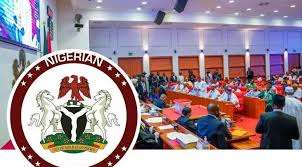
Tension is brewing in the National Assembly, following plans by the Senate to grant concurrence to a controversial bill on extension of retirement age for civil servants in nation’s Parliament and across the 36 State Houses of Assembly. Staff who are apprehensive said attempts by the Senate to pass a Bill for an act to extend the retirement age of the staff of the National Assembly Service from 60 to 65 years of age and from 35 to 40 years of service is counterproductive. According to documents cited by our correspondent, the current clerk to the National Assembly, Sani Tambawal Magaji, joined the National Assembly Service in April 1990 (34 years) and was born in 1965. If the Bill scales through, he will remain in office until he’s 65 and 40 years in service. The Senate had on Wednesday listed the controversial Bill, which had passed third reading in the House of Representative for concurrence after it passed first reading in the Senate some weeks ago. Several attempts had been made by the two Chambers of the apex legislature to extend the retirement age of the members of staff of the National Assembly since 2017. Successive management of the National Assembly bureaucracy since 2017 made attempts to allegedly buy over the leadership and members of the Senate and the House of Representatives to make a law extending the tenure of service as against the condition prescribed by the Public Service Rules which provides for retirement age of persons in the public service of the federation at the attainment of 60 years of age or 35 years of service, whichever comes first. While the management vigorously pursued its goal, the staff of the National Assembly under the aegis of the Parliamentary Staff Association of Nigeria (PASAN) under the chairmanship of Bature Musa rejected the Bill in its entirety. It would rather admonish the management of the National Assembly to ensure the full implementation of the welfare and allowance packages as contained in the service’s Conditions of Service. The rejection of the Bill was attributed to what the workers’ Union termed an “attempt by Clerk to the National Assembly and the management team to perpetuate themselves in office for another 5 years after they are due for retirement from service. The Union in a unanimous decision rejected the Bill, saying that it was against the position of Council of Establishment of the Federation which pegged the retirement age at either 60 years of age or 35 years of service – whichever comes first. The Union also argued that the controversial Bill if passed, will bring stagnation on the career progression of her members, thus would serve only the interest of the management staff, especially those who are due for retirement from service. Again, the Union also averred that the passage of the Bill contravenes the Constitution of the Federal Republic of Nigeria and runs contrary to the Federal Government policy on youth development and empowerment. The Union advanced its argument by illustrating that perpetuating persons who have served the nation for 35 years or attained 60 years of age will not make room for employment of Nigerian youths some of whom graduated for more that 10 years without gainful employment. Consequently, the Union, in a letter, addressed to the President of the Senate and the Rt. Honorable Speaker of the House of Representatives denounced the Bill and threatened industrial action should the legislators go ahead to pass the Bill. It said the Union’s position led the two Chambers to discontinue action on the Bill, which was respectively sponsored by Sunday Akon in the House and Senator Stella Odua in the Senate during 9th Assembly. However, determined to see it through, the management in allegedly reached a deal with the National Assembly Service Commission and smuggled the tenure extension into the Conditions of Service in use in the National Assembly Service, but the Union protested and forced the Commission to expunge it from the revised edition of the Conditions of Service currently in use. The revision led to the retirement of the then Clerk to National Assembly, Ataba Sani Omolori, and 150 staff of the service. However, further attempts were made in the House of Representatives under the speakership of Femi Gbajabiamila, but was rejected by the House thus, the Bill did not see the light of the day under the then Clerk to the National Assembly, Amos Olatunde Ojo. Presently, the management led by the current clerk to the National Assembly, Magaji Sani Tambawal, is again pushing for it. The Bill has passed in the House of Representatives and presently before the Senate for concurrence. The Senate, after taking the first reading of the Bill some weeks ago, reversed itself and listed it for concurrence on Wednesday 14, February, 2024. However, a group of staff of the apex lawmaking body in the land has rejected the attempt by the Senate to concur to the decision of the House of Representatives, citing same reasons adduced by the Union in 2019. The staff queried the move, asking what has changed in 2024 that is motivating the present Assembly to buy into the Bill to the extent that it is in a hurry to get it passed. The workers said the leadership of the Workers Union in the National Assembly Service may have been compromised. The group of staff alleged that the management of the National Assembly, led by Tambawal, got the Sunday Sabiyyi-led Executive of the Union, hence the deafening silence in the Union They accused the chairman of buying into the attempt to stagnate majority of staff and blocking the viable youth population who would be employed into the service upon the retirement of over 200 staff who are due to retire between 2024 and 2026, because of selfish interest as he stands to benefit from the extension if passed and assented to. They wondered why the leadership that led the struggle against the Bill during Omolori and Ojo respectively will now
Nigerian Lawmakers Sponsor Bill To Adopt Parliamentary System Of Government

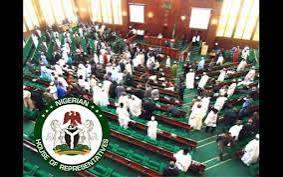
A proposal to introduce the parliamentary system of government in the country has successfully passed the first reading in the house of representatives. The bill, backed by 60 lawmakers, was presented during Wednesday’s plenary session. Currently operating under a presidential system, Nigeria elects its president directly. In contrast, the parliamentary system involves the legislature appointing a prime minister, with a less distinct separation of powers. Lawmakers aim for a transition to this system by 2031, citing perceived flaws in the current presidential system. Abdulsamad Dasuki, representing the PDP in Sokoto, highlighted concerns, including the high cost of governance and excessive executive powers. “Among these imperfections are the high cost of governance, leaving fewer resources for crucial areas like infrastructure, education, and healthcare, and consequently hindering the nation’s development progress, and the excessive powers vested in the members of the executive, who are appointees and not directly accountable to the people,” Dasuki said. The lawmakers said they expect the bill to ignite, and provoke a national conversation about the future of the Nigerian governance system. “To ensure robust public debates, stakeholder consultations, expert analyses, and a thorough and informed decision-making process, raise awareness about this significant development and encourage constructive dialogue on the potential implications of these proposed constitutional alterations,” they said. “Our conviction is that a streamlined executive branch, which replaces the president and vice president with a prime minister and cabinet chosen from the legislature could lead to a smaller central government, reducing salaries and administrative expenses. “We also hold strongly that shifting the election of governors and local government chairmen from the general election to votes within their respective legislative bodies could save billions spent on state and nationwide campaigns,” he said.
Fresh EndSARS Protest Erupts In Delta

Youths in Delta state have taken to the streets, protesting escalating police brutality and extortion. Viral videos depict demonstrators holding placards with the inscription “ENDSARS NOW,” urging the Nigeria Police Force to address the alleged misconduct. A social media user, X, shared the videos, asserting a surge in police brutality within the state. The spokesperson for the Delta Police Command, DSP Bright Edafe, responded, stating that the protest stemmed from the arrest of four individuals who couldn’t prove ownership of an unregistered car. According to Edafe, during the arrest, some youths attacked the officers, causing injuries and damaging a police patrol vehicle. He emphasized that the police would not be deterred by protests and urged the public to remain calm. In his statement, Edafe mentioned, “Nine of the suspects were arrested and will be charged to court. Youths are advised to stay off any protest because it won’t deter us from doing our job.” This incident echoes the 2020 #EndSars protests that swept through Nigeria, prompting the government to disband the Special Anti-Robbery Squad (Sars) and establish judicial panels to investigate allegations of police abuse.
Bayelsa Guber: APC, INEC tender conflicting documents

The All Progressive Congress (APC) and Independent National Electoral Commission (INEC) Wednesday, tendered conflicting election results on the November 11 governorship election before the State Governorship Tribunal, sitting in Abuja. A former Minister of Petroleum, Timiprye Silva, and his party, APC, had dragged INEC, elected governor, Senator Diri Duoye, his Deputy , Lawrence and the People Democratic Party (PDP) before the tribunal. When the matter was called up, the electoral body tendered its own certified true copies of its results, while the APC polling units agents tendered various results in respect of the places the party was represented. The conflicting results, which were objected by the parties, were, however, admitted as exhibits by the Chairman of the tribunal, Justice Adekunele Adeleye, for the tribunal’s consideration during the hearing of the petition. Specifically, the petitioners are asking the tribunal to hold that election took place in three different local governments where INEC claimed that election was not conducted due to alleged diversion of electoral materials. They were also allegations of bypass of the BVAS machines . The affected local governments are Southern Ijaw, Ogbia, and Nembe Local Government Area LGAs. Led in evidence by the counsel of the petitioners, Tunde Falola, the APC’s witness, who was a poling agent, Odungele Moses, maintained that the election took place in PU unit 15 ward 4 and tendered a result which he claimed was issued to him by the election presiding officer on the election day. However, during cross-examination by counsel to the governor, Chris Uche SAN, the witness admitted that although 16 political parties participated in the election, only APC, which he represented as an agent, signed the result he tendered. He, however, did not give reasons why others did not sign. Another witness, Mallory Afin, who also testified for the petitioners, tendered APC results, which had the same serial number and number of accredited voters 169 with INEC but had different results recorded for the political parties. During cross examination by counsel to Governor Diri, it was discovered that the results tendered by APC in ward 002 were prepared and signed by the same presiding officer for ward 015. The witnesses were also cross examined by Charles Edosonwon SAN, who stood for INEC, Chukwuma Machukwu-Umeh SAN, who stood for the Deputy Governor and Tayo Oyetibo SAN who represented PDP. The witnesses, though, denied the allegations of parading fake election results but admitted that only INEC has statutory powers to conduct elections and to possess superior documents. Hearing continues Thursday,15th February.
Atiku Disowns Aide Daniel Bwala, Clarifies Relationship

Former Vice President of Nigeria, Atiku Abubakar, has clarified the relationship between himself and a lawyer cum politician, Daniel Bwala. According to Atiku, in a statement released on Tuesday by his media office, Bwala is a former spokesperson of the Atiku/Okowa Presidential Campaign Organisation and not his former aide. The statement noted that “it is important that the media and the general public take corrective note of defining Mr. Daniel Bwala as an aide to His Excellency Atiku Abubakar.” It added that Bwala served as a spokesperson to the Atiku/Okowa Presidential Campaign Organization in the 2023 election, and after the election, the need for a campaign spokesperson was terminated, and Bwala has also moved on. The 2023 Peoples Democratic Party (PDP) presidential candidate, therefore, urged the public/media to stop defining Bwala as an ex-aide of Atiku Abubakar, but recognize him by his current vocation and alliance. “Bwala offered his services and support to the Atiku/Okowa Presidential Campaign Organization as a spokesperson – and it was a position he held during the last presidential campaign. “Subsequently, and after the election, the need for a campaign spokesperson has terminated, and Bwala has moved on with his career. “This, therefore, serves as notice to the media and the interested public to desist from defining Bwala as an ex-aide of Atiku Abubakar. “We duly urge the public to henceforth recognize, introduce, and define Daniel Bwala by his current vocation and alliance,” the statement noted. The clarification by Atiku comes amidst the recent fraternization and declaration of support by Bwala for the administration of President Bola Tinubu of the All Progressives Congress (APC).
Details Of PDP BoT Meeting In Abuja Emerge

The Board of Trustees (BoT) of the Peoples Democratic Party (PDP) has called on President Bola Tinubu to address the escalating insecurity and the continuous depreciation of the Naira. The call came after a meeting at the PDP National Secretariat in Wadata Plaza, where Adolphus Wabara, the newly appointed Chairman, expressed deep concerns about economic hardship, high costs of essential commodities, and alarming food scarcity. Wabara emphasized the BoT’s distress over the worsening insecurity, corruption, falling Naira value, high fuel prices, and unemployment. He stated “The BoT is alarmed by the worsening insecurity in the country as evident in the rising cases of mass killings, banditry, kidnap for ransom, and acts of terrorism by assailants who are emboldened by the manifest laidback attitude of the APC administration to issues of security, especially in the last nine months. “The BoT is appalled by the monumental corruption and unbridled treasury-looting in the APC administration especially the looting of billions of Naira meant for palliatives for poor and vulnerable Nigerians. “The BoT is seriously worried over the fall of the Naira to an abysmal N1,500 to the Dollar, incessant increase in the pump price of fuel which now sells for over N700 per liter with long queues in various parts of the country. “These have attendant negative consequences as evident in the nearly 30% inflation rate, 41% unemployment rate, and alarming 46% poverty rate where up to 130 million citizens have sunk deeper into multi-dimensional poverty in the last nine months. “The BoT is disturbed that the catastrophic economic and security situation in the country has left Nigerians hopeless, despondent, angry and constitutes a present and immediate threat to the survival of the country as hardworking young Nigerians, professionals in critical fields as well as major multinational companies are now leaving our nation in droves. “The BoT is distressed that there are no concrete and coherent policies, measures, and steps by the APC administration to address these existential threats which have put the country in a precarious situation. “The BoT calls on President Bola Ahmed Tinubu to know that the situation in the country has become unbearable. Mr. President should immediately address the issues of corruption in his administration, worsening insecurity in the country, continuous fall in the value of the Naira, high fuel price, unbearable food scarcity, and unemployment in the country.”
Buhari didn’t sign alleged $6.2M foreign election observers payment- Boss Mustapha

The Immediate past Secretary to the Government of the Federation (SGF) Boss Mustapha, Tuesday, said the letter credited to former President Buhari as author and signatory did not emanate from the Presidency while another one purported to have emanated from him and signed by him were forged documents. The ex-SGF revealed this to the federal high court Abuja, clearing former President Muhammadu Buhari and himself from the alleged fraudulent payment of $6.2M dollars to foreign election monitoring observers. Mustapha made the clarifications on Tuesday while giving evidence in the trial of former governor of the Central Bank of Nigeria CBN, Godwin Ifeanyi Emefiele at the High Court of the Federal Capital Territory. He said that the one, Jubrin Abubakar who allegedly collected the $6.2M cash on February 8, 2023 under the watch of Emefiele was not a staff of the office of the SGF and was not known to him. Mustapha faulted the purported two letters alleged to have emanated from the Presidency under Buhari and the SGF office adding that the letters did not conform with the standard with which the Presidency and SGF write letters. The Economic and Financial Crimes Commission EFCC had alleged that Emefiele forged the letters to defraud the federal government to the tune of$6, 230, 000 under the guise of making payments to some foreign election monitoring observers. Mustapha insisted that the issue of payment for either local or foreign observers is the sole responsibility of the Independent National Electoral Commission INEC and not any other federal government agency. “Iam not privy to the operations of the Central Bank of Nigeria CBN and cannot write the governor for the attention of the Director, Banking Services. “From mere looking at the purported letters, the headline down the contents are defective. Iam not aware of the contents of the letters because there was no Federal Executive Council approval for such a thing”, he said. “The purported letter from the office of Secretary to the Government of the Federation bears my name as the SGF. To the best of my knowledge, the letter did not emanate from the SGF office. If did not emanate from the SGF office, then, I did not sign it. ” Nigerian government has no business with foreign election observers. That I know as a fact because I managed two election cycles. INEC has sole responsibility for the foreign election monitoring observers. “Looking at the signature on the purported letter that emanated from the Presidency, it is a failed attempt at reproducing President Muhammadu Buhari’s signature. “Uptil the time I left office, I did not know anything about the transactions. All through my service, I did not come across the letter purported to have been written by Mr President. “On the face value, and having served as SGF for 5 years and 7 months as SGF, I can say this letter did not emanate from the Presidency for seven major reasons. “Among others, the seal of the Presidency does not carry reference number. Seal itself is the authority. Federal Executive Council decisions are not transmitted by letters but by extracts after conclusions have been adopted. “Iam the custodian of FEC. The President will not refer FEC conclusions to me. In all the correspondences from the Presidency, President Buhari never ended with “Please, accept the assurances of my highest regards. Trial to be continued March 7th, 11th and 25th.
Tinubu Nominates Hajj Commission Leadership, asks Senate to Scrutinize for Compliance

President Bola Tinubu has submitted nominations for the leadership of the National Hajj Commission (NAHCOM) to the Senate for confirmation. The announcement, conveyed through a letter to Senate President Godswill Akpiabio and read during a plenary session in Abuja, listed the nominees for key positions of the commission. The letter, which cited provisions of the National Hajj Commission Act 2006, outlined the proposed appointments as follows: – Jalal Alabi for Chairman – Aliyu Abdulrazaq for Commissioner of Policy, Personnel, and Finance – Mr. Anofi Elegushi for Commissioner of Operations – Prof. Abubakar Yagawal for Commissioner of Planning and Research Acknowledging the importance of adherence to the Act, Senate President Akpiabio underscored the requirement for commission members to represent all six geopolitical zones of Nigeria. He indicated that further communication with the President’s Chief of Staff would be initiated to ensure compliance with this provision. Subsequently, the Senate referred President Tinubu’s request to the Senate Committee on Foreign Affairs for meticulous examination and legislative recommendations. The committee has been tasked with providing a comprehensive report within 10 days, ensuring that the nominees meet the necessary criteria and represent the diversity of Nigeria’s regions.
Senate Holds Closed-Door Meeting with Service Chiefs and Ministers on National Security

In response to the escalating state of insecurity across the nation, the Senate convened another closed-door executive session on Tuesday to receive a detailed security briefing from top military officials and federal ministers. The decision to transition into the executive session was prompted by a motion by Senate Leader Senator Opeyemi Bamidele, who sought to temporarily suspend regular proceedings to allow for the admission of invited guests. The guests granted access to the session comprised the National Security Adviser, Nuhu Ribadu, along with the Ministers of Defence, Police Affairs, Interior, and Finance. Additionally, all Service Chiefs, the Inspector General of Police, and Directors-General of the Department of State Services (DSS) and the National Intelligence Agency (NIA) were present. Senate President, Godswill Akpiabio, in his opening remarks, underscored the significance of involving ministers responsible for overseeing the financial allocations to security agencies. Akpabio emphasized the pivotal role of adequate funding in facilitating the procurement of essential equipment necessary for combating security threats. Of notable presence was the Finance and Coordinating Minister of the Economy, Mr. Wale Edun, whose insights were sought on avenues for financing critical security initiatives aimed at safeguarding lives and properties. Akpiabio reiterated that the invitation extended to the ministers and security chiefs was a response to numerous petitions received from constituents, demonstrating the Senate’s commitment to addressing the concerns of citizens. The interactive security briefing was framed within the context of the Senate’s oversight mandate, providing an opportunity for direct engagement with key stakeholders to assess the current security landscape and explore legislative interventions. Senators seized the opportunity to raise pertinent security-related queries and collaborated with relevant agencies to devise effective strategies for mitigating the nation’s security challenges.
Senate President Administers Oath to Three New Senators

Three new senators, elected during the recent national by-election, were on Tuesday, sworn in by the Senate President Godswill Akpabio as members of the 10th Senate. The ceremony, conducted within the confines of the Senate chamber, saw Mustapha Musa of the All Progressives Congress (APC) representing Yobe East, Professor Anthony Ani of the APC representing Ebonyi South, and Prince Pam Mwadkon of the Action Democratic Party (ADP) representing Plateau North taking their oaths of office and allegiance. With the guidance of Senate Clerk Mr. Chinedu Akubueze, the new senators solemnly pledged their commitment to their legislative duties before being escorted to their designated seats by the Sergeant-At-Arms. The inclusion of these three senators brings about a shift in the Senate’s political landscape, as the distribution of lawmakers across different parties now stands at: APC – 59, PDP – 37, LP – 7, NNPP – 2, SDP – 2, APGA – 1, and ADP – 1. This alteration promises increased diversity and representation within the Upper Chamber, shaping the legislative agenda with varied viewpoints and interests.