Governors meet over tax reform, others

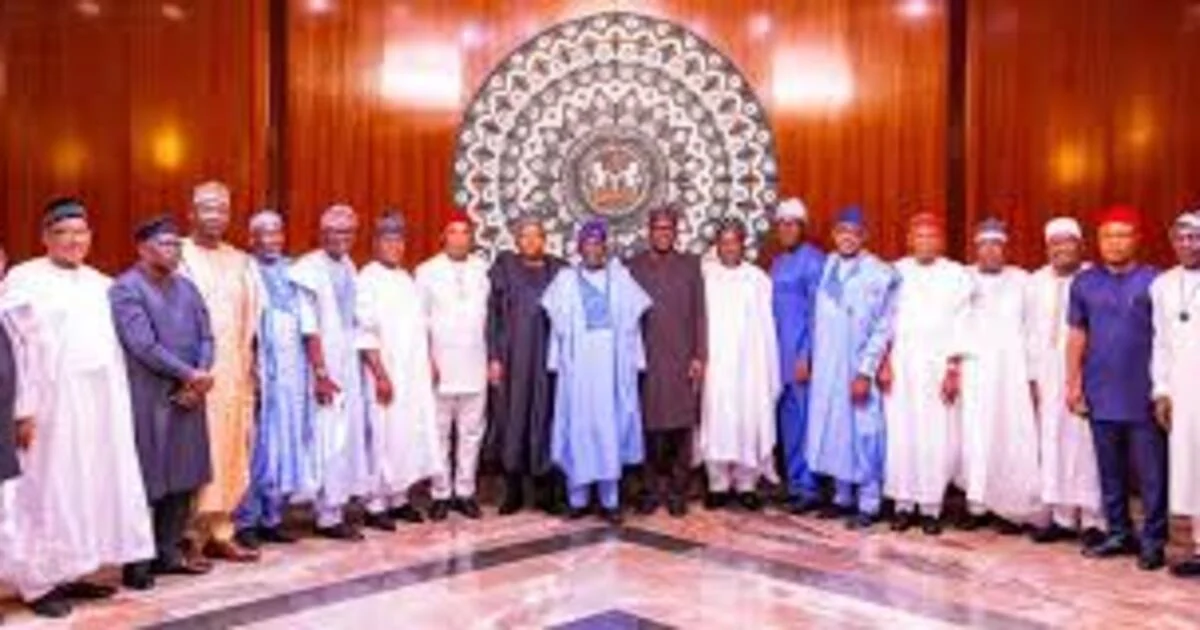
The 36 state governors, under the aegis of the Nigeria Governors’ Forum (NGF), are meeting in Abuja to discuss tax reform and other national issues. The meeting is chaired by the forum’s chairman, Gov. AbdulRahman AbdulRazaq of Kwara. Governors from Oyo, Anambra, Bauchi, Jigawa, Lagos, Ogun, Abia, Ebonyi, Bayelsa, and Akwa Ibom are in attendance. Also present are the deputy governors of Kaduna and Zamfara. Speakers of State Houses of Assembly are also attending the meeting. At its Jan. 17 meeting with the Presidential Committee on Fiscal and Tax Reforms, the NGF endorsed a revised Value Added Tax (VAT) sharing formula. The proposed formula allocates 50 per cent based on equality, 30 per cent on derivation, and 20 per cent on population. On Wednesday, the Federal Government inaugurated 50 newly appointed Tax Appeal Commissioners to strengthen economic reforms and revenue generation. The Minister of Finance and Coordinating Minister of the Economy, Mr Wale Edun, underscored the commissioners’ vital role in enhancing revenue collection. He highlighted the importance of the Tax Appeal Tribunal (TAT) in ensuring fair tax dispute resolution, fostering investment, and promoting a business-friendly environment.
Supreme Court Dismisses Suit Seeking To Scrap EFCC

In what some analysts have likened to the ignoble scenario of corruption fighting against the effort of the government to rein in on corrupt agents of the state, the gambit by 16 state Attorneys General was curtailed by Supreme Court, which on Friday in Abuja, threw out their suit seeking to have the EFCC scrapped. The suit, which was initially instituted by attorneys general of 16 states, sought the scrapping of the anti-graft agency. While some states withdrew from the suit, some others asked to be joined as co-plaintiffs. The state governments, in their suit, had argued that the Supreme Court, in Dr. Joseph Nwobike Vs Federal Republic of Nigeria, held that it was a United Nations Convention against corruption that was reduced into the EFCC Establishment Act and that in enacting the law in 2004, the provision of Section 12 of the 1999 Constitution, as amended, was not followed. They argued that in bringing a convention into Nigerian law, the provision of Section 12 must be complied with.
Anambra Withdraws From Suit Against EFCC, NFIU, ICPC

The Anambra State Government announced on Tuesday its decision to withdraw from a legal suit challenging the legality of the Economic and Financial Crimes Commission (EFCC). This lawsuit, initially filed by the Kogi State Government, seeks to declare the operations of the EFCC, the Nigerian Financial Intelligence Unit (NFIU) and the Independent Corrupt Practices Commission (ICPC) as unconstitutional. Through a notice dated October 20, Anambra’s Attorney General, Prof. Sylvia Ifemeje, informed the Supreme Court of the state’s decision to step back from the case. Meanwhile, Osun State, represented by its Attorney General, Mr. Oluwole Bada, sought to join the suit and consolidate its own grievances against the EFCC with those of Kogi State. Osun State is pursuing similar reliefs, seeking to challenge the EFCC’s authority. At Tuesday’s hearing, a seven-member panel of the Supreme Court, led by Justice Uwani Abba-Aji, also noted the absence of Sokoto State, which had previously been a co-plaintiff but did not send a legal representative. Other states present in the case include Kogi, Kebbi, Katsina, Jigawa, Oyo, Benue, Plateau, Cross River, Ondo, Niger, Edo, Bauchi, Adamawa, Taraba, Ebonyi, Imo, and Nasarawa. Representing the federal government, Attorney General of the Federation and Minister of Justice, Prince Lateef Fagbemi, SAN, did not oppose Anambra’s request to withdraw from the case. The case stems from a collective legal action by 16 states against the EFCC, arguing that the anti-graft agency was not constitutionally established by the administration of former President Olusegun Obasanjo. The states claim that section 12 of the 1999 Constitution was violated, as the EFCC Act, passed by the National Assembly in 2002 and later amended in 2004, did not receive the required approval from a majority of state Houses of Assembly. The plaintiffs assert that the EFCC’s establishment under the United Nations Convention Against Corruption did not comply with constitutional requirements, rendering its operations illegal in states that did not consent to the law. They argue that, based on the supremacy of the 1999 Constitution, any act inconsistent with it should be considered null and void. Kogi State, in its submissions to the Supreme Court, raised six key issues and sought nine major reliefs. Among them is a request for a declaration that the EFCC, the Nigerian Financial Intelligence Unit (NFIU), or any other federal agency does not have the power to investigate or manage funds belonging to Kogi State or its local government areas without state consent. Kogi also contends that federal agencies lack the authority to issue directives regarding the administration of state funds.