Police foil bandit attack on police station, Juma’at prayer in Zamfara

Shakeup In Police As IGP Reassigns 14 AIGs, 26 CPs

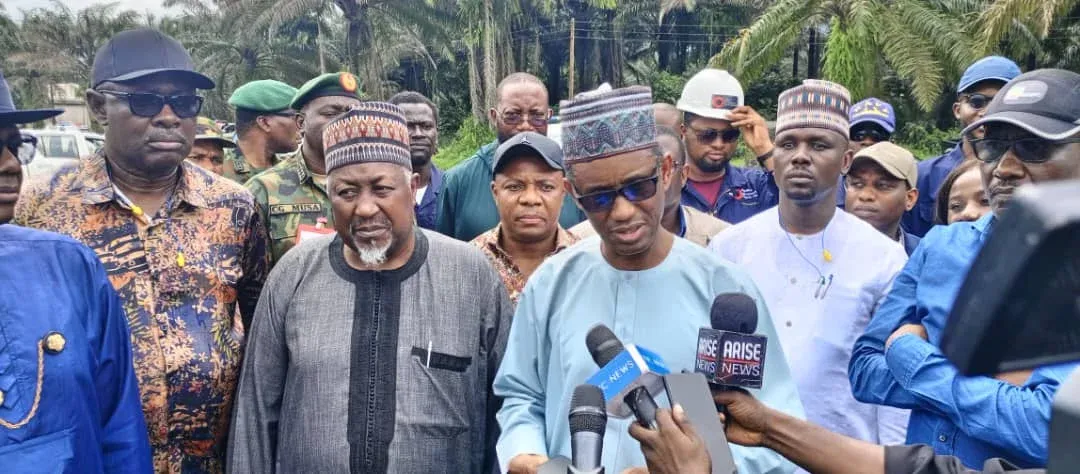
The police command in Zamfara said its operatives repelled bandits who attacked the Divisional Police Station in Zurmi Local Government Area of the state. The command said it also arrested a 35-year-old suspected female informant. The Command’s Public Relations Officer, ASP Yazid Abubakar disclosed this at the weekend at a media briefing in Gusau. Abubakar said police operatives attached to the police station acted on credible intelligence that a group of armed bandits was planning to carry out the attack. “The police operatives mobilised, confronted the bandits, and engaged them in a gun battle which lasted for hours. “As a result of this, one of the bandits was neutralised while the others escaped to the bushes spilling blood on their paths because of the wounds they sustained. “Police investigation that followed the incident resulted in the arrest of a 35-year-old female suspected to be an informant from Rukudawa village. “The suspect confessed that she has been working with bandit kingpin Dankarami Gwaska as his informant and has given her the task of monitoring activities at the police stations for him. “Two handsets containing bandits’ telephone numbers were recovered from her,” Abubakar said. “On July 28 Police Tactical Operatives attached to 34 PMF, deployed to Magarya community in the same Zurmi local government area acted on an intelligence report that suspected armed men were on their way to attack Muslims during Juma’at prayers at Kwata village in Magarya district. “The police operatives confronted them and succeeded in foiling the attack and the bandits escaped to the bushes. “Two AK47 rifles, four rounds of 7.62mm ammunition and Bajaj motorcycle were recovered at the scene while the command is still pursuing the suspects with a view to arresting and prosecuting them. “On July 27 at about 1330hrs, Police Tactical Team attached to Area Command Gusau acted on intelligence that led to the arrest of two suspected bandits and kidnappers terrorizing the Saminaka area in Gusau Metropolis,” the command’s spokesman added. 

Tinubu, subsidy, NLC and Nigeria’s economic turbulence

Tinubu, subsidy, NLC and Nigeria’s economic turbulence

On May 29, 2023, during his inaugural speech, President Ahmed Bola Tinubu made a momentous decision to scrap Nigeria’s fuel subsidies, citing pressing budgetary concerns. However, this move triggered a staggering surge in fuel prices, widespread panic-buying of fuel, and a sharp increase in the cost of various essential commodities. The ramifications of the fuel subsidy removal have struck fear in the hearts of millions of Nigerians, particularly low-income earners who worry about their ability to afford transportation, education, food, and healthcare and other social amenities. In response to the government’s decision, the Nigerian Labour Congress (NLC), entrusted with the responsibility to protect and defend workers’ rights and well-being, vehemently opposed the move. Joe Ajaero, the NLC President, criticized Tinubu’s decision, asserting that it lacked careful consideration and predicted it would cause the country’s economy to regress by more than 50 percent within the coming weeks. In light of their objections, the Congress issued a seven-day ultimatum to the Federal Government, demanding the reversal of all “anti-poor” policies, including the petrol price hike. The NLC accused the government of showing disdain and contempt for the Nigerian people and declared a war of attrition on workers and the masses. Citing the strength of Section 40 of the 1999 Constitution as amended, the NLC announced on June 7 their intention to launch a nationwide protest on August 2, 2023, against the fuel subsidy removal. In response, the Federal Government took legal action, seeking to stop the union from proceeding with the proposed strike. The government argued that such industrial action could severely impact society and the nation’s overall well-being. In a ruling on an ex parte application, Justice O.Y Anuwe ordered the unions not to embark on any industrial action or strike pending the hearing and determination of the motion on notice, dated June 5, 2023. The court highlighted the potential disruptions to economic activities and essential sectors. Unfazed by the court’s injunctions, lengthy negotiation meetings, and warnings from the Federal Ministry of Justice regarding contempt of court, the NLC stood firm on their threat and flooded the streets with protesters on August 2. The demonstrations aimed to voice opposition against the recent fuel price hike, tuition fees increase in public schools, and the withholding of salaries for university lecturers and workers. Meanwhile, the government, through the Solicitor General of the Ministry of Justice, accused the NLC leaders of treating the order of the National Industrial Court (NIC) with contempt. Justice Beatrice Jedy-Agba asserted twice that the organized labour’s industrial action was illegal, as there was a subsisting interim order restraining the NLC from engaging in any industrial action. The government prayed the court to hold NLC President Joe Ajaero, Deputy Presidents Audu Aruba, Prince Adeyanju Adewale, and Kabiru Sani, General Secretary Emmanuel Ugboaja, TUC President Engr Festus Usifo, and Scribe/Chief Executive Nuhu Toro in contempt of court and commit them to prison. In response, the NLC condemned the industrial court and the Justice Ministry as “anti-democracy” agents, and they demanded the withdrawal of the lawsuit or face mass strike. Following discussions at the NLC’s NEC meeting in Abuja, the union issued a stern ultimatum, warning that failure to comply with their demand could result in a nationwide strike on August 14, 2023. This ongoing saga showcases the deep-seated tensions and concerns about the impact of the fuel subsidy removal on the lives of Nigerian citizens and the overall health of the nation’s economy. As both sides engage in a legal battle and the NLC continues its protests, the future remains uncertain, and the fate of Nigeria’s fuel subsidy hangs in the balance, even as ordinary Nigerians continue to bear the brunt.

Group decries lack of inclusion, calls for equity, representation in Benue

Group decries lack of inclusion, calls for equity, representation in Benue

The Benue Rebirth Movement (BRM), a non-partisan political pressure group, has advocated for political inclusion in Benue state. Led by Air Vice-Marshal Monday Morgan (rtd), the National Coordinator, BRM joined concerned elders from Benue South Senatorial District (Zone C) to voice discontent over the exclusion of non-Tiv-speaking ethnic groups from the state’s democratic gains. Since the state’s creation in 1976, ethnic groups like Idoma, Igede, Jukun, Etulo, and Nyinfo have been denied the opportunity to hold the position of Governor, while political leadership roles have been carefully zoned and rotated among Tiv-speaking areas. Currently, about 90 percent of key positions at federal and state levels are occupied by the Tiv, exacerbating the marginalization of Benue South. According to a statement signed by BRM PMC, non-Tivs have faced opposition from major political parties in the state, with accusations of being sponsored against them. “Despite the recent change in government, the issue of marginalization persists, prompting BRM to call for fairness and representation. “The movement seeks justice for Zone C, comprising the Idoma and Igede communities, representing one-third of the state’s local government areas and population. BRM, supported by various senatorial zones, emphasizes the need for inclusive politics and governance. “Air Vice-Marshal Morgan, a retired Air Force Fighter Pilot, and former Chief of Defence Intelligence, has been at the forefront of this agitation. He has engaged with prominent leaders and sub-unit leaderships across the state to campaign for inclusive representation,” the statement said. While BRM remains resolute in its pursuit of justice, it called on the state Governor, Rev. Fr. Hyacinth Alia, and the Secretary to the Government of the Federation, Senator George Akume, to address the existing imbalance in appointments and promote fair representation as BRM envisions a future where political emancipation is achieved for all the people of Benue state, regardless of their ethnic origins.

Niger: Tinubu writes Senate, highlights 7 resolutions to restoring democracy

Niger: Tinubu writes Senate, highlights 7 resolutions to restoring democracy

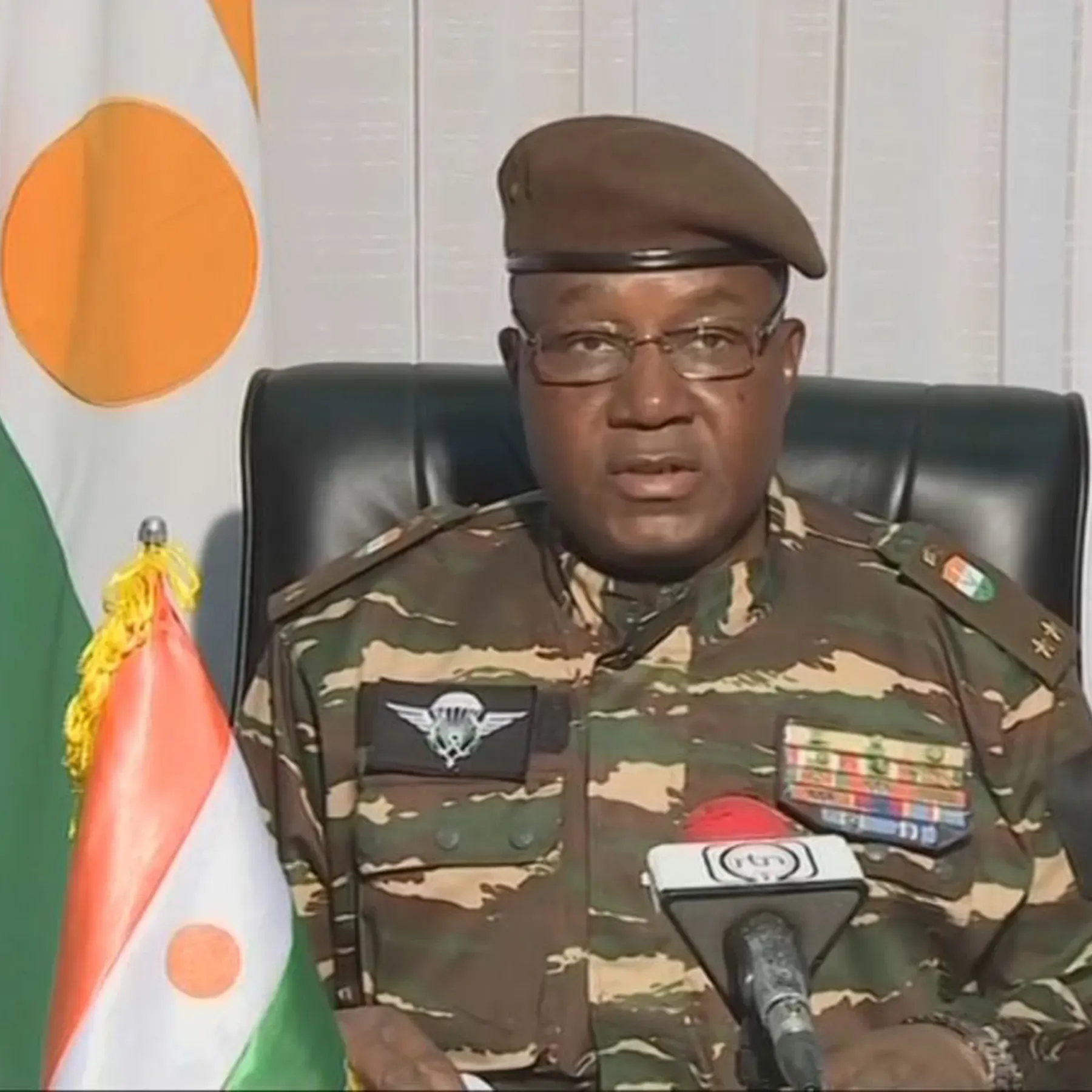
In a bid pursuant to restore democracy in the neighboring Niger Republic, President Tinubu has written to the Nigerian Senate, seeking their support in implementing seven crucial resolutions aimed at pressuring the military junta to relinquish power and reinstate civilian rule. These resolutions reflect the collective will of the Economic Community of West African States (ECOWAS) and underscore Nigeria’s commitment to regional stability and democratic values. The first resolution calls for a military buildup and deployment of personnel to Niger’s borders, with the intention of enforcing compliance with the military junta. The President emphasized that this measure is not an act of aggression but rather a deterrent to ensure the junta understands the seriousness of the international community’s stance on democratic governance. In another resolution, the President seeks the suspension of electricity supply to Niger Republic as a means of applying economic pressure. According to the President, this move sends a strong message to the military junta that their actions have consequences beyond their borders and aims to foster public discontent over the lack of essential services. President Tinubu also highlighted the importance of rallying international support for the implementation of ECOWAS provisions. Diplomatic efforts will be intensified to garner cooperation from other African nations and the global community, demonstrating a united front in the fight for democracy. To further isolate the military junta and disrupt their operations, the fourth resolution seeks from Tinubu seeks to prevent the operation of commercial and special flights to and from Niger Republic. This measure will curtail the junta’s mobility and impede their ability to sustain their rule. In a move to exert economic pressure, the President proposed a blockade of goods in transit to Niger, particularly from Lagos and eastern seaports. This tactic aims to disrupt the flow of goods and impact the junta’s access to essential supplies, further fueling discontent within the country, Recognizing the power of social media in shaping public opinion, the President urged the Senate to embark on a sensitization campaign, utilizing various platforms as this campaign will inform Nigerians and the international community about the necessity and importance of these actions, garnering support for the cause. The seventh resolution calls for the immediate closure and monitoring of all land borders with Niger Republic. Additionally, the border drilling exercise will be reactivated to tighten security and prevent any illicit activities that may undermine the resolution’s objectives. President Tinubu emphasized that these actions are not taken lightly and are in full accordance with ECOWAS’ commitment to upholding democratic principles in the region. The objective is to restore civilian rule, safeguard human rights, and pave the way for free and fair elections in Niger Republic. President Tinubu’s call for the implementation of these seven resolutions against Niger Republic marks a critical step in the restoration of democracy and the rule of law in the region.

Ministerial Nominees: Tinubu withdraws Shetty, lists Keyamo, Mahmoud

Ministerial Nominees: Tinubu withdraws Shetty, lists Keyamo, Mahmoud

President Bola Tinubu on Friday made an alteration to his list of ministerial nominees by replacing Maryam Shetty with two new candidates, Festus Keyamo (SAN) and Dr. Mariya Mahmoud. The Senate President, Godswill Akpabio, read the President’s letter containing this update during Friday’s plenary session. The announcement came just before the commencement of the fourth round of screening, which saw former Governor Adegboyega Oyetola take the podium at 12:14 pm. Among those waiting to be screened were former Governors Simon Lalong (Plateau), Bello Matawalle (Zamfara), and Atiku Bagudu (Kebbi), as well as Abdullahi Gwarzo, Bosun Tijani, Isiak Salako, Tunji Alausa, Yusuf Sununu, Ibrahim Geidam, Lola John, Shuaibu Audu, Tahir Mamman, Aliyu Abdullahi, Alkali Saidu, Heineken Lokpobori, Maigari Ahmadu, and Zaphaniah Jisalo. However, the name of Maryam Shetty was withdrawn from the supplementary list of ministerial nominees. This development followed three earlier screening sessions, beginning with the examination of 14 nominees from the first batch forwarded by the President the previous Thursday. The initial screening included individuals such as former Governor Nyesom Wike of Rivers State, Abubakar Kyari from Borno State, Nkiruka Onyejeocha (Abia State), Bello Muhammad (Sokoto State), Sani Abubakar Danladi (Taraba State), and Badaru Abubakar (Jigawa State), among others. On Tuesday, the Senate screened nine additional nominees, including former Governors Nasir El-Rufai (Kaduna) and Dave Umahi (Ebonyi), as well as Wale Edun, Uche Nnaji, Stella Okotete, Adebayo Adelabu, Ekperikpe Ekpo, Hannatu Musawa, and Musa Dangiwa. The screening process resumed on Wednesday with Dele Alake, presidential spokesman, Senior Advocate of Nigeria Lateef Fagbemi, Muhammad Idris, Ali Pate, and Doris Uzoka facing scrutiny. Moreover, Femi Gbajabiamila, Chief of Staff to the President, presented Tinubu’s supplementary ministerial list containing 19 additional nominees to the Senate. It is worth noting that Section 147 (3) of the 1999 Constitution mandates the President to appoint at least one minister from each of the 36 states. However, 11 states, including Adamawa, Bayelsa, Gombe, Kano, Kebbi, Kogi, Lagos, Osun, Yobe, Plateau, and Zamfara, are still without ministerial nominees as of now.

We must reset our political values to restructure Nigeria -Prof Odinkalu

We must reset our political values to restructure Nigeria -Prof Odinkalu

The former Chairman of the National Human Rights Commission (NHRC), Prof. Chidi Anslem Odinkalu, has called for a resetting of the country’s value system which, according to him, will culminate in a restructuring of Nigeria. Odinkalu argues that the process of resetting Nigeria must start with addressing the country’s values problem, which requires a new kind of leadership that is national in outlook. Odinkalu, who is a visiting professor at Harvard University, maintained that for effective resetting to be accomplished, the process must begin with paying attention to political values that underpin coexistence in the country. The human rights activist, made these submissions in Abuja while speaking as a guest lecturer at the 10th-anniversary lecture of Just Friends Club of Nigeria. Speaking on the topic “Resetting Nigeria” he posited that if we cannot restructure our values, we cannot restructure a Nigeria that is equitable and just. The Prof emphasized that the theme, “Resetting Nigeria” is pregnant with more questions than illumination. First, it implies that Nigeria was already set without disclosing who did so. Secondly, it suggests also that the initial setting is flawed, imperiled, or spent, without indicating why, when or how this happened. Thirdly, it suggests that this old setting now needs reworking but does not say who will do it, why they are qualified for that task or from whence they derive their mandate to do so. He submitted that as a leader, we got to understand the diversity of this country and chose leaders who understand the diversity. “Many explanations have been proffered for Nigeria’s current unhappy condition: corruption, violence, impunity, among others. I want to suggest that these are symptoms, not the underlying problem. “Two decades ago, Chinua Achebe declared that ‘the trouble with Nigeria is simply and squarely a failure of leadership’, and argued that ‘Nigerians are corrupt because the system under which they live today makes corruption easy and profitable. “As a supplement or complement to this, I propose shortly to suggest that we have a structural crisis in our political economy indexed as it is on allocation rather than production. “This is an important point to make to a gathering of professionals. The defects of this fundamentally flawed political economy are compounded by a long-established ethics of deliberate political innumeracy”.  “As a political economy, we specialize in fraudulent counting and accounting, legitimized post-hoc by the instruments and skills of the law. “To preserve our innumeracy of public accounts, we have used everything from coercive instruments to commissions of inquiry whose reports have never been seen. In over half a century as a country, we have never held a credible census. “To legitimize the outcome without addressing the underlying malfeasances, we establish Census Tribunals. In the same period, we have struggled to undertake credible elections. For each flawed election, we establish an Election Petitions Tribunal, procuring judicial legitimacy for returns that have been – in most cases – fundamentally flawed,” he lamented. Odinakalu recalled various past avoided trajectories of the country and the deliberate choice of her leaders not to do the right things and warned of dire consequences. “The only way to avoid those consequences is to come to terms with the reality that the country needs to be re-set. That re-setting, however, must begin with attention to the political values that underpin coexistence in the country. “But addressing this values problem requires a new kind of leadership that is national in outlook. That is where we must begin and in this, associations like the JFCN have a significant role to play,” he stated.

Stevedore Services: Transportation Ministry to shut down Chevron Warri Jetty

Stevedore Services: Transportation Ministry to shut down Chevron Warri Jetty

The Federal Ministry of Transportation has disclosed its intention to shut down the Chevron Warri Jetty within two weeks following overt disregard by Chevron Nigeria Limited to hinder stevedore services regardless of extant laws and standard procedures. The Permanent Secretary, Dr. Magdalene Ajani, who made this known at a meeting between Chevron Nigeria Limited, Bena-Franco, the Nigerian Ports Authority (NPA), and the National Inland Waterways (NIWA) at the Ministry in Abuja, stated that the Ministry of Transportation has the mandate to guide activities going on in the maritime sector and will act accordingly to protect that at all times. In this regard, Ajani informed representatives of Chevron that the Nigerian Ports Authority as the master stevedore has assigned a stevedore company in the last two years to the Warri jetty and has been denied access by Chevron despite all efforts by NPA. Chevron also has avoided all meetings by the Federal Ministry of Transportation & National Stevedore Association to resolve this matter. She advised that it will be in their best interest to grant Bena – Franco access to the jetty. “You have the next two (2) weeks to register this stevedore that has been assigned to you by the Federal Government of Nigeria to oversee what goes on at that jetty” Ajani emphasised. In addition, the inability of representatives of Chevron Nigeria Limited to substantiate the status of the operating license for the jetty, the Permanent Secretary mandated the task force on private jetties to avail her evidence of approval granted to the company immediately. Furthermore, she noted that failure to comply within the next two weeks will leave the Ministry with no option but to shut operations at the Warri jetty.

Subsidy Protest: I share in your pains, Gov AbdulRazaq tells labour unions

Subsidy Protest: I share in your pains, Gov AbdulRazaq tells labour unions

Kwara State Governor, AbdulRahman AbdulRazaq has said the state government has rolled out several measures designed to ease the inconveniences of fuel subsidy removal for its workers and the general public. While addressing the labour unions who presented to him a protest letter over the subsidy removal, AbdulRazaq commended labour for its peaceful protest and aspirations as representatives of the Nigerian workers. The governor, who was represented by the Deputy Governor, Kayode Alabi, said the message from Nigeria Labour Congress (NLC) was loud and clear and would be delivered to President Bola Tinubu. “We acknowledge that this is a tough moment for everyone and we share in the temporary pains of our people,” the governor said. He added that his administration empathises with the people and workers and would do more in addition to the moves already made by the state government to ease their pains. AbdulRazaq explained that, as a palliative measure, grains were being purchased from the Federal Government and would soon be distributed to vulnerable households, including labour unions and affiliate organisations. The list of beneficiaries, he said, would be inclusive and the process would involve all key stakeholders in the community. The governor further confirmed the approval of the support for students and security agencies, which was built on what was earlier announced for all categories of workers in the state. He said free transportation had earlier been arranged for tertiary students in the state. “I call on the NLC to further support and work with government to implement key economic reforms for sustainable growth alongside specific palliatives until things stabilise,” the governor said. He urged NLC to bear with the government and continue to hold talks so that everyone involved could pull through the phase in a way which would sustainably benefit the country. “There may not be easy solutions, but Nigeria will come out of this stronger and better if everyone endures and works together,” AbdulRazaq added. The State Chairman of NLC, Comrade Muritala Olayinka, said workers were facing a lot of challenges due to the removal of fuel subsidies. He urged the state government to come quickly to the aid of the people in order to lessen the pains on the people and business concerns.

AfroBasket: D’Tigress bounce off Mozambique, advance to semi-finals

AfroBasket: D’Tigress bounce off Mozambique, advance to semi-finals

Nigeria’s D’Tigress on Wednesday in Kigali, Rwanda extended their winning streak in Africa to 22 straight wins by over-running Mozambique 59-52 to advance to the 2023 FIBA Women’s AfroBasket semi-finals. The hard-earned win means the Nigerian senior women’s national basketball team will now meet hosts Rwanda in Thursday’s semifinal. Mozambique led at the break, after 18-16 and 15-13 wins in the first and second quarters, but Nigeria overcame their lethargy to eventually turn the tables around. They outscored Mozambique 18-10 in the third quarter to set the tone for claiming the win, before a close 12-9 win in the fourth and final quarter. With Nigeria trailing by four points at half-time, they had to rally and find a way to get back into the game. When the opportunity occurred, Elizabeth Balogun seized the moment to help Nigeria tie the contest at 40-40. Amy Okonkwo then gave the reigning champions a short but solid advantage, before Ifunaya Okoro scored from behind the arc to give Nigeria the lead definitely. Mozambique tried to fight back, but they met a resilient and combative Nigeria. Okonkwo chipped in 17 points, Balogun contributed 12 points, and Sarah Ogoke finished just one point shy from a double-digit. Nearly every Nigerian ended the game with at least two points to their credit. However, what saved Nigeria was the depth of their bench, which produced 22 of the 59 points Nigeria needed to see off Mozambique. Nigeria also made the difference on free throws ratio, having 14 for 18 free throws which gave them the edge over Mozambique who had 16 from 24 attempts. The D’Tigresses also out-rebounded Mozambique 51-43, by being more active on the defensive side with 38 boards. But ironically, the game’s best rebounder was Mozambique’s Tamara Seda. With this win, Nigeria have also sent a message to hosts Rwanda that they will be tough nuts to crack, ready and focused on getting a fourth title in a row. Speaking after the game, Nigeria guard Sarah Ogoke said while their opponents were good her team was better and deserved their win. “Mozambique are a great team, and credit to them for putting up such a game. But we stayed together and we made it through,” she said. Looking ahead to their semi-final fixture, Obote said: “We’re going to be playing against the stadium, against the fans, against the entire country. “So it’s going to be very difficult. We will try to get us to Saturday’s final and to the 2024 Women’s Olympic Qualifying Tournament (WOQT). “We definitely have what it takes to make it four titles in a row and we have a way of making things happen. And we’ll find a way.”

Subsidy Removal: FG initiates contempt suit against NLC, TUC amid protests

Warning Strike: We achieved our goal, says NLC

The Federal Government has taken legal action against the Nigeria Labour Congress (NLC) and the Trade Union Congress (TUC) for allegedly defying a court order that prohibits the unions from engaging in industrial action. This “notice of consequences of disobedience to order of court,” also known as “Form 48,” was filed in the National Industrial Court in Abuja on Wednesday. The notice warns the NLC and TUC that failure to comply with the court’s directions, as delivered by Honourable Justice Y. Anuwe on June 5, 2023, will result in contempt of court charges and possible imprisonment. In response to the perceived “anti-people” policies of the President Bola Tinubu administration, the Organised Labour initiated protests in the Federal Capital Territory (FCT), Abuja, as well as in various states, including Lagos, Benue, Abia, Plateau, Kaduna, Kano, Rivers, Zamfara, Katsina, Cross River, Ebonyi, Enugu, Kwara, Ogun, Imo, Ondo, and Edo. Key figures from the NLC and TUC, accompanied by numerous members, led the protest in the Federal Capital Territory, commencing from the Unity Fountain. Additionally, affiliated unions, such as the Nigeria Union of Petroleum and Natural Gas Workers (NUPENG), the National Union of Electricity Employees of Nigeria (NUEE), the National Union of Road Transport Workers (NURTW), and the Academic Staff Union of Universities (ASUU), participated in the nationwide demonstration.