FG Obtains $163m AfDB Loan To Boost Wheat Production

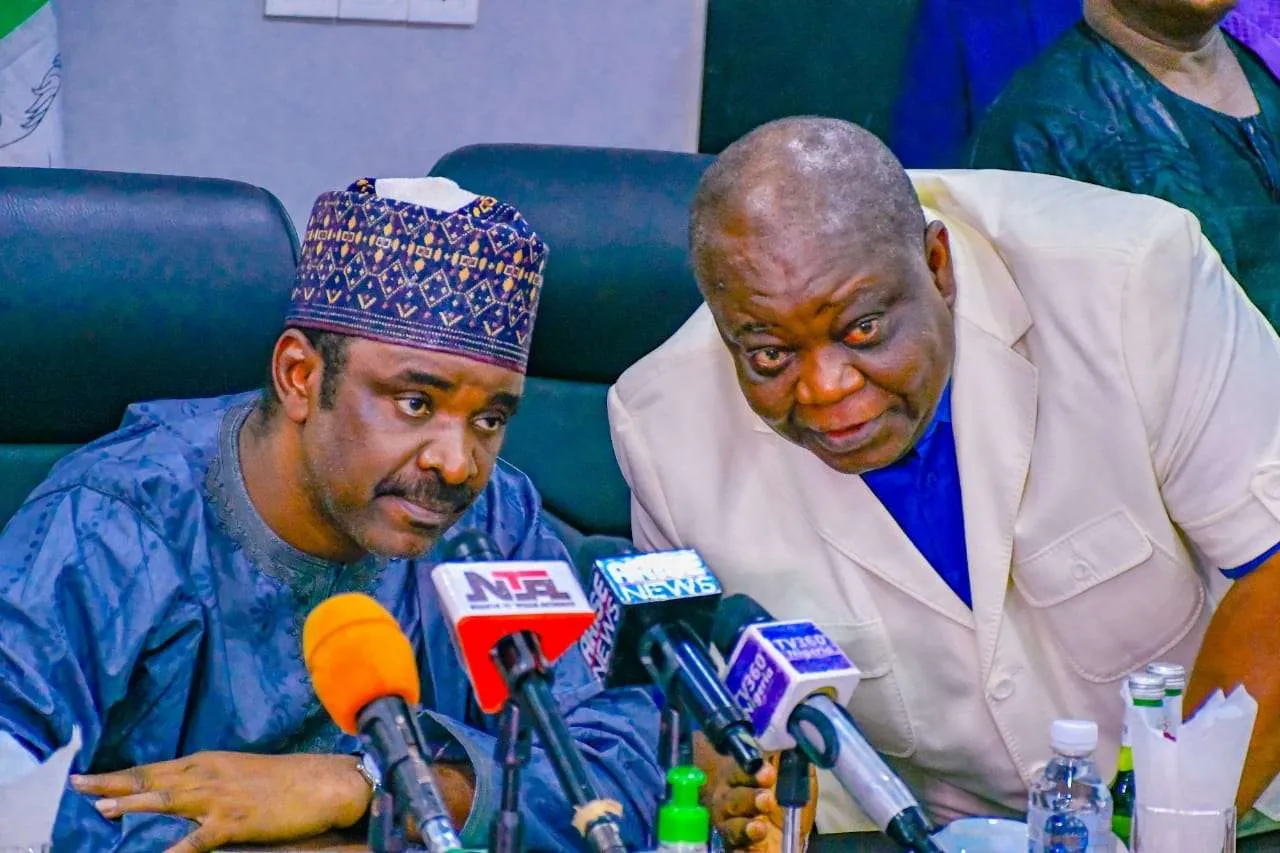
The Vice President, Kashim Shettima has disclosed that the Federal Government had obtained 163 million dollars loan from the African Development Bank to support wheat production in the country. Shettima stated this at the palace of the Emir of Argungu, Alhaji Sumaila Mera, when he paid a condolence visit to the Emirate and family of late Sheikh Abubakar Giro. He re-affirmed the determination of the Tinubu administration to fulfill all its promises to Nigerians, particularly in the agricultural sector. The Vice President also assured that food security would receive serious attention from the government. “We have obtained 163 million dollars loan from the African Development Bank to support wheat production. The scheme would be launched soon. “We need 10,000 hectares of land in Kebbi State. But the scheme would be well executed in Jigawa State with a cultivation of 50,000 hectares of land to boost wheat production.” In his remarks, the Emir of Argungu, Mera, who prayed for the unity and progress of Nigeria, thanked President Tinubu and Vice President Shettima for their support.
Nigeria Requires N21trn To Bridge Housing Deficit – FG

The Vice President, Kashim Shettima, has said that Nigeria requires N21 trillion to effectively bridge housing deficit, despite efforts across the three tiers of governments. The vice president stated this on Sunday in Sokoto at the groundbreaking for the construction of a 500-unit housing estate by the State government. Shettima, who commended Gov. Ahmed Aliyu for his efforts to address the housing needs of his people, noted that the housing deficit in Nigeria remained a huge challenge. “Nigeria has a deficit of 28 million houses and we will need N21 trillion to meet our housing needs. This step taken by the Governor is highly commendable and worthy of emulation by other State governments. “The governor has started well by completing the roads and flyovers he inherited,” he added. Earlier, the governor explained that the housing estate would be for civil servants and would be sold to them when completed on an owner-occupier basis. Aliyu said: “This is a project that was initiated by the former Governor of the State, Aliyu Wamakko but was later abandoned by the immediate past administration. “But, we are determined to complete it for the benefit of our workers and the general public.” Aliyu disclosed that the project located at Wamakko Local Government Area of the State will cost the State government N7.3 billion to complete. The event, which was to mark the first 100 days in office by the administration was attended by Sen. Aliyu Wamakko and the Minister of Agriculture and Food Security, Sen. Abubakar Kyari. Others were the Minister of State, Water Resources and Sanitation, Alhaji Bello Goronyo and former Deputy Governors of Sokoto, Mukhtari Shagari and Chiso Abdullahi-Dattijo, among others.
Exclusive: ABP Failure: FG, RIFAN Initiate Nationwide Loan Recovery Drive

*Orders formation of loan recovery taskforce nationwide In the wake of the Federal Government’s recent threat to recover loans issued to Nigerians during the previous administration, the Rice Farmers Association of Nigeria (RIFAN) has taken swift action by issuing a directive to its members nationwide to reclaim loans disbursed to farmers during the 2018-2021 cropping seasons under the Anchor Borrowers’ Program (ABP). At inception in late 2015, the Central Bank of Nigeria (CBN) had said the programme thrust of the ABP is the provision of farm inputs in kind and cash (for farm labour) to smallholder farmers to boost production of these commodities, stabilise inputs supply to agro-processors and address the country’s negative balance of payments on food. By 2022, at least 4.8 million people had benefitted from the Anchor Borrowers Programme, authorities said at the unveiling of stacked paddy rice pyramids produced by rice farmers under the ABP initiative. While some beneficiaries have cited insecurity, flooding, climate change and crop failure as reasons for their inability to repay the loans, government officials have said that while the farmers’ reasons are somewhat valid, many of the farmers saw the loans as ‘their share of the national cake’ which do not need to be repaid. But the programme has been marred by loan default, even as food prices rose significantly within the years it took effect. There are also reports that several farmers collected the loan to travel to Hajj or married additional wives from the proceeds of the Anchor Borrowers Programme. This, among other reasons, is why authorities resolved to take legal action. “We find it very difficult to recover this loan,” Sahabi Augie, the immediate past Chairman of the Kebbi State chapter of the Rice Farmer Association of Nigeria (RIFAN), had said. In a recent report on Nigeria, the International Monetary Fund (IMF) said that only 24% of loans under the ABP had been repaid. The CBN, however, disagreed with the IMF, saying N503 billion of loans under the ABP had been repaid. This figure represents 52.39% of the total loans collected by farmers under the programme, according to the bank. But a recent statement from CBN’s corporate communications department restated that only 48 per cent of the loan has not been repaid. The CBN said it released N1.079 trillion under the programme, out of which over N500 billion is due for repayment. Interestingly, the All Farmers’ Association of Nigeria (AFAN) seemed to tilt towards the IMF when, in December 2022, it said the CBN was having difficulties recovering the loans because most beneficiaries of the ABP were not Nigerian farmers. Experts believe the failure of farmers who benefitted from the ABP to repay more than N500 billion extended to them by the CBN underscores a weakness in the initiative. However, the critical decision to set up a taskforce and recover the loans by all means is following a high-level executive meeting between RIFAN and the Department of State Security (DSS) on August 29, 2023. During the meeting, the recovery of loans issued to rice farmers between 2018 and 2021 was discussed extensively, leading to the issuance of a directive by RIFAN’s top leadership. In the confidential memo addressed to RIFAN members, which was leaked to the NIGERIAN ANCHOR, Aminu Mohammed Goronyo, the National President of RIFAN, and Chief Livinus Ngwangwa, the National Secretary, provided detailed instructions on how the loan recovery process should proceed: “Immediate Loan Recovery: All loans disbursed to beneficiary farmers from 2018 to the present date must be swiftly and effectively recovered. Farmers are given the flexibility to repay in either cash or paddy. “Loan Repayment Account: Beneficiary farmers are required to channel their loan repayments to the designated loan recovery account: Account Name: RIFAN 2020/2021 Wet Season; Account Number: 0054122612; Bank: Unity Bank PLC. “Documentation: Farmers are mandated to ensure that copies of their loan repayment records are sent promptly to RIFAN Headquarters. This documentation process is essential for maintaining accurate records. “Recovery Task Force: RIFAN state chapters have been instructed to establish a dedicated recovery task force without delay. These task forces will work in close collaboration with law enforcement agencies, including the police, Department of State Security (DSS), Nigerian Civil Defense, and local traditional rulers, to oversee and facilitate the loan recovery process,” the memo instructed. Beneficiary farmers were encouraged to fully cooperate with their respective RIFAN state chapters to facilitate the successful recovery of loans in adherence to the provided directives. For additional information and updates, beneficiaries are advised to contact their local RIFAN chapter or visit the RIFAN website. RIFAN Contact Information: Website: www.rifan.ng, Email: info@rifan.ng. The Rice Farmers Association of Nigeria (RIFAN) is a prominent agricultural organization dedicated to supporting and advancing rice farming in Nigeria. RIFAN plays a pivotal role in facilitating the Anchor Borrowers’ Program (ABP) to empower rice farmers and enhance food security in Nigeria.
We’ll continue to support fight against oil theft -Chevron

Oil major, Chevron Nigeria Limited, has said that it would not relent in the continued support of the fight against oil theft and pipeline vandalism in the Niger delta region. General Manager, Policy, Government and Public Affairs of Chevron, Esimaje Brikinn, in a statement on Saturday insisted that over the years, it has been in the vanguard of the fight to curb oil theft and pipeline vandalism in the oil rich region. CNL is the operator of the joint venture between the Nigerian National Petroleum Company Limited (NNPCL/CNL JV). According to Esimaje, to therefore blame the company for incidences of oil theft and pipeline vandalism is not only untrue but also without basis. “Chevron Nigeria Limited is aware of a report in one of the online media platforms blaming international oil companies (IOCs), communities and other stakeholders for the oil theft that has hindered the growth of the oil industry. “Chevron and another IOC were specifically mentioned in the report allegedly attributed to the Chairman of the House of Representatives ad hoc committee set up to investigate crude oil theft. “CNL refutes this assertion as it is untrue, incorrect, and made without any basis. CNL reiterates its commitment to supporting the collaborative efforts to prevent oil theft and pipeline vandalism in its area of operation. “CNL affirms illegal bunkering and oil theft in the Niger Delta region has negatively impacted CNL’s operation and has devastating effects on the nation’s economy and the environment in the Niger Delta region. CNL continues to monitor the environment in its areas of operations and report any suspected illegal activity and breaches to the relevant Government Security Forces and regulatory agencies. “CNL has helped in reducing pipeline vandalism and oil theft in the Niger Delta region by collaborating with communities around the areas of the company’s operations to set up the Community Pipeline and Facilities Surveillance Programme (CPFSP) in 2005. Through the CPFSP, CNL continues to tackle the challenge of oil theft and pipeline vandalism and engage the community youth in pipeline surveillance to reduce oil theft in CNL’s area of operation. CNL also deploys security surveillance equipment and other technologies in addition to physical water-borne patrols by the CPFSP and the government security forces,” the company said. He noted that CNL’s commitment to working with government agencies and others to prevent oil theft and its impact on the environment was recently commended by the Special Investigation Panel on Oil Theft/Losses in Nigeria set up by the Federal Government during their visit to CNL’s operations. “CNL is committed to the highest ethical standards and business principles. CNL operates as a responsible company and conducts its business in full compliance with the law and in a socially and environmentally responsible manner. CNL will continue to work with the Nigerian government towards the development of the oil and gas industry and the Nigerian economy generally,” he added.
FG proposes creation of national shipping carrier to revitalise maritime sector

The Federal Government is committed to revitalizing the maritime sector in alignment with President Bola Tinubu’s Renewed Hope Agenda, aiming to enhance the welfare of Nigerians. During a recent facility tour of the Nigerian Maritime Administration and Safety Agency’s (NIMASA) Headquarters and various centres in Lagos, the Minister of Marine and Blue Economy, Adegboyega Oyetola, outlined his vision for the sector. Oyetola emphasized the need for transformative measures in the maritime industry to position Nigeria as a major player. One of his key recommendations is the establishment of a national carrier through a Public Private Partnership (PPP) arrangement to facilitate freight transport within the country. Notably, Nigeria stands as the only member of the Organization of the Petroleum Exporting Countries (OPEC) without a national shipping line flying its flag. The Minister highlighted that creating a national carrier would help eliminate the burden of the 30% freight charge associated with chartering vessels. However, he clarified that his call for a national line should not be confused with advocating for the revival of the defunct Nigerian National Shipping Line (NNSL). Furthermore, Oyetola expressed interest in NIMASA’s Modular Floating Dock, recognizing its potential to generate employment opportunities and curb capital flight. He urged the agency to engage stakeholders to support this initiative. Addressing the potential of the Blue Economy, the Minister underscored that Nigeria, with one of the world’s largest wetlands, is well-suited for coastal tourism development. He also committed to exploring opportunities in fishing and other sectors to stimulate economic growth. Bashir Jamoh, the Director General of NIMASA, expressed gratitude to President Bola Tinubu for establishing a dedicated Ministry for the Maritime sector. This move has long been advocated by stakeholders and Nigerians. With the creation of the Marine and Blue Economy Ministry, Nigeria joins seven other countries worldwide with standalone Blue Economy Ministries. Jamoh assured that this development positions NIMASA to elevate Nigeria’s global maritime presence.
Growing concerns surround delisting of companies from NGX

Amidst rising domestic costs, fluctuating naira exchange rates, and challenges in dividend declaration and tax payments, several large-cap companies listed on the Nigeria Exchange Limited (NGX) are considering leaving the market, raising concerns among equity market stakeholders. Over the past 22 years, more than 120 companies have either voluntarily or regulatory delisted from the NGX, and the increasing frequency of such announcements or rumours is causing unease among analysts and investors. Initial estimates suggest that approximately N182 billion in market value could exit the NGX due to potential departures by prominent companies like PZ Cussons (current price N20), GSK (current price N12.65), and Oando (current price N7.07). This trend underscores several critical issues within the market, including the perceived lack of tangible benefits associated with being listed, difficulties in raising capital, relatively lower valuations of publicly-listed companies compared to their private counterparts, and challenges in determining exit pricing. Many companies, particularly those with international interests, are opting for private status due to the opportunity cost of remaining listed on a formal exchange. Market analysts argue that this shift should be a cause for concern for NGX management and the Securities and Exchange Commission (SEC). While these companies intend to continue operations within Nigeria, they seek the advantages of private arrangements, which offer more confidentiality and flexibility in managing profits to minimize tax obligations, thus avoiding the need for widespread distribution of local dividends. To reverse this growing delisting trend and safeguard the interests of minority shareholders, several corrective measures are being considered. These include revising listing regulations to enhance the quality of publicly-listed firms, providing support for companies through innovative equity funding programs, offering incentives such as corporate income tax (CIT) reductions to listed firms, and increasing the costs associated with delisting. The issue of low exit pricing, which significantly impacts the value of investments held by minority shareholders, is a primary concern that calls for regulatory attention.
Nigeria’s H1 2023 foreign trade data raises questions about economic balance

In the first half of 2023, Nigeria engaged in trade amounting to N24.79 trillion in goods and services with global partners, resulting in a N2.2 trillion trade surplus, as reported by the National Bureau of Statistics (NBS). While these figures indicate a -12.68% decline compared to the N28.39 trillion traded in the same period of 2022, they also signify a significant +258% year-on-year (Y-o-Y) increase in trade surplus, highlighting a potential enhancement in Nigeria’s international net trade. Total imports for H1 2023 amounted to N11 trillion, with total exports reaching N13.50 trillion, contributing N2.2 trillion to the country’s foreign exchange earnings. The data reveals that crude oil remains Nigeria’s dominant export product for H1 2023, constituting approximately 79.50% of exports, while other oil products make up 10.57%, manufacturing 2.54%, and agriculture 4.15%. This suggests that despite reduced crude oil production, oil still heavily influences the nation’s exports, indicating a lack of comparative advantage in non-oil products. In contrast, Nigeria’s imports for H1 2023 predominantly comprised manufactured products at 47.99%, oil products at 33.17%, agriculture at 8.21%, and raw materials at 9.95%. Analysts believe that due to substantial domestic productivity gaps, reliance on imported fuel is likely to continue undermining the country’s foreign exchange position. A breakdown of trading partners reveals that Nigeria’s largest trading partners are Europe (46% of total exports) and Asia (25%), while intra-African trade accounts for a modest 19%. Likewise, Nigeria’s primary sources of imports are Asia (42%) and Europe (38%), with other African nations contributing 15% to imports. The relatively limited trade relations with other African countries in favor of India (Asia), the Netherlands (Europe), and the United States (America) may restrict Nigeria’s ability to maximize the benefits of the African Continental Free Trade Agreement (AfCFTA). *Culled from Proshare
Tinubu’s 100 Days: Navigating the challenges, high expectations

President Bola Ahmed Tinubu achieved his lifelong aspiration of becoming Nigeria’s president when he was declared the president-elect of the February 25, 2023, presidential election. On May 29, 2023, during his inauguration as the President and Commander-in-Chief of the Armed Forces, he wasted no time in expressing his commitment to hit the ground running. In his address, he humbly requested not to be pitied, emphasizing that he had actively pursued the presidency. President Tinubu’s first 100 days in office were marked on September 5, 2023. However, an in-depth assessment of his administration within this relatively short timeframe may not fully reflect the promises he made to the Nigerian people. It is essential to consider the challenges inherited from the previous administration under Muhammadu Buhari, which endured eight years of economic difficulties. President Tinubu had pledged to alleviate the burdens faced by the poor, and this commitment generated enthusiasm and high expectations among the populace. One notable policy shift was the sudden removal of the controversial oil subsidy without accompanying palliative measures mentioned during his inauguration speech. Following this move, Nigerian oil marketers and fuel racketeers swiftly increased the pump price of Premium Motor Spirit (PMS) from N186/ltr to N575/ltr and later to N617/ltr. Their rationale was that the price adjustment was a response to global oil prices and associated costs. Additionally, changes in the exchange rate led to a depreciation of the Naira against other currencies. Subsequently, Nigerians experienced increased living costs, including rising food prices, transportation expenses; rent hikes by landlords, and higher school fees, among other challenges. Before he assumed office Nigerians had eagerly awaited the 2023 general elections as an opportunity for change. Youth and political sentiment were strongly geared toward effecting a transformation in various aspects of the country’s political landscape. Some politicians capitalized on the public’s anger and youth mobilization, switching parties they viewed as more conducive to their political ambitions. It is widely acknowledged that the previous administration, led by former President Buhari, faced significant criticism for its handling of the economy. While promising change, the administration was perceived to have delivered misery and despair, corruption, which the government pledged to combat, appeared to flourish. While it is essential to address economic challenges and leadership issues in Nigeria, this article primarily focuses on the treatment of individuals who have served the nation diligently and those, who upon identifying institutional weaknesses or leadership shortcomings, have sought to enrich themselves. Recent developments in the political arena bring into question the treatment of individuals like Mr. Godwin Emefiele, the suspended CBN Governor, and Abdulrasheed Bawa, the suspended Chairman of the Economic and Financial Crimes Commission (EFCC). Both face various charges, possibly related to their actions while in office during the previous administration. It is important to recognize the valuable contributions of these individuals during their tenure. For instance, Godwin Emefiele, as the CBN Governor, played a pivotal role in propping up the economy during times of fiscal uncertainty. His interventions and policies were instrumental in averting economic crises, particularly during the COVID-19 pandemic. Similarly, Abdulrasheed Bawa demonstrated zeal and effectiveness in his role as the anti-corruption czar. However, they may have inadvertently crossed ethical boundaries while executing their duties as directed by the Commander-in-Chief (C-in-C) in alignment with political agenda. For example, Godwin Emefiele’s foray into politics and a controversial Naira redesign policy attracted political criticism, while Abdulrasheed Bawa’s aggressive pursuit of corruption cases earned him powerful enemies. While this discussion does not intend to justify their actions or inactions in office, it however raises questions about the treatment they currently face. Is this treatment an incentive or disincentive for individuals to serve their nation? President Tinubu’s administration has already made bold policy moves, although they have resulted in unexpected hardships for Nigerians. With the appointment of his cabinet after nearly 80 days in office, Nigerians anticipate selfless dedication from him and his team. Concerns have arisen regarding the inclusion of certain politicians, including former governors with underwhelming performance records, in the cabinet. Nigerians hope to avoid a repeat of past experiences, where ministers seemed ill-prepared, leaving the Central Bank of Nigeria to take on responsibilities beyond its mandate to prevent economic collapse. Given the current economic challenges, Nigerians expect President Tinubu to uphold his commitment to hold non-performing ministers accountable. This approach should ensure that the Central Bank of Nigeria can fulfil its constitutional responsibilities as outlined in BOFIA 2007 without unnecessary political interference. Preserving the CBN’s independence is essential for effective monetary policy and economic stability. In conclusion, while it is crucial to address economic woes and leadership issues, it is equally important to safeguard institutions like the Central Bank of Nigeria from unwarranted political interference. Nigeria’s economy depends on CBN’s stability and effective functioning, and it is essential to protect this national heritage. *Chisom Adindu writes from Umuahia, Abia State
NCAA lifts suspension on XEjet operations

The Nigerian Civil Aviation Authority (NCAA) said it lifted the suspension on the operations of XEjet Airline following the resolution of an aircraft insurance challenge with one of the airline’s planes. According to a letter signed by Director General Civil Aviation, Capt Musa Nuhu, after considering the submission of the airline and confirming it met regulatory compliance, the suspension was lifted. The document titled: Lifting Of Suspension On Your Air Transport Licence (Atl) And Air Operators Certificate (AOC) reads: Further to the NCAA’s letter on the above subject matter referenced NCAA/DGCA/GC/8/16/628 and dated 30 August, 2023, the Authority hereby lifts the suspension on your ATL and AOC after considering your submissions. “Consequently, you have been cleared to exercise the privilege of your ATL and AOC.” Speaking on the issue, Chairman and Chief Executive Officer of XEjet, Mr. Emmanuel Iza said: “The suspension is within the regulatory framework and we want to thank the Authority for diligently doing its work. We are happy to be back and we will continue to deepen our safety consciousness. “We sincerely thank you all for your patience, unwavering support, understanding and cooperation. We look forward to continuing delivering our premium services to you. Your safety and security is always of utmost importance to us.”
Nigeria has recorded appreciable success on UN TB control –FG

The Federal Ministry of Health and Social Welfare says the country has made significant progress in the implementation of the 2018 UN High-Level Meeting (UNHLM) declaration on Tuberculosis (TB) control. Dr. Chukwuma Anyaike, its Director of Public Health, said this on Thursday in Abuja at the Pre-UNHLM on TB National Stakeholders’ Consultation. The event was organised by Stop TB Partnership Nigeria in collaboration with the National TB and Leprosy Control Programme (NTBLCP). The 2018 UNHLM on TB resulted in the adoption of the Political Declaration on the Fight against TB in September 2018. Nigeria committed itself to implementing the declaration to achieve the targets set forth. TB remains a major public health challenge in Nigeria, with the country ranking among the top 10 with the highest burden of the disease in the world. Anyaike, who was represented by Dr. Urhioke Ochuko, a Deputy Director who currently oversees the Childhood Tuberculosis Unit, said that Nigeria had increased the number of TB cases detected and treated. “We have detected more than 285,000 cases; we had a 60 per cent achievement of the target in 2022,” he said. He said the country had also strengthened health systems. “Nigeria has prioritised the strengthening of its health systems to improve TB control, including the training of healthcare workers and the establishment of more TB treatment centres. “TB preventive treatment for Nigerians has also improved significantly from the pre-2018 levels,” he said. He said that the Nigerian government had shown increased political commitment to TB control with some additional funding to TB control by the government and partners. He, however, said that there were still significant challenges that the country was facing in achieving the targets set forth in the political declaration. The official listed the challenges to include inadequate funding, low child TB case detection and low enrolment of diagnosed DR-TB patients on treatment, He called on participants to equally explore the possibility of more investment for TB treatment as well as innovative TB financing strategies to match funding with the multiple interventions being rolled out. Mr Mayowa Joel, Executive Secretary of Stop TB Partnership, said that the 2023 UNHLM special session would serve as an opportunity for a comprehensive review of the political declaration. “The theme of 2023 UNHLM on TB is: ‘Advancing science, finance and innovation, and their benefits, to urgently end the global TB epidemic by ensuring equitable access to prevention, testing, treatment and care,” he said. He said that the UNHLM on TB is the most significant political meeting ever held on TB and the biggest opportunity to raise the political priority of TB. “It secured commitment from Heads of State and governments for a coordinated global response, resulting in a substantial increase in financial resources for TB. “That led to millions of lives being saved from premature deaths from TB,” he said. He emphasised the need for Nigeria to develop a comprehensive and coordinated response to UNHLM.