Tinubu’s Reforms Will Bring Prosperity To Nigeria -AGF

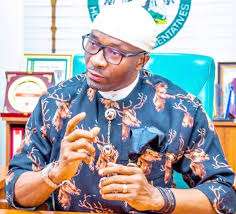
The Attorney General of the Federation and Minister of Justice, Prince Lateef Fagbemi (SAN), has said ongoing reforms of President Bola Ahmed Tinubu will bring economic prosperity and stability to Nigeria. He urged Nigerians to be patient with the president and support the reforms being introduced across the board. Fagbemi spoke during a prayer organised in his honour by his family in his Ijagbo country-home in Oyun Local Government of Kwara State on Friday. The event was attended by the state governor, Abdurrazaq Abdurrahman; monarchs, friends and well wishers. A statement signed by the S A Communication & Publicity to AGF& Minister of Justice, Kamarudeen Ogundele, stated that the minister assured Nigerians of the president’s determination to take the country out of the woods. He said, “The president is not looking for self aggravadisement. He’s seeking a better future for the country. ” Immediately after his swearing in, he has been all out to seek investors’ buy-in. As a result, positive responses have been trailing his discussions with foreign investors. The only thing we need is to exercise some patience. Even if you plant a tree, it won’t grow into fruition until after a while. “Nigerians need to be patient; things will improve greatly in the coming days. The sacrifices of today will translate to a greater future for the country. I know with prayers and support of Nigerians, the country will emerge stronger.” The AGF commended the governor for his giant strides in the state.
Nigeria’s Q3 GDP Grows 2.54% – NBS

In the third quarter of 2023, Nigeria’s Gross Domestic Product (GDP) grew by 2.54 per cent (year-on-year) in real terms. This growth rate is higher than the 2.25 per cent recorded in the third quarter of 2022 and higher than the second quarter 2023 growth of 2.51 per cent. In its Gross Domestic Report Q3 2023, released on Friday, the statistics bureau noted that Q3 performance was driven mainly by the Services sector, which recorded a growth of 3.99 per cent and contributed 52.70 per cent to the aggregate GDP. The agriculture sector grew by 1.30 per cent, from the growth of 1.34 per cent recorded in the third quarter of 2022. The growth of the industry sector was 0.46%, an improvement from -8.00% recorded in the third quarter of 2022. In terms of share of the GDP, agriculture, and the industry sectors contributed less to the aggregate GDP in the third quarter of 2023 compared to the third quarter of 2022. In the quarter under review, aggregate GDP stood at N60,658,600.37 million in nominal terms. This performance is higher when compared to the third quarter of 2022 which recorded aggregate GDP of N52,255,809.62 million, indicating a year-on-year nominal growth of 16.08%. The NBS noted that in real terms the oil sector growth was –0.85 per cent (year-on-year) in Q3 2023, indicating an increase of 21.83 percentage points relative to the rate recorded in the corresponding quarter of 2022 (-22.67%). Growth also increased by 12.58 percentage points when compared to Q2 2023 which was –13.43 per cent. On a quarter-on-quarter basis, the oil sector recorded a growth rate of 12.47 per cent in Q3 2023. Nigeria recorded an average daily oil production of 1.45 million barrels per day (mbpd), higher than the daily average production of 1.20mbpd recorded in the same quarter of 2022 by 0.25mbpd and higher than the second quarter of 2023 production volume of 1.22 mbpd by 0.23mbpd. According to the NBS, “the sector contributed 5.48 per cent to the total real GDP in Q3 2023, down from the figure recorded in the corresponding period of 2022 and up from the preceding quarter, where it contributed 5.66 per cent and 5.34 per cent respectively.” The non-oil sector grew by 2.75 per cent in real terms during the period under review. This rate was lower by 1.52 percentage points compared to the rate recorded in the same quarter of 2022 and 0.84 percentage points lower than the second quarter of 2023. “The sector was driven in the third quarter of 2023 mainly by Information and Communication (Telecommunication); Financial and Insurance (Financial Institutions); Agriculture (Crop production); Trade; Construction; and Real Estate, accounting for positive GDP growth. In real terms, the non-oil sector contributed 94.52% to the nation’s GDP in the third quarter of 2023, higher than the share recorded in the third quarter of 2022 which was 94.34% and lower than the second quarter of 2023 recorded as 94.66%,” the report stated.
Tinubu Appoints 8 New Permanent Secretaries

President Bola Tinubu, on Friday appointed eight new permanent secretaries in the Federal Civil Service. The appointment follows “the recently concluded selection process by the Office of the Head of the Civil Service of the Federation,” a statement signed by President Tinubu’s Special Adviser on Media and Publicity, Ajuri Ngelale, read Friday. The statement is titled ‘President Tinubu appoints eight new permanent secretaries.’ According to Ngelale, the new appointees include Ndakayo-Aishetu Gogo, Adeoye Ayodeji, Rimi Abba, and Bako Deborah Odoh. Others are Omachi Omenka, Ahmed Umar, Watti Tinuke, and Ella Agbo. Tinubu said he expects the new Permanent Secretaries, having emerged at the top of qualified candidates after a diligent assessment process, to deploy their expertise and competence to revitalise service delivery in all Federal Ministries, Departments, and Agencies in the interest of Nigerians.
Counter-Terrorism: Nigeria To Deepen Collaboration With UNODC

The Honourable Minister of Defence, Mohammed Badaru Abubakar CON, mni has commended the United Nations Office on Drugs and Crime on their Counter- Terrorism Project work with Nigerian Armed Forces. The Minister made the commendation when he received the Representative of the United Nations Office for Drugs and Crime (UNODC), Mr. Oliver Stolpe, in his office at Ship House, Abuja. Badaru stated that Nigeria welcomes any effort that would help in the fight against terrorism in Nigeria. “Thank you for doing a good job in Maiduguri. We will give you maximum cooperation needed to sustain the fight against Boko Haram and other forms of criminalities in Nigeria. On the rehabilitation of the repentant Boko Haram members, the Minister said in addition to what they have done, there was the need for Tracking Mechanism to ensure that the released Boko Haram members are fully integrated back to the society. Badaru expressed gratitude for UNODC’s continuous support in enhancing Nigeria’s capabilities to combat terrorism. In his remark, Mr. Stolpe pointed out that the UNODC is collaborating with Nigerian Armed Forces in area of counter- terrorism and Maritime security. He said UNODC in partnership with Joint Investigation Centre (JIC) in Maiduguri, Borno State has successfully reviewed over 2,900 case files leading to 2,400 prisoners released.
Nigeria’s Currency Circulation Rises By N230bn In October

Despite reported scarcity of naira in the banking system, data made available by the Central Bank of Nigeria (CBN) showed that currency in circulation rose eight per cent to a new high of N2.99 trillion by the end of October, 2023. The value represents a N230 billion increase from the N2.76 trillion recorded in September, 2023, and an increase of N1.6 trillion from N1.39 trillion recorded at the beginning of 2023. The apex bank defines the currency in circulation as currency outside the vaults of the Central Bank of Nigeria, meaning, all legal currency notes in the hands of the general public and in the vaults of the Deposit Money Banks (DMBs). With this new high of almost N3 trillion, currency in circulation appears to be on the rise to the level it was in October 2022 (N3.29 trillion) before the naira redesign policy of the CBN. Analysts say, it is surprising the currency in circulation is increasing, while the deposit money banks say there is scarcity of naira, with many of the banks restricting withdrawals by depositors to a maximum of N 20,000 as was the case with some banks in Lagos last week. “Certainly, if the apex bank said money in circulation it has to be naira, not the dollar and pounds sterling that is clearly a scarce commodity. How come, here in Lagos, many of the banks could not give more than N20,000 and their ATM machines perpetually dry last week”, David Agumo argued. It is widely believed that it was as a result of the scarcity of the naira that made the CBN announce the continued usage of the old naira notes as legal tenders indefinitely. While some economic analysts, believe the development may be attributed to the apex bank’s decision to extend the deadline for the old notes and the assurance of sufficient currency stock may indicate efforts to stabilise the situation and address any cash scarcity concerns, others say that decision made only recently can only affect currency in circulation for November and not October.
2026 World Cup Qualifiers: Lesotho’s Crocodiles Hold Eagles In Uyo

The Super Eagles’ race to USA/Canada/Mexico 2026 commenced on Thursday with the three-time African champions held 1-1 at home in Uyo by the Crocodiles of Lesotho. Nigeria’s attacking line of stand-in captain Kelechi Iheanacho, Ademola Lookman, Taiwo Awoniyi and Victor Boniface threw stones and sticks at the opposition goal-area but an inspired goalkeeper Sekhoane Moerane, also the team captain, and his rearguard foiled all the attempts and frustrated spectators at the Godswill Akpabio Stadium. The home team could have fallen behind after 16 minutes when Tsepang Seeali fired point-blank at Francis Uzoho after a poor touch in the box by Alex Iwobi, playing uncharacteristically deep at the back, released the forward who saw his effort parried by Uzoho. At the other end, defender Jamilu Collins saw his close shot parried; Boniface headed over the sticks and Iheanacho saw a dipping shot from a 20-yard free-kick punched away by the magnificent Moerane. Awoniyi missed Nigeria’s best chance of the first period when dragging wide a pass by Boniface in the 36th minute, and Lookman watched in shock as his left-footed belter was parried away. In the second period, Iwobi saw his shot parried in the 52nd minute, and then three minutes later, the Crocodiles shot ahead when Uzoho failed to deal with the ball from a corner kick and Motlomelo Mkwanazi struck gold with a bullet header that sailed into the net. The Eagles stepped up a gear and Moerane had saved from Collins and Iheanacho watched his shot come back off the upright before Semi Ajayi nodded powerfully past the goal-tender from a corner kick by Iheanacho, for Nigeria’s leveller half-way into the second half. There were opportunities to hit the winner from promising free-kick positions, but it ended in a stalemate and both teams took a point each from the encounter ahead of the Day 2 clashes coming up this weekend. Nigeria will fly to the city of Butare in Rwanda to trade tackles with the Warriors of Zimbabwe at the Huye Stadium on Sunday.
Nigeria’s Equity Market Gains N6bn

The local equity market, on Thursday advanced by N6 billion as gains recorded in the shares of Nigerian Breweries, C&I Leasing, Northern Nigeria Flour Mills among others lifted market activities. Market capitalisation of listed equities increased by N6 billion or 0.02 per cent to N39.059 trillion from N39.053 trillion reported the previous day. The NGX All Share Index also appreciated by ç basis points to 71025.16 points from 71014.34 points reported the previous day. Volume of transactions increased by 186.494 million, representing 63.72 per cent as investors traded 483.847 million shares valued at N4.378 billion in 6545 deals against 297.353 million shares valued at N6.161 billion in 6172 deals. A review of investment showed that Deep Capital and NSLTech led gainers table,gaining 10 per cent each to close at N0.44 and N0.33 per unit, C&I Leasing followed with a gain of 9.95 per cent to close at N4.53 per share, Northern Nigeria Flour Mills gained 9.85 per cent to close at N22.75 per unit while SCOA Plc added 9.82 per cent to close at N1.23 per share. On the contrary, ABC Transport recorded the highest loss in percentage terms, dropping by 10 per cent to close at N0.90 per unit, ETranzact trailed with a loss of 9.93 per cent to close at N6.80 per unit, Thomas Way fell by 8.95 per cent to close at N3.46 per share. Guinea Insurance dipped by 8.33 per cent to close at N0.22 per unit, Ellah Lakes fell by 7.89 per cent to close at N3.50 per share. Transactions in the shares of Regal insurance led market activities with 104.341 million shares valued at N36.490 million, Oando Plc followed with account of 55.280 million shares worth N676.637 million, Universal insurance traded 53.351 million shares cost N12.338 million, Japaul Gold exchanged 24.949 million shares cost N46.772 million while United Bank for Africa sold a total of 21.492 million shares cost N445.446 million.
Expert Decry 3.5% Annual Deforestation In Nigeria

As climate change wreaks havoc across the 36 States and FCT, an expert has raised the alarm over continued depletion of forests through illegal tree logging. The Publisher and Editor-in-chief of Development Agenda Magazine, Mr Paddy Ezeala, said this at a one-day seminar organised by Development Agenda in collaboration with Environmental Media Correspondents Association of Nigeria recently in Abuja. The seminar had as its theme: “Climate Change and COP28: The Way Forward For Nigeria.” He estimated that 1.5 million trees are felled daily through illegal logging, thereby leading to 3.5 percent deforestation annually. Ezeala stated that the establishment of a foreign privately-owned charcoal producing factory in Nsukka, Enugu state worsened the destruction caused by the foreigners, adding that the adjoining states were affected by the massive logging. The publisher lamented that Nigeria is experiencing four percent forest loss annually, which is about the highest globally, as people continue to cut down trees in Cross Rivers, Ondo, Ogun, as well as in some North Central States. Ezeala hinted that between 1981 and 2000, Nigeria lost 3.7 million hectares of forests which implied colossal loss of biodiversity. The forest cover had depleted to less than 10 percent as against the mandate of the Food and Agricultural Organizations’ (FAO) that each state is expected to keep its forest cover to a minimum of 25 percent of its land area. While about 484 plant species are threatened with extinction, the publisher lamented the absence of measures aimed at encouraging forest regeneration “Related to this is the absence of a valuation system to place a value on forest resources so that when forests are destroyed through individual or corporate negligence, adequate compensation will be paid,” he said. He stated that there is a need to develop more environmentally and socially equitable approaches to forest management in Nigeria, noting that the wanton destruction of forests across the country must be checked. Ezeala added: “Forests perform a broad range of critical environmental and climatic functions, including the maintenance of constant supply of water. Forests harbour species and at the same time have very deep economic, aesthetic, industrial and religious significance for humans. “However, economic development pressures often lead to the conversion of forest ecosystems without consideration for both the long-term economic costs and the implications of the immediate loss of biodiversity, ecosystem structure and function.” The publisher maintained that Nigeria’s remaining rainforests harbour about 4000 different species of plants, including those effective in the development of alternative medicine. Ezela harped on the need to priortise tree planting and secure protected areas, noting that the National Park Service and others managing the protected areas should be supported. The Emir of Nasarawa, Alhaji Ibrahim Usman Jibril hinted that the rising sea level at the coastal areas, climate change, deforestation, drought and desertification are some of the environmental challenges affecting Nigeria. He said though charcoal has been banned that the government cannot stop households from cooking with charcoal without providing alternative means of fuel. The Chairman of EMCAN, Mr Chuks Oyema said that the essence of the seminar was to showcase how Nigeria is tackling climate change and how the government is prepared for COP28. He urged the media to publish more stories on climate change and embark on collective actions toward mitigating the impact of climate change on the environment.
Nigeria, France Sign Pact To Support Young Entrepreneurs, Boost Employment

The Federal Government on Friday signed an agreement with France on the Digital and Creative Enterprise (I-DISE) programme aimed at promoting employment opportunities in Nigeria. Minister of Foreign Affairs, Yusuf Tuggar and the Minister for Europe and Foreign Affairs of the Republic of France, Catherine Colonnade signed the bilateral agreement at the Ministry of Foreign Affairs in Abuja on behalf of both countries. The agreement was also witnessed by Bosun Tijani the Minister of Communications who represented the Vice President of Nigeria, Kashim Shettima. Tuggar said the I-DICE programme is an initiative of the Federal Government of Nigeria, spearheaded by the Office of the Vice President and aimed at promoting entrepreneurship and innovation in the digital technology and creative industry sectors. According to the minister, with a focus on job creation, the programme is set to significantly impact young Nigerians, by assisting them to create sustainable employment opportunities, develop high value-added industries and contribute to the development of the Nigerian economy. He said the programme would train two million young people, whilst encouraging them to structure their own ecosystem, through access to financing for the creation of innovative businesses and start-ups. Tuggar said the programme is being financed by the French Development Agency (AFD), the African Development Bank (AfDB), the Islamic Development Bank (ISDB) & the Bank of Industry (BOI). He said of the 600 million dollar value of I-DICE, the AFD is contributing 100 million euros (equivalent to $116 million). He added that the programme would also receive funding and support from the private sector and institutional investors adding that the Bank of Industry, as the Implementing Agency, will coordinate the day-to-day activities of the project. Colonnade thanked all the partners and co-financers including the l’Agence Française de Développement, bien sûr. She said the purpose of this ambitious programme is to support young entrepreneurs and innovators. She added that the programme will promote the employability of Nigerian youth, enable Nigeria to boost the capacities of its very promising digital technology and creative industries and help thousands of young Nigerian entrepreneurs to unleash their talents. “Those digital technology and creative industries have indeed enormous potential to create jobs and spur economic growth in Nigeria. “We are very pleased that the French Agency for Development is stepping into these sectors, enabling us to scale up significantly our actions through the I-DICE programme,’’ she said. According to her, the programme is expected to include nearly two million youth in the training sessions of which 40 per cent would be women. “The programme will create more than 65,000 start-ups, 150,000 direct jobs in the technology and creative industries sectors and approximately 1.3 million indirect jobs.’’ Speaking on behalf of the vice president, Tijani said Shettima champions youth development and the Nigerian government’s efforts to boost the employability of young people by focusing on promising careers in the digital, cultural and creative industries. “As part of our efforts to stimulate the growth of the Nigerian economy and mainstream the application of technology in critical sectors, we welcome the support of the French government as they collaborate with us to leapfrog technological advancements for the benefit of our startup ecosystem. “This funding from the AFD for the I-DICE programme is a testament to France’s historical commitment to the growth of startups which is evidenced by its position as a leading startup destination in Europe”.
Local Equity Market Dips By N296bn

Trading activities on the floor of Nigerian Exchange (NGX) Thursday returned to bearish run, shedding N296 billion as depreciation in the share price of MTN Nigeria, and other 27 companies weigh down the market. Market capitalisation of listed equities declined by 0.76 per cent to N38.481 trillion from N38.777 trillion reported on Wednesday. The NGX All Share Index also depreciated by 539.48 basis points to 70042.28 points from 70581.76 points it closed the previous day. The NGX trading result showed that Omatek led gainers table during the day with a gain of 10 per cent to close at N0.55 per share, Academy Press followed with a gain of 9.83 per cent to close at N1.90 per share, Tantalizer and Prestige insurance added 9.76 per cent each to close at N0.45 and N0.45 per share respectively. Daar Communication increased by 8.70 per cent to close at N0.25 per share. On the contrary, Chams Plc traded 9.84 per cent to close at N2.20 per unit, International Breweries trailed with a loss of 8.79 per cent to close at N4.15 per unit, RTBriscoe traded 8.51 per cent to close at N0.43 per share, Thomas Way declined by 8.42 per cent to close at N3.70 per share, FBNHoldings dipped by 8.14 per cent to close at N18.05 per unit Volume of transactions declined by 76.275 million, representing 12.68 per cent as investors traded 525.457 million shares valued at N6.088 billion in 8396 deals against 601.732 million shares valued at N11.016 billion exchanged hands the previous day in 7444 deals. Trading in the shares of Japaul Gold recorded the highest volume of activities with 92.015 million shares valued at N124.950 million, Fidelity Bank followed with account of 67.032 million shares worth N557.364 million, United Bank for Africa exchanged 46.312 million shares valued at N971.341 million, FCMB traded 42.616 million shares cost N262.589 million while Chams Plc sold 30.951 million shares valued at N728.810 million.