ActionAid Demands Probe Into Allegations Against NMDPRA Boss

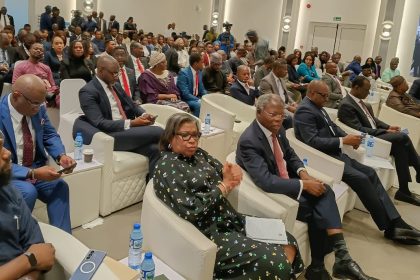
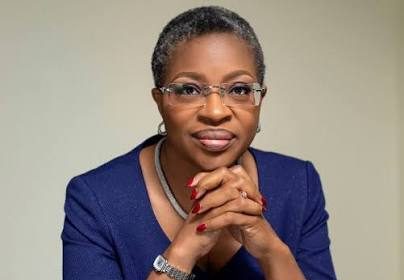
Abuja — ActionAid Nigeria has called on President Bola Ahmed Tinubu to intervene and ensure an independent public review following allegations involving the Chief Executive of the Nigerian Midstream and Downstream Petroleum Regulatory Authority (NMDPRA), Farouk Ahmed. The organisation said the move was necessary to reinforce accountability, transparency, and public confidence in governance institutions. In a statement released in Abuja, the Country Director of ActionAid Nigeria, Dr Andrew Mamedu, stressed the importance of institutional integrity and timely responses that strengthen democratic governance nationwide. Mamedu referenced media reports alleging foreign education expenses for four children of the NMDPRA boss, noting that the claims remain unproven. He urged calm, lawful scrutiny anchored in due process, fairness, and respect for all parties involved. He called on the Economic and Financial Crimes Commission (EFCC) and the Independent Corrupt Practices and Other Related Offences Commission (ICPC) to immediately commence a thorough, transparent investigation, with findings made public. ActionAid Nigeria commended Alhaji Aliko Dangote for raising concerns responsibly, describing whistleblowing as a positive civic duty that strengthens accountability and democratic participation. Mamedu emphasised the need to protect whistleblowers, describing them as vital partners in safeguarding public resources and promoting a culture where ethical conduct is rewarded and corruption discouraged. He said the allegations offered an opportunity for broader governance reforms, including modest leadership standards, verifiable income declarations, and responsible stewardship of public office to reduce inequality and expand opportunities for Nigerians. The organisation also highlighted ongoing petroleum supply challenges, calling for increased investment in functional local refineries to ensure fair pricing, energy security, reduced import dependence, and transparent market practices that benefit vulnerable citizens. ActionAid Nigeria noted that ending impunity would strengthen democracy, restore trust in public institutions, and reaffirm public service as a platform for national development rather than personal enrichment. The group further urged prompt clarification from the official concerned and advocated stronger asset declaration systems, verification processes, and public access to information to empower citizens and oversight institutions. ActionAid concluded by calling on Nigerians to actively monitor public resources, engage institutions constructively, and sustain collective demands for accountability, fairness, and effective service delivery across all levels of government.

Nigeria’s War Within: Why Force Alone Can’t Defeat Insecurity

November 2025 As Nigeria prepares to inaugurate a new Minister of Defence, General Christopher Musa, recently pulled from his position as Chief of Defence Staff, the appointment highlights a familiar pattern: leadership reshuffles and reconfigurations of the security architecture that have so far failed to address the nation’s deepening insecurity. Despite record defence budgets and years of military operations, Nigeria’s war against insurgency, terrorism, and violent crime remains far from won. Behind the official rhetoric of “decisive action” and “renewed hope,” the figures tell a sobering story: the country is spending more on security than ever before, yet becoming less safe. Between May 2023 and April 2024, at least 614,937 Nigerians were reported killed in violence linked to insecurity, according to data from the National Bureau of Statistics and independent research groups. Amnesty International estimates that more than 10,000 people were killed in the northern states alone during that period. Villages have been razed, farmers displaced, and highways turned into hunting grounds for kidnappers. For 2025, the Federal Government earmarked ₦6.57 trillion for defence and security, nearly equivalent to the combined budgets of education, health, and agriculture. Yet insecurity persists. From Boko Haram’s remnants in the northeast to bandits in the northwest and separatist militias in the southeast, violence has become a permanent feature of daily life. Nigeria’s insecurity cannot be solved by military might alone. “Nigeria’s security crisis is systemic, not merely operational,” a recent Counter-Insurgency and Anti-Terrorism Plan notes. “You can suppress conflict with soldiers, but you cannot kill an idea, or desperation, with bullets.” The country’s challenges go beyond insurgents and bandits; they are rooted in economic inequality, governance failures, and social exclusion, problems that no army, no matter how well-funded, can solve. The Price of Peace Without Justice Decades of economic inequality, corruption, and exclusion lie at the heart of the crisis. Wealth and resources are concentrated in the hands of a few, leaving large portions of the population marginalized. Communities excluded from decision-making or denied access to the country’s resources often turn to violence as a form of protest. Other forces exacerbate the problem: mass illiteracy, youth unemployment, religious manipulation, and climate-induced displacement. Across northern Nigeria, desertification has swallowed farmland, forcing herders southward and triggering deadly clashes with farmers. In the mineral-rich central states, illegal mining networks, sometimes backed by foreign interests, have transformed into armed militias. The insecurity is not merely a question of security operations; it reflects a broader governance failure, where political neglect, corruption, and impunity have created fertile ground for violence to thrive. Without addressing these structural issues, any attempt to suppress insurgency with force alone will remain temporary. Spending More, Achieving Less Nigeria’s defence spending has ballooned over the past four years: ₦966 billion in 2021, ₦1.2 trillion in 2022, ₦1.38 trillion in 2023, and now ₦6.57 trillion in 2025. Yet insecurity has worsened. World Bank data shows that the country’s military expenditure has risen faster than that of many African peers, without a corresponding reduction in violence. Bigger budgets have meant more equipment, more contracts, and more commissions, but not necessarily more safety. Observers note that the country continues to fight the same war with the same tactics, expecting different results. High-profile military campaigns have occasionally neutralized specific threats, but the absence of complementary development and governance reforms has allowed insecurity to regenerate. A New Strategy for a Broken Nation Recognizing that force alone cannot deliver security, the counter-insurgency plan advocates a multi-dimensional approach that blends immediate security measures with long-term social, economic, and governance reforms. It is founded on the principle that lasting peace requires both containment of violence and addressing the root causes of unrest. A central feature of the plan is the proposed Geopolitical Security and Development Summit. This high-level forum would bring together the Presidency, service chiefs, and state governors to coordinate priorities, share intelligence, and integrate human capital development into security planning. By aligning national and sub-national efforts, the summit aims to create a cooperative framework in which security operations respond to local realities rather than operating in isolation. Education, rural empowerment, and healthcare are reimagined as tools of national defence rather than afterthoughts. By addressing poverty, unemployment, and social exclusion, the plan seeks to reduce the vulnerabilities that violent actors exploit. Economic opportunities, skill development, and access to services strengthen communities, making them less susceptible to recruitment by insurgents, bandits, or criminal networks. Complementing this is a Stakeholders’ Summit involving religious leaders, traditional rulers, youth organizations, and civic groups. The forum is intended to promote interfaith dialogue, encourage conflict resolution at the community level, and empower citizens to take part in building peace. By fostering trust between communities and the state, the summit aims to prevent minor disputes from escalating into large-scale violence. The plan emphasizes a shift in mindset: security is not just the absence of attacks but the presence of justice, opportunity, and inclusion. “Peace cannot be sustained through force alone,” it stresses. “It must be built on trust, understanding, and shared values.” Military interventions may suppress violence temporarily, but without addressing structural weaknesses, the gains remain fragile. Reforming the Fault Lines Several structural reforms are prioritized in the plan. Modernizing animal husbandry is one key step, including regulated ranching and strict enforcement of anti-open-grazing laws, paired with economic support for pastoralists to prevent marginalization. Illegal mining, now a major source of funding for armed networks, is another critical target. The plan calls for a nationwide crackdown, formalizing artisanal mining into regulated cooperatives while reclaiming illegal mining corridors with security support. Central to all reforms is restoring the rule of law. Impunity has become a pervasive issue in Nigeria, where political influence often shields offenders. The failure to prosecute crime erodes public trust and perpetuates violence. “A nation that does not punish crime inevitably rewards impunity,” the plan notes, emphasizing accountability as a cornerstone of sustainable security. From Force to Fairness At its core, the strategy envisions a paradigm shift in how Nigeria approaches security. True national security is not measured solely by military victories or the neutralization of threats; it

Fear Is the Enemy: Nigerians Must Resist 2027’s Weaponized Terror Politics

Wale Alonge, Dadeland, Miami, US-based Nigerian writer and political commentator.

By Wale Alonge Administration after administration, the Nigerian state has failed in its most basic responsibility: guaranteeing the safety and security of its citizens. Ordinary Nigerians live in perpetual fear, often petrified to leave their homes after dawn. Let’s accept this as the backdrop before the usual critics start targeting the messenger. As the 2027 presidential election approaches, citizens must brace for a surge of terror-driven political propaganda. Expect real attacks, fabricated incidents, recycled videos, AI-generated scenes of carnage, kidnappings, and orchestrated chaos, strategically pushed into our WhatsApp groups and social media feeds. Violence is not new in Nigerian elections. From the First Republic to the “Wet e” era, political contests have often been marred by bloodshed. But the playbook has evolved—and worsened. The 2015 election between Jonathan and Buhari, and the 2023 contest among Obi, Atiku, and Tinubu, revealed how fear can be weaponized. The stakes in 2027 are higher than ever, and ordinary Nigerians will bear the brunt. Expect spikes in terror attacks and gruesome content engineered to manipulate emotions. Social media will be awash with shocking videos, some real, many doctored, others entirely fictional but frighteningly convincing. Politicians will exploit these to control public perception and electoral outcomes. Why does this work? Fear hijacks the human brain. Dopamine surges at shocking images, just as bloodthirsty crowds once roared in the Roman Colosseum. Bad news spreads faster than truth because it hooks emotions and triggers compulsive sharing. Fear and terror remain the most potent tools in the political power game, and those who seek control understand this perfectly. We must resist. We must not allow manufactured, exaggerated, or even real terror to manipulate our choices. We must tame our fingers before hitting “share.” Panic is a political strategy, and we are the targets. Social media algorithms—designed by what I call the true “evil geniuses,” exploit our emotional vulnerabilities. They monetize fear, incentivize outrage, and erode social and moral values. AI-generated fake news will only get harder to distinguish from reality. But intentionality, verification, and discipline can save us. The fight is not just against political actors but against a system that thrives on fear, chaos, and manipulation. We must educate ourselves, question sensational content, and prioritize truth over virality. As Nigerians, resisting the weaponization of fear is not optional—it is necessary for the survival of our democracy and the integrity of our electoral process. May God save us from what lies ahead. Adewale Alonge, PhD, Founder & President, Africa Diaspora Partnership for Empowerment and Development. www.adped.org, writes in from Dadeland, Miami, Florida, USA.

A Minister of Particular Concern

By Ugo Onuoha A Minister of Particular Concern “What happened between the Minister of the Federal Capital Territory (FCT), Nyesom Wike, and Navy Lieutenant A.M. Yerima is unfortunate. When Wike arrived at the site of the disputed land in Abuja, the officer explained that he was simply obeying lawful orders. Wike should not have exchanged words with the officer; he ought to have addressed his concerns through the officer’s superiors. He is our colleague, and he could have reached out to us to resolve whatever issue there was. “The officer’s action was lawful—he was trained to be disciplined, loyal, and obedient to orders. Therefore, the young officer merely carried out his duty, which is worthy of commendation. He did not commit any offence under military regulations. If you observe carefully, he spoke respectfully and conducted himself properly. “There is, therefore, no offence under military law for which he should be charged. Wike should not have engaged him in an altercation, especially out of respect for the uniform he was wearing. Anyone who disrespects a soldier indirectly disrespects the President, who is the Commander-in-Chief of the Armed Forces. There is, therefore, no basis for any punishment against the officer. This is not about supporting the military to act disrespectfully towards civilians. The Minister should understand that every officer has superiors. “I gathered that he called the Chief of Defence Staff, who advised him to wait for an investigation. However, he did not wait and instead went straight to the site. As a leader, he ought to have exercised patience and waited for the outcome of the investigation. Wike also contacted the Chief of Naval Staff, who assured him that an inquiry would be conducted. Yet again, he did not wait. It was supposed to be a one-day inquiry, but he chose to go there and confront them. Now that the Chief of Naval Staff has visited the area—since it involves a land dispute—the matter will be investigated to determine who owns the lawful documents. If the land has been revoked, there are established procedures to follow diplomatically. “We [the Ministry of Defence] have not received any formal complaint from Wike, but I called him after the video went viral and advised that he should have spoken with me before going there, rather than confronting the officers directly.” A Matter Effectively Closed I have chosen to reproduce the words of Alhaji Bello Matawalle, the Minister of State for Defence, because of what they represent. Although he mentioned the need for further investigation, the tone and tenor of his statement suggest that the matter is effectively closed—and the naval officer has nothing to worry about. Lt. Yerima, by every indication, acquitted himself well. He was professional and measured in his conduct during that very public confrontation with a “super minister” known for his loquacity. To reinforce the sense that the matter is closed, one only needs to recall the words of the Minister of Defence, Alhaji Mohammed Badaru, who stated that his ministry and the armed forces “will always protect our officers on lawful duty.” Badaru added: “We will not allow anything to happen to him so far as he is doing his job, and he is doing his job greatly well.” The defence minister made this statement during a ministerial briefing for the 2026 Armed Forces Remembrance Day in Abuja. Let that sink in. You may call it esprit de corps, but several retired generals from both the North and the South—including former Chiefs of Defence Staff and Army Staff, Generals Lucky Irabor and Tukur Buratai—have spoken in Yerima’s defence. They even called for a public apology from Wike to both Yerima and the Commander-in-Chief, President Bola Tinubu, for dishonouring a military officer commissioned by the President himself. Lawyers, Silence, and Political Optics Notable voices have weighed in on the Wike–Yerima confrontation over the disputed plot of land in Abuja last Tuesday. Some are lawyers—senior and junior—while others are political commentators and public intellectuals. A few have argued in favour of Wike, citing the 1999 Constitution (as amended), but the majority have faulted him, emphasizing due process, the rule of law, and the impropriety of resorting to self-help, as appeared to be the case here. As usual, the legal community has been divided—lawyers seldom agree on anything, even when the law seems straightforward to the “unlearned.” For most of the past week, they have been doing what they do best: lawyering. Their disputations may be intellectually stimulating, but one must not take them too seriously. Often, their arguments are shaped by convenient partisanship masquerading as constitutional fidelity. By the way, has anyone noticed the deafening silence from Wike’s colleagues in the Federal Executive Council? Nearly fifty cabinet members, yet not one has publicly spoken in his defence. Does this silence reflect how they truly regard the Minister? As for President Tinubu, who appointed Wike “on our behalf,” the Minister may well be beyond reproach or removal—for obvious political reasons. The Politics of 2023 and the Future of 2027 Wike appears untouchable—because of the past (2023) and the future (2027). President Tinubu, ever the political strategist, prioritizes electoral victory by any means necessary—the Machiavellian creed that the end justifies the means. And Wike fits perfectly into that school of thought. Tinubu “discovered” Wike in 2023, when the latter was nearing the end of his governorship of oil-rich Rivers State. Having fallen out with his own party, the PDP, Wike was eager to prove his relevance. Tinubu needed a foothold in the Niger Delta and, by extension, the national electoral map. In that year’s presidential election, Wike reportedly “delivered” Rivers State to Tinubu—an opposition candidate—in defiance of his own party’s standard-bearer, Atiku Abubakar. An APC governor from the North, astonished by Wike’s performance, allegedly remarked that his party merely begged for 25 percent of the votes but received an overwhelming—and inexplicable—victory. Unsurprisingly, the PDP still won the subsequent governorship election by a landslide, demonstrating the complex web of political transactions that define Nigerian

Tinubu’s Broadcast: ECOWAS Breaks Silence on Hunger Protests

What Tinubu Told Lawmakers During 2024 Budget Presentation

The Economic Community of West African States (ECOWAS) has broken its silence on the ongoing protests in Nigeria. In a statement released on Tuesday, the ECOWAS Commission urged protesters to heed the call for dialogue and peaceful resolution of their grievances. The body expressed deep concern over the violence, fatalities, and property destruction that have marred the demonstrations The commission extended condolences to the families of those who have lost their lives in the protests and expressed sympathy with the Nigerian government and its people over the losses incurred. The statement said, “The ECOWAS Commission has been closely monitoring the ongoing protests by citizens of the Federal Republic of Nigeria and deeply regrets reports of violence in the course of the protests and the unfortunate death of some protesters as well as alleged looting and destruction of public and private properties. “The commission extends heartfelt condolences to the bereaved families and sympathizes with the Government and people of the Federal Republic of Nigeria over the losses. “The ECOWAS Commission recognises the right of citizens to peaceful protests, as guaranteed by the 2001 ECOWAS Supplementary Protocol on Democracy and Good Governance and enshrined in the 1999 Constitution of the Federal Republic of Nigeria, as amended.” ECOWAS also welcomed President Bola Tinubu’s recent State of the Nation address on Sunday, in which he called for inclusive dialogue to address the grievances of protesters. “The Commission welcomes the State of the Nation address of August 4, 2024 by President Bola Tinubu and urges the protesters and all stakeholders to heed the President’s call for inclusive dialogue for the resolution of all grievances and the preservation of peace and security in Nigeria and the ECOWAS region at large,” it added. The hunger protests in Nigeria, which began as a peaceful demonstration against the rising cost of living and food insecurity, took a violent turn last week, resulting in numerous deaths and the burning of properties.

Peter Obi Identifies ‘Sponsors’ Of August Protest

Peter Obi standing with South-East political leaders at an ADC event in Enugu during his declaration for the African Democratic Congress.

By Doris Isreal Ijeoma The Labour Party (LP) presidential candidate in the 2023 election, Peter Obi, has stated that protest is allowed within the Nigerian Constitution. Obi made this known amidst the proposed nationwide protest scheduled by some Nigerian youths to hold on August 1-10 over the current economic situation in the country. In an interview with Channels TV after a visit to Abia State Governor, Alex Otti, on Sunday, the former Governor of Anambra State urged intending protesters to demonstrate in a civil manner. Peter Obi pointed out that ‘huger and hopelessness’ in the country are the sponsors of the August protest. He said, “Protest is allowed within the Nigerian Constitution. All I plead for all of those who are protesting to do so within the law and in a civil manner that allows us as a nation to show that we live within the law. “Everybody knows that things are difficult, when they talk about the sponsors of the protest, I say the sponsors are very simple, is hunger, and hopelessness among the youths. So we all have to listen to what Nigerians are going through.” Speaking further, Peter Obi urged security agencies to manage the situation within the law and avoid overbearing. He added, “On security agencies, I will tell them to ensure that they manage the situation within the law. We should not try to be overbearing. Protest oa allowed everywhere globally. Listen to the reason why people are protesting, engage and talk with them, that is what governance is all about.”

NNPC announces recruitment 

NNPCL Rolls Out New Official Logo

By Doris Isreal Ijeoma The Nigerian National Petroleum Company Limited is set to hire more workers. The NNPC spokesperson, Olufemi Soneye, confirmed this in a statement on Friday. Soneye said the recruitment would be for various positions across various departments within the energy company. He directed interested applicants to visit the NNPC careers page for application instructions. “NNPC Ltd is pleased to announce that we are currently hiring for multiple positions across various departments. We are seeking talented and dedicated individuals to join our team. Visit our careers page for application instructions,” Soneye stated. In an update, Soneye disclosed that due to unprecedented traffic to the NNPC Ltd career page from applicants applying for vacancies, the site is currently experiencing slow load times. “Our techs are working diligently to rectify the problem. “Please be assured that the application process deadline remains Aug 20, 2024,” he disclosed. This may be the major recruitment exercise since the NNPC fully transformed into a limited company in 2022.

Don’t Use Oro To Threaten Protesters – Gbadebo

Former Lagos State Labour Party governorship candidate, Gbedebo Rhodes-Vivour, has advised against using the traditional Yoruba ritual, Oro, to threaten protesters. Gbadebo Rhodes-Vivour accused the All Progressives Congress (APC) of assaulting Yoruba traditional institutions. He said the Yoruba are known for justice and fairness through upholding their traditions. Gbadebo’s statement on Thursday followed an announcement on the Lagospedia X handle, on Wednesday. The handle announced that traditionalists in Lagos have fixed Oro to hold from August 1 to 15. Lagos State government was accused of sponsoring the Oro event to shun the planned “EndbadgovernanceinNigeria” protest slated on August 1. Gbadebo said, “The campaign by APC propaganda handles to use ORO – a sacred ritual in Yoruba land – to threaten protesters is an assault on our traditional institution. Casualizing centuries of a hallowed ritual with such juvenile intent debases our culture and corrupts our revered institution. “The Yoruba are obsessed with Justice and fairness, not only as a guiding principle but also as a defining feature. It explains why, although the subjects recognize their king as an authority second only to the gods, the community does not tolerate high-handedness on the part of the king. Whenever they perceive such, there is bound to be a protest.” He said while he supports peace and patience from the youths, the right to peaceful assembly must be respected by traditional leaders. “I urge patience and restraint from our youth but defend their right to peaceful assembly. More importantly, I call on our respected traditional leaders to condemn our tradition’s desecration and guard our revered institutions jealously,” he added.