Alleged $4.5bn, N2.8bn fraud: Court grants Emefiele N50m bail

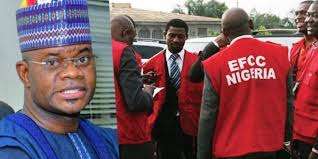
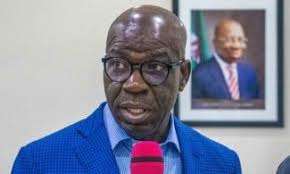
An Ikeja high court in Lagos State has granted bail to the embattled former governor of the Central Bank of Nigeria (CBN) Godwin Emefiele, in the sum of N50 million. Ruling on the bail application on Friday, the presiding judge, Rahmon Oshodi, admitted Emefiele on bail with two sureties in like sum. The former CBN governor is facing a trial in Lagos on a 26-count charge bordering on abuse of office. Recall that Justice Oshodi had ordered the remand of the former Central Bank Bank (CBN) Governor, Godwin Emefiele, in the custody of the Economic and Financial Crimes Commission (EFCC). The judge gave the remand order over alleged abuse of office and $5.5 billion and N2.8 billion fraud. The judge ordered that Emefiele’s co-defendant, Henry Isioma-Omoile, should be detained at Ikoyi Custodial Centre. The defendants counsel, Mr A. Labi-Lawal, had in his two bail applications, urged the court to grant the defendants bail on self recognition and on liberal terms pending the determination on the case. Labi-Lawal, in his 31 affidavits, said the first defendant (Emefiele) had complied with the bail application, which was given to him by Justice Muazu in his alleged fraud trial case going on in Abuja. He said the charges were bailable offences and not a capital offence. “Though the first defendant was granted administrative bail by the prosecuting authority. He is seeking bail based on self recognition and he is ready to attend the court. “The court should also take into consideration the status of the first defendant as he was the former CBN governor of the country,” he said. The defence counsel said his client had religiously presented himself before Justice Muazu in Abuja to answer the allegations before him. According to him, the first defendant was not at flight risk, as he was the first person to arrive in court. He also prayed the court to release Emefiele to lawyer, pending the determination of the bail. Emefiele and his co-defendant pleaded not guilty to the 26-count charge bordering on abuse of office, accepting gratification, accepting gifts through agents, corruption, and fraudulent property receipt. The defendants, however, pleaded not guilty, following their arraignment. The EFCC counsel, Mr Rotimi Oyedepo (SAN), did not oppose the bail application moved by the defence counsel. Oyedepo, however, urged the court to exercise its discretion judiciously in granting bail to the defendants.
Retired Justice, Ahmad Olarewaju Belgore dies at 71

Ahmad Olarewaju Belgore, a retired Justice of the Court of Appeal, has passed away at age 71 in Ilorin, Kwara State. It was gathered that he died after breaking his Ramadan fast on Tuesday, April 9. Belgore, born on April 18, 1953, graduated with an LL.B. (Hons.) in Law from Ahmadu Bello University, Zaria in 1978, and subsequently earned his Barrister-At-Law (BL) at the Nigerian Law School, Victoria Island, Lagos in the 1978/79 session. He was enrolled as a Solicitor and Advocate of the Supreme Court of Nigeria in July 1979. Throughout his distinguished career, Belgore served in several prominent legal roles. He was a Judge of the High Court of Justice in Kwara State from August 1990 to 2006, and also served as the Resident High Court Judge of the Offa Judicial Division of Kwara State from August 1994 to September 1999. Additionally, he chaired the Special Tribunal for Miscellaneous Offences in Abuja. Belgore’s international experience included a secondment to the Judiciary of the Republic of the Gambia, where he served as a Justice of Appeal in the Gambia Court of Appeal, later becoming the acting Justice of the Supreme Court until December 2005. Upon returning to Nigeria, he was appointed as a Justice of the Court of Appeal on April 27, 2006, and was sworn in on June 8, 2006. Belgore’s contributions to the legal profession were further recognized with appointments to the Body of Benchers of Nigeria in October 2015 and as a Life Bencher in February 2021. He retired from his role as a Justice of the Court of Appeal on April 18, 2023, upon reaching the age of 70. His recent public appearance was at the fidau held for the late District Head of Ballah, Alhaji Salman Olarongbe Abdulkadir.
Preparations in Full Swing for Korea-Africa Summit 2024

Officials from African Diplomatic Missions and South Korean Ministry of Foreign Affairs Engage in Consultative Meetings Ahead of June, 2024 Summit in Seoul, Korea. As the summit draws near, officials from African diplomatic missions stationed in Korea and the South Korean Ministry of Foreign Affairs have intensified their collaborative efforts to ensure the success of the upcoming summit. Scheduled to take place in Seoul in June 2024, the summit aims to foster closer ties and explore avenues for mutually beneficial cooperation between South Korea and African nations. South Korea, known for its robust trading relationships with countries such as the US, China, Japan, Vietnam, Turkey, India, New Zealand, Peru, and the European Union, is now eyeing expansion into the African market. The Korea-Africa Summit presents a unique opportunity to solidify trade alliances with African countries, with both sides anticipating significant economic gains. Ambassador Dong-han Yang, representing South Korea, emphasized the summit’s goal of forging future-oriented partnerships with African counterparts. He underscored the importance of sharing development experiences to invigorate growth in participating countries, leveraging the dynamism of African economies. With the theme “The Future We Make Together: Shared Growth, Sustainability, and Solidarity,” the summit will delve into strategic collaborations between South Korea and African nations. Key areas of focus include addressing global challenges, sustainable energy, infrastructure development, human resource development (including Technical and Vocational Education and Training), science, technology, digital transformation, people-to-people exchanges, and peace and security initiatives. One of the significant announcements expected during the summit is South Korea’s intention to initiate Official Negotiations for the first-ever Free Trade Association (FTA) with African countries. Currently, South Korea boasts 21 FTAs with 27 countries, none of which are with African nations. This move aims to rectify the imbalance and facilitate direct trade between South Korea and Africa, potentially unlocking substantial economic opportunities for both sides. The summit also holds the promise of reversing the current trade imbalance, where Africa constitutes only one percent of Korean trade with the rest of the world. African countries stand to benefit from increased access to the Korean market, bypassing intermediaries such as Vietnam, China, and India. President Tinubu-led Federal Government is among the countries eagerly anticipating the economic windfall from the Korea-Africa Summit. The summit’s sideline meetings present a platform for high-level engagements, akin to the G20 summit held in Delhi, where the African Union was conferred with a permanent member title. President Tinubu had the opportunity to engage with leaders from the US, Germany, and South Korea, signaling the potential for significant diplomatic and economic gains. The Korea-Africa Summit in June 2024 is poised to be a landmark event, heralding a new chapter of cooperation and economic prosperity between South Korea and the African continent.
Eid-el-Fitr: Tinubu Departs Abuja For Lagos

President Bola Tinubu will be leaving Abuja on Sunday for Lagos where he will celebrate this year’s Eid-el-Fitr celebration. This was contained on Saturday in a statement by his Special Adviser on Media and Publicity, Ajuri Ngelale. “President Bola Tinubu will depart Abuja, the Nation’s Capital, for Lagos on Sunday ahead of Eid-el-Fitr. “In deference to the solemn occasion, which marks the end of Ramadan, the President will observe the moment in prayers for Nigeria and with family. “The President will continue official duties during and after the Eid-el-Fitr holidays,” the statement reads.
Nigeria records 1,580 human rights violations in March alone – NHRC

The National Human Rights Commission (NHRC) Friday revealed that the country recorded 1,580 human rights violations in the six geopolitical zones in the March alone. The rights violations included killings , kidnapping, domestic violence , abductions, and children’s rights, among others. According to the Commission, North Central topped the list of the complaints of human rights violations recorded with 468 cases. The senior human rights advicer, Mr Hilary Ogbona, made this known at the National Human Rights Commission headquarters in Abuja. At the presentation of the findings attended by the Executive Secretary of the Human Rights Commission and Senior Advocate of Nigeria SAN, Dr. Tony Ojukwu, Ogbona explained that the police, military, and Department of State Service DSS grouped as state actors recorded 94 rights violations cases. The human rights adviser who explained that the killings of the military and police personnel in Delta State formed part of the report revealed that 542 cases of violation of children’s rights were also recorded during the period. Besides, Ogbona explained that domestic violence, which he said was becoming too rampant in some parts of the country, had 471 cases recorded. He said that the non state actors and private actors have 32 and 36 respectively while 3 cases of violation of rights were recorded against disabled people. According to him, other sectors, including social economic and cultural rights, accounted for 157, while referred cases were put at 24. He said that killings and kidnapping accounted for 499, while another 71 violations of rights to life were also recorded by the commission during the period. Ogbonna said that the 1,580 human rights violations were the entire figures recorded in the 36 states offices of the commission and Abuja. Expressing worry over the increasing cases of human rights violation, Ogbonna said that about 301 school children were abducted in kaduna state alone while 40 people were killed in Benue state. He expressed dismay that rights to life were being violated in various ways and manner because four deaths were recorded in Nassarawa State during the sharing of palliative. He then called for restraint on both State and Private Actors, adding that reprisal attacks contributed to the recorded rights violations. Ogbona also appealed to police and military to always conduct their investigations in compliance with the rules of engagement and rule of laws as provided for in the national and international laws. Earlier in his welcome address, the Executive Secretary of the Commission Ojukwu reaffirmed the commitment of the commission to the promotion and protection of human rights in the country. He promised to partner with other stakeholders, including the government, in the bid to step up efforts to protect lives and properties and in ensuring downward size in the violations of human rights. The NHRC monthly dashboard aimed at making the human rights situation public is supported by the United Nations Development Program, the Office of the United Nations High Commission for human rights, and others.
IBEDC Restores Power to UCH After 16-Day Blackout

University College Hospital (UCH) in Ibadan, Oyo State, has finally regained electricity after enduring a 16-day blackout due to a disconnection by the Ibadan Electricity Distribution Company (IBEDC). The disconnection was a result of an outstanding debt amounting to N495 million, accumulated over six years. The power restoration, which occurred around 6:30 pm on Thursday, came after the hospital management took steps to address the issue. Part of the debt, totaling N80 million, was paid, and an agreement was reached with IBEDC on a repayment plan for the remaining amount. During the blackout period, the hospital faced significant challenges, with workers resorting to rechargeable lamps to attend to patients. Many wards operated at minimal capacity, leading to patient discharges, while critical cases were still admitted, albeit with difficulties. In response to the outage, the Joint Action Committee (JAC) had previously announced limited working hours for staff, citing the lack of electricity as a major hindrance to their duties. However, with power now restored, normal operations are expected to resume fully.
Nigeria To Begin Local Production Of Passport

The Nigerian Government has rolled out plans to begin the local production of international passports in the country. The Minister of Interior, Olubunmi Tunji-Ojo, made this known in a post via his official X handle on Wednesday night. Tunni-Ojo revealed that he met with a local technology company that presented a proposal for localizing international passport production. “Today, I had a meeting with an indigenous technology company presenting a proposal on localizing our international passport production,” he wrote. The production of international passports by Nigeria in other countries appears to be constituting a delay in the process of acquiring the document. The Nigeria Immigration Service (NIS) unveiled the fully automated passport application system on March 8, 2024. With this, applicants, including Nigerians in the diaspora, are expected to enjoy a seamless experience registering for new passports and renewing expired ones. In another development, Tunji-Ojo recently convened a brainstorming session with the Ministry of Interior’s technical partners, top immigration officers, and ministry officials. The minister said the mission is to revolutionize the visa application process, particularly for short-stay visitors, so that Nigeria can streamline procedures, reduce stress, and enhance accessibility through automation. “It is my belief that by fostering a more welcoming environment for tourists eager to explore our vibrant culture and rich artistic heritage, we are on another step towards achieving the Renewed Hope agenda of President Bola Ahmed Tinubu,” he said.
US Embassy Warns Citizens in Nigeria Over Shiites Protest

The United States Embassy in Nigeria has issued a cautionary advisory to its citizens residing in the country regarding an impending nationwide protest organized by the Islamic Movement of Nigeria, commonly known as Shiites. Scheduled for Friday, April 5, 2024, the protest is anticipated to primarily take place in the Federal Capital Territory, Abuja. The embassy highlighted potential risks associated with the demonstrations, including roadblocks, traffic disruptions, and potential clashes between protestors and Nigerian security forces. While specific details such as timing and exact locations remain unspecified, the US embassy indicated potential protest sites based on past demonstrations, including prominent areas in Abuja such as Bannex Plaza, Berger Junction, Unity Fountain, and various mosques. In light of the security concerns, the embassy advised its citizens to exercise caution, avoid the protest areas, monitor local media for updates, steer clear of crowds, and maintain awareness of their surroundings. Additionally, residents were urged to review their personal security plans and ensure their cell phones are charged in case of emergencies, while carrying proper identification at all times. Meanwhile, the Federal Capital Territory Police Command has assured residents of adequate security measures during the protest and beyond, emphasizing the commitment to maintaining peace and order in the region.
NERC Sanctions AEDC for Misapplying New Electricity Tariff

The Nigerian Electricity Regulatory Commission (NERC) has taken action against the Abuja Electricity Distribution Company (AEDC) for incorrectly implementing the new electricity tariffs in the nation’s capital. In response to numerous complaints from Abuja residents, NERC has fined AEDC a sum of N200 million and instructed the company to refund affected customers who were wrongly billed. According to NERC, the tariff adjustment was intended for customers classified under Band A, who typically receive approximately 20 hours of electricity per day. However, residents in other bands were also subjected to the increased charges when attempting to purchase electricity units. Although AEDC has issued an apology and attributed the situation to an error, NERC’s sanctions underscore the importance of accurate billing practices and consumer protection in the electricity sector.
EFCC Launches Investigation into Bobrisky’s Alleged Naira Abuse

The Economic and Financial Crimes Commission (EFCC), Lagos Zonal Command, has launched a probe into the actions of Idris Okuneye, popularly known as Bobrisky, for purportedly spraying Naira notes. The investigation stems from a video circulating online, showing Bobrisky allegedly flaunting bundles of new Naira notes at the premiere of the movie “Ajakaju,” produced by Nollywood actress and producer Eniola Ajao. The event took place at Film One Circle Mall in Lekki, Lagos, on March 24, 2024. According to sources, this is not an isolated incident, as Bobrisky is suspected of engaging in similar activities at various event centers and parties on multiple occasions. Responding to the EFCC’s invitation, Bobrisky arrived at the Lagos Zonal Command on Wednesday morning, April 4, 2024, for questioning and provided his statements voluntarily. Upon the conclusion of investigations, Bobrisky is expected to be formally charged in court.