Coup in Gabon as Army sacks Ali Bongo over disputed election

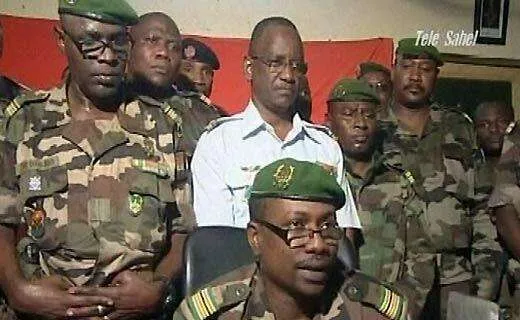
*Military generals nullify controversial election results Another coup has happened in Africa after a faction of high-ranking military officials in Gabon took to national television to assert their control, asserting that the recent general election’s legitimacy is questionable. They maintain that they represent the collective security and defense forces of Gabon. In a televised address, the officers proclaimed the nullification of the election outcomes, immediate closure of national borders, and the dissolution of state institutions. The capital city, Libreville, resonated with the echoes of gunshots, as reported by a correspondent from Reuters, right after the televised message was broadcasted. Efforts to reach the government for a response were unsuccessful at the time of reporting. The incumbent leader of Gabon, President Ali Bongo, secured a third term in office through the presidential election, garnering 64.27% of the total votes, according to the Gabonese election centre’s announcement on Wednesday. The general election had been marred by delays, fueling allegations of fraud from the opposition. The Bongo family’s lengthy 53-year reign over Gabon could potentially be terminated if this power shift takes effect. Presenting the results during the early hours, Michel Stephane Bonda, the head of the election committee, disclosed that Albert Ondo Ossa, Bongo’s primary rival, emerged in second place with 30.77% of the votes. Bongo’s team promptly dismissed Ondo Ossa’s claims of electoral improprieties. Tensions had already escalated in the lead-up to the presidential, parliamentary, and legislative elections held on Saturday. While Bongo aimed to prolong his family’s 56-year dominion over Gabon, opposition forces pressed for transformative change in the resource-rich yet economically challenged Central African nation. Apprehensions had escalated due to the absence of international observers, the suspension of foreign broadcasts, and the government’s imposition of internet blackouts and a nationwide curfew following the polls. These actions have raised doubts about the transparency and fairness of the electoral process.
ECOWAS rejects Niger Junta’s 3-year transition plan

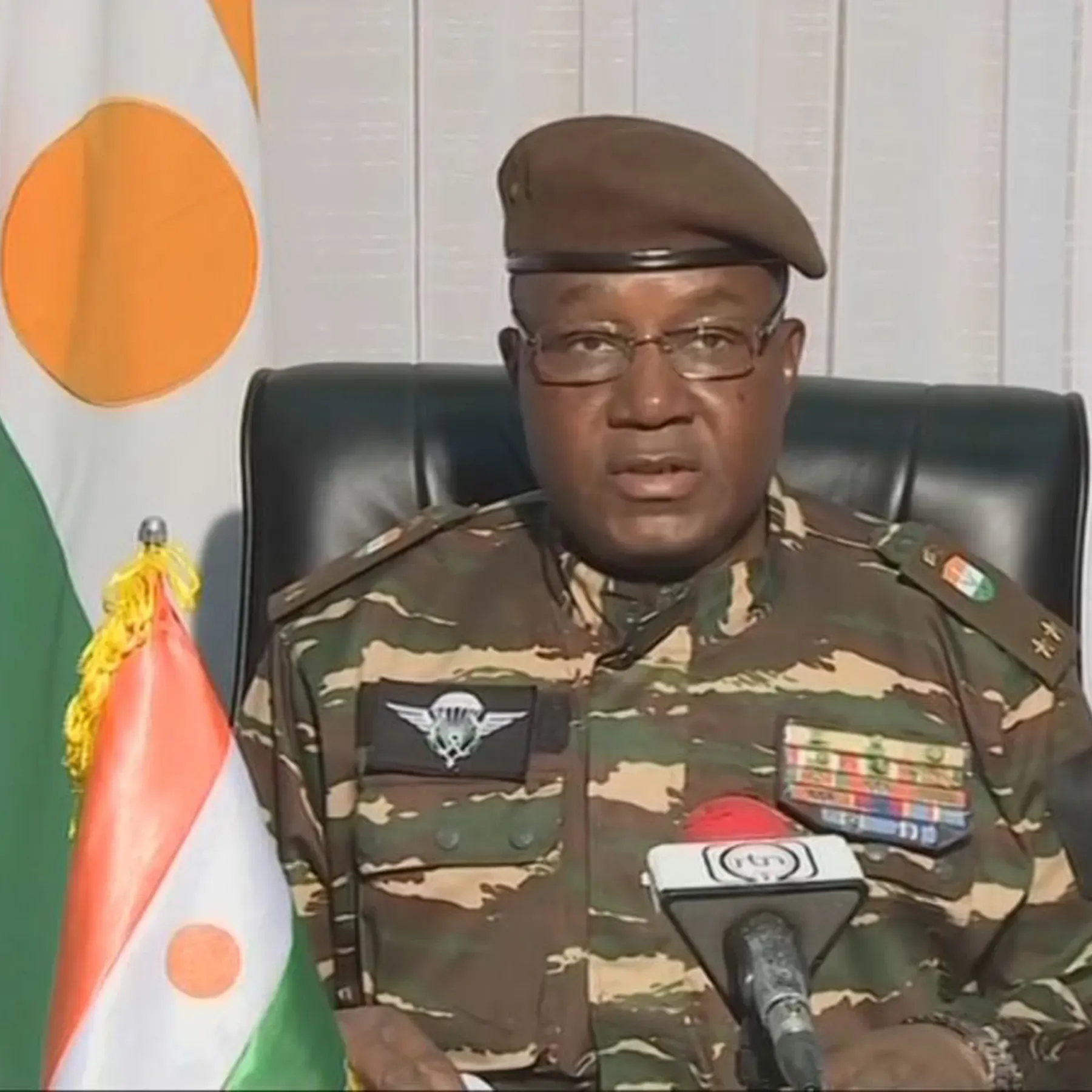
The transition plan presented by the Niger junta for a three-year period to presumably establish a democratic government has been unequivocally dismissed by the Economic Community of West African States (ECOWAS). General Abdourahamane Tchiani, leader of the Niger junta, had said in a televised broadcast on Saturday night that the army will hand over power to the civilian government within the next three years. According to him, his ambition is not to confiscate power but help the country out of its current conundrum. “Our ambition is not to confiscate power,” General Abdourahamane Tiani emphasized in a televised address. He further stated, “Any transition of power would not go beyond three years.” However, in a contrary view, the ECOWAS Commissioner for Political Affairs, Amb. Abdel-Fatau Musah, who made an appearance on Channels Television on Monday, voiced the West African bloc’s strong objection to the proposal. “This offer is completely unacceptable, and ECOWAS insists on the restoration of constitutional order as quickly as possible,” Amb. Musah stated firmly, emphasizing that the commission had prior experience dealing with similar maneuvers by military regimes. He referred to the situation in Niger, highlighting the creation of the “new” constitution in 2010, which was subsequently revised in 2017. Musah posed a pointed question, “What dramatic change do you need in the governance architecture of the country to require three years to experiment with something else? Expressing skepticism about the junta’s intentions, Musah remarked, “This is like subterfuge to throw ECOWAS off-course and then do whatever they want.” Drawing comparisons, he pointed out that some other West African countries under military rule had been given about three years, yet they were now “negotiating” with their populations for an additional 18 months. Putting the timeframe into perspective, he highlighted the fact that even a democratically elected president in Nigeria only has four years in office. Musah concluded by questioning the legitimacy of the junta’s decision to start with a three-year period and implying that it could extend beyond that. ECOWAS’ response underscores its unwavering commitment to democratic governance and stability in the region, raising concerns about the motives behind the proposed three-year transition plan.
Niger Coup: Tchiani asserts defensive stance against ECOWAS

In the wake of the recent coup in Niger, General Abdourahamane Tchiani, the leader of the mutineers who assumed control, emphasized his nation’s reluctance for conflict but readiness to safeguard itself when necessary. Tchiani conveyed that both the military and the populace of Niger are averse to the prospects of war, yet they remain steadfast in their determination to counter any signs of aggression, as reported by Al Jazeera. The head of the junta underscored the unawareness of member states within the Economic Community of West African States (ECOWAS) regarding Niger’s pivotal role in preventing regional destabilization amidst a surge in terrorist activities. He expressed skepticism towards the imposed sanctions on his country, suggesting that they aimed to exert pressure on the rebels rather than resolve the ongoing crisis. Tchiani further clarified that the insurgents’ objective isn’t to seize power but to facilitate a solution that aligns with the best interests of the populace. The coup leader disclosed that an ECOWAS delegation visited Niger’s capital and held discussions both with the deposed President Mohamed Bazoum, who was removed and detained by his own guard led by Tchiani, and with Tchiani himself. Since the coup’s occurrence on July 26, ECOWAS has responded by suspending financial aid to Niger, freezing rebel-held assets, and imposing travel restrictions on flights to and from the nation. A subsequent summit in Nigeria’s Abuja resulted in ECOWAS leaders agreeing to ready a standby force to potentially compel the Nigerien military to reinstate Bazoum. On a recent note, ECOWAS Commissioner for Political Affairs, Abdel-Fatau Musah, indicated that the general staff chiefs within ECOWAS have set a date for an undisclosed military intervention. This decision comes as tensions and uncertainties persist within Niger’s political landscape. General Abdourahamane Tchiani’s statements echo a stance against war while highlighting the nation’s resolve to defend itself against aggression, as Niger navigates through these challenging times of political transition and unrest.
Niger Coup: No harm will come to ousted Bazoum, PM Zein assures

*Says Niger will not collaborate with Russia or the Kremlin-backed Wagner group Ali Mahaman Lamine Zeine, the newly appointed Prime Minister of Niger, has conveyed that the generals responsible for the recent coup, which led to the ousting of President Mohamed Bazoum on July 26, are committed to ensuring his safety. In an interview with The New York Times, Zeine, the most prominent civilian figure appointed by the military, emphasized that Niger does not have a history of resorting to violence. “Nothing will happen to him, because we don’t have a tradition of violence in Niger,” Zeine, the most senior civilian appointed by the military leaders, told the newspaper in an interview from Dakar on the fate of overthrown President Mohamed Bazoum. Speaking from Dakar, Zeine assured that there are no plans for harm to befall President Bazoum, who has been confined to his residence since the coup. Zeine also explicitly stated that there is no intention to collaborate with Russia or the Kremlin-backed Wagner group, addressing concerns about external partnerships. Reports from The New York Times indicate that the ousted President’s house had its water and electricity supply disrupted by the coup leaders, who also issued threats regarding his safety if other African countries proceed with a military intervention to restore him to power. In response to the situation, President Bola Tinubu warned of “grave consequences” should Bazoum’s health deteriorate while under house arrest, as conveyed by a European Union official. Meanwhile, questions about Bazoum’s well-being and his status were raised by reporters at the United Nations headquarters in New York. A spokesperson for UN Secretary-General Antonio Guterres confirmed that they have received information from a reliable source indicating that Bazoum is alive. Stephane Dujarric, the spokesperson, stated, “As far as we know, he’s alive.” Prime Minister Zeine, a trained economist who had previously served as the finance minister, addressed the presence of foreign military forces in Niger. He commented on the presence of 1,100 American soldiers and 1,500 French soldiers involved in anti-terrorist operations alongside the local army. Zeine suggested that a review of such military partnerships might be necessary and acknowledged the diplomatic approach of the White House in resolving the crisis. As Niger navigates this complex situation, the commitment to peaceful resolution and the assurance of the safety of ousted leaders remain crucial aspects of the ongoing discourse.
African Union supports ECOWAS’ military response to Niger coup

The African Union (AU) has expressed its endorsement of the proposed military intervention led by the Economic Community of West African States (ECOWAS) against the coup perpetrators in Niger. Moussa Faki Mahamat, the Chairperson of the AU, conveyed his solidarity with ECOWAS’ stance against the Niger Republic coup. Following a pivotal summit held in Abuja, Nigeria’s capital on Thursday, ECOWAS directed its military leaders to establish a rapid-response force for potential deployment to Niger. The organization emphasized the importance of prioritizing peaceful means to address the crisis. Mahamat reiterated his call for the immediate release of ousted Nigerien President Mohamed Bazoum and all individuals from his administration and family. He condemned the treatment of a democratically elected leader and expressed concern about Bazoum’s reportedly deteriorating detention conditions. The upheaval occurred on July 26 when Niger’s presidential guard removed Bazoum from power. Subsequently, the commander of the elite unit, Abdourahamane Tchiani, seized control and dissolved the constitution. Bazoum and his family have remained confined to their residence for over two weeks. Niger had been a noteworthy exception within the Sahel region’s “coup belt,” maintaining a democratic government and serving as a vital ally to the West in the fight against regional Islamist extremists. The international community has unequivocally criticized the coup and urged the coup leaders to restore order and transfer authority back to the democratically elected administration.
Niger Coup: ECOWAS leaders gather as Tinubu declares Summit open

High-level representatives hailing from the West African region have convened in Abuja for an emergency summit aimed at addressing the recent coup in Niger, subsequent to the military junta’s defiance of an ultimatum urging the restoration of elected President Bazoum. The pivotal meeting took place in Abuja, Nigeria’s political capital, and was attended by several West African leaders, including President Bola Tinubu, who holds the role of Chairman within the Economic Community of West African States (ECOWAS). Notable figures from the United Nations and African Union were also present at the event. In his capacity as the convener, President Tinubu officially initiated the extraordinary gathering and emphasized the profound ramifications of the coup in Niger on the stability of democratically established governments within the sub-region. He articulated the imperative of prioritizing diplomatic negotiations and open dialogue with the military junta in Niger to ameliorate the crisis. President Tinubu expressed, “Reaffirming our unwavering commitment to democracy, human rights, and the welfare of the Nigerien people, it is of utmost importance that we place diplomatic negotiations and dialogue at the forefront of our strategy. “We must engage all stakeholders, including the leaders of the coup, in sincere discussions aimed at persuading them to relinquish authority and reinstate President Bazoum. Our responsibility is to exhaust all possible avenues of engagement in order to ensure a swift return to constitutional governance in Niger.” The President further expounded, “In a more specific context, as leaders representing our respective nations, we must acknowledge that the political turmoil in Niger not only jeopardizes the nation’s stability but also casts extensive reverberations across the entire West African region. “Through unwavering adherence to the principles of democracy, effective governance, and the rule of law, we can reestablish tranquility, stability, and prosperity within the Republic of Niger, thereby cultivating an environment conducive to comprehensive growth and development for all.” “More so, in reaffirming our relentless commitment to democracy, human rights, and the well-being of the people of Niger, it is crucial that we prioritize diplomatic negotiations and dialogue as the bedrock of our approach. “We must engage all parties involved, including the coup leaders, in earnest discussions to convince them to relinquish power and reinstate President Bazoum. It is our duty to exhaust all avenues of engagement to ensure a swift return to constitutional governance in Niger. “More specifically, as leaders of our respective nations, we must recognize that the political crisis in Niger not only poses a threat to the stability of the nation but also has far-reaching implications for the entire West African region. “By remaining steadfast in our adherence to the principles of democracy, good governance, and the rule of law, we can restore peace, stability, and prosperity in the Republic of Niger, thereby fostering an environment conducive to growth and development for all.” Following President Tinubu’s address, the summit transitioned into a confidential deliberation phase. The meeting, convened two weeks subsequent to the coup that ousted Mohamed Bazoum, who ascended to power in 2021, signifies ECOWAS’s proactive pursuit of a diplomatic resolution while keeping the prospect of employing force as a last resort. Critical determinations are anticipated from the gathering held in Abuja, as ECOWAS endeavors to curtail the succession of coups among its member states that has been unfolding since 2020. The coalition granted the military forces, which assumed control on July 26, a grace period until the prior Sunday to reinstate President Bazoum, aged 63, under the threat of potential military intervention. In response to the crisis, Nigeria, among other measures including border closures, has suspended electricity supply to Niger as part of a series of economic sanctions. Nonetheless, the leaders of the coup remained steadfast in their stance, and the deadline elapsed without any observed action. Tinubu’s Full Speech at the Summit Your Excellency, the President of the ECOWAS Commission; Your Excellency, President of the African Union Commission; Your Excellency, President of the UEMOA Commission; The Special Representative of the Secretary General of the United Nations in West Africa and the Sahel; and Distinguished Ladies and Gentlemen. 1. Let me commence by welcoming you all to the Second (2nd) Extraordinary Summit on the Socio-Political Situation in the Republic of Niger, within the space of ten days. Your presence here, despite the short notice, demonstrates the unwavering dedication of our esteemed community to finding a lasting solution to the political situation in the Republic of Niger. 2. Today, we gather with a profound sense of urgency and firm determination, building upon the commitments made during our first Extraordinary Summit, on the grave political crisis befalling our sister nation. During that initial meeting, we voiced our solidarity with the people of Niger and their democratically elected President, H.E Mohamed Bazoum, by condemning the military take over and the unjust detention of their democratically elected President. Your Excellencies, Distinguished Ladies and Gentlemen, 3. As you may recall, we called on the junta to rescind its decision of toppling a legitimate government. We proceeded to impose sanctions with the hope that this resolute measure would serve as a catalyst for the restoration of the constitutional order in Niger. Regrettably, the seven-day ultimatum we issued during the first Summit has not yielded the desired outcome. We have also made diligent efforts through the deployment of various ECOWAS mediation teams, to engage the military junta for a peaceful resolution of the political situation. One of the facilitators, former Head of State of Nigeria, General Abdulsalami Abubakar, would update us on the outcome of his mission to Niamey. 4. Similarly, as part of a coherent diplomatic initiatives, Special Envoys were dispatched to non-ECOWAS nations, particularly Libya and Algeria. During these engagements, the Envoy designated for Libya had the privilege of an audience with the President of Libya. This discourse resulted in an unequivocal expression of support for the resolutions adopted by ECOWAS aimed at restoring constitutional governance in Niger. In Algeria, the Envoy was received by the Minister of Foreign Affairs on behalf of the President of the country.
Military Action Against Niger: Int’l Group drags Tinubu to ECOWAS Court

An International Civil Group, Egalitarian Mission for Africa (EMA) has dragged President Bola Tínubu of Nigeria before the Economic Community of West African (ECOWAS) Court of Justice, invoking the Protocols of the Court to stop the planned military action against the Republic of Niger over coup plot. The group, in the suit instituted on its behalf by a Nigerian lawyer, Dr Oluwakayode Ajulo, OON, is praying the Regional Court to invoke relevant ECOWAS treaties and international laws to stop the military invasion of Niger Republic being spearhead by the Nigerian Government. The grouse of the Civil Group, among others, is that the planned military action or invasion will run foul of the obligations in the ECOWAS treaties and therefore amounting to illegality. The suit marked ECW/CCJ/APP/3/23 emphasized categorically that ECOWAS treaties prohibit aggression among member States. Apart from the Egalitarian Mission for Africa (EMA), other plaintiffs in the matter are a former Director General of the Nigerian Institute of the Internal Affairs (NIIA), Professor Bola Akinterinwa and a Nigerian Northern Region lawyer, Hamza Nuhu Dantani. Defendants are ECOWAS, Authority of Heads of State & Government of ECOWAS, President of ECOWAS Mission, Federal Republic of Nigeria and Republic of Niger. A military group led by General Abdourhamane Tchiani had on July 26 toppled the civilian and democratic government of President Mohammed Bazoun who has since been clamped into unlawful military detention. Although the three plaintiffs in the regional suit described the coup detat as most unfortunate, they however warned that Nigeria should not travel the dangerous road of military hostilities that may further escalate the crisis in the Niger Republic. According to them, over 300,000 refugees, mainly Nigeria citizens, have already fled the Niger Republic adding that military action against Niger Republic would lead to breach of fundermrntal rights to life, right to dignity of human persons and liberty to life. The plaintiffs therefore prayed the ECOWAS Court of Justice for a restraining order against any form of military action in Niger Republic that may undermine the sovereignty and the territorial integrity of Niger Republic. Besides the Court action, the plaintiffs’ Counsel, Dr Ajulo wrote a strongly worded letter to President Tinubu, notifying him of pendency of the suit and invoking the Protocol of the ECOWAS Court on the need to respect and obey the rule of law as well as to refrain from doing that will militate against the subject matter. The letter is entitled “Notification of Pendency of case before the ECOWAS Community Court of Justice ; Call For Strict Adherence To The Protocol of the Honourable Court of the ECOWAS Commumity Court of Justice’. It read in part “We are Counsel to the Plaintiffs/Applicants in the above case before the ECOWAS Community Court of Justice and it is on their firm and unequivocal instructions that we write. Sequel to the Resolution and several sanctions imposed by the ECOWAS in the aftermath of the unfortunate and unconstitutional takeover of the democratically elected Government of the Republic of Niger, we have lodged a Case before the ECOWAS Community Court of Justice in an application for reliefs as the proposed military intervention in the Republic of Niger would be tantamount to aggression between ECOWAS Member States. ” The intervention will specifically violate Articles 1, 5, 15, 16, 17, 21, 22 & 24 of the African Charter on Human and Peoples’ Rights; Articles 1 (2), 2, 3, 4, 5, 6, 7, 8, 9, 11, 12, 13 & 14 of the International Covenant on Economic, Social and Cultural Rights; Articles 1, 3, 22, 23 (3), 25 (1) & 26 of the Universal Declaration of Human Rights 1948; Articles 1, 2, 3, 4, 5, 6, 7, 8, 9 & 10 of the Declaration on the Right to Development 1986; Articles 6, 15, 31, 63 & 64 of the Revised Treaty of the Economic Community of West African States; Article 10 of the Supplementary Protocol (A/SP.1/01/05) amending the Protocol (A/P.I/7/91) relating to the Community Court of Justice and Articles 10 (c), 22, 26, 27, 28, 56 of the ECOWAS Protocol Relating to the Mechanism for Conflict Prevention, Management, Resolution, Peace– Keeping and Security 1999. “The Case, an official copy of which has been duly served on your Excellency through the ECOWAS Secretariat, 101, Yakubu Gowon Crescent, Asokoro, Abuja, has invoked the jurisdiction of the International Court to consider conventions, treaties, Protocols and regulations to which your Excellency and the Federal Republic of Nigeria are signatories and which override the resolutions, sanctions, domestic law and practices and which the ECOWAS Community Court of Justice has been called upon to declare illegal. Another copy of the Case is attached for your informed action. “We wish to further draw your attention to Article 22(2) of the Protocol on the Community Court of Justice which mandates that “When a dispute is brought before the Court, Member states or institutions of the Community shall refrain from any action likely to aggravate or militate against its settlement” “In the Case before the ECOWAS Community Court of Justice, The Economic Community of West African States (ECOWAS), Authority of Heads of State and Government (of which your Excellency is the Chairman), President, ECOWAS Commission, The Federal Republic of Nigeria (of which your Excellency is the President and Commander-in-Chief of the Armed Forces) have been sued as sovereign legal representatives of respective institutions including the Republic of Niger. “It is your Excellency’s sacred duty as the Chairman of the Authority of Heads of State and Government of ECOWAS and the President and Commander-in-Chief of Armed Forces of Federal Republic of Nigeria under your hand to bring the institution of the Case before ECOWAS Community Court of Justice to the attention of the other Defendants and to insist, particularly in your Excellences’ subsequent meetings, that the Defendants refrain from taking any action in respect of the subject matter pending the determination of the case, in view of your Excellency and Nigeria’s protocol obligation under the Article above quoted. “Your Excellency, it is our firm
Niger Crisis: Guarding our minds against information warfare and perception manipulation

When we see a sleekly produced video with subliminal political overtone like the “Yoruba” woman on a viral video showing President Tinubu sleeping in the background, making an emotional plea about the plight of Yorubas in Niger, please keep your wits about you and be vigilant and know that you are being subjected to perception manipulation by AI and deep fake. The woman who claims she is more Nigerien than a Nigerian and that she is a foreigner in Nigeria should be told to stay her butt in her native country Niger, and let the president who Nigerians have elected to take the hard decisions on our behalf to do his job. History and the electorate will hold him accountable for the outcome of his decisions. That is why he has been hired, to take all the information in his possession and the experts serving on his national security council into account, to make the hard choice. He has the intelligence report most of us do not have access to. Yes, we can exercise our civic responsibility to let him know where we stand, but international crisis management is not conducted by taking polls but by data. Don’t let us be manipulated by crass emotionalism and social media hyperventilating when it comes to the ongoing Niger crisis. We must remember that complex international issues such as a military junta in Niger, and a clientele state run by Putin’s Wagner mercenaries, with which we have no real geographical nor cultural border, represents a present, imminent and existential danger to our country. None of us is getting the security and intelligence report that is on the desk of the president in Aso Rock, so we are not in the position to know the dynamic at play in the Niger crisis. Yes, Mr. Tinubu as the president of Nigeria and the Chairman of ECOWAS is the face of the Niger crisis, but we must remember this is a crisis of dire international and geopolitical implications and there are many actors involved, including the ECOWAS, the African Union, the UN, the Western powers and of course Russia. So the notion that piling pressure on President Tinubu like many are erroneously assuming, will cause him to deviate from what intelligence report is guiding him to do, shows naïveté about the complicated dynamics of international crisis management like the contagion of military coups that is spreading and rampaging the Sahel region, and that is inching towards our homeland. They are not issues that can be resolved by the maddening appeal to emotionalism on Nigerian social media. No one wants war. However, sleeping with one’s two eyes closed when you have a raging lion at one’s doorstep is neither a smart thing to do. The Nigerian social media and especially WhatsApp, is consumed by fear mongering about impending war and dooms day prediction about how the ragtag Niger military will make a mince meat of the Nigerian military. That is nothing but an empty posturing and fear-mongering. We must realise that behind the scenes, frenetic diplomatic, economic, and political pressures are now being applied to the juntas to make them see reason. Russian propagandists have seized on this crisis to portray the Nigerien coup plotters as anti-imperialists who are seeking to liberate Niger and the entire African continent from under the yoke of France imperialism, neo-colonialism, economic servitude and exploitation. What a pile of hogwash. Would a true anti-imperial regime go to bow before and kiss Putin’s ass like the young lad leader from Burkina Faso did, when like a school boy before his dad condescendingly gave his rousing support for the Ukraine war and then begged the Russian leader, that he is willing to open Burkina Faso economy to the Russian with no strings attached? He then made the ridiculous request to Putin to come and build a nuclear plant in impoverished Burkina Faso. We all could see the flag of Russia flying all over Niger, Mali, and Burkina Faso. Are those the kind of actions that a Thomas Sankara whose image all the three military leaders are invoking would take? On the contrary, by their naive posturing, it can be said that they are frankly desecrating the values that their fabled hero stood for. If anything, they are merely selling to us their selfish lust for power as the long awaited African revolution to free the continent from servitude to France and other Western powers. Record has it that the coup leader in Niger, General Tchiani has been a member of the Nigerien political class that has enjoyed the spoils of power and that have been serving the imperialists’ interest of their France overlords for decades as the head the presidential guards. He, in fact, crushed another coup against President Bazoum just days to his inauguration in 2021. Reports have it that the reason he struck with a coup was because he was about to be booted out of his position of power and influence. All of a sudden, he is now the liberator and Thomas Sankara of Africa. What a desecration of that sacred name and of the legacy of Shankara, one of the greatest leaders to walk the surface of Africa. We must remember that we are fighting on social media against information, disinformation, and propaganda warfare, and against a force that is a thousand times smarter, more nimble, and more adaptable than us. Artificial intelligence and deep fake. AI can gobble through trillion bytes or data and use it to manipulate our thought process and perception. That is what is happening with the Niger coup with the massive amount of auditory and visual information manipulation and disinformation that is coming at us like the great flood of Noah. We must guard our brains and minds against this powerful enemy that is seeking to mess with our minds and perception of reality like the woman in the sleekly produced video whose intent is to tug at our heart strings. Don’t let us
Top US diplomat meets leaders of Niger military junta

A Senior U.S. diplomat Victoria Nuland has met with senior leaders of the military junta in Niger, the U.S. State Department has said. Nuland, the acting deputy secretary of state, travelled to Niamey to meet with the armed forces’ new chief of staff, General Moussa Salaou Barmou, and three other members of the military junta. She expressed Washington’s “grave concern regarding developments in Niger and our resolute commitment to supporting democracy and constitutional order,” U.S. State Department spokesman Matthew Miller said in a statement. During the meeting Nuland outlined what was at stake if Niger did not “respect its own constitutional order,” Miller said. “This includes the potential loss of hundreds of millions of dollars in economic and security support for the people of Niger,” she highlighted. She described the more-than-two-hour conversation as “extremely frank and at times quite difficult” in a call with reporters. Nuland’s request to meet with ousted and detained President Mohamed Bazoum was denied, she said. “The United States continues to call for the immediate release of President Mohamed Bazoum, his family, and all those detained as part of the extra-constitutional attempt to seize power,” Miller said. Nuland was also not able to see new self-declared ruler Gen. Abdourahmane Tchiani. Bazoum was ousted in a military coup on July 26. Tchiani, the commander of Niger’s presidential guard, then claimed power as the country’s new ruler. He and his group of officers suspended the constitution and dissolved all constitutional institutions.
Niger Coup: Tinubu didn’t ask Senate for permission to go to war- Akpabio

*Urges Tinubu, ECOWAS to exhaust all diplomatic options Senate President, Godswill Akpabio has said that President Bola Tinubu did not approach the Senate for permission to go to war in Niger over the recent coup d’etat as is been peddled in some quarters, but rather, on how best to resolve the current political impasse. Akpabio, who announced the resolutions on Saturday after a closed-door meeting which lasted for about two hours with the President Tinubu, urged him, as Chairman of ECOWAS, to encourage other ECOWAS leaders to further explore political and diplomatic options and other means towards resolving the political impasse in Niger Republic. The upper chamber also called on the ECOWAS Parliament to rise to the occasion by equally condemning the coup and also proffer solutions to resolve the impasse quickly. Niger President Mohamed Bazoum was on July 26, overthrown by his presidential guards. Akpabio said: “We discussed with President Bola Tinubu, who also doubles as the Chairman of ECOWAS and requested for support in the implementation of the resolutions of ECOWAS on the political situation in Nigeria and resolve as follows: “The leadership of the Senate is mandated to further engage with the President and Commander-in-Chief on behalf of the Senate and National Assembly on how best to resolve the issues. “This is in view of the hitherto existing cordial relationship between Nigeriens and Nigerians. “The Senate commends President Bola Tinubu and other Heads of State and Government of ECOWAS for their prompt response and the positions taken on the unfortunate development in Niger Republic. “The Senate recognises the fact that President Tinubu, by virtue of his correspondence had not asked for the approval of the parliament or approval of this Senate to go to war as is been erroneously suggested in some quarters. “Rather, Mr President and Commander-in-Chief had expressed and I quote: “I wish to respectfully solicit the support of the National Assembly in the successful implementation of the ECOWAS resolutions as outlined in the said communications.” The Senate President also said that the Senate condemned in totality the military coup that took place recently in Niger. Tinubu had in a letter to the Senate on Friday, conveyed the decisions of the ECOWAS on recent military intervention in Niger. The ECOWAS decision is contained in a letter addressed to the President of Senate and read at plenary on Friday. ”I do have the honour to inform you, that following the unfortunate political situation in Niger Republic culminating in the overthrow of the administration of His Excellency President Mohammed Bazoum on 26 July 2023. “The Economic Community of West Africa States (ECOWAS), under my leadership condemns the coup in its entirety and resolved alongside other members of the international community to seek the return of a democratically elected government in Niger,” the letter stated.