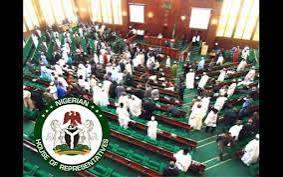
House of Representatives Advances Bill on State Police to Second Reading

In a decisive move aimed at bolstering Nigeria’s internal security, the House of Representatives has taken a significant step by passing for second reading, the State Police Reform bill. Spearheaded by the deputy speaker and backed by 14 other members, the proposed legislation seeks to amend the 1999 constitution to pave the way for the establishment of state police formation. During Tuesday’s plenary session, members of the House engaged in a robust debate on the merits of the bill. Expressing concern over the nation’s current security landscape, Kalu, standing in for Speaker Abbas Tajudeen, emphasized the paramount importance of prioritizing the safety of Nigerian citizens over political considerations. Babajimi Benson underscored the pressing need for a decentralized approach to law enforcement. With Nigeria’s population exceeding 200 million and a police force of fewer than 400,000 officers, Benson argued that the creation of state police forces is imperative to effectively tackle internal security challenges. Despite facing contention since the Seventh National Assembly, the advancement of the bill marks a notable breakthrough in the legislative process. Notably, governors from the Peoples Democratic Party (PDP) have reiterated their support for state policing, citing it as crucial for addressing the nation’s deteriorating security situation and averting a scenario akin to Venezuela’s. Furthermore, various regional socio-political organizations, including Afenifere, Ohanaeze Ndigbo, the Middle Belt Forum, and the Northern Elders’ Forum, have thrown their weight behind the implementation of state police forces. They view it as a pragmatic solution to the escalating security challenges confronting Nigeria. The bill’s referral to the House Committee on Constitution Review signifies a pivotal phase in its journey through the legislative process. As Nigeria grapples with persistent security threats, the advancement of the bill underscores a growing consensus on the imperative of decentralized law enforcement to safeguard the nation and its citizens.
Only 25 States Have Passed The Fiscal Responsibility Law – NGF

The Nigeria Governors’ Forum (NGF) has disclosed that less than 25 states in the country have passed the Fiscal Responsibility Law. It also said that 30 state have passed the Debt Management law. The Director-General, NGF, Mr Asishana Okauru, said this while delivering a goodwill message at the Fiscal Responsibility Commission’s (FRCs) Stakeholders Dialogue on Implementation of Section 45 of the Fiscal Responsibility Act (FRA) in Lagos. Okauru, represented by Mr Olanrewaju Ajogbasile, Senior Programme Manager, NGF, said that states were also domesticating core principles of the FRA, regarding fiscal planning and management. He revealed that 15 states recorded an average monthly debt service that was less than 40 per cent of gross Federation Account Allocation Committee (FAAC) for 2021 financial year and total debt stock at the end of December 2021. According to him, although section 45 of the FRA is the premise of the deliberation, all sections of the Act or state’s FRL’s, are reinforcing of each other in terms of delivering fiscal sustainability across the tiers of government. “Unfortunately, certain flexibilities and a weak consequence system, renders full compliance a choice. “Likewise, fiscal planning has largely remained unrealistic due to paucity of requisite data, low Own Source Revenue (OSR), increase in permanent and development expenditures. “As well as the susceptibility to volatiles in FAAC, crude oil, inflation rate and exchange rate parameters, among others,” he said. According to him, the NGF Secretariat will continue to advocate as good practice the tenets and provision of the Act through its engagements, initiatives and discourse around fiscal transparency, accountability and sustainability. In a keynote address, the Secretary to the Government of the Federation (SGF), Dr George Akume, said that the dialogue was organised to promote the need for subnational to borrow through the right channels and for the right reasons. Akume, represented by Dr David Eze, Assistant Director, Finance and Account, OSGF, stated that the commission must adhere to laid down rules that ensure that government officials at all levels do not abuse the process of borrowing. He noted that governments across the world grow faster and better through very good and strong institutions, rules and regulations, hence the implementation of the FRA 2007 is worthwhile. The SGF stated that there was the need to urgently address some of the excesses and infractions of the FRA 2007, particularly with the banks. Akume also demanded for adequate machineries to effectively control and properly manage public resources, as public debt lowers the future generation’s well-being. He expressed worry that the private sector may be discouraged from investing in the states, if the government needs to service debt and also provide a satisfactory environment for investment in infrastructure. “Although, it is believed that the efficiency and equity benefit of borrowing by subnational government outweighs associated macroeconomic risk, factors such as lack of institutional capacity. “Also, quest to control subnational government impulse in running excessive deficit and the need to take their fiscal excesses in the area of borrowing cannot be overemphasised,” he said. According to him, systemic subnational insolvency may impede the growth of the capital market, deter fiscal space for infrastructure investment, threaten financial stability and core public services. Akume said that might create pressure on the Federal Government to provide financial assistance to ensure a continued provision of essential public services. The SGF insisted that a disciplined borrowing processes was needed to avoid the potential long-term consequences of subnational borrowings of fiscal sustainability and macroeconomic stability. He stated that FRA 2007 was enacted to ensure the coordination of the national economy policy between various tiers of government. The SGF expressed that the ACT also enables the monitoring of agencies that were off budget, but whose activities had significant impact on fiscal policies. He lauded FRC for organising the meeting at a time when the Nigeria economy is faced with key challenges. Akume said that the country needed to develop strategy on how to structurally reform the economy, move labour and economic resources from low productivity to high productivity sector. “The dialogue is justified, as the government is damning to get things right from the beginning to avoid mistakes that have dragged the nation into huge domestic and foreign debt. “Accordingly, this particular direction is to ensure that the nation follows the laid down rules and regulations, in order to ensure prudence, transparency and accountability in the management of public funds and also to depart from such practices that have left so much debt for successive government,”: he said. Earlier, the Executive Chairman, FRC, Mr Victor Muruako, said that banks and financial institutions in the country must ensure that their lending practices consistently comply with provisions of the FRA. Muruako, a lawyer, said that to eliminate ambiguity, Section 45 (1) of the FRA, all banks and financial institutions shall request and obtain Proof of Compliance with the provision of the Act before lending to any government in the federation. Stakeholders at the dialogue include the representatives of NGF, Nigeria Deposit Insurance Corporation, Chief Compliance (NIDC) Officers, Chief Risk Officers, Chief Legal Officers and Chief Executive Officers of banks, among others.