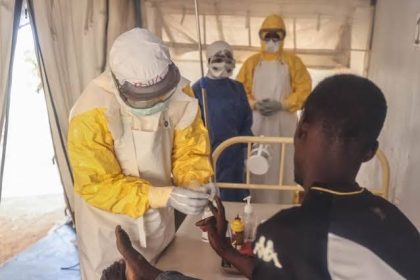
NCDC Registers 1,968 Lassa Fever Cases In 28 States

The Nigeria Centre for Disease Control and Prevention (NCDC), has registered 1,068 Lassa fever infections across 112 local government areas in 28 states of the federation. The NCDC said this via its official website on Tuesday in its Lassa Fever Situation Report for Week 37 (September 11 -17, 2023). The centre indicated that 75 per cent of the cases were detected in Ondo, Edo, and Bauchi States. Lassa Fever is a viral hemorrhagic fever caused by the Lassa virus. It is primarily found in West Africa, particularly in Sierra Leone, Liberia, Guinea and Nigeria. The virus is transmitted to humans through contact with the urine or faeces of infected rodents, specifically the multimammate rat. According to the NCDC, there are currently 7,352 individuals with suspected cases and the infection has resulted in the unfortunate loss of at least 181 lives in the country. The centre said that the case-fatality ratio of the infection stood at 16.9 per cent. “Cumulatively from week 1 to week 37, 2023, 181 deaths have been reported with a case fatality rate of 16.9 per cent which is lower than the CFR for the same period in 2022 (19.1 per cent). “In total for 2023, 28 States have recorded at least one confirmed case across 112 local government areas. “Seventy-five per cent of all confirmed Lassa fever cases were reported from these three states (Ondo, Edo, and Bauchi) while 25 per cent were reported from 25 states with confirmed Lassa fever cases. “Of the 75 per cent confirmed cases, Ondo reported 35 per cent, Edo 29 per cent, and Bauchi 11 per cent. “The predominant age group affected is 21-30 years (Range: 1 to 93 years, Median Age: 32 years). “The male-to-female ratio for confirmed cases is 1:0.9. The number of suspected cases increased compared to that reported for the same period in 2022,” it said. It is regretted that in 2023 Lassa fever infected 49 healthcare workers across the country. The agency said that the National Lassa Fever Multi-partner, Multi-sectoral Emergency Operations Centre had been activated to coordinate the response activities at all levels. It added that prevention of Lassa fever involves avoiding contact with rodents and their droppings, practising good personal hygiene and taking precautions when caring for infected individuals. The NCDC said that early diagnosis and prompt medical care are crucial in managing the disease and preventing complications.
Anthrax: FG alerts of outbreaks in Ghana, Togo, others

The Federal Government has alerted the public on the outbreak of Anthrax disease in some neighbouring countries within the West African sub-region. The Permanent Secretary, Federal Ministry of Agriculture and Rural Development, Dr Ernest Umakhihe, announced this in a statement in Abuja on Monday. According to him, the affected countries are Northern Ghana which borders Burkina Faso and Togo. Umakhihe said that the disease, which had claimed some lives, is bacterial and affects both animals and man. He said that Anthrax spores are naturally found in the soil and commonly affect domestic and wild animals. Umakhihe said that people could get infected with Anthrax spores if they come in contact with infected animals or contaminated animal products. He said that the disease is not contagious but one cannot get it by coming in close contact with an infected person. ”Signs of anthrax are, flu-like symptoms, such as cough, fever, and muscle aches,“ he said. He said further that if not diagnosed and treated early, it could lead to pneumonia, severe lung problems, difficulty in breathing, shock, and ultimately, death. He added, however, that anthrax responds to treatment with antibiotics and supportive therapy. ”It is primarily a disease of animals but because of man’s closeness to animals, non-vaccinated animals with anthrax can easily be transmitted to man through the inhalation of anthrax spores. ”It could also be through consumption of contaminated or infected animal products, such as hides and skin (known in Nigeria as ‘Pomo’), meat or milk,” he said. He said annual vaccinations with anthrax spores are available at the National Veterinary Research Institute in Vom, Plateau Staten, and that it is the cheapest and easiest means of prevention and control of the disease in animals, adding that infected animals cannot be vaccinated, but animals at risk can be vaccinated. ”There is a need to intensify animal vaccinations along border States of Sokoto, Kebbi, Niger, Kwara, Oyo, Ogun and Lagos States, because of their proximity to Burkina Faso, Togo and Ghana,” he said. Umakhihe urged other states in Nigeria to join in the exercise to prevent the spread of the disease. He advised that infected dead animals should be buried deep into the soil, with equipment used in the burial after applying chemicals that would kill the anthrax spores. “The public is strongly advised to desist from the consumption of hides (pomo), smoked meat, and bush meat as they pose a serious risk until the situation is brought under control,” he said. Umakhihe urged the public to remain calm and vigilant as the Federal Government has resuscitated a Standing Committee on the control of Anthrax. He said that relevant institutions and collaborators have been contacted with the aim of controlling the outbreak.