Maurice Ikpambese remains Benue Chief Judge

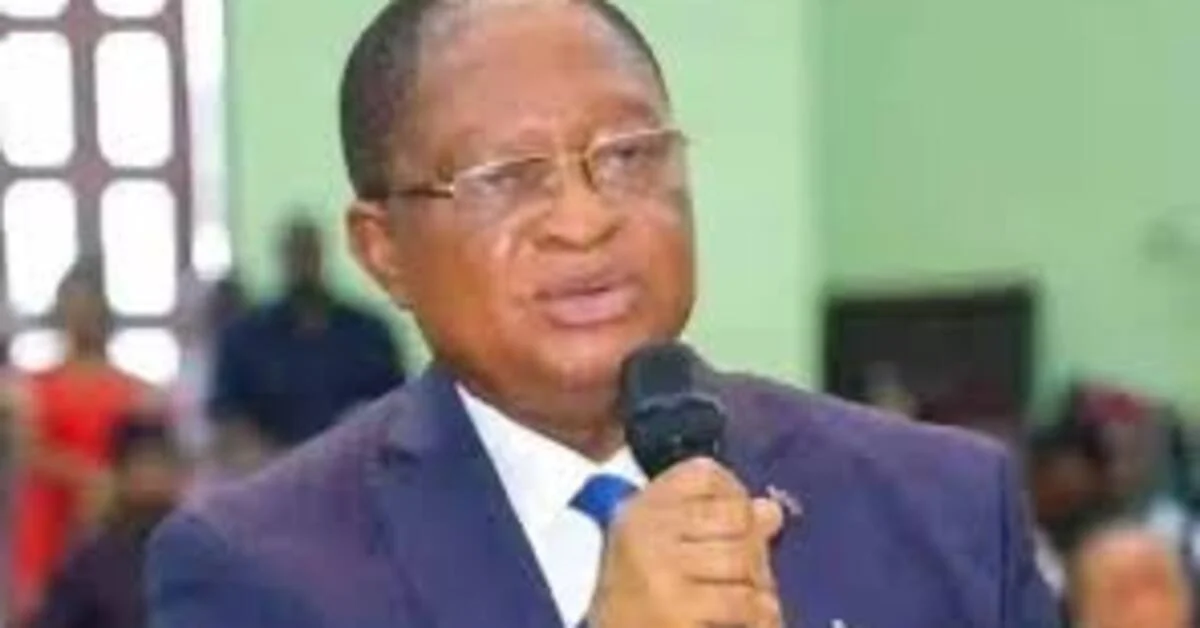
The National Judicial Council has stated that Justice Maurice Ikpambese remains the Chief Judge of Benue. This declaration is contained in a statement issued by Mrs Kemi Ogedengbe, Deputy Director of Information, NJC on Tuesday in Abuja. “The attention of the NJC has been drawn to a certain media report to the effect that the Benue State House of Assembly has purportedly passed a Resolution recommending the removal of Justice Ikpambese as chief judge of Benue from office. “Unfortunate as this development is, the council wishes to reiterate that there are clear and unambiguous provisions in the 1999 Constitution of the Federal Republic of Nigeria on discipline and appointment of judicial officers vested in the council, which clearly are not adhered to in the instant case. READ ALSO: NAPTIP rescues 13 tracking victims, seals Abuja hotel “Although, the council had this morning received a petition against Ikpambese, that petition is yet to be investigated in line with the council’s investigation procedure and the principles of fair hearing,” the council declared. The NJC added that as far as the council is concerned, until the complaint is investigated and deliberated upon by it, Justice Ikpambese remains the chief judge of Benue . 

#ENDBADGOVERNCE Arrests: NCoS Refutes Claims of Juvenile Detention in Adult Facilities

The Nigerian Correctional Service (NCoS) has countered reports suggesting it detained minors involved in recent #EndBadGovernance protests within adult custodial facilities in Abuja.  Following the protests, 76 individuals were arraigned, with the court ordering separate detention for underage defendants in a juvenile center and adult detainees in standard facilities. Speculations surfaced that the Kuje Correctional Centre lacked juvenile-specific accommodations, raising concerns over possible mixed detentions.  NCoS responded, clarifying that its policies and the Nigerian Correctional Service Act 2019 strictly prevent juveniles from being housed alongside adults.  It further stated that overcrowded facilities have the authority to reject new inmates, ensuring adherence to proper procedures. The NCoS urged the public to disregard misinformation, emphasizing its ongoing commitment to best practices and the protection of detainees’ rights.

Ondo Guber: Police cautions against fake news

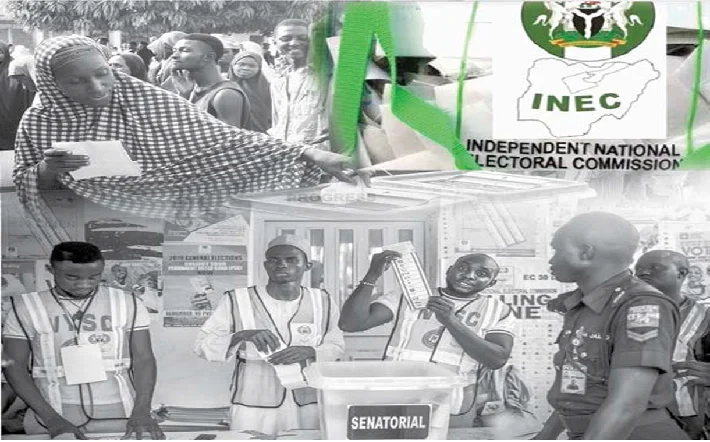
The police in Ondo have warned fake news purveyors and other mischief makers ahead of the state’s November 16 off-cycle governorship election. The police stated that such action could cause a breakdown of law and order as the state prepared for the gubernatorial election. “The police command emphasises the importance of verifying information before sharing or reposting, as constructive engagement is essential for fostering a peaceful environment during this pivotal time in the history of the state,” the police said in a statement by its spokesperson Funmilayo Odunlami-Omisanya. The police said it had observed two trending old videos and misleading content being shared with intent to incite unrest and violence. While explaining that one of the videos depicting flooding in Ore, Odigbo Local Government Area of the state, was “irresponsibly circulated”, the police added that the action also threatened the integrity of democracy and could deprive the political parties of a level-playing field in the forthcoming election. “Such actions are not only misleading but pose significant risks, especially during this crucial electoral period, as the spread of misinformation can undermine public trust, incite violence, jeopardise public safety, and threaten the integrity of our democracy—ultimately depriving the people of a level playing field for the exercise of their civic rights and responsibilities. “In a similar event, a story alleging the amputation of fingers from a corpse at a mortuary in Ajowa-Akoko was found to be false, as confirmed by the divisional police officer who visited the morgue,” the police said. The police urged the electorate to remain critical of the information they encounter and distance themselves from those who seek to exploit the current situation for personal gain. “Finally, while assuring the citizens of the force’s readiness, in collaboration with sister security and safety agencies, to ensure free, fair, and safe elections, the commissioner of police, CP Abayomi Oladipo Peter, wishes to state that the command under his watch will not stand idly by while agents of calumny operate,” it added. The police stressed that they would not hesitate to respond appropriately and within the law to threats to the peace of the election. Eighteen political parties have fielded gubernatorial candidates for the upcoming election.

NJC Bars 3 Judges From Elevation …issues warning letter to them

The National Judicial Council (NJC) has barred three judges from elevation for two to three years over a series of offenses and also issued warning letters to them. The decision followed resolutions reached at the NJC’s 105th plenary meeting on May 15 and 16, 2024. Therefore, the chairman of the council, Chief Justice of Nigeria Justice Olukayode Ariwoola, had issued warning letters to Justice Inyang Ekwo of the Federal High Court and Justice GB Brikins-Okolosi of the Delta State High Court. In a statement, NJC’s Director of Information, Soji Oye, said Justice Ekwo was warned for abusing his discretionary power by improperly granting an ex parte order in the case between Juliet Ebere Nwadi Gbaka & 2 Ors. vs. Seplat Energy Plc & 12 Ors. The NJC therefore barred Justice Ekwo from elevation to a higher bench for two years. Similarly, Justice GB Brikins-Okolosi was warned for failing to deliver a judgment within the stipulated period in the case of Joseph AneneOkafor vs. Skye Bank, despite the parties having filed and adopted their final written addresses. Consequently, Justice Brikins-Okolosi was prohibited from elevation to a higher bench for three years. Furthermore, the NJC cautioned Justice Amina Shehu of the Yobe State High Court for issuing a writ of possession conferring title on the defendant in a case without any subsisting judgment from any court to justify the issuance of the writ. During the meeting, the Council reviewed two reports from its Preliminary Complaints Assessment Committees, which examined 35 petitions against judges from the Federal and State High Courts. The Council decided to form eight committees to further investigate the petitions deemed meritorious by the assessment committees. Additionally, the NJC considered recommendations from its Interview Committee on the Appointment of Judicial Officers for all Superior Courts of Record in Nigeria. As a result, the NJC resolved to recommend 86 judicial officers for appointment to the Court of Appeal, High Court of the Federal Capital Territory, Sharia Courts of Appeal, and Customary Courts of Appeal of various states in Nigeria. These candidates will be sworn in after the NJC’s recommendations are approved by the President and their respective state governors.

Review of Judges salary: Bill passes second reading

    A bill seeking to increase the salaries and allowances of judges at all levels has passed second reading in the senate. The bill was considered after Lola Ashiru, deputy majority leader, led the debate during plenary on Thursday. Ashiru said the bill, which was sent by the executive, will enhance the integrity of the judicial arm of government. Contributing to the debate, Tahir Monguno, senator representing Borno north, said improving the welfare of judges will insulate them from corruption. “There is a need to bring up the remuneration of judicial officers that have stagnated over the years,” Monguno said. “This will insulate judicial officers from corruption and give them courage to deliver judgments that are just and fair.” On his part, Orji Uzor Kalu, senator representing Abia north, said increasing the salaries of the judges is the right thing to do. “No right thinking Nigerian will not think that it is right to keep the judiciary comfortable. I want to thank the executive for deeming it fit to increase salaries of judges at all levels,” Kalu said. “We should not stop at the judiciary but look at other sectors of the economy.” Emmanuel Udende, senator representing Benue north-east, said judges have had their morale dampened over the years because of poor remuneration. “For the past 15 years, judicial officers have remained on meagre salaries,” he said. “When you interact with them as a lawyer, you see their morale is dampened, and when the morale is dampened the work will be.” The bill passed second reading after it was put to a voice vote by Senate President Godswill Akpabio.

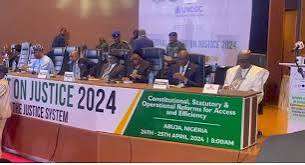
National Justice Summit 2024: Stakeholders call for reforms ..In judicial appointment process ..Funding ..Eradicating delays in the justice system

The communique released at the end of the National Justice Summit, 2024, made far-reaching recommendations that will address the issues of judicial appointment process, funding, and eradicating delays in the administration of justice in Nigeria. Stakeholders in the judiciary, experts, legal luminaries, retired judicial officers etc have noted that the National Policy on Justice 2024 to 2028, will now serve as a roadmap, paving the way for a more efficient, equitable and responsive justice system for all Nigerians. In the communique on Friday, the Chairman, Joint Planning Committee of the Justice Summit, Dr Babatunde Ajibade SAN, said the summit had three technical sessions. He stated that the general consensus reached at the summit was that the role of the National Judicial Council in discharging its responsibility for judicial appointments into the Superior Court of record required significant review. The stakeholders expressed concern about the fact that the Chief Justice of Nigeria, who is the chairman of the NJC is also the chairman of the Federal Judicial Service Commission, the body that initially reviews proposals or lists of candidates by appointment into judicial office. The summit pointed out the seeming inconsistency between the CJN playing both roles, as it would appear that he is recommending candidates to himself being chairman of both bodies, and being the person who appoints a significant number of the members of both bodies other than those who are statutory members. There’s a general consensus by the summit on the need to reconstitute or propose reconstitution of both the NJC and the FJSC. On the role of the State Judicial Service Commission in judicial appointmens, the summit concluded that there was a significant need to ensure that composition of the SJSC is more diverse, that it reflects the interests of the users of the justice sector. Stakeholders noted the fact that the current NJC guidelines may have subverted the intent of the constitutional provision, empowering the SJSC to make judicial appointments, because the NJC guidelines, rather than authorising the SJSC to prepare a shortlist of potential candidates for judicial appointments, appear to address that responsibility solely in the Chairman (Chief Judges of States). The summit therefore called for an amendment of the aspect of the NJC guidelines to make clear that the development or preparation of shortlist of candidates for judicial appointments is something that is to be done by the Commissions as a whole and not just by the Chief Judges. On the general approach that ought to be taken to reforming the judicial appointments process, the summit stressed that focus should be on increased transparency in the appointment process, meritocracy and on meaningful performance evaluations of those who seek judicial office. Also, it was recommended that Nigeria should consider the model that is currently being used in Kenya. There was a consensus on the need to codify the judicial appointments process, such that the discretion that is currently witnessed in the appointments process is reduced to the barest minimum. On funding, budgeting, and administration for the judiciary, the summit resolved that the current process for funding the courts was totally deficient as it was evident that the provisions of the Constitution as amended by the Fifth Amendment, authorising that funding for the State courts should be a joint effort carried out by the executive and the judiciary was not being implemented in any shape or form in the majority of the states. Clear recommendations were made that this was something that needed to be pursued and dealt with decisively, as the summit stated that funding of the judiciary at the federal level is much better than what obtains in the States of the Federation. More so, the summit observed the need to professionalise the administration of the courts, as well as to appoint persons with clear administrative experience to be selected through a transparent process to administer the courts, and to separate the administration of the courts from the administration of justice. On eradicating delays in the administration of justice agenda for leveraging the rules of procedure and effective case management in Nigeria, the panel considered the importance of limiting the jurisdiction of the Supreme Court, and ensuring that matters that would go to the Supreme Court would only be matters of significant national importance. The summit held that before a matter goes to apex court, it would only be by the leave of the Supreme Court, and that the automatic right of appeal to the will be severely curtailed and will be limited only to matters relating to the office and the election into the office of the president of the federation, Vice President and, and Governors of the States. The summit also stated the need for there to be clarity as to who has the authority to discipline legal practitioners and also issues as to how to improve the efficiency of the disciplinary process for legal practitioners. It was agreed that significant steps needed to be taken in these areas to enhance the quality of justice delivery in Nigeria and increase the confidence of members of the public in our justice sector. Conclusively, the summit noted the commitment by the Attorney General of the Federation and by all stakeholders, stressing the need to quickly engage the resolutions into draft legislation that will be presented to the National Assembly for inclusion in the ongoing constitution review process, and also for non-constitutional related legislation to be implemented almost immediately.

NJC raises alarm over alleged bid to defraud retired Judicial officers

The National Judicial Council (NJC) has raised an alarm over alleged incessant bids by a group of fraudsters to defraud retired Judicial officers across the country. According to the NJC, the alleged fraudsters have been bombarding its retired Judicial officers with phone calls demanding for various sums of money to help them fast track payment of their retirement benefits. In a statement signed in Abuja on Sunday, by its Director of Information, Barrister Soji Oye, thr council dissociated itself from the actions of the alleged fraudsters and pleaded with retired Judicial officers not to fall victims of the unscrupulous people. The statement read in part “The attention of the National Judicial Council has been drawn to the incessant phone calls being made to retired Judicial Officers by some unscrupulous individuals demanding payments to fast track the processing of their retirement benefits. “The National Judicial Council by this medium, informs retired Judicial Officers and members of the public to disregard such phone calls as NJC would never demand money from any Judicial Officer to fast track the payment of his retirement benefit. “The public is hereby advised to be wary of and report such calls to the Pension Department of the Council for appropriate action”, the statement said.

NJC recommends compulsory retirement of Osun High Court Judge… probe into 51 petitions against others

The National Judicial Council NJC has recommended compulsory retirement of a High Court Judge in Osun State, S.O Falola,The NJC also sets up panels to investigate 51 petitions against others over various acts of misconduct in the discharge of their judicial duties. The Osun High Court Judge was recommended to Governor Ademola Adeleke for compulsory retirement for granting fraudulent orders against the provisions of the law.At its 104th Meeting held in Abuja, the Council invoked its Constitutional powers and placed the Judge on indefinite suspension from duties pending the time governor Adeleke would give effect to its recommendation. NJC statement issued by its Director of Information Mr Soji Oye on Thursday indicated that Justice Falola incurred the wrath of the Council when he granted a Garnishee Order Absolute against Polaris Bank for the sum of N283,174,000 in a questionable and strange manner and endorsement of the Order, The compulsory retirement recommendation was made sequel to the findings of an Investigation Committee in a petition written against the Judge by one Dapo Kolapo Olowo and Polaris Bank. Justice Falola was also found wanting for attaching the account of the Garnishee with another garnishee and not the account of the Judgment Debtor who had the legal obligation to pay the supposed judgment sum.NJC found that the Judge misconducted himself by entertaining suit No HIK/41/2018 when there was no evidence of a judgment of the Kwara State High Court before him, neither was there a Certificate of Registration of same in Osun State to confer jurisdiction on him. It further found the conduct of the Judge travelling to Lagos to visit the Counsel of the Bank in his Chambers on the issue of Garnishee Proceedings unbecoming of the standard expected of a Judicial Officer. Consequently, Council recommended him to Governor Adeleke for compulsory retirement with immediate effect. Meanwhile, in the exercise of its disciplinary powers under the 1999 Constitution, the Council has suspended Hon. Justice Falola from office pending the approval of the recommendation of his compulsory retirement by the Governor.However, the Council declined the request of Governor Ademola Adeleke of Osun State for permission to swear in the next Most Senior Judge in the State in acting capacity, following allegations levelled against Justice Adepele Ojo, Chief Judge, Osun State and the resolution of the State House of Assembly to suspend him. The Council affirmed that Justice Ojo is still the recognized Chief Judge of Osun State and would not work on the resolution of a State House of Assembly, as it is the only body constitutionally empowered to investigate Judicial Officers and recommend same for any action to the Governor. Consequently, it ordered that Osun State should revert to status quo.At the meeting presided over by the Chief Justice of Nigeria CJN, Olukayode Ariwoola, 11 probe panels were put in place to investigate 51 fresh petitions against other Judicial officers for gross acts of misconduct. The statement also revealed that the Council considered the reports of other Investigation Committees that had concluded their sittings, and dismissed petitions written against Justice Ekaete F. F. Obot, Chief Judge, Akwa Ibom State, Justice Benson Anya of High Court Abia State, Justice Z. B. Abubakar of Federal High Court, Justice Opufaa Ben-Whyte and Augusta Uche K. Chuku of the High Court of Rivers State, for being un-meritorious or withdrawal of petition by the Petitioners. However, Hon Justice A. I. Akobi of the High Court of the Federal Capital Territory is to be issued a letter of guidance to take proper charge and control of his Court. Similarly, the NJC Council resolved to report a Senior Advocate of Nigeria SAN, A. A. Aribisala, to Legal Practitioners’ Privileges Committee (LPPC) for investigation and disciplinary action, for the unpalatable and derogatory remarks he made against a Judicial Officer and by extension, the NJC in his petition to the Council.

NJI Administrator Tasks Judiciary Correspondents On Court Reportage

Administrator of the National Judicial Institute (NJI), Abuja, Justice Salisu Garba Abdullahi (rtd), has tasked judiciary correspondents to maintain fair and balanced reportage of judicial proceedings especially in this era when fake news is commonly peddled via the social media.This was expressed, Wednesday, in his keynote address at the opening ofa 2-day workshop organized by the NJI for members of the National Association of Judiciary Correspondents, Abuja chapter.According to the Administrator, the participants’ role as judiciary correspondents is portraying the Judiciary in good light directly. Impacts upon public opinion and public confidence.With the theme: “Pursuing Media Service Excellence for Optimal Productivity in the Judiciary” the NJI Administrator urged judiciary reporters to continuously be guided by the dictates and ethics of journalism practice.Abdullahi exuded confidence that regularly abiding with the ethics of the profession will no doubt promote media excellence, which in turn will deepen optimal judicial productivity as the theme stipulates.”It is important that I emphasize the need to remain unbiased as journalists and as judiciary correspondents.”The pen they say is mightier than the sword. You will therefore agree with me that biased reportage would certainly ignite unobjective responses in the polity and this would be at variance with the tenets of a democratic society.”Therefore, the desire to ensure that you are at par with your contemporaries in other climes, in line with best global best practices remains a task that all stakeholders must close ranks to achieve” the NJI Administrator said.Justice Abdullahi reminded participants that the impact of judicial integrity to the growth of public confidence in the Judiciary cannot be overemphasized; as such, the need for judiciary reporters to carefully streamline their reportage to reflect integrity exhibited by judicial officers, which he said, is crucial in promoting public confidence in the Judiciary.The Administrator reiterated that transparency is strengthened by the important role Judiciary reporters play in their reportage of judicialofficers.In his remarks, Secretary of the National Judicial Institute,Abdullazeez Olumo Esq. reminded participants that the of theme of the workshop also applies to the media.While commending judiciary correspondents for the robust relationship existing between them and the NJI, Mr Olumo, however, expressed regret that public perception of the judiciary has not been friendly andcommendable.Mr Olumo submitted that the dwindling and negative public perception of the Judiciary could be attributed to what Nigerians read in mainstream and social media.”The public perception of the Judiciary has not been good enough. The Judiciary has really not been treated fairly by the media” Mr Olumosaid.He explained that most often than not, the public doesn’t understand how the Judiciary works, insisting that the media, particularly judiciary reporters must sensitize the public through their reports rather than dwelling on sensation and biased reportage.According to Olumo, some issues that ought not be in court are litigated upon, and when the litigant fails, the person resorts to making inflammatory remarks against the judiciary because the judgment didn’t go the person’s way.”Evidence, Facts and law play key role in hearing and determination of an issue before the court. When you juxtapose these three issues, and present a good case in court, definitely you will get justice.”What you give to the court is what you get back. The court is not a Father Christmas that gives you what you did not ask of.”The media, especially judiciary correspondents should help to sensitize the public through objective, factual and well informed reportage, so that the negative perception of the Judiciary can be reduced, Olumosaid.”It is only the judiciary Correspondents that can do this and we enjoin you to continue to be objective, unbiased while shunning sensationalism in the discharge of your reportage,” the NJI Secretary stated.On the Institute’s part, Olumo assured that the workshop has come to stay in view of the fact that education is a continuum.”Education is an on going process, and one can only stop learning, when one is dead, Olumo said.He therefore assured that the NJI will continue to educate and trainJudiciary Correspondents through capacity building workshops.Also speaking, Chairman of the National Association of Judiciary Correspondents Abuja Chapter, Mr Kayode Lawal, thanked the Administrator of NJI, Justice Garba Abdullahi (rtd) for fulfilling his promise of ensuring that the yearly workshop for Judiciary Correspondents issustained.Lawal confessed that since the inception of the capacity building workshop many years ago, Judiciary Correspondents have become more precise, guided, careful in choice of technical words and objective in reporting the courts.He assured that Judiciary reporters will continue to discharge their duties without fear or favour while at the same time avoid contemptous issues, sensationalism and unbiased reportage.The 1st paper presentation, titled “Reportage of Court in Proceedings:Respect for Victims, Privacies and Presenting the Truth to the Public”was presented by Venerable Tunde Oyesina Esq. of New Telegraph newspaper.

Social Media Reports On Justices Nomination List, ‘Mischief-Making’, Says NJC 

Social Media Reports On Justices Nomination List, ‘Mischief-Making', Says NJC 

The National Judicial Council (NJC) has disowned reports credited to it in the social media that it was not aware or did not receive nomination list for Supreme Court vacancies from the Federal Judicial Service Commission (FJSC). The Director of Information, Barrister Soji Oye, on Sunday, said that he never had discussion with anybody regarding receiving or not receiving the list of Justices nominees from the Federal Judicial Service Commission (FJSC). He described the social media reports on the matter as deliberate handiwork of mischief -makers, insisting that reports on such matters are always by official press statement from the Council through his office. The NJC Spokesperson cautioned against unverified reports circulating on social media regarding Supreme Court nominations and the process being followed to fill vacancies on the bench. It will be recalled that there were reports stating that the FJSC released 22 names for NJC’s consideration to fill vacancies at the Apex Court bench.  The nomination reportedly includes regional distribution of candidates across Nigeria’s geopolitical zones. According to the report, the nomination of Justices for the bench followed complaints in September that the Supreme Court was operating with only 10 out of its constitutional strength of 21 Justices. Based on the depletions of Justices due to retirement and deaths, it was reported that the FJSC subsequently submitted a shortlist to address the vacant positions. Oye warned the media, especially social media operators to always get their information from rightful sources so as not to mis-inform the general public on Supreme Court nominations and the process being followed to fill vacancies on the bench.