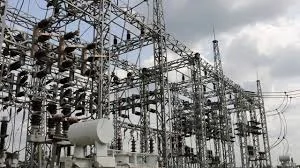
National Grid Collapses Again, Triggering Nationwide Blackout

Nigeria’s national electricity grid collapsed on Saturday, marking the third failure in just one week.  The grid recorded zero megawatts as of 9:10 a.m., leaving the country in darkness once more.  This latest collapse brings the total number of grid failures to eight in 2024, with earlier outages occurring in February, March, April, July, and August. The recurring power disruptions have been linked to outdated infrastructure. Nigeria’s power minister, Adebayo Adelabu, has stressed the need for improvements in power systems, including a push for decentralisation, allowing multiple regional grids to operate independently.  This would reduce the widespread impact of failures.  Despite earlier reports of a decline in system disturbances, the national grid’s failures remain a pressing issue.

Peter Obi Reacts to Power Grid Failures

2023 Labour Party presidential candidate Peter Obi has voiced his concerns over the ongoing power grid failures in Nigeria, describing the situation as a national embarrassment.  In a Twitter post, he criticized the repeated collapses of the national grid, which have left many Nigerians without electricity.  He pointed out that these outages expose the weaknesses in the country’s power infrastructure and highlight failures in leadership and policy implementation. Obi questioned how long Nigerians must endure a system that fails to provide reliable electricity, a crucial element for a productive society.  He emphasized the importance of power supply for the economic transformation of the country, particularly for small and medium-sized enterprises (SMEs) that are vital for job creation and economic growth. He also compared Nigeria’s electricity generation capabilities with those of other African nations.  Despite being the fourth largest economy on the continent, Nigeria generates less than 10,000 megawatts of electricity, a stark contrast to South Africa and Egypt, which each generate over 40,000 megawatts.  Obi argued that this significant disparity in power generation illustrates deep-rooted governance issues that hinder the country’s growth and potential. Calling for immediate and comprehensive reforms, Obi stated that Nigerians deserve a government focused on measurable progress in development and the well-being of its citizens. ReplyForwardAdd reaction

Blackout As Electricity Workers Shut Down National Grid

In compliance with the joint directive of the Nigeria Labour Congress (NLC) and Trade Union Congress (TUC) to down tools on Monday over the new minimum wage, electricity workers have shut down the National Grid, resulting in nationwide blackout. This was disclosed by the Transmission Company of Nigeria (TCN) in a statement signed by its spokesperson, Ndidi Mbah, on Monday morning. TCN said workers were driven away from their duty posts while others were beaten and wounded at some power facilities. It added that all its efforts at grid recovery were being frustrated by the unionists. “The Transmission Company of Nigeria hereby informs the general public that the Labour Union has shut down the national grid, resulting in black out nationwide. The national grid shut down occured at about 2.19am this morning, 3rd June 2024. “At about 1:15am this morning, the Benin Transmission Operator under the Independent System Operations unit of TCN reported that all operators were driven away from the control room and that staff that resisted were beaten while some were wounded in the course of forcing them out of the control room and without any form of control or supervision, the Benin Area Control Center was brought to zero. “Other transmission substations that were shut down, by the Labour Union include the Ganmo, Benin, Ayede, Olorunsogo, Akangba and Osogbo Transmission Substations. Some transmission lines were equally opened due to the ongoing activities of the labour union. “On the power generating side, power generating units from different generating stations were forced to shut down some units of their generating plants, the Jebba Generating Station was forced to shut down one of its generating units while three others in the same substation subsequently shut down on very high frequency. The sudden forced load cuts led to high frequency and system instability, which eventually shut down the national grid at 2:19am. “At about 3.23am, however, TCN commenced grid recovery, using the Shiroro Substation to attempt to feed the transmission lines supplying bulk electricity to the Katampe Transmission Substation. The situation is such that the labour Union is still obstructing grid recovery nationwide. “We will continue to make effort to recover and stabilize the grid to enable the restoration of normal bulk transmission of electricity to distribution load centres nationwide,” TCN stated.