Nigeria’s Economic Decisions Beginning to Pay Off, Says FG

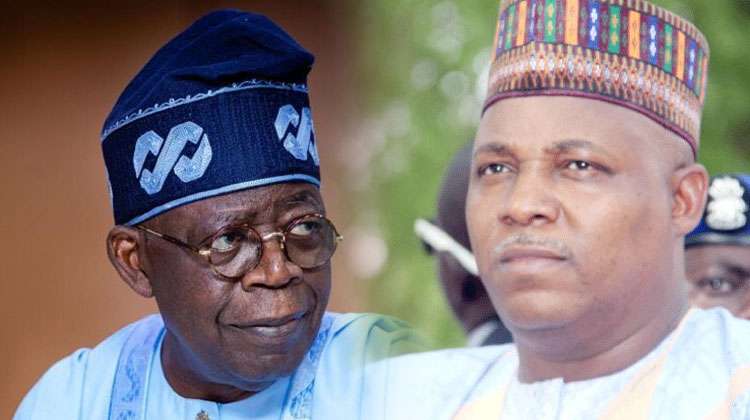
The Federal Government has expressed optimism about the positive effects of its tough economic decisions, citing recent growth in Nigeria’s GDP as a sign of progress.  Vice President Kashim Shettima made the statement during the National Economic Council’s (NEC) 147th meeting in Abuja on December 13, 2024.  He noted that the 3.46% GDP growth reported for the third quarter of 2024 was an indication of better economic times ahead.  READ THIS: NNPCL 2024 Recruitment: Candidates Ready For Interview Stage Shettima acknowledged the contributions of the Council’s members and urged them to prepare for the coming year, taking into account how this year’s policies and projects have shaped the nation’s economic trajectory.  He emphasized that, despite the challenges, the government’s reforms are starting to show results. In addition, the meeting included a discussion on the World Bank’s Economic Report, which highlighted efforts to strengthen Nigeria’s education and healthcare sectors.  Shettima pointed out that these initiatives aim to improve human capital, reduce inequalities, and better equip the workforce to thrive globally.

Senator Kashim Shettima upscales Nigeria’s Human Capital Development Programme

Vice President Kashim Shettima upscales Nigeria’s Human Capital Development (HCD) agenda with the launch of the second phase of the critical development strategy, November 1, Abuja. He inaugurated the second phase, christened as HCD 2.0, during a meeting of the Human Capital Development Programme Steering Committee at the Presidential Villa in Abuja. The launch marks a renewed commitment to enhancing healthcare, education, and economic inclusion across Nigeria, building upon efforts initiated in 2018. Vice President Shettima acknowledged the progress made since the initial HCD 1.0 strategy, which laid essential groundwork to improve Nigeria’s global human capital rankings.  Recognizing critical gaps in health, education, and employment, HCD 1.0 united national and state-level stakeholders in a shared goal to strengthen Nigeria’s health and education sectors by 2030.  “Today, we are not only assessing our journey but setting a new path with HCD 2.0,” Shettima stated, describing the initiative as more than a program, but rather a “national commitment” aimed at creating a healthier, more educated, and inclusive Nigeria. HCD 2.0 introduces an expanded focus on equitable healthcare access, including digital health solutions, innovative financing, and climate-resilient practices to ensure all Nigerians receive essential services.  Another key aspect of HCD 2.0 is bridging the digital divide and advancing financial inclusion, with measures to promote online banking, digital payment systems, and fintech solutions, allowing broader participation in the economy. Shettima emphasized that HCD 2.0’s success relies on support from federal and state leaders, private sector partners, and civil society, urging all stakeholders to embrace this shared vision for a sustainable future.

Shettima Presides Over 145th NEC Meeting as Peter Obi berates call for a new aircraft for VP

Nigeria Vice President, Senator Kashim Shettima on Thursday, presided over the One hundred and Forty-fifth National Economic Council (NEC) meeting at the Council Chamber of the Presidential Villa in Abuja. Various state governors, Ministers, and other stakeholders were in attendance at the meeting. Thursday’s meeting is the seventh in the year 2024 and focuses on preferring robust solutions to the current economic challenges facing the nation. Meanwhile, the Labour Party (LP) presidential candidate in the 2023 election, Peter Obi, has berated the Speaker of the Borno State House of Assembly, Abdulkareem Lawan, over the demand for a new aircraft for the Vice President, Kashim Shettima. Lawan highlighted that the Vice President’s life is endangered by the recurrent use of a “faulty” presidential aircraft for international commitments. This alarm was raised following Vice President Shettima’s abrupt cancellation of his scheduled appearance at the Commonwealth Summit in Samoa. In a statement via X, Peter Obi stated that the demand for a new aircraft for Shettima shows the Speaker is insensitive and unconcerned about the prevailing economic situation in the country. Peter Obi noted that issues that will benefit the masses should preoccupy leaders rather than being consumed by selfish desires for needless luxury at the expense of the people.

Human Capital Development: Empowering Nigerians for global competitiveness

The growth and development of Third World economies are usually hampered, largely, by the extractive nature of their productive bases. This developmental challenge is quite rife in the African continent. Take Nigeria as an example, the highest revenue the country ever recorded from the export of crude oil in a year was $35billion in 2011. As an absolute figure, the amount may seem impressive but it peters out significantly if compared with the country’s productive potential per capita.  Nigeria is often referenced in very superlative terms as a land brimming with abundant natural and human resources. Nigerians speak of their country with great pride. Of course, they deserve the bragging right. Nigeria is a rich country of very happy people. One in every four black people in the world is a Nigerian, it is claimed. With a GDP of $474.5billion as of 2019, and growing at 3.19% in 2024, Nigeria has the largest economy in Africa. Unfortunately, the Nigerian economy is dependent on the export of oil and other natural produce for its mainstay. In other words, several decades of pivoting Nigeria’s development effort on finite resources have not led to much. This has led successive federal administrations to promise diversification of the productive base of the Nigerian economy, with most, if not all of them, failing to walk the talk. The most epochal decision to catalyze the economic potential of the Nigerian economy on a sustainable basis was taken in 2018 when the National Economic Council (NEC) initiated the National Human Capital Development Program to address poverty and ensure sustainable economic growth. This decision may have arisen from the realization that the most strategic growth plan is that which targets individuals as economic agents, or the engine room that drives much needed growth and development on a sustainable basis. ALSO READ: VALUABLE INSIGHTS OF THE 2023/2024 HUMAN DEVELOPMENT REPORT AND CORRELATIONS FOR NIGERIA’S HUMAN DEVELOPMENT INDEX According to NEC, the “HCD Program is an effort to accelerate more and better-streamlined investments in people for equitable and economic growth in Nigeria.” At this juncture, it is timely to address the subject matter of Human Capital Development. The World Bank Human Development Project defines Human Capital as consisting “of the knowledge, skills, and health that people accumulate throughout their lives, enabling them to realize their potential as productive members of society.” In other words, HCD is the painstaking exercise of transforming the human population of a society from being a liability to an economic asset that is required for the transformation of such society along a positive growth trajectory. According to the National Economic Council (NEC) HCD document: “Over the past decade, many of the key metrics relating to Human Capital Development (HCD) in Nigeria have been going in the wrong direction. Nigeria’s performance across all major global HCD indices, including the United Nations Human Capital Index, the Institute of Health Metrics and Evaluation (IHME) Expected Human Capital Index, and the World Bank Human Capital Index, is below the global average, as well as below the average for developing economies in sub-Saharan Africa (SSA).” The reasons for this high rate of underdevelopment of the human capital are not far-fetched, taking into account the low level of budgetary provisioning for education, decrepit state of infrastructure, pervasive state of insecurity and global economic headwinds. A lifeline for our nation The race towards developing the human capital assets of Nigeria may appear belated but the next best time is NOW! It is the cornerstone from which the building blocks of the Nigerian economy, post-Covid shall be aligned in aid of the realising the overarching objective of establishing a knowledge-based economy. According to the Vice President, Senator Kashim Shettima, Chairman of the NEC drives the Human Capital Development project, the “Program is a lifeline for our nation and built on the collective realization that enough is enough. Enough of the cycles that have held us back. Enough of the legacies of unplanned high fertility rates and alarming maternal and under-five mortality rates.” Senator Shettima who spoke while launching the Nasarawa State Human Capital Development in Lafia declared that HCD is a treasure which contains solutions to Nigeria’s human “capital challenges by focusing on education, health, and workforce development.” Nigeria’s Human Capital Development project is now in the second phase (HCD 2.0) with emphasis on gender and equal opportunities, climate change and sustainability, digital economy and financial inclusion as well as food and nutrition. With steady progress being made in attaining the set targets in the three thematic areas of health, education and skills, labour force participation and livelihoods, coupled with the avowed determination of the Vice President, as well as the HCD Secretariat towards the attainment of these goals, the presidency is not just walking the talk this time, but resolved to surpass its own targets. This is self-evident from the Vice President’s declaration that “The unemployment rates, the growing informal sector, and low labor force participation must be reversed. This is the dystopia our Human Capital Development Program is designed to abate, under the mandate of His Excellency President Bola Ahmed Tinubu, GCFR. For so long, at the National Economic Council, we have debated the ideal nation we wish to build and the paths we are to achieve it.”

Shettima launches Nasarawa State Human Capital Development Plan

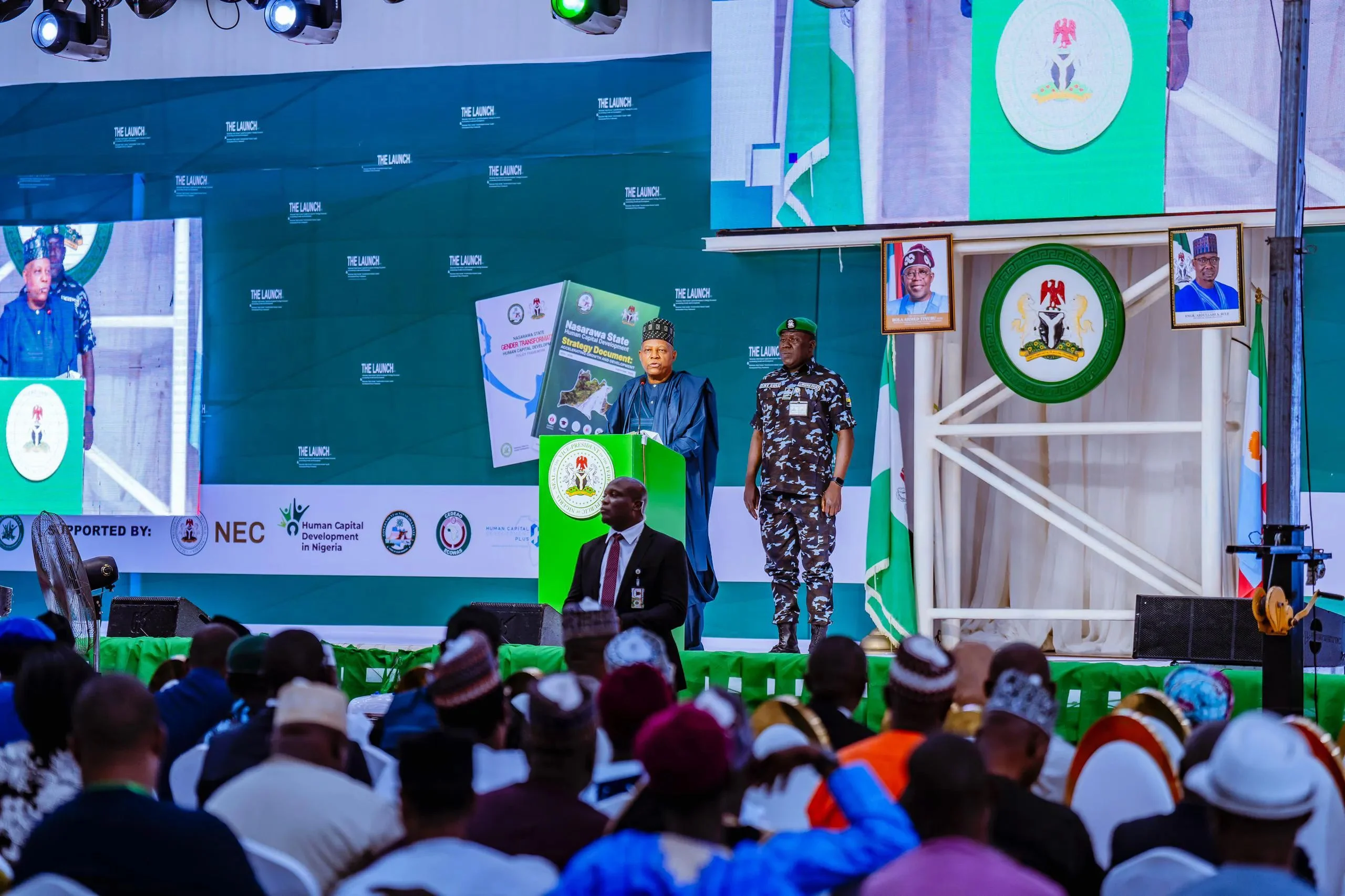
It is D-day in Nasarawa State today as the Vice President, His Excellency Senator Kashim Shettima launches the Nasarawa State Human Capital Development Strategy Document in Lafia, the state capital. A release from the focal Nasarawa State Human Capital Development Agency (HCDA) indicates the overarching focus of the strategy as “accelerating growth and development.” The occasion shall also feature the launch of the Nasarawa state Gender Transformative Human Capital Development policy framework. Human Capital Development was adopted as a development strategy by the National Economic Council in 2018. The aim was to address poverty and ensure sustainable economic growth. ” Nigeria’s Human Capital Development program (HCD 1.0) set clear targets and commitments for investment priorities, accelerating investments in human capital, and expanding stakeholder support to drive outcomes in Health, Education, and Labour Force participation in line with the UN Sustainable Development Goals 2030.” With a population of about 215million, expected to double to 400million by 2050, the human capital, apart from a huge reserve of oil and gas, which is a finite resource, is Nigeria’s most sustainable development resource. A huge population alone is however, not enough. Age and educational attainment are two critical attributes required to make the population amenable to development needs. READ ALSO: Human Capital Development and Economic Growth in Nigeria Consequently, the World Bank Human Capital Project defines human capital “as a combination of the knowledge, skills, and health people accumulate throughout their lives that enables them to realise their potential as productive members of society.” It is therefore the position of the NEC that, “For Nigeria to unlock its ‘demographic dividend’ and tap into the economic potential of its working age citizens, the country will need to first enhance its investment in its people – particularly women and children.” It argues that, “Over the past decade, many of the key metrics relating to Human CapitalDevelopment (HCD) in Nigeria have been going in the wrong direction. Nigeria’s performance across all major global HCD indices, including the United Nations Human Capital Index, the Institute of Health Metrics and Evaluation (IHME) ExpectedHuman Capital Index, and the World Bank Human Capital Index, is below the global average, as well as below the average for developing economies in sub-Saharan Africa (SSA),” the NEC, Nigeria’s apex economic policy body posited. According to a statement by Habiba Balarabe Suleiman, the Director General, Nasarawa State HCDA, successful implementation of the state HCD Strategic Plan 2024-2030 “is pivotal to the socioeconomic growth and sustainable development of Nasarawa state.” The launch of the HCD Strategy Document and Nasarawa state Gender Transformative Human Capital Development policy framework by the Vice President opens a new vista in the development aspiration of the state and a benchmark for peer review by other sub-nationals.