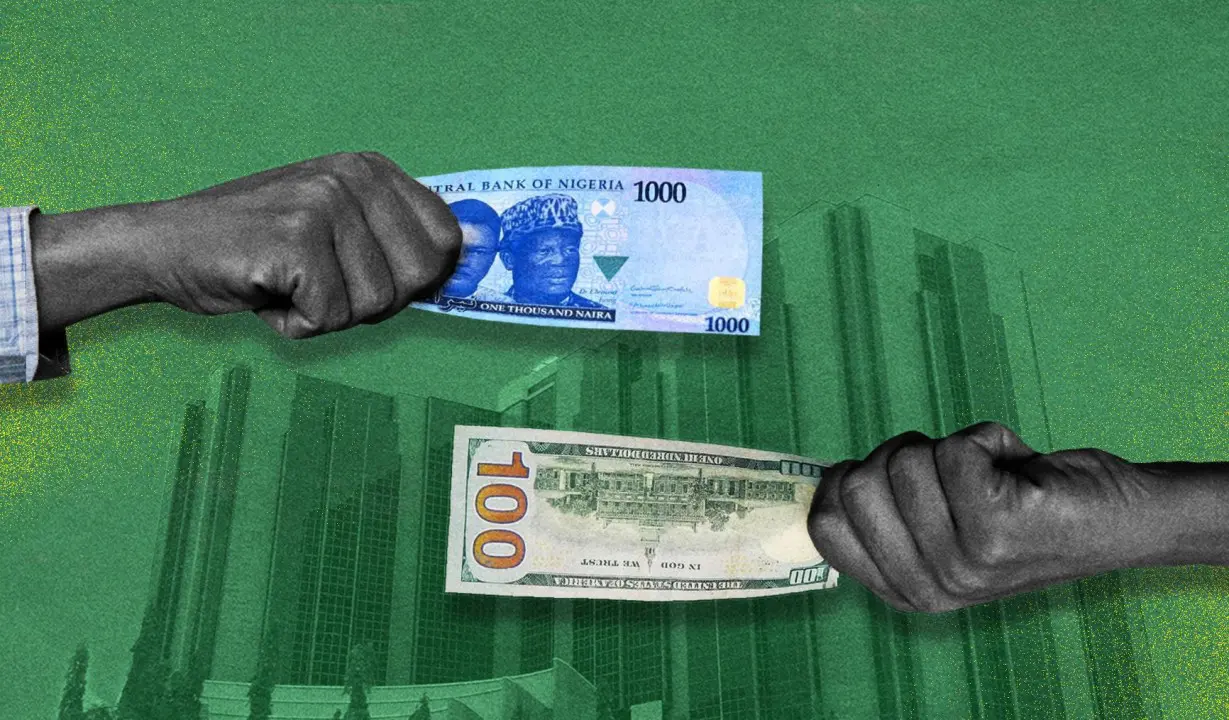
The Strengthening Naira: Poetic Justice for Greedy Speculators and Economic Saboteurs

The precipitous decimation of the value of the Naira in the past several months since the Tinubu regime came on board was driven largely by irrational and insanely greedy speculators combined with vested corrupt moneybags who had stacks of Naira in their basement and were hell bent in discrediting and undercutting the Tinubu regime by attacking our currency. We also can not forget unpatriotic governors who were alleged to be converting their increased federal allocation into the greenback, which they stacked away in their governor residences. Their evil plot and greed caused the poor masses and the middle class so much grief with galloping inflation pricing them out of basic consumer goods like bread not to talk of critical commodity like cement whose price went as far as above 12,000. It also did tremendous damage to the Tinubu regime with shouts of “ Ebi npawa” we are hungry rendering the land. Even one of his most ardent supporters, Fuji maestro Wasiu Ayinde (aka Kwam 1), even jumped on the critic wagon. It is, therefore, poetic justice that the evil plot of these greedy speculators and economic saboteurs has now backfired. Betting against resilient, convention-busting Nigeria remains a bad bet. We have for decades befuddled conventional economists who struggled unsuccessfully to unravel the logic behind Naijanomics, which seems to defy gravity. People might have forgotten that not so long ago, as recently as July last year, the Naira to dollar rate war was around 750. So the Naira falling as low as nearly 1900 against the dollar defied conventional economic theory. People pointed to the removal of the oil subsidies. The sudden rebound of the Naira against the dollar, with the oil subsidies removal still in place, sticks a sharp needle into that balloon. What’s most important now for the economy’s health is stability and predictability in the forex market to allow investors to make long-term investment plans and to curtail the price gouging behavior of Nigerian retailers. The question now is will the prices that shot through the roof on the excuse of the skyrocketing dollar to Naira rate for even non-import dependent products like gari and bush meat, come down to earth now that the Naira has regained some of its lost value. Knowing our people, I am not raising my hope too high. Another unknown is the rumors making the round about the huge minimum wage hike being proposed for federal employees. No doubt, long suffering, underpaid Nigerian workers deserve their long overdue due raise to a living wage. The risk is that if it is not properly calibrated to the ability of the state and the private sector to pay, it might lead you to inflationary pressure and instability in the forex market. The Caddoso and CBN have their work cut out for them and have many sleepless nights ahead of them. Finally, my heart goes out to recent “japanerians” who flung their houses and other valuables assets at hugely discounted prices to finance their japaing by the lure of earning high flying foreign currencies, but many finding out that the green grass across the fence might just be fake artificial turf. The strengthening of the Naira against the dollars throws another wrench to totally mess up their calculus.

Naira Plunges Across Forex Segments Amid Liquidity

Naira Plunges Across Forex Segments Amid Liquidity

The naira closed last week on a losing streak, plunging in all segments of the foreign exchange (forex) market. “In the local currency market, the performance of the naira was underwhelming”, said analysts at Afrinvest. At the parallel market, the base currency (Dollar) appreciated 1.8 per cent week-on-week (w/w) against the price currency (naira) to N1,150.00/$. While at the NAFEM window, the base currency (dollar) rose 0.4 per vent w/w against the naira) to N794.89/$. Meanwhile, activity level in the NAFEM window improved by 11.1 per cent w/w to $817.7 billion from $736.3 billion in the prior week. At the FMDQ Securities Exchange (SE) FX Futures Contract Market, the total value of open contracts of the Naira remained at $4.2 billion. “We do not foresee any changes given that CBN has cleared all Non-Deliverable Forwards (NDFs) open contracts, shortly after rendering contracts for tenors between one and twelve months inactive in response to reforms in the NAFEM window. This week, we expect rates across different segments of the market to depreciate following demand-supply imbalance”, said Afrinvest. At the end of trading last week, system liquidity surged higher by 667.2 per cent to close at N527.1 billion. Nonetheless, the price of liquidity in the banking system, the OPR and OVN rates rose 2.9ppts and 2.4ppts w/w respectively to 23.8 per cent and 24.6 per cent. At the primary market segment for T-bills, the CBN offered bills worth N211.7 billion across the 91 (N9.7 billion), 182 (N1.8 billion), and 364-day (N199.9 billion) tenors. Demand was healthy across all ends of the curve as the average bid-to-cover ratio printed at 5.8x due to robust system liquidity. Stop rates across the 91-day and 182- day instrument improved, rising 100bps apiece to 7.0 per cent (91-day) and 11.0 per cent (182-day). Meanwhile, the stop rate remained unchanged at 16.8 per cent in the 364-day instrument. Meanwhile, the secondary market segment saw a bullish outing as the average yield across all tenors compressed 213 basis points (bps) w/w to 11.2 per cent. The bullish outing was driven by buy interest on the mid (182-day) and long-dated (365-day) instruments as yield saw a decline of 242bps and 221bps w/w respectively. In the coming week, we anticipate healthy liquidity conditions due to FAAC inflow and Bond coupon payment. Consequently, we expect buy sentiment to be sustained at the T-bills secondary market. Meanwhile, Brent crude oil price futures inched higher by 1.4 per cent to close at $81.75/bbl., as traders remained on the sideline ahead of next week’s Organisation of Petroleum Exporting Countries (OPEC+) meeting. The anticipated meeting would focus on output cut agreements for 2024, following the recent downturn in oil price due to strong supply from non-OPEC producers. Meanwhile, on the domestic front, Nigeria’s foreign reserves fell 28bps ($91.7m) w/w to $33.2bn (22/11/2023).

Naira Depreciates To N827.83/$1 At Official Market

Naira Plunges Across Forex Segments Amid Liquidity

The naira again declined against the US dollar at the official market on Thursday, exchanging for N827.83 to one U.S dollar after a slight appreciation on Wednesday which saw the local currency exchanging at N818.99/$1. This is still a slight gain when compared to the N850.22 it recorded on Tuesday. However, the naira closed flat at the parallel forex market where forex is sold unofficially, the exchange rate closed at N1140/$1 as against the same N1140/$1 it quoted on Wednesday, representing 0.00 per cent, while peer-to-peer traders quoted around N1127.01/$1.  The intraday high recorded was N1100/$1, while the intraday low was N751.00/$1, representing a wide spread of N348.78/$1. Similarly, the naira also fell to the Euro, exchanging at N1,175/€1 at the parallel market, while it goes for N898.44/€1 at the official market. Also the pound sterling goes for N1,370 and N1029.7441 at the parallel and official market respectively. According to data obtained from the official NAFEM window, forex turnover at the close of the trading on Wednesday was $173.51 million, representing a 20.87 per cent increase compared to the previous day.  The local currency struggle at the foreign exchange market is coming on the heels of rising inflation in the country which saw the inflation rate jump to 27.33 per cent in October 2023 as prices of foodstuff continued to increase in the aftermath of the removal of fuel subsidy by the President Bola Tinubu administration. This was according to the October 2023 Consumer Price Index (CPI) and Inflation Report released by the National Bureau of Statistics (NBS) on Wednesday. The CPI, which measures the changes in the prices of goods and services, rose from 26.72 per cent to 27.33 per cent showing an increase of 0.61 per cent points. “In October 2023, the headline inflation rate increased to 27.33 per cent relative to the September 2023 headline inflation rate which was 26.72 per cent,” the report partly read. “Looking at the movement, the October 2023 headline inflation rate showed an increase of 0.61 per cent points when compared to the September 2023 headline inflation rate. “Furthermore, on a year-on-year basis, the headline inflation rate was 6.24 per cent points higher compared to the rate recorded in October 2022, which was (21.09 per cent). “This shows that the headline inflation rate (year-on-year basis) increased in October 2023 when compared to the same month in the preceding year (October 2022).”

Naira Rallies Across Markets, Trades Below N900/$1 At P2P

CBN Mulls New Recapitalisation For Banks

For the first time since August 2023, the exchange rate dipped below the N900 to $1 mark on peer-to-peer (P2P) platforms, including Binance, indicating a robust turnaround for the Naira. Data from the acclaimed Binance Crypto trading platform showed the exchange rate at an impressive N855 to $1. This development highlights the naira’s impressive recovery trajectory. The black market, often regarded as an unofficial gauge of the currency’s vigour – has listed exchange rates ranging from N1000 to N1,100 for $1 in cash transactions. Several black market dealers shared the sentiment that the naira’s rally might be linked to the recent influx of positive news reports, notably those highlighting the government’s progress in clearing forex backlogs. A black market operator, requesting anonymity, mentioned that the market may be transitioning from ‘panic buying’ to ‘panic selling,’ a stark reversal of the previous trend. On the official front, the Nigerian Autonomous Foreign Exchange Market (NAFEM) witnessed the Naira closing at an encouraging N776.14, marking its strongest finish since October 13th of the current year, a notable improvement from the preceding day’s close of N793.2. The breakthrough below the N900 threshold on the p2p market is being celebrated as a considerable psychological triumph by Nigerian government officials and their surrogates on social media. The Naira commenced the week trading at N1,110 last week Monday, experienced a slight dip to N1,180 on Tuesday, and then exhibited a positive trend on Wednesday and Thursday, closing at N1,175 and N1,125, respectively. The most astounding surge occurred last Friday, with the Naira selling at N950/$. Naira rebound may not be unconnected with augmented foreign exchange inflows, deft policy interventions by the Central Bank of Nigeria (CBN), and stringent measures against illegal financial activities. It would be recalled that the CBN focused on Tier 2 Nigerian banks and international banks with over 75 to 80 per cent of the foreign exchange forward contracts obligations cleared. Findings show that Citigroup ($72 million), Stanbic ($125 million), and Standard Chartered ($63 million) are among the companies that are receiving forex futures deliveries last week The FG also stated that it expected to spend $10 billion to settle FX obligations, support the country’s FX market, and stabilize the naira. Minister of Finance Wale Edun, said that forex liquidity will improve in the coming weeks. He further highlighted that discussions with sovereign wealth funds willing to invest and provide advances along with investments are in advance phases. A US multinational financial services firm, JP Morgan, on Wednesday projected that the naira would trade at N850/$ at the Investors’ and Exporters’ forex window before the end of 2023. However, the US bank said the recent efforts to restore a flexible forex regime may be sustained given the willingness to accompany it with tighter monetary conditions.

No Plans To Re-Denominate Naira, Says CBN

No Plans To Re-Denominate Naira, Says CBN

The Central Bank of Nigeria (CBN) has insisted that it has no plans to re-denominate the Naira, saying such reports are misleading.   According to a statement by the Director, Corporate Communications of the Apex Bank Dr. Isa AbdulMumin, he wondered why a narrative that had been refuted by the Bank continues to gain traction. “The attention of the Central Bank of Nigeria (CBN) has been drawn to the wide circulation of a text message suggesting that the Bank plans to redenominate the country’s legal tender, the Naira, with effect from January 2024. “We are concerned that this narrative, which we had refuted before now, appears to be gaining traction with several debates on the implication of such a policy for the Nigerian economy. “We wish to reiterate that the contents of the message are misleading,” it said. The Apex Bank noted that the “authors of the message, in their mischief, modified text eked from an old policy move by a previous CBN Governor in 2007 to make it appear recent. “For the avoidance of doubt, there is currently no plan by the Bank to restructure and redenominate the naira as it considers reforms”, according to laid down procedures in line with the provisions of the CBN Act, 2007. The regulator advised Nigerians to ignore the news report, “as it is speculative and calculated to cause panic in the polity.”

Despite Slight Appreciation, Naira Still Weak – Report

Naira Plunges Across Forex Segments Amid Liquidity

In spite of the slight appreciation of the Naira at the weekend, the World Bank has listed Nigeria’s local currency as being among the worst-performing currencies in Sub-Saharan African in the first ten months of 2023. According to figures obtained from Aboki forex, the naira was bought and sold for 1,140/$ and 1,150/$1 at the weekend on the parallel section of the foreign exchange market as against the 1,310/$ on Thursday. Over the past two weeks, the Naira has been hitting new lows, as it sold as low as N1300/$ at the black market, and N848/$ at the official market. However, within the past few days, the currency has been on an upward swing, as it appreciated to N789.84/$ on Friday. But in a report by the World Bank the Nigerian Naira has posted a year-to-date depreciation of about 40 per cent, making it the weakest currency in Sub-Saharan Africa, alongside the Angolan Kwanza. Other currencies with significant losses include the South Sudanese pound which has depreciated by about 33 per cent YTD, the Burundian Franc which has depreciated by 27 per cent YTD, the Congolese Franc (18 per cent), Kenyan Shilling (16 per cent), Zambian Kwacha (12 per cent), Ghanaian Cedis (12 per cent), and Rwandan Franc (11 per cent). In the report, it highlighted that between March 2020 and June 2023, there was a widening disparity between the parallel market exchange rate and the official exchange rate. The disparity widened to as much as 80 per cent in November 2022 and dropped to 60 per cent in June 2023. The prioritization of strategic sectors and the imposed price ceilings and trade restrictions pushed transactions to the parallel market, which started to account for a large share of the foreign exchange transactions in the country, including for remittances, tourism, and exports of non-oil products. After the unification and liberalization of the exchange rates in June 2023, the NAFEX rate converged to the parallel one, closing the gap. However, resistance toward the increasing pressure on the Nigerian naira coupled with limited supply of FX at the official window has led to the reemergence of the parallel market premium. Figures obtained from the Central Bank of Nigeria on movement of foreign reserves showed that the country’s external reserves recorded $76.82m accretion in one week, after it moved up from $33.249bn on October 19, 2023 to $33.326bn as of the end of October 26, 2023. It had earlier lost $841.75m in three months after it fell from $34.07bn as of July 7, 2023, to $33.23bn as of October 5, 2023. Meanwhile, an economist and Chief Executive Officer, Centre for the Promotion of Private Enterprise, Dr Muda Yusuf, attributed the naira appreciation to the Supreme Court judgment that brought finality to the litigation around the presidential election. He said the judgment removed uncertainty in the economy. “The pronouncement that the President made about efforts to boost the liquidity in the forex market may have also affected the level of confidence and influenced expectations because if people have expectations that liquidity will improve and the naira will appreciate, they would quickly begin to offload the dollars they have at a lower rate. “We need to seize the opportunity to push down the demand for foreign goods. We must reduce the demand for the dollars. We can have the naira appreciate better.”

Naira Freefall: FG To Receive $10bn Forex Inflow – Finance Minister

Naira Freefall: FG To Receive $10bn Forex Inflow - Finance Minister

The fortunes of the naira may soon be reversed with the Finance Minister, Wale Edun assuring that about $10 billion naira is expected to flow into the economy in a matter of week Edun made this known during a panel session at the ongoing Nigeria Economic Summit Group (NESG) question and answer session concerning stabilizing the foreign exchange market and enshrining liquidity in the market. Since the unification of the foreign exchange market in June, the naira’s value has slumped by over 100 per cent on the parallel market. The current CBN management has introduced a slew of measures to provide liquidity but the chasm between the rate on the I&E window and parallel market continues to widen. The minister said, “in addition, from the supply of foreign exchange through NNPC, increased production, reduced expenditure, from transactions such as forward sales, from our discussions with sovereign wealth funds, that are ready to invest and provide advanced alongside that investment, there is a line of sight of $10 billion worth of foreign exchange in the relatively near future in weeks rather months.” The Minister further said President Tinubu has signed two executive orders geared towards ensuring liquidity in the forex market. He said, “Mr. President announced that he had taken measures to ease illiquidity in the forex market which we know is very problematic at this time.” “The market is illiquid; it’s not functioning properly because there is no supply and there are various reasons for that. The solution that the President has put on the table is that he has signed an executive order that effectively allows under forbearance all the cash that is in the domestic economy to legally come into the formal money supply” “Along with that, there is another executive order that allows domestic issuance of foreign currency instruments so that they will have the incentive to provide that foreign exchange from whatever source.”

Naira Hits All-Time N1065/$ Low, As BDC Operators Seek Urgent Reforms

Naira To Reach ‘Fair Value’ Of N750/$ By Year’s End – FG

The nation’s currency, the Naira, experienced a historic low on Wednesday in the parallel market, with the unofficial exchange rate reaching an unprecedented N1065 to the US dollar. On Tuesday, the Naira closed at N1060 to the dollar on the unofficial market, driven by a shortage of dollars, leading to a rapid depreciation of the currency. Additionally, the Naira weakened by 8.9 percent to N848.12 against the dollar in the official Investors and Exporters (I&E) forex market on Tuesday, according to data from FMDQ. Foreign exchange trades took place within the range of N700 to N981 per dollar, with the dollar’s trading volume surging to $133 million, according to an investment note by the Lagos-based investment banking firm Chapel Hill. The Central Bank of Nigeria (CBN) had relaxed foreign exchange controls in mid-June following criticism of monetary policy measures by President Bola Tinubu and a pledge to end the multiple exchange rate regime. The official rate briefly aligned with the parallel market, plunging 40 percent, but the spread began to widen again. Until Tuesday, the official rate remained near N800 to the dollar, while the street rate surpassed N1,000 to a dollar. Foreign exchange operators attributed the Naira’s depreciation to persistent illiquidity in the market in the absence of central bank intervention. The widening premium between the official rate and the black market is a sign that the exchange rate has not found a clearing price. The Chairman of the Association of Bureau de Change Operators in Nigeria (ABCON), Aminu Gwadabe, explained that the Naira’s rapid devaluation is due to significant liquidity driving up demand for unavailable dollars in the market. He also pointed to uncertainties, loss of public and international confidence in the economy, rising inflation, and a low interbank market interest rate, which have reduced the appeal for alternative investments. Gwadabe recommended abolishing the I&E window and allowing willing buyers and sellers to dictate price mechanisms with legislative backing.