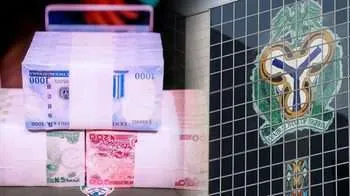
CBN Eyes Explicit Inflation-Targeting Framework To Enhance MP Effectiveness

CBN Eyes Explicit Inflation-Targeting Framework To Enhance MP Effectiveness

The Central Bank of Nigeria (CBN) is set to adopt an explicit inflation-targeting framework to enhance the effectiveness of its monetary policy. The Governor, Central Bank of Nigeria (CBN), Mr. Olayemi Cardoso who disclosed this in Lagos while unveiling his policy direction at the Chartered Institute of Bankers of Nigeria (CIBN) bankers’ night, said that the details and requirements for this framework are currently being finalized alongside the fiscal authorities. He said the CBN will provide forward guidance, enhance transparency, and maintain effective communication with the public to anchor expectations and build trust among stakeholders. He said under the economic agenda of President Bola Ahmed Tinubu’s administration, the government has set an ambitious goal of achieving a Gross Domestic Product (GDP) of $1.0 trillion over the next seven years, with clearly defined priority areas and strategies. He said attaining this substantial target necessitates sustainable and inclusive economic growth at a significantly higher pace than current levels. The administration has already commenced this journey through fiscal reforms, including the removal of petrol subsidy and the unification of the foreign exchange market rate.    On achieving President Bola Tinubu’s Agenda, he  said Nigerian banks do not have sufficient capital in servicing a $1.0 trillion economy in the near future. He said the first step to be taking by the CBN will be directing banks to increase their capital while technology will continue to play a critical role in delivering financial services and enhancing financial inclusion. “Therefore, we must make difficult decisions regarding capital adequacy. As a first step, we will be directing banks to increase their capital,” he added. He stated that from his observation some licensees are operating outside the approved activities, breaching the boundaries set for them, insisting that any intentional or unintended non-compliance will be subject to sanctions, as operators have the responsibility to ensure that they are licensed for the activities they undertake. Speaking further he said “Concurrently, as we conduct a comprehensive review of the licensing framework for payment services, we will engage in extensive consultations to develop a new regulatory and compliance framework that is suitable for the technology-driven payment services sector. “Looking ahead for the industry, banks should reassess the responsible banking framework to ensure that the requirements are effectively integrated into their strategies. I am aware that some banks have made commendable progress in this regard. “The Central Bank of Nigeria is taking steps to enhance its in-house capacity so that it can assist other banks that still have progress to make in implementing their sustainability principles. The governor said the primary mandate of the CBN is to ensure price stability, in addition to other objectives such as issuing legal tender currency, safeguarding external reserves, promoting a sound financial system, and providing economic and financial advice to the government. He mentioned that  In line with CBN strategy to refocus on its core mandate, the CBN will discontinue direct quasi-fiscal interventionist activities and instead utilize orthodox monetary policy tools for implementing monetary policy. According to him “Our monetary policies will aim to achieve price stability, foster sustainable economic growth, stabilize the exchange rate of the naira, and reduce interest rates to facilitate borrowing and investments in the real sector. In order to ensure the proper functioning of domestic and foreign currency markets, clear, transparent, and harmonized rules governing market operations are essential. “New foreign exchange guidelines and legislation will be developed, and extensive consultations will be conducted with banks and FX market operators before implementing any new requirements” The CBN governor pointed out that the major challenges affecting the nation’s economy include high and rising inflation, inadequate foreign exchange supply, depreciation of the exchange rate, limited external reserves, weakened output, and high unemployment. These challenges according to him have led to increased interest rates, discouraging investments in productive activities. He said within the banking system, high inflation has affected asset quality and solvency ratios. Additionally, the persistent depreciation of the naira poses a significant risk for domestic banks with foreign exchange exposures. He assured Nigerians that while it is indeed a formidable challenge, it is not insurmountable, adding that with the right policy measures, we can overcome these obstacles and pave the way for progress and prosperity. He said the removal of petrol subsidy and the adoption of a floating exchange rate, among other government policies, are anticipated to have positive effects on the economy in the medium-term. These measures are expected to enhance investor confidence, attract capital inflows, stimulate domestic investment, and ultimately improve the level of external reserves. Additionally, they are expected to contribute to the stabilization of the domestic currency. He said despite the challenging global and domestic macroeconomic environment, Nigeria’s financial sector has demonstrated resilience in 2023, with key indicators of financial soundness largely meeting regulatory benchmarks. He mentioned that stress tests conducted on the banking industry also indicate its strength under mild-to-moderate scenarios of sustained economic and financial stress, although there is room for further strengthening and enhancing resilience to shocks. He said although the banking sector demonstrated soundness and resilience, there is still much work to be done in fortifying the industry for future challenges. He said in recent years, the continuous decline in Nigeria’s crude oil production has further weakened our already inadequate economic diversification. This has led to a decline in government revenue and foreign exchange inflows, while simultaneously witnessing a growth in public expenditures and a deterioration in macroeconomic indicators, which has constrained our policy options. Consequently, we have seen the fiscal deficit and public debt increase, placing additional strain on external reserves and contributing to exchange rate instability.

MPC Postponement, Blessing In Disguise – Uwaleke

MPC Postponement, Blessing In Disguise – Uwaleke

The postponement of the MPC meeting for the second consecutive time could be a blessing in disguise, Professor Uche Uwaleke said. The Central Bank of Nigeria had on Monday announced the indefinite postponement of the Monetary Policy Committee meeting. The meeting, early scheduled for Monday and Tuesday, November 20 and 21, has again been postponed for the second time since Dr. Olayemi Cardoso became the governor of the apex court in September. The CBN’s Director of Corporate Communications, Dr Isa Abdulmumin, who gave this hint in a text message, confirmed that “MPC is not holding”. However, in a chat with NIGERIAN ANCHOR, Uwaleke, who is a Professor of the Capital Market at the Nasarawa State University Keffi, noted that had the MPC had held in September, it most likely would have jerked up the MPR thereby further increasing the cost of doing business and reducing access to credit. “This would have been the outcome of the meeting against the backdrop of the pressure by the IMF for an MPR hike to reduce money supply which would not have had any significant impact on the rising inflation,” he said.

More Proactive Push Needed For Central Bank Digital Currencies – IMF   

More Proactive Push Needed For Central Bank Digital Currencies – IMF   

The head of the International Monetary Fund (IMF) has urged countries to make a more proactive push to develop Central Bank Digital Currencies (CBDCs). Eleven countries, including a number in the Caribbean, and Nigeria, have already launched CBDCs. Around 120 others are exploring them, although progress and approaches differ widely and a few have even abandoned the idea altogether. “We may be at a point where the public sector needs to offer a little more guidance,” IMF Managing Director Kristalina Georgieva said in a speech in Singapore. “Not to crowd out, not to disrupt,” she added. “But to act as a catalyst, to ensure safety and efficiency – and to counter fragmentation.” She made her remarks as the IMF published the first instalment of a “virtual handbook” on CBDCs, designed to help countries with the design and set-up process and ensure that the new technologies are globally interoperable. Supporters say CBDCs will modernise payments with new functionality and provide an alternative to physical cash, which seems in terminal decline. But questions remain as to why they represent an advance when current systems are already capable of many of the proposed benefits, and countries such as Nigeria that have already launched CBDCs are seeing very low uptake among the public. Georgieva said that with technology advancing so rapidly, countries needed to push ahead with development now to avoid getting caught out in future. “If anything, we need to raise another sail to pick up speed,” she said, likening the efforts to a nautical journey. “The world is changing faster than most imagined”.

Naira Depreciates To N827.83/$1 At Official Market

Naira Plunges Across Forex Segments Amid Liquidity

The naira again declined against the US dollar at the official market on Thursday, exchanging for N827.83 to one U.S dollar after a slight appreciation on Wednesday which saw the local currency exchanging at N818.99/$1. This is still a slight gain when compared to the N850.22 it recorded on Tuesday. However, the naira closed flat at the parallel forex market where forex is sold unofficially, the exchange rate closed at N1140/$1 as against the same N1140/$1 it quoted on Wednesday, representing 0.00 per cent, while peer-to-peer traders quoted around N1127.01/$1.  The intraday high recorded was N1100/$1, while the intraday low was N751.00/$1, representing a wide spread of N348.78/$1. Similarly, the naira also fell to the Euro, exchanging at N1,175/€1 at the parallel market, while it goes for N898.44/€1 at the official market. Also the pound sterling goes for N1,370 and N1029.7441 at the parallel and official market respectively. According to data obtained from the official NAFEM window, forex turnover at the close of the trading on Wednesday was $173.51 million, representing a 20.87 per cent increase compared to the previous day.  The local currency struggle at the foreign exchange market is coming on the heels of rising inflation in the country which saw the inflation rate jump to 27.33 per cent in October 2023 as prices of foodstuff continued to increase in the aftermath of the removal of fuel subsidy by the President Bola Tinubu administration. This was according to the October 2023 Consumer Price Index (CPI) and Inflation Report released by the National Bureau of Statistics (NBS) on Wednesday. The CPI, which measures the changes in the prices of goods and services, rose from 26.72 per cent to 27.33 per cent showing an increase of 0.61 per cent points. “In October 2023, the headline inflation rate increased to 27.33 per cent relative to the September 2023 headline inflation rate which was 26.72 per cent,” the report partly read. “Looking at the movement, the October 2023 headline inflation rate showed an increase of 0.61 per cent points when compared to the September 2023 headline inflation rate. “Furthermore, on a year-on-year basis, the headline inflation rate was 6.24 per cent points higher compared to the rate recorded in October 2022, which was (21.09 per cent). “This shows that the headline inflation rate (year-on-year basis) increased in October 2023 when compared to the same month in the preceding year (October 2022).”

Tweaking The CBN Act, NASS Must Tread With Caution

Tweaking The CBN Act, NASS Must Tread With Caution

The ongoing effort by the National Assembly to tinker with the Central Bank of Nigeria’s Act, 2007, has been generating heated debate within the polity. The concern has been the rationality of the exercise. This effort is spearheaded by two distinguished Senators, Senators Steve Karimi and Darlington Nwokocha. The bills are – ‘A Bill to Amend the Central Bank of Nigeria Act 2007, and Matters Connected Therein’, and An Act to Amend the Central Bank (establishment) Act 2007 to Make the Central Bank More Transparent and Accountable in its Operations and to Ensure Enhancement of its functions and for Connected Matters’. The crux of the two amendments already consolidated by the Senate is the ban on the CBN governor and his deputies from partisan politics, reconstitution of the CBN Board; subjection of CBN staff remuneration to the Salaries and Wages Commission; and ceding the position of the Board Chairman to a person outside the CBN. Also proposed prohibition of use of foreign currency in local transactions. Until this proposal, the Governor doubles as the Board Chairman. The preoccupation of the sponsors of the bills is to enhance transparency and efficiency of the Central Bank of Nigeria, and to strip its governor of certain powers. The Senate Committee on Banking and Finance is saddled with the responsibility of reviewing and working on these bills for the Senate to take a position. Whatever is the expectation of the sponsors, it is important that the National Assembly does not in a spasm of emotion erode the independence of the Bank. CBN Act 2007 had settled this. It was a common knowledge that the immediate past CBN governors hiatus and unprofessional conduct by engaging in partisan politics may have warranted this quest.His action was an infraction,and antithetical to his oath of office. It was also against the norms of central banking ethics. Anger against a rare singular infraction should not be used as an excuse to cripple a vital organ of government as the CBN. It amounts to throwing the baby away with the bath water. An International Monetary Fund (IMF) working paper titled: The Role of Board Oversight in Central Bank Governance: The Legal Design Issues describe the Central Banks as a public law institution established to fulfill essentially sovereign functions delegated to them by the State. It admitted that certain central bank laws explicitly prohibit certain operations. Continuing, the paper said, for a central bank to be effective, it must enjoy a high level of autonomy vis-à-vis both political institutions and private economic interest. This autonomy it enumerated as: institutional, functional, personal, and financial. Institutionally it said the central bank should not be influenced by the State or private third parties in its decision-making in the context of the performance of its functions, e.g., through ministerial instructions. Functional points to its capability to implement its functions without direct governmental interference, and Personal ensures that key decision makers of the central bank (Governor and members of the Executive Board, Monetary Policy Committee and Oversight Boards) are autonomous from political and private economic interest. The Financial entails the capability of the bank to pursue its mandate by way of the financial means required to do so (the emphasis is mine). Banning the CBN governor and his deputies from partisan politics is a good proposal, and well approved. But to appoint/impose an outsider as the chairman of the board other that its governor is incongruous with global central banking practice. Typical of our clime, as being proposed will not augur well for a critical institution as the CBN. The infraction of its former governor – highly condemned, is not an excuse to deal a fatal blow on the Bank. It amounts to killing a fly with a sledgehammer. Subjecting its staff salaries to an external body violates the financial independence of the Bank. Infractions committed by its former governor have nothing to do with staff welfare. There are other organs of government earning far higher than the CBN staff, yet the legislators turned the blind eye. Why are all eyes on the CBN? Are the Nigeria National Petroleum Plc staff salaries a subject of scrutiny by the National Salaries and Wages Commission, the Debt Management Office (DMO), the Nigeria Deposit Insurance Corporation (NDIC), and many others? It is public knowledge that the staff of some of these agencies earn fantastically higher, (excluding other perks) than CBN staff. The Central Bank of Nigeria like its peers is the heart of the monetary system of the country. Nigeria’s economy is influenced heavily by the actions it takes, thus, any spasm of irrational decisions to alter or whittle what international investors and global partners would see as an erosion of the Bank’s independence, will further hurt the already fragile economy. It Was the Central Bank of Nigeria during the COVID-19 pandemic that ensured the stability of the economy while other organs of government were at a loss on what to do. The CBN should not be politicized. What happened under Godwin Emefiele was a rash decision that should be treated in isolation. Amending the Act is not investor friendly, and it should be jettisoned. It will also encumber the effectiveness of monetary policy, and once the institution is seen as an appendage of the political class, there will be loss of faith, and confidence, in the economy. Ultimately, the economy will suffer for it. Mr. Uche Tochukwu, a financial expert, said tweaking the CBN Act Now because of what happened under Godwin Emefiele will hurt the economy and the integrity of the CBN. He welcomed the decision of the lawmakers to ban the Governor and his deputies from partisan politics but frowned at appointing an outsider as the Bank’s Board Chairman. He said it is an aberration. Tochukwu called the attempt to subject the CBN staff salary to Salaries and Wages Commission as meddlesomeness. What about their own opaquely fatty allowances the public has decried? Doing that, they advised, will kill the morale of the staff. Are we even sure

No Plans To Re-Denominate Naira, Says CBN

No Plans To Re-Denominate Naira, Says CBN

The Central Bank of Nigeria (CBN) has insisted that it has no plans to re-denominate the Naira, saying such reports are misleading.   According to a statement by the Director, Corporate Communications of the Apex Bank Dr. Isa AbdulMumin, he wondered why a narrative that had been refuted by the Bank continues to gain traction. “The attention of the Central Bank of Nigeria (CBN) has been drawn to the wide circulation of a text message suggesting that the Bank plans to redenominate the country’s legal tender, the Naira, with effect from January 2024. “We are concerned that this narrative, which we had refuted before now, appears to be gaining traction with several debates on the implication of such a policy for the Nigerian economy. “We wish to reiterate that the contents of the message are misleading,” it said. The Apex Bank noted that the “authors of the message, in their mischief, modified text eked from an old policy move by a previous CBN Governor in 2007 to make it appear recent. “For the avoidance of doubt, there is currently no plan by the Bank to restructure and redenominate the naira as it considers reforms”, according to laid down procedures in line with the provisions of the CBN Act, 2007. The regulator advised Nigerians to ignore the news report, “as it is speculative and calculated to cause panic in the polity.”

Nigeria’s Currency Circulation Jumps To N66.4trn -CBN

FAAC: FG, States, LGs Share N906.955bn October Revenue

The Central Bank of Nigeria CBN) has reported that Nigeria’s total money supply (M2) increased to N66.4 trillion in September 2023. The data from the apex bank on money supply in the economy in the month other review comprising demand deposits, quasi-money, and currency outside banks, reflected increases in the components. Specifically, quasi-money, which pertains to financial tools that can be easily converted to cash, rose from N40.8 trillion in the preceding month to N41 trillion; demand deposits, primarily made up of funds in banks accessible without prior notice, moved from N21.7 trillion to N23 trillion while currency outside banks’ vaults marginally increased from N2.29 trillion to N2.3 trillion. Over the past few years, Nigeria’s money supply has been increasing based on the micro and macroeconomic whirlwinds of the economy, particularly the surging inflation rate, FX pressure on the Naira, and declining interest rates. The money supply, also known as M2, represents the total amount of money available in the economy at a particular moment, including physical currency such as coins and banknotes as well as deposits maintained by individuals, enterprises, and institutions in banks and other financial entities. However, the nation’s Net Foreign Assets dipped in September from N7.1 trillion to just N591 billion while Net Domestic Assets rose to N66.5 trillion from N58.3 trillion. A further analysis of the M2 trend during the month under review showed that the net domestic credit rose from N87.2 trillion to N92.7 trillion, thereby raising the net domestic credit to GDP by around 42.7 per cent. The breakdown of the net domestic credit indicated that credit to the government marginally increased to N34.1 trillion from N32.5 trillion while credit to the organized private sector surged from N54.7 trillion in the preceding month to N58.6 trillion, representing 63% of net domestic credit.

Naira Freefall: FG To Receive $10bn Forex Inflow – Finance Minister

Naira Freefall: FG To Receive $10bn Forex Inflow - Finance Minister

The fortunes of the naira may soon be reversed with the Finance Minister, Wale Edun assuring that about $10 billion naira is expected to flow into the economy in a matter of week Edun made this known during a panel session at the ongoing Nigeria Economic Summit Group (NESG) question and answer session concerning stabilizing the foreign exchange market and enshrining liquidity in the market. Since the unification of the foreign exchange market in June, the naira’s value has slumped by over 100 per cent on the parallel market. The current CBN management has introduced a slew of measures to provide liquidity but the chasm between the rate on the I&E window and parallel market continues to widen. The minister said, “in addition, from the supply of foreign exchange through NNPC, increased production, reduced expenditure, from transactions such as forward sales, from our discussions with sovereign wealth funds, that are ready to invest and provide advanced alongside that investment, there is a line of sight of $10 billion worth of foreign exchange in the relatively near future in weeks rather months.” The Minister further said President Tinubu has signed two executive orders geared towards ensuring liquidity in the forex market. He said, “Mr. President announced that he had taken measures to ease illiquidity in the forex market which we know is very problematic at this time.” “The market is illiquid; it’s not functioning properly because there is no supply and there are various reasons for that. The solution that the President has put on the table is that he has signed an executive order that effectively allows under forbearance all the cash that is in the domestic economy to legally come into the formal money supply” “Along with that, there is another executive order that allows domestic issuance of foreign currency instruments so that they will have the incentive to provide that foreign exchange from whatever source.”

Inflation Rate Climbs To 26.72% In September -NBS

Inflation Rate Climbs To 26.72% In September -NBS

In September 2023, the headline inflation rate increased to 26.72% relative to the August 2023 headline inflation rate which was 25.80%, the National Bureau of Statistics has said.  In it’s CPI and Inflation Report for September, released Monday in Abuja, the bureau said the rates showed a showed an increase of 0.92% points when compared to the August 2023 headline inflation rate.  On a year-on-year basis, the headline inflation rate was 5.94% points higher compared to the rate recorded in September 2022, which was 20.77%. This shows that the headline inflation rate (year-on-year basis) increased in September 2023 when compared to the same month in the preceding year (i.e., September 2022). Furthermore, on a month-on-month basis, the headline inflation rate in September 2023 was 2.10%, which was 1.08% lower than the rate recorded in August 2023 (3.18%).  This means that in September 2023, the rate of increase in the average price level was less than the rate of increase in the average price level in August 2023. 

FX Policy: LCCI Tasks CBN On Creative Financing Options

No Plans To Re-Denominate Naira, Says CBN

The Lagos Chamber of Commerce and Industry (LCCI) have urged the CBN to adopt creative financing options for clearing the short to medium-term backlog of foreign exchange. LCCI noted that the new FX policy of the CBN unbanning the 43 items that were excluded from accessing FX at the official market is a market-friendly step towards unifying the exchange rates and is expected to curtail inflationary pressures in the short term. The body also said the policy change was expected to reduce the demand pressure on the parallel market and ensure there is a gradual convergence in FX market rates. The President/Chairman of Council, LCCI, Asiwaju Michael Olawale-Cole, said this in a statement at the weekend, adding that the policy would promote orderliness and professional conduct by all market participants to ensure market forces determine exchange rates on a willing buyer- willing seller principle. “The Chamber recommends that the CBN adopt creative financing options for clearing the short to medium-term backlog and establish a mechanism to address forex unification under the current system. “The Chamber believes the authorities must pursue the right monetary policy reforms to improve the investment climate and boost investor confidence. We call on the CBN to ensure transparency and accountability in banks’ foreign exchange dealings at the Investors & Exporters window”. Recall that the CBN recently lifted the forex ban on 43 items and also promised to intervene in the FX market from “time to time”. The apex bank had in 2015 restricted the items from accessing FX from the I&E window, saying they were “not valid for foreign exchange and could be produced in the country. Items affected include rice, cement, palm kernel, meat and processed meat products, poultry, soap, and cosmetics among others. But in a statement, the bank’s Director of Corporate Communications Isa AbdulMumin said the ban has been lifted. “As part of its responsibility to ensure price stability, the CBN will boost liquidity in the Nigerian Foreign Exchange Market by interventions from time to time. As market liquidity improves, these CBN interventions will gradually decrease,” the Thursday statement read. “As part of its responsibility to ensure price stability, the CBN will boost liquidity in the Nigerian Foreign Exchange Market by interventions from time to time. As market liquidity improves, these CBN interventions will gradually decrease.” “The CBN has set as one of its goals the attainment of a single FX market. Consultation is ongoing with market participants to achieve this goal,” CBN added.