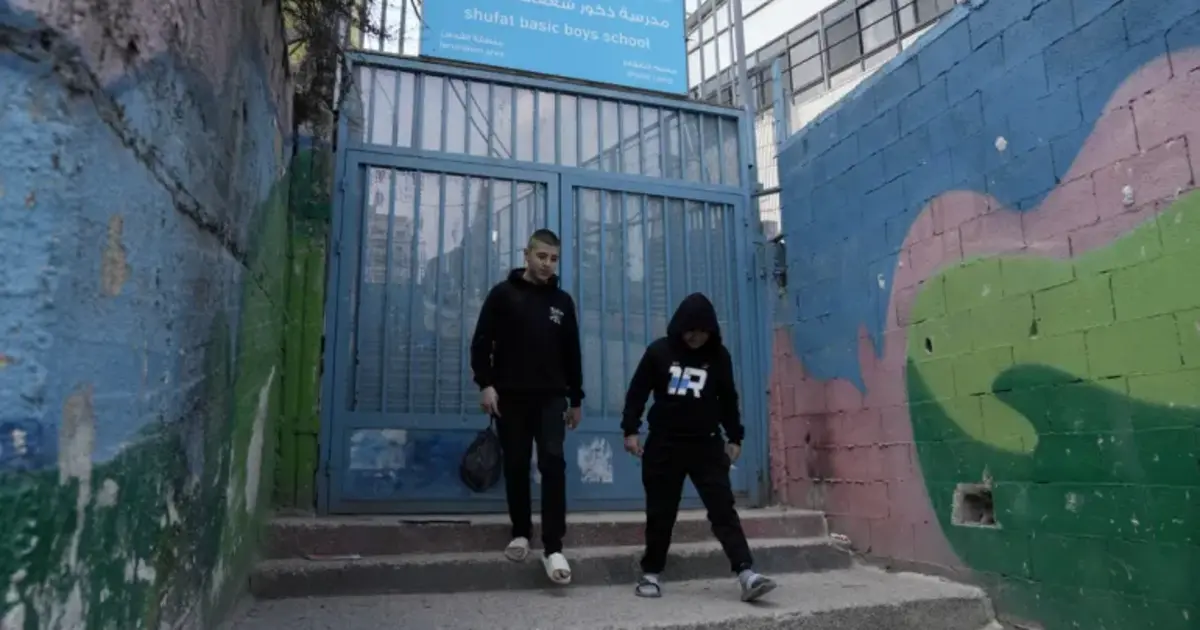
Israeli Army closes 6 UN-run schools in Shu’afat refugee camp

Israeli army forces on Thursday raided six UN-run schools in occupied East Jerusalem to enforce military closure orders, Palestinian authorities said. A statement by the Jerusalem Governorate said Israeli soldiers moved into the facilities in the Shu’afat refugee camp to demand the immediate departure of students and teachers. It called the closure orders of the schools “part of an Israeli systematic escalation against Palestinian education institutions” in East Jerusalem. Earlier, the UN agency for Palestinian refugees (UNRWA) warned that the Israeli closure orders of the six schools risk depriving some 800 Palestinian students of their right to education. Israeli authorities ordered the schools in the camp to close by May 8, citing the lack of a license. Under the orders, no one will be allowed into the schools, including principals, teachers, and other staff. The Israeli closure orders are seen as part of Tel Aviv’s wider campaign against UNRWA and its mandate of serving Palestinian refugees. In October 2024, the Israeli Knesset (parliament) passed two laws banning UNRWA’s operations in Israel and areas under its occupation and prohibiting Israeli authorities from having any contact with the agency. The laws took effect on Jan. 30. Israel alleges that UNRWA employees were involved in a Hamas attack on Oct. 7, 2023, a charge vehemently denied by the UN agency. UNRWA was established in 1949, and has served as a critical lifeline for Palestinian refugees, supporting nearly 5.9 million people across Gaza, the West Bank, Jordan, Syria, and Lebanon.
Gaza Ceasefire: WHO, others upscale humanitarian deliveries, emergency health plan

The World Health Organisation (WHO) says Gaza ceasefire could boost aid deliveries to 600 trucks daily amid reports that Israel’s security cabinet has given the green light to a ceasefire deal with Hamas. Dr Rik Peeperkorn, WHO representative in the occupied Palestinian territories (OPT), expressed the optimism in a statement on Friday. “The target is to get between 500 and 600 trucks in per day over the coming weeks,” Peeperkorn said. This would represent “a huge increase” from the 40 to 50 lorries reaching Gaza in recent months and be similar to the level of aid reaching Gaza before war erupted on Oct. 7, 2023. Speaking from Jerusalem, the WHO medic described the ceasefire announcement as “a sign of hope”. He, however, warned that the challenge is massive and daunting, because of chronic and severe shortages of food, fuel and medical supplies. READ ALSO: Suspected cholera outbreak kills 9 in Rivers State According to him, plans are in place for deliveries to begin on Sunday. “We have ordered temporary prefabricated clinics and hospitals. “We will integrate into the existing health facilities as part of plan to expand some needed bed capacity, address urgent health needs and health service delivery.” Humanitarians have repeatedly warned that the crisis in Gaza for civilians has reached catastrophic levels. More than 46,000 people have been killed, according to the authorities and more than 110,000 have been injured – often with life-changing injuries – since the conflict began in October 2023. “Disease is spreading and the risk of famine remains high – needs that are critical to address, especially when more than 12,000 patients – a third of them children – still await evacuation for specialised care,” Peeperkorn said. READ ALSO: Cervical cancer: fourth most common cancer in women He complained that the pace of evacuations has been painfully slow. Of 1,200 requests submitted between November and December 2024, only 29 were approved, a rate of just 2.4 per cent, according to WHO. The WHO and other agencies have stressed the immediate need to provide food, water and medical supplies, but also fuel and spare parts for hospital generators. Gaza’s healthcare system has been shattered, with only half of its 36 hospitals currently operational. Critical health infrastructure continues to be targeted, according to the UN health agency, which pointed to 664 healthcare attacks since October that have caused deaths among civilians and medical workers, also damaging vital health facilities. In spite of the dire conditions, WHO aims to implement an ambitious 60-day emergency health response plan, once a ceasefire kicks in. This includes scaling up existing health efforts, setting up temporary medical clinics and restoring essential healthcare services. Efforts will also focus on combating malnutrition, bolstering disease surveillance and providing medical supplies to areas that have been difficult to access until now. According to WHO, more than $10 billion is required to restore Gaza’s shattered healthcare system, and substantial international support will be essential to avoid further loss of life and prevent a complete breakdown of the region’s health infrastructure. In addition to addressing the immediate health needs, there is also a pressing requirement for broader humanitarian aid. Food, clean water and shelter are fundamental priorities, alongside other crucial medicines and medical equipment which remain in desperately short supply. For the moment, international agencies continue to work under difficult and dangerous conditions, hoping that the ceasefire will offer a lifeline to those trapped in the besieged enclave.
FG advises Nigerians in Lebanon to leave amid escalating Israeli attacks

Nigerians in Diaspora Commission (NIDCOM) has advised nationals living in Lebanon to consider moving out of the country now that commercial flights are still in operation.