Iran begins poll for presidential election

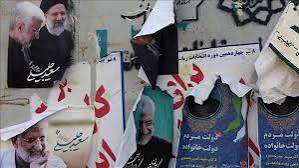
Polls in Iran opened on Friday for a presidential election following the death of ultraconservative president Ebrahim Raisi in a helicopter crash last month. Around 61 million Iranians are eligible to vote in the polls where reformist Masoud Pezeshkian, 69, hopes for a breakthrough win against a divided conservative camp. The Guardian Council, which vets candidates, allowed him to run against a field of conservatives now dominated by parliamentary speaker Mohammad Bagher Ghalibaf and former nuclear negotiator Saeed Jalili. Also left in contention is cleric Mostafa Pourmohammadi after two ultraconservatives dropped out — Tehran major Alireza Zakani and Raisi’s former vice president Amir-Hossein Ghazizadeh Hashemi. “We start the elections” for the country’s 14th presidential ballot, Interior Minister Ahmad Vahidi said in a televised address. Iran’s supreme leader Ayatollah Ali Khamenei cast his ballot shortly after the polls opened and urged Iranians to vote. “Election day is a day of joy and happiness for us Iranians,” he said in a televised speech where he also called for a high turnout. “We encourage our dear people to take the issue of voting seriously and participate,” he said. The election in sanctions-hit Iran comes at a time of high regional tensions between the Islamic Republic and its arch-foes Israel and the United States as the Gaza war rages on. Polls opened at 8:00 am (0430 GMT) in 58,640 stations across the country, mostly in schools and mosques. Polling stations will be open for 10 hours, though authorities could extend voting time as in previous elections. Early projections of the results are expected by Saturday morning and official results by Sunday. If no candidate wins 50 per cent of the vote, a second round will be held on July 5, for only the second time in Iranian electoral history after the 2005 vote went to a runoff. The candidacy of Pezeshkian, until recently a relative unknown, has revived cautious hopes for Iran’s reformist wing after years of dominance by the conservative and ultraconservative camps. Iran’s last reformist president, Mohammad Khatami, praised him as “honest, fair and caring”. Khatami, who served from 1997 to 2005, had also endorsed the moderate Hassan Rouhani, who won the presidency and sealed Iran’s nuclear deal in 2015 with Western powers before it was derailed three years later. The Iranian opposition, particularly in the diaspora, has called for a boycott of the vote. Ultimate political power in Iran is held by Khamenei, the supreme leader. Khamenei insisted this week that “the most qualified candidate” must be “the one who truly believes in the principles of the Islamic Revolution” of 1979 that overthrew the US-backed monarchy. The next president, he said, must allow Iran “to move forward without being dependent on foreign countries”.
Iran fixes date for Presidential Poll

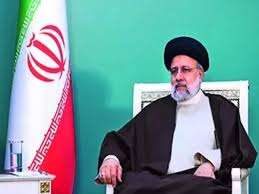
As Iranians continue to mourn the death of former President Ebrahim Raisi in a helicopter crash over the weekend, the Islamic State will now hold a presidential election on June 28. This is coming as the United States gave a positive nod to the demise of President Ebrahim Raisi, claiming that Iranians are “probably better off” without him. Meanwhile, the decision according to local media to hold the election for his replacement was published after a meeting between the heads of the republic’s judicial, executive, and legislative authorities. Vice President Mohammad Mokhber has taken on the role of Acting President of Iran following Supreme Leader Ayatollah Ali Khamenei’s approval on Monday. It is unclear whether Mokhber himself will run. Candidate registration will take place from May 30 to June 3, followed by electoral campaigns scheduled to run from June 12 to 27. Individuals, according to the report, will be vetted by the Guardian Council, a 12-member body of clerics and jurists that administers elections. The president of Iran is usually elected every four years by a “direct vote of the people,” indicating that an election was due in or before June 2025. The announcement comes two days after the fatal helicopter crash, which killed the Iranian president. Raisi and several other senior officials, including Foreign Minister Hossein Amir-Abdollahian, were killed when the helicopter they were travelling in went down in the mountainous East Azerbaijan province in northwest Iran. After more than ten hours of searching – hampered by fog and rain – the president and his entourage were found and confirmed dead. The head of state was returning from the inauguration ceremony of a dam on the Iran-Azerbaijan border, having pledged to visit each of Iran’s 30 provinces at least once a year. Meanwhile, the US Secretary of State, Antony Blinken, has said that condolences offered over Raisi’s death were merely a formality, adding that Iranians are “probably better off” without President Ebrahim Raisi. The State Department had expressed its “official condolences” in a brief statement on Monday, while reaffirming Washington’s “support for the Iranian people and their struggle for human rights and fundamental freedoms.” Blinken was grilled about the statement during a Senate Foreign Relations Committee hearing on Tuesday, when Senator John Barrasso (R-WY) claimed it was “shocking” that the administration would mourn a “sworn enemy of the free world.” “We expressed official condolences as we’ve done when countries – adversaries, enemies or not – have lost leaders,” Blinken explained. “It changes nothing about the fact that Mr. Raisi was engaged in reprehensible conduct, including repressing his own people for many years.” Senator Ted Cruz (R-TX) pressed Blinken further, asking whether the top US diplomat believed “the world is better today now that Raisi is dead.” “Given the horrible acts that he engaged in, both as a judge and as president, to the extent that he can no longer engage in them, yes, the Iranian people are probably better off,” Blinken replied.