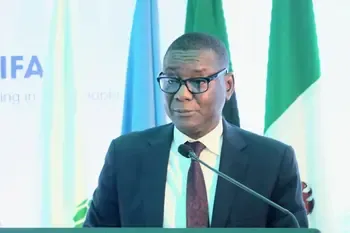
AfDB’s Total Portfolio In Nigeria Hits $4.4bn – Burrow

The African Development Bank (AfDB) says its total portfolio in Nigeria stands at $4.4 billion. The portfolio is for development projects. In his opening remarks at the Joint Country Portfolio Performance Review (CPPR), the Director General for Nigeria Country Department, AfDB, Lamine Barrow, who stated this at the weekend in Abuja, added that there have been significant improvement in the portfolio performance. He said: “Currently, the Bank’s portfolio in Nigeria is one of the largest among the Regional Member Countries (RMCs), with a total commitment value of US$ 4.4 billion. These are 48 operations fairly evenly distributed between public and private sector operations. “Since the 2022 CPPR Workshop, some of the portfolio performance metrics have improved. In particular, operations flagged for implementation challenges decreased from 36% in January 2023 to 32% in September 2023. This is a result of collective efforts from the Federal Ministry of Finance, the Executing Agencies and the Bank to reduce start-up and implementation delays. Indeed, the time taken to meet loan effectiveness and first disbursement conditions tend to be excessive. Let me acknowledge the unprecedented recent development with the FEC approval of the Ekiti Knowledge Zone project! “We are pleased that the share of start-up delays has been reduced from 32% of flagged operations in June 2023 to 28% in October 2023, and is expected to reach 8% by end 2023 with timely and targeted actions for some projects.” Burrow commended the Federal Government for the bold reforms initiated to address macro-economic imbalances and structural issues in the economy. “These reforms, particularly removal of the fuel subsidies and unification of the exchange rates management system, will help reignite higher economic growth trajectory, despite the short-term pains to the population. “This renewed drive for results and impact is clearly noticeable in the Bank’s interface with the Federal Ministry of Finance, and specifically the International Economic Relations Department,” he said. Since the outbreak of the COVID-19 pandemic, Burrow said the Bank’s annual disbursements increased from UA 93 million in 2021 to UA 143 million in 2022 and projected to reach UA165 million by end December 2023. According to him, fiduciary compliance has also improved with progress observed in the submission rate of audited financial statements by the executing/implementing agencies for financial Years 2021 and 2022. “However, there is scope for further improvements in these and other areas. A more regular scheduling of our Quarterly Meetings will also help ensure that emerging issues in the portfolio management are addressed timely,” the AfDB chief said. To further drive improvement in the implementation of its project, he said the Bank “decided to introduce Project Awards to recognize excellence and strong performance, showcase best practices, and incentivize Executing Agencies and Project Implementation Units to improve performance and delivery of development results. I am pleased to announce that the first Project Awards will be given out today. We hope that these recognitions will provide Project Teams added motivation to enhance project implementation performance and results.” For his part, Director International Economic Relations Department, Federal Ministry of Finance, Budget and National Planning, Stanley George, said the aim of the workshop is to ensure Nigeria gets value for money. He said, “If we take a facility we need to know how it is convertible to impact on people. The benefit is to the people that are our concern. We don’t want any delay. We want seamless implementation of these projects so that people on whose behalf this service was called would have immediate impact.” The Director said the review would help proffer solutions to the delays that are encountered in the implementation of some projects. “I want to use this opportunity to highlight some of the issues that may have inhibited the smooth performance of some of the portfolios. One of which is the long period of delay, low disbursement rate, and communication with various MDAs. I believe that some of these issues will be taken up at the very technical level, so that all stakeholders will know their critical roles,” he added.
Yuguda Tasks Private Sector On Infrastructure Funding

Director General of the Securities and Exchange Commission, Mr. Lamido Yuguda has tasked the private sector to rise up to the challenge of sourcing long term financing from the capital market that would fund the provision of infrastructure in the West African Sub region. Yuguda stated this at a pre-event press briefing on the forthcoming West Africa Capital Market Conference scheduled to hold in Lagos October 25-26 with the theme ‘Infrastructural deficit and sustainable financing in an integrated West Africa Capital Market’. According to Yuguda, “Infrastructure deficit refers to a situation where there is insufficient infrastructure relative to the needs of the population. Availability of infrastructure, such as power, telecommunications, roads, rail, schools, hospitals, shopping malls, hotels etc. is crucial to raising the living standards of the people”. He disclosed that in many countries, the responsibility for the provision of infrastructure has been steadily moving away from government to the private sector owing to increasing demand and reduced ability of the government to fund infrastructure alone, adding that the need to tackle the infrastructure deficit in the sub-region as well as embrace principles of sustainable finance to promote economic development are some of the issues to be discussed as the conference. The conference is being jointly organised by the West Africa Securities Regulators Association (WASRA) comprising the Securities and Exchange Commission (SEC) Nigeria, the Securities and Exchange Commission (SEC) Ghana, and Autorite de Marche’s Financiers or AMF-UMOA, in collaboration with Economic Community of West African States (ECOWAS), the West Africa Capital Market Integration Council (WACMIC), and the West African Monetary Institute (WAMI) are jointly organizing the 3rd biennial West Africa Capital Market Conference (WACMaC) 2023. The SEC boss said, “This deficit also poses a significant challenge to the region’s sustainable development. To address this gap, there is a growing need to adopt innovative financing mechanisms, and sustainable financing options to mobilize the desired funds to meet the region’s critical infrastructure needs, foster economic growth, and achieve sustainable development goals. “The Conference will bring together a distinguished array of experts, regulators, policymakers, and industry leaders who will share their insights, experiences, and strategies to proffer solutions to the region’s massive infrastructure deficit. The WACMaC 2023 provides a unique platform to engage in meaningful discussions, share insights, and forge partnerships that will help shape the future of our capital markets. The DG added that this year’s conference is particularly significant, as over 300 stakeholders will converge at the Eko Hotels and Suites, Lagos from October 25-26, 2023 to hold discussions around the general theme with a view to contributing significantly to infrastructural development in Nigeria.
Umahi stops payments to South East road contractors

The Minister of Works, Dave Umahi has stopped some road construction in the South East pending the review of the existing and additional contracts. Umahi gave the directive on Thursday in Enugu during the inspection of some ongoing construction/rehabilitation of federal roads across states in the South-East. The minister expressed dismay that four bridges and three kilometres of additional work were costing N15 billion. “I have directed directors in the ministry to sit with the contractors and review it. “I strongly believe that there is no way that the project will cost us more than three to four billion naira, and when a project is too expensive, and the budgeting process is very low, then contractors will remain on site for 10 to 15 years,” he said. Some of the roads inspected included the Ozalla- Akpugo-Amangunze-Isu Onicha (Enugu-Onitsha) with a spur to Onunwere in Enugu State done by Arab Contractors and rehabilitation of Old Enugu- Onitsha Road also done by Arab Contractors. Others were the construction of the Nenwe-Nomeh-Mburubu -Nara Road with a spur from Obeagu-Oduma road, Enugu State, Rehabilitation of Nsukka -Ikem, Eha Amufu – Nkalagu in Ebonyi State among others. Umahi commended the quality of work done on some of the roads in Enugu, adding that he stopped certain payments until contractors, and the ministry reviewed the existing contracts and additional works. The former Ebonyi governor said he stopped payment of RCC and Arab Contractors until they all sit down to review the cost of the projects and methods of construction. He also said because of funding he had directed works on spots should come in the second phase to enable contractors to complete carriage ways first. He equally directed the contractor handling the Mmaku road seven days to return to the site to cover the binder course. He also directed that the right-hand side of the Enugu-Onitsha expressway be done with concrete to save costs. “I discovered something unprofessional where contractors put a binder course and leave it up to five to eight years, and within that period, the binder course fails. “Henceforth, no contractor will leave the binder course for more than one month without covering it because the binder course admits water which affects subgrade. “It is not healthy for contractors as they lose money for the equipment they are using to maintain the work,” he said. The binder course is an intermediate, bitumen-bound aggregate layer placed between the base layer and the surface of an asphalt pavement. The minister explained that Nigerian roads failed because of the bad asphalt placed on them as a result of adulterated bitumen imported into the country. According to him, most of our roads are not failing because of sub-base or subgrade but fail because of bad asphalt placed on them. “So the fight of turning to concrete is a continuous one, and we will not give up until our roads are able to last up to 30 years to 40 years without maintenance when built. “At Enugu section three to Port Harcourt section 3, I have also directed that the second carriage be totally done on concrete as we are safer with concrete in southeast roads,” he said. To buttress his point on the concrete road, Umahi, who took newsmen to Nigercem – the first cement factory in Nigeria, said the factory road built in 1950 with concrete was still stable as well as other roads in Nkalagu built with concrete seven years ago. “This is what we are advocating and basically, South East, South-South, and South-West roads shall be on concrete because of their terrain,” he said.