Abia Budgets N1.016 Trillion, Focus Education, Health, Roads in 2026

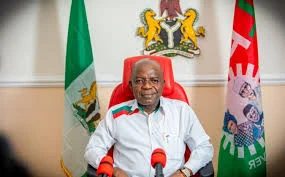
Umuahia, Abia State – Governor Alex Otti on Tuesday presented a N1.016 trillion Appropriation Bill for the 2026 fiscal year to the Abia State House of Assembly, describing it as the “Budget of Acceleration and New Possibilities.” The proposed budget represents a 13 per cent increase over the 2025 appropriation of N750.28 billion and is aimed at fast-tracking infrastructure expansion, enhancing social services, and deepening ongoing reforms across the state. Of the total outlay, N811.8 billion, or 80 per cent, is earmarked for capital projects, while recurrent expenditure accounts for N204.4 billion, representing 20 per cent of the budget. Compared with 2025, the capital vote increased by 32 per cent, and recurrent expenditure rose by 33 per cent to support daily operations and new personnel. Governor Otti highlighted allocations for key sectors, with education receiving N203.2 billion, including N150.4 billion for salaries of at least 15,000 teachers and new school infrastructure. Plans include constructing 17 model primary and secondary schools, three technical colleges, staff quarters, and over 100 ICT laboratories. Tertiary institutions will receive N52.8 billion for staff salaries and new facilities. The health sector is set to receive N149.7 billion, representing 15 per cent of the budget, for the acquisition of new equipment at Abia State University Teaching Hospital, Aba, 23 other facilities, and the renovation of seven general hospitals. Road construction and rehabilitation will take N169.3 billion, or 16.7 per cent of the budget, with priority given to the Umuahia-Ikot Ekpene, Ahiaeke-Okwuta-Bende, and Umuahia-Umueze-Agwu roads. The transport sector is allocated N11.1 billion, including N6 billion to fund 80 additional electric buses, complete transport terminals, and build bus shelters. Other allocations include over N229 billion for agriculture, entrepreneurship, youth development, sports, ICT, women’s empowerment, housing, environment, and urban renewal. Governor Otti projected the state’s internally generated revenue (IGR) to reach N223.4 billion in 2026, up from a target of about N100 billion in 2025. Recurrent expenses will be fully funded from IGR. Federal allocations are projected at N83.2 billion from FAAC, N67.1 billion from VAT, N26.5 billion from grants, and N168 billion from other federal sources, bringing total revenue to N607.2 billion. The governor indicated a budget deficit of N409 billion, or 40 per cent of the budget, which will be financed through concessionary loans strictly for capital projects. He stressed that loans would not be used to fund recurrent expenditure. Governor Otti urged the House to consider and pass the budget, emphasizing its importance in sustaining the state’s development trajectory. Responding, Speaker Emmanuel Emeruwa noted that the state had inherited a deep fiscal hole in 2023 but praised the administration for restoring stability. He said the 2026 budget reflects growing responsibilities and expanding development needs and commended the governor for prudent fiscal management. Emeruwa assured the governor that the House would thoroughly review the estimates and support initiatives that benefit the state.

FG Moves To Establish Building Material Hubs

FG Moves To Establish Building Material Hubs

The Federal government has disclosed its plans to establish building materials manufacturing hubs nationwide to actualize the Action Plan for housing and urban development. The establishment of the hub, which the FG said was in line with the ministry’s housing reform initiatives, was aimed at delivering decent, affordable, and quality housing to Nigerians across all income segments.   The Minister of Housing and Urban Development, Mr. Ahmed Dangiwa, disclosed this recently during a courtesy visit by a delegation from the International Financial Corporation (IFC), led by Dr. Dahlia Khalifa – Regional Director, Central Africa, and Anglophone West Africa, in Abuja. Represented by the Minister of State, Alhaji Abdullahi Gwarzo,  Dangiwa said: “Establishing Building Materials Manufacturing Hubs across the country, implementing a Nationwide Urban Renewal and Slum Upgrading programme is one of the actionable strategies to achieve the renewed hope agenda in housing development. “Also, the development of New Cities that are integrated and inclusive, using a demand-driven strategy that will ensure prompt offtake of units built,” he said. The minister further listed other strategies put in place to achieve the renewed hope agenda including strengthening the institutional capacity of agencies under its supervision including the Federal Mortgage Bank of Nigeria (FMBN) and the Federal Housing Authority (FHA). Dangiwa added that plans to increase the risk of supply of decent and affordable housing, establishing a National Social Housing Fund (NSHF), and implementing land reforms to enhance easy and cost-effective access to land were also in place. He commended the work of the IFC in providing funding for developmental projects across Africa. Dangiwa further assured the corporation of the ministry’s commitment to transparency and accountability in their collaborations. “Our sole goal is to deliver on Mr. President’s objective of providing decent and quality accommodation to all Nigerians, especially the 80 percent falling within the medium and low segments.  We aim to build livable communities and leverage the housing sector to lift 100 million Nigerians out of poverty”, he said. Earlier, the Senior Country Manager of the IFC, Mr Kalim Shah, had noted that housing was a major focus of the IFC across Africa where they service both the supply and demand sides of the industry. He said the purpose of the visit was to understand what the ministry was doing and see how the group could partner and support their efforts to enhance the delivery of affordable housing to Nigerians. “We see some honest desire on the part of the new government to provide affordable housing to the people, and we’ve come as partners to see how we can support what you’re doing. As an arm of the World Bank, our focus is primarily on private sector investment, so we are looking for areas where we can work with the ministry in line with your vision for decent and affordable housing solutions to Nigerians, “he said. Also speaking,  the Senior Investment Officer, Public-Private Partnership of IFC, Alexander Leigh, said the corporation wished to engage the ministry in a bid to identify the specific areas of need and know how to provide solutions. He added that the IFC considers factors like access to land and its administration, construction costs, the situation of beneficiaries to occupy the houses, and affordability in its dealings with countries, and expressed excitement at the ministry’s efforts to address such issues.

Water Supply: PEWASH Constructs 3,321 Facilities In 19 States – Prof Utsev

Sanitation: PEWASH Constructs 3,321 Facilities In 19 States – Prof Utsev

The Partnership for Expanded Water Supply, Sanitation, Hygiene, (PEWASH) initiative has constructed 3,321 facilities, serving an estimated population of about 5,262,189 people across 19 states of the federation. This was revealed on Thursday by the Minister of Water Resources and Sanitation, Prof. Joseph Terlumun Utsev, saying the programme conceptualized and launched by the Federal Government on 7th November, 2016, as a national collaborative and partnership intervention between key stakeholders, to increase access to water supply and sanitation in Nigeria towards achieving the SDG 6.1 and 6.2, by 2030 in the rural areas is achieving it purposes. He said the programme focuses on “Out-put” (Projects) instead of “Input” (Funds) in the rural water supply and sanitation financing, providing an opportunity to transform the WASH sector to deliver results at required scale by adopting “Counterpart Matching Projects”.  “The goal of PEWASH is to contribute to improvements in public health and eradication of poverty in Nigeria, through equitable and sustainable WASH interventions.” According to him, since inception of the programme, 35 State Governments and FCT have signed the PEWASH Protocol (PP), with Rivers State outstanding. “Under the FGN PEWASH Component, it has constructed, rehabilitated and upgraded 2,046 water supply facilities in 19 States of: Kano, Ogun, Bauchi, Osun, Ondo, Jigawa, Plateau, Ekiti, Gombe, Kaduna, Cross River, Kwara, Delta, Katsina, Oyo Sokoto and Nasarawa States, and serving an estimated population of about 3,729,000 people “Under the State PEWASH Component, they have constructed, rehabilitated and upgraded a total number of 1,275 facilities and 761 sanitation facilities, serving an estimated population of about 1,533,189 people, with a total of 19 participating States across the 6 geo-political zones. “The PEWASH programme introduced an innovative technology of sustainable drinking water solutions in Kano and Ogun States, with construction of five (5) Nos. Water health Centres in Ogun State in 5 LGAs which were completed and commissioned; “While additional 5 Nos. AQtap Water Kiosks Dispenser with integrated revenue collection in 5 LGAs of Kano State, are still ongoing in Nasarawa, Fagge, Dala, Ungogo, and Kumbotso LGAs; He said the programme still faces the challenges of poor funding commitment by some state governments.

Capital Markets Can Bridge Africa’s Infrastructure Deficit – Shettima

Capital Markets Can Bridge Africa’s Infrastructure Deficit – Shettima

The Vice President Kashim Shettima has said that the infrastructural deficit in the West African sub region is better tackled from inside and not through foreign borrowing alone, and that the job of the capital market in Nigeria and across the region is therefore cut out for it and this extends to Africa at large. Shettima stated this at the opening ceremony of the 3rd West Africa Capital Market Conference (WACMaC) with the theme: “Infrastructural Deficit and Sustainable Financing in an Integrated West African Capital Market” held Wednesday in Lagos. The Vice President, who was represented by Mr. Tope Fasua, Special Adviser to the President on Economic Affairs in the Office of the Vice President of the Federal Republic of Nigeria, said the centrality of capital market to Nigeria’s development trajectory especially to the evolution of corporate sector, industries and most importantly infrastructural development cannot be over emphasized. He added that it is a time of intense competition among nations and resources, and with advancement in technology, nations are able to reach nations with their products just as businesses have their fingers in billions of pockets the world over. In his opening remarks, Director General of the Securities and Exchange Commission and Chairman of West Africa Securities Regulators Association, WASRA, Mr. Lamido Yuguda stated that the Conference (WACMaC) was conceived as a platform to address crucial issues related to the orderly growth and development of regional and continental capital markets and jointly hosted by WASRA, the Economic Community of West African States (ECOWAS), the West Africa Capital Market Integration Council (WACMIC), and the West African Monetary Institute (WAMI). Yuguda said, “In 2010, the establishment of the West African Capital Market Integration Council (WACMIC) marked the inception of our collaborative effort to create a seamless and unified capital market within West Africa. Five years later, the formation of the West Africa Securities Regulators Association (WASRA) further solidified this commitment to harmonizing the regulatory environment for financial securities issuance and trading. “WACMIC and WASRA bring together the securities exchanges, central securities depositories and commissions of the sub-region, comprising Cape Verde, Ghana, Nigeria, and the Union Economique et Monétaire Ouest Africaine (UEMOA), with Morocco as an observer member.  Our mission, as outlined in the ECOWAS Commission Treaty, is to facilitate the issuance and trading of financial securities across the region,” he said. In an address, Executive Governor of Lagos State Mr. Babajide Sanwo-Olu said the co-operation between the various bodies fortifies the bedrock of the W/African region fostering a collaborative spirit among member states. Sanwo-Olu said governments are actively aware of the imperatives of addressing infrastructure deficit and sustainable financing in the region. He said the theme of the conference is especially apt for the moment as across the sub region, modern infrastructure such as roads, rails, ports, fibre optics connectivity power etc. are largely inadequate. “These perennial inadequacies have hindered the economic growth of our various nations and economic development of our people.  It behoves therefore on us to deliberate on ideas, financial strategies that can bridge these infrastructural gaps, enhancing the quality of life of our people and propelling our economy to greater heights,” the governor added.

FCT To Construct 30km Roads In 6 Area Councils –Wike

FCT Residents Get October 31 Ultimatum To Revert Land For Residential Use

The Minister of the Federal Capital Territory (FCT), Mr Nyesom Wike, says a total of 30-kilometre roads will be constructed across the six Area Councils of the FCT. Wike, who stated this when Sen. Philip Aduda and Mr Zakari Dobi visited him in his office in Abuja on Wednesday. Aduda was the immediate past Senator that represented FCT in the Senate in the 9th Assembly under the Peoples Democratic Party. He recontested the seat along with Dobi, who contested under the All Progressives Congress but lost to Senator Ireti Kingibe of the Labour Party. The minister said that the 30-kilometre roads, five in each of the six area councils, would be concluded before May 29, 2024. This, according to him, is to decentralise development efforts from the city centre to rural communities across the area councils. “President Bola Tinubu had directed that at least five-kilometre roads must be constructed in each of the six area councils before May 29. “This is part of his renewed hope agenda to ensure that people in rural communities were not left out in the development efforts of the current administration,” he said. Wike commended the visitors for working as a team irrespective of political party differences to work for the development of the FCT. He promised to routinely consult them to tribute their quota in developing the city, adding that the FCT Administration would work with everybody that has something to offer. The minister explained that the establishment of the Civil Service Commission for FCT was part of the renewed hope agenda by removing every bottle next to carrier progression. He added that FCT was equally pulled out of Treasury Single Account (TSA) to encourage development in the capital city. “The goal is to rebuild the lost hope among residents of the FCT,” Wike said. Earlier, Aduda explained that the visit was to congratulate Wike on his appointment as Minister of the FCT and commend him for the good work he was doing. He added that the visit was also to thank Tinubu for appointing a son of the soil as a Minister and pledged their full support to the development of the FCT for the interest of all. “We are also here to commend you for the bold step in establishing the Civil Service Commission for FCT, removing FCT from TSA and establishment of. Women Affairs Secretariat to address women’s concerns,” Aduda said. 

Zungeru Hydropower Project To Generate 2.64bn Kwh Electricity Annually – CNEEC

Zungeru Hydropower Project To Generate 2.64bn Kwh Electricity Annually – CNEEC

The Zungeru hydropower project will generate 2.64 billion kWh of electricity annually, a Chinese consortium comprising China National Electric Engineering Company (CNEEC) and Sinohydro, has said in Abuja. The consortium said via a statement, that the project will make a significant contribution to Nigeria’s power generation capacity and is proof of the China-Nigeria partnership. “The project will provide flood-control, irrigation, water-supply and fish-breeding facilities; although construction works on the power plant started in May 2013, it was expected to take 60-months for completion with initial completion date of 2018. “However, legal and financial challenges related to ecological settlement in the affected area delayed the project commissioning to 2021. “The global pandemic COVID-19 further delayed the construction period as the site was shut down from operation in the year 2020 during the peak of the pandemic.” The engineering, procurement and construction contract was awarded to  the China National Electric Engineering Company (CNEEC) and Sinohydro. It said amidst security challenges such as attacks on workers at the site in 2022, the project progressed, adding that as of Aug. 15, 2023, the project was successfully handed over to the Federal Government. NAN reports that the project located on the Kaduna River in Niger is a 700MW hydroelectric facility built by the consortium. The project which costs about 1.3billion dollars approximately (₦162.9 billion) is the biggest power project completed in Nigeria in the past ten years and one of the biggest power projects in Africa. The is designed to generate 2,630 GWh energy with a total installed capacity of 700MW. Zungeru is one of several hydro projects that are part of Nigeria’s Renewable Energy Master Plan (REMP) proposed in 2006. REMP seeks to increase the supply of renewable electricity – including wind, solar, biomass and small hydro – from 13 per cent of total electricity generation in 2015 to 23 per cent in 2025 and 36 per cent by 2030, according to the Nigerian government. The government said additional hydro power plant (HPP) projects in various stages of development include 3,050-MW HPP, 360-MW Gurara II HPP, 38-MW Dadinkowa HPP, 40-MW Itisi HPP and 3,100-MW Mambilla HPP. Nigeria’s population is more than 160 million people and published reports indicate the country’s 10 national integrated power projects only generate 4,000 MW of electricity.

Concrete Roads More Durable, Cheap, Umahi Insists

Concrete Roads More Durable, Cheap, Umahi Insists

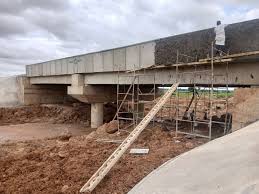
The Minister of Works, David Umahi has reiterated that concrete has been discovered to be more durable and cost effective in the construction of roads in some parts of the country. A statement by the Director of Press FMW, Mrs Blessing Lere-Adams, disclosed that the minister said this during a meeting with Directors of the Ministry in Abuja. The meeting was held for the purposes of clarification on pavements built with concrete and asphalt. Umahi said there were a lot of advantages in using concrete in road construction, stressing that roads built with concrete could last for 50 years without having issues of portholes or washout. “Concrete roads have a longer lifespan, it can withstand heavy traffic loads, low maintenance, less affected by temperature fluctuations. “A lot of advantages accrue to the use of concrete to construct roads, concrete roads last longer, compared to asphalt roads, reducing the need for frequent repairs and maintenance. “It is stronger and can withstand heavy traffic loads, it also has low maintenance,” Umahi said. Umahi, however, stated that nobody was insisting that all ongoing road construction in the nation should be changed to concrete. He said such could happen under some conditions, including roads constructed with asphalt pavement must be on concrete shoulder, with an alternative design on the road shoulder. He added that some of the contractors were still working with obsolete and old machines. He encouraged the directors to come to him for any suggestion or logical argument, saying that the mission of Tinubu’s administration was to improve on the road infrastructure across the nation for the good of all. “I am appealing to our consciences to see ourselves as people going to the same direction and pursuing the same agenda for the betterment of all. “All those in the field are the same with people in the office. Services in the office is what is keeping the services in the site,” Umahi said. 

FG Decries CCECC’s Slow Pace Of Work On Port Harcourt-Maiduguri Railway

FG Decries CCECC’s Slow Pace Of Work On Port Harcourt-Maiduguri Railway

The Minister of Transportation, Sen. Saidu Alkali, has expressed disappointment over the slow pace of work on the reconstruction of the Eastern Railway Corridor by the Chinese Civil Engineering Construction Company (CCECC) Ltd. The minister made his feelings known at the weekend when he inspected the progress of work done on the reconstruction of Eastern railway corridor to Port-Harcourt, Rivers State. Alkali expressed sadness that between Port-Harcourt and Aba Section, only 47 per cent completion stage had been achieved, instead of achieving 47 per cent completion of the entire stretch from Port-Harcourt to Maiduguri. “If you cannot complete Port-Harcourt to Aba which is 63km in 12 months, how would you be able to complete over 2000km in 36 months?” Alkali expressed dismay on the use of manual alignment processes by the CCECC in laying the track in the 21st Century. According to him, in a project that is 85 per cent funded by the Chinese and 15 per cent by the Federal Government, it is only the 15 per cent fund provision by the Federal Government that financed the project so far. The minister said that he would go back to the ministry to look at what was doable within the ambit of the law and that whatever the law provided on the issues observed, he would enforce it. Alkali however, identified one of the striking benefits to be the linking up of the two Sea Ports in Port-Harcourt to Maiduguri as well as promotion of regional trading at a highly reduced cost. The minister assured the people of the zone that by the time the passenger train services commenced, it would go a long way in cushioning the effect of the petroleum subsidy removal on Nigerians that would make use of the train services. Briefing the Minister and his delegation, representative of the CCECC, Mr C. Ching, promised that the first section of the project which was from Port-Harcourt to Aba, would be delivered by December, 2023. The CCECC assured the minister that enough materials were on ground to meet the target date, adding that the project with a special kind of bolts and nuts that were ‘anti-theft’ had been introduced to make vandalism difficult. Onovo said the Consultant handling the project, Khairi and Jamub Global Services Limited as well as the Permanent Secretary, Federal Ministry of Transportation, Dr Magdalene Ajani, Directors from the Ministry, the Managing Director, NRC, Fidet Okhiria and others attended the inspection. On March 10, 2021, the Federal Government began the $3 billion repair and reconstruction of the 1,443 kilometres Eastern Railway Line from Port Harcourt to Maiduguri. The railway, when completed, will link Rivers, Abia, Imo, Enugu, Benue, Nasarawa, Plateau, Kaduna, Bauchi, Gombe, Yobe and Borno States.

$2bn Kano-Maradi Rail Project Excites Transport Minister

$2bn Kano-Maradi Rail Project Excites Minister

The Minister of Transport, Sen. Ahmed Alkali, expressed his delight at the progress of the $2 billion Kano-Maradi standard gauge rail project connecting Niger Republic. Speaking to reporters in Dadin Kowa, Jigawa State, after inspecting the project, Alkali emphasized the project’s significance in boosting the economies of both Nigeria and Niger Republic. He reaffirmed the government’s commitment to ensuring the timely completion of the Kano-Jigawa-Maradi rail line project. Alkali acknowledged the necessity of making sacrifices, including concessions from the contractors, to meet the project’s financial requirements. The minister, who traveled by road from Kano to Daura, expressed satisfaction with the work accomplished thus far and was optimistic that the project would meet its target completion date of 2025. The standard gauge rail project, which commenced in Kano and passes through Jigawa and Katsina States before terminating in Maradi, Niger Republic, holds great promise for regional trade and development. Alkali revealed that the earthwork for the project had reached an impressive 80% completion stage, with rail line construction set to commence soon. He praised the contractors for adhering to the job’s specifications and expressed confidence that the project would stay on course. Regarding potential cost adjustments due to rising production expenses, the minister encouraged the contractor to make necessary contributions to support the nation’s development under the Tinubu-led administration. Lead Contractor, Mr. Vladislav Bystrenko, clarified that the contract was valued at $1.95 billion, with contractual obligations signed in 2021. Despite funding delays, they proactively initiated key tasks like design, land survey, and site supervision to expedite the project’s progress. Bystrenko expressed appreciation for the government’s commitment to the project’s timely completion by 2025. Meanwhile, during the visit, the minister also inspected the Muhammadu Buhari University of Transportation in Daura, where the Vice Chancellor, Prof. Adam Umar, announced plans to commence admissions in October.

Nigeria Requires N21trn To Bridge Housing Deficit – FG

FG Committed To Solving Housing Deficit, Says Minister

The Vice President, Kashim Shettima, has said that Nigeria requires N21 trillion to effectively bridge housing deficit, despite efforts across the three tiers of governments. The vice president stated this on Sunday in Sokoto at the groundbreaking for the construction of a 500-unit housing estate by the State government. Shettima, who commended Gov. Ahmed Aliyu for his efforts to address the housing needs of his people, noted that the housing deficit in Nigeria remained a huge challenge. “Nigeria has a deficit of 28 million houses and we will need N21 trillion to meet our housing needs. This step taken by the Governor is highly commendable and worthy of emulation by other State governments. “The governor has started well by completing the roads and flyovers he inherited,” he added. Earlier, the governor explained that the housing estate would be for civil servants and would be sold to them when completed on an owner-occupier basis. Aliyu said: “This is a project that was initiated by the former Governor of the State, Aliyu Wamakko but was later abandoned by the immediate past administration. “But, we are determined to complete it for the benefit of our workers and the general public.” Aliyu disclosed that the project located at Wamakko Local Government Area of the State will cost the State government N7.3 billion to complete. The event, which was to mark the first 100 days in office by the administration was attended by Sen. Aliyu Wamakko and the Minister of Agriculture and Food Security, Sen. Abubakar Kyari. Others were the Minister of State, Water Resources and Sanitation, Alhaji Bello Goronyo and former Deputy Governors of Sokoto, Mukhtari Shagari and Chiso Abdullahi-Dattijo, among others.