Police Crack Down on Protest Against Forced Evictions in Lagos

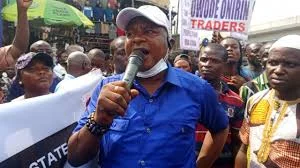
Police fired tear gas to disperse residents protesting forced evictions and home demolitions in parts of Lagos, raising fresh concerns over housing rights, police conduct, and the treatment of vulnerable communities.
Taliban Carry Out Public Execution in Khost for Mass Killing

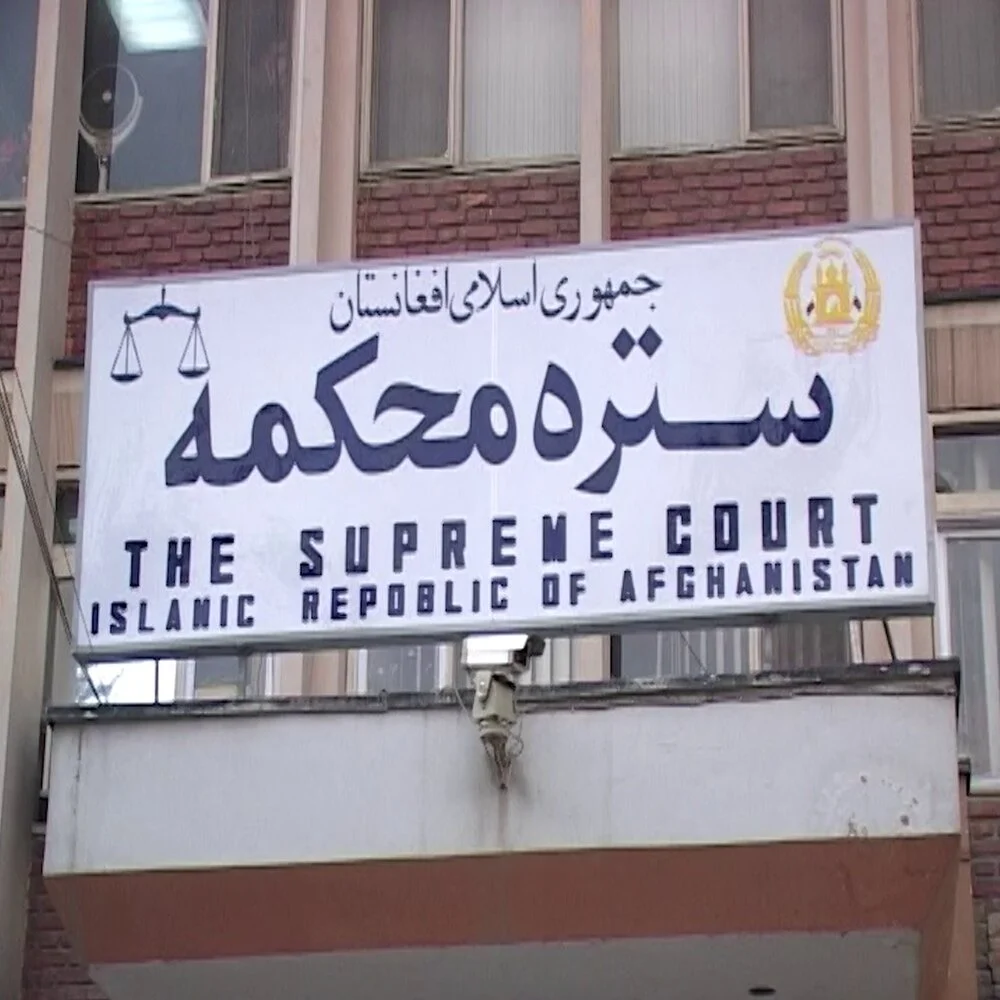
KHOST, Afghanistan — Afghanistan’s Taliban-controlled Supreme Court has executed a man publicly in Khost for his role in the killing of 13 members of a family. The Supreme Court identified the man as Mangal, who was convicted of intentionally killing another Afghan with a Kalashnikov rifle. The victim’s family declined an offer of forgiveness, prompting the so-called retaliation punishment, known as qisas under Islamic law. Mustaghfir Gurbaz, spokesman for the provincial governor, said the man had been involved in the incident about 10 months ago that resulted in the deaths of 13 people, including women and children. Two other men convicted in the same case have also received qisas sentences, but their executions were postponed as the victims’ families are currently abroad. Since returning to power in August 2021, the Taliban have reinstated corporal punishments, including public executions and floggings, for crimes such as murder, robbery, and adultery. This latest execution marks the 11th public execution carried out under Taliban rule. The United Nations has condemned the Taliban’s use of corporal punishment, saying it violates the UN Convention against Torture and calling for an end to such practices. Taliban officials, however, defend the measures as consistent with Afghan law and necessary for public security. The execution took place in a stadium in the presence of local residents and Taliban officials.
The Misuse of “Genocide” in Nigeria’s Public Discourse

Contextualizing The Horrific Killings in Nigeria Within The International Convention Against Genocide By Wale Alonge Since President Donald Trump’s 2020 threat to “invade Nigeria” to stop what he called “the targeted genocide of Nigerian Christians by Muslims,” the term genocide has gained sudden, viral currency across Nigerian social media. It is now used casually, cavalierly, and often without any understanding of its historical roots or the international legal framework that defines it. When such a morally charged word is used loosely, it dilutes its moral and legal force — and makes enforcement far more difficult in genuine cases of genocide. That is why it is critical to define and apply it precisely, something sorely lacking in Nigeria’s public conversations. It is deeply ironic that the same President Trump who refuses to describe the state-sponsored mass killing, starvation, and displacement of Palestinians in Gaza as genocide was so quick to use the word for Nigeria’s communal violence. I am a Christian, so this is not a case of a non-Christian downplaying the killings of Christians. There is no doubt that many Nigerian Christians have been victims of murderous attacks by Islamist jihadist groups — often targeted specifically in their houses of worship. Only yesterday, reports emerged from Kwara State of Christians being slaughtered and kidnapped in church. But so have Muslims — indeed, in larger numbers according to widely available data — including many attacked in mosques. These killings are largely random, carried out by non-state insurgents and criminal militias using hit-and-run, opportunistic tactics, often also targeting government forces. There is no demonstrated element of state-sponsored intent to destroy a protected group, which is central to any credible genocide claim. What “Genocide” Actually Means The word itself derives from the Greek genos (“tribe” or “race”) and the Latin caedere (“to kill”). Polish lawyer Raphael Lemkin coined it during World War II, and in 1946 the United Nations General Assembly first recognized genocide as an international crime. It was later codified in the 1948 Convention on the Prevention and Punishment of the Crime of Genocide. Article II of the Convention defines genocide as any of the following acts committed with intent to destroy, in whole or in part, a national, ethnic, racial, or religious group: The most difficult and crucial element is intent. Genocide requires a proven intention to physically destroy a protected group — not merely to displace it, weaken it, or target individuals for other reasons. This “special intent” (dolus specialis) distinguishes genocide from other international crimes. Nigeria’s Reality Every innocent life unjustly taken is one life too many. Nothing in this analysis minimizes the suffering of Nigerian Christians killed or displaced by jihadists or murderous Fulani militias that have devastated farming communities — particularly in the Middle Belt — through cycles of violence stretching back decades. But as horrific as these crimes are, to call them genocide is to misapply the term. The Genocide Convention arose from the ashes of the Holocaust — the targeted, systematic, state-orchestrated extermination of millions of Jews by Nazi Germany. That context matters. Nigeria’s insecurity is a grave humanitarian crisis, but not one that fits the legal or moral definition of genocide. The danger in misusing the word lies not just in linguistic carelessness, but in the erosion of its power to mobilize international justice where it is most needed — in places where governments, not bandits, plot the destruction of entire peoples. If we are to confront Nigeria’s violence meaningfully, we must name it for what it is: terrorism, mass atrocity, and state failure — not genocide. To do otherwise cheapens both the suffering of the victims and the gravity of one of humanity’s most serious crimes. Adewale Alonge, PhD, Founder & President, Africa Diaspora Partnership for Empowerment and Development. www.adped.org, writes in from Dadeland, Miami, Florida, USA.
Nigeria records 1,580 human rights violations in March alone – NHRC

The National Human Rights Commission (NHRC) Friday revealed that the country recorded 1,580 human rights violations in the six geopolitical zones in the March alone. The rights violations included killings , kidnapping, domestic violence , abductions, and children’s rights, among others. According to the Commission, North Central topped the list of the complaints of human rights violations recorded with 468 cases. The senior human rights advicer, Mr Hilary Ogbona, made this known at the National Human Rights Commission headquarters in Abuja. At the presentation of the findings attended by the Executive Secretary of the Human Rights Commission and Senior Advocate of Nigeria SAN, Dr. Tony Ojukwu, Ogbona explained that the police, military, and Department of State Service DSS grouped as state actors recorded 94 rights violations cases. The human rights adviser who explained that the killings of the military and police personnel in Delta State formed part of the report revealed that 542 cases of violation of children’s rights were also recorded during the period. Besides, Ogbona explained that domestic violence, which he said was becoming too rampant in some parts of the country, had 471 cases recorded. He said that the non state actors and private actors have 32 and 36 respectively while 3 cases of violation of rights were recorded against disabled people. According to him, other sectors, including social economic and cultural rights, accounted for 157, while referred cases were put at 24. He said that killings and kidnapping accounted for 499, while another 71 violations of rights to life were also recorded by the commission during the period. Ogbonna said that the 1,580 human rights violations were the entire figures recorded in the 36 states offices of the commission and Abuja. Expressing worry over the increasing cases of human rights violation, Ogbonna said that about 301 school children were abducted in kaduna state alone while 40 people were killed in Benue state. He expressed dismay that rights to life were being violated in various ways and manner because four deaths were recorded in Nassarawa State during the sharing of palliative. He then called for restraint on both State and Private Actors, adding that reprisal attacks contributed to the recorded rights violations. Ogbona also appealed to police and military to always conduct their investigations in compliance with the rules of engagement and rule of laws as provided for in the national and international laws. Earlier in his welcome address, the Executive Secretary of the Commission Ojukwu reaffirmed the commitment of the commission to the promotion and protection of human rights in the country. He promised to partner with other stakeholders, including the government, in the bid to step up efforts to protect lives and properties and in ensuring downward size in the violations of human rights. The NHRC monthly dashboard aimed at making the human rights situation public is supported by the United Nations Development Program, the Office of the United Nations High Commission for human rights, and others.
129 Inmates On Death Row In Plateau Prisons – Official

The Plateau Command of the Nigerian Correctional Service (NCoS), says there are 129 inmates currently on death row in the various custodial centres in the state. ASC Godfrey Longdiem, the command’s Public Relations Officer (PRO), disclosed this in an interview on Sunday in Jos. According to Longdiem, the figure consists of 128 males and one female, adding also that 700 inmates are awaiting trial in the various prison facilities across the state “We also have 700 inmates who are awaiting trial in our various facilities; and these consist of 691 males and nine females. He further explained that those convicted for short terms were 55 and those serving long term sentences were 192. Longdiem said those that serving life sentences were 49, adding that there no minors among them. Also speaking with NAN in Jos, Mr Steve Aluko, the Executive Director of Civil Liberties Organisation (CLO), who decried the dearth in prison facilities, called for reforms in the sector. Aluko stressed that custodial centres all over Nigeria were in dire need of total overhaul. “This is given the deteriorating condition of the country’s correctional centres that have featured more inmates awaiting trial than those actually convicted. “Certainly, the Nigerian prison system is in dire need of urgent reforms to rid it of the perennial problem of congestion and its adverse consequences on the health, wellbeing and human rights of the inmates,’’ he said. Meanwhile in Taraba, stakeholders, who claimed there were no inmates on death row in the state’s correctional facilities, however, decried the high number of those incarcerated in the centres, calling for the restoration of their human dignity. Malam Aminu Mohammed, a legal practitioner, told NAN that there were no death row inmates because those convicted of capital offences such as murder, were serving life sentences as maximum punishment. Mohammed however, said this had contributed to the high number of inmates, especially those awaiting trial, making the correctional centres in Taraba unsuitable for human habitation. He called for increased man power on the bench and judicial independence, to ensure there were more judges and magistrates, as well as adequate funds, to ensure quick dispensation of cases, in order to decongest correctional centres. However, all efforts by a NAN correspondent to get the NCoS officials in Jalingo to confirm that there were no death row inmates in correctional centres in Taraba, proved abortive as the PRO, Mrs Ken Nnanna, declined comment saying she was not authorised to speak on the matter. Mr Raymond Ibrahim, the Executive Director, Centre for Justice and Development, an NGO, who described the centres as dilapidated, overcrowded, and with terrible living conditions that fall short of places for human habitation, suggested that the electronic system of justice dispensation was the way out. According to Ibrahim, most inmates are awaiting trial due to the slow pace of justice dispensation in the country. “The world is now technologically driven, and justice dispensation cannot be left behind if the country must get it right in justice administration. “A situation where case files move from one court to another, and sometimes get mixed up or missing due to years of prosecution, can be addressed if the process becomes digital,” he said. While commending the few judges that had started writing and delivering judgments virtually, Ibrahim called on the government to support a full transition from analogue to digital justice dispensation, to ensure speedy and efficient dispensation of justice and decongestion of correctional centres. Mrs Bridget Jonathan, also a legal practitioner, suggested the use of alternative dispute resolution mechanisms, to prevent every case from being taken to court as part of measures to decongest correctional centres. Jonathan therefore, urged the government to support traditional rulers in strengthening the alternative dispute resolution mechanisms in communities.
151 Days After Unlawful Detention, Court Grants Emefiele Bail

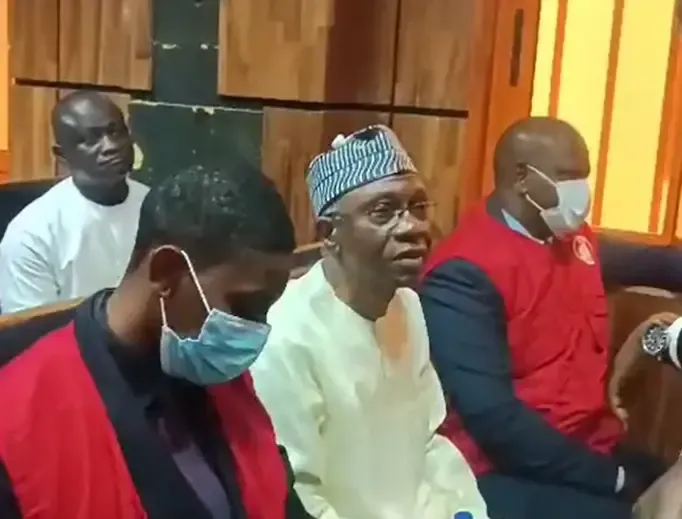
The High Court of the Federal Capital Territory, Maitama, on Wednesday admitted the former Governor of the Central Bank of Nigeria (CBN), Godwin Emefiele to conditional bail after 151 days in detention. Justice Olukayode Adegbola Adeniyi held that Emefiele had stayed in government security custody beyond the time stipulated by law. The Judge also predicated his decision on the fact that the Federal Government had completed investigation into the allegations against the former CBN Chief and had even prepared the charged against him as far as August this year. On the bail conditions, the court held that Emefiele must be released to his Senior lawyer Matthew Burkaa SAN who must produce him any day the Federal Government chooses to arraign him. Emefilele is also to deposit his travelling passport with the Registrar of the Court pending his formal arraignment. In a ruling on the application for bail argued by Mathew Burkaa, SAN, Justice Adeniyi held that it is in the best interest of justice and fair play especially the provision of section 35 of Nigeria’s Constitution to follow the rule of law. The Judge specifically said that there must be an end to detention without trial by the federal holiday. Both the FG, and AGF re-presented by Oyin Koleoso had strongly objected to Emefiele’ s request for bail on the ground that he would interfere with the November 15 arraignment but did not tell the court how the interference would be done. EFCC on its part through its counsel, Farouk Abudalla insisted that Emefiele had not spent three months in its own custody and urged the Court to refuse the bail request. Counsel to the applicant however punctured the opposition of the Federal Government adding that the claim of likelihood of interference in arraignment was speculative because his client was not declared a flight risk. He told Justice Ademiyi to disregard the claim of EFCC that Emefiele was brought to its custody only October 26. The Senior lawyer informed the Court that the former CBN boss was investigated by a team of inter Ministerial Investigators from EFCC, Police and Department of the State Security Service DSSS which jointly constituted government agency.
Recent Attack On Joe Ajaero Violates His Human Rights- NASU

The Non-Academic Staff Union of Educational and Associated Institutions (NASU) has strongly condemned the recent attack on Mr. Joe Ajaero, the President of the Nigeria Labour Congress (NLC). The union’s reaction to the incident was conveyed through a statement signed by its General Secretary, Mr. Peters Adeyemi, in Abuja on Sunday. Ajaero fell victim to the attack in Imo State on November 1 when he traveled to the Southeastern state to declare a mass protest against alleged anti-labour practices. The Witness had reported that Ajaero was subsequently detained by the police, although the police claimed that they took him into custody to protect him from further attacks by hoodlums. Adeyemi firmly asserted that the attack on the union leader amounted to “a violation of trade union rights as well as the human rights of Ajaero.” He emphasized that the rights exercised by Ajaero in Owerri, as the leader of Nigeria’s working people, are guaranteed by the Federal Republic of Nigeria’s 1999 Constitution (as amended) and International Labour Organization (ILO) Conventions. “Nigeria, as an ILO member-state, has ratified ILO Conventions on Freedom of Association and Protection of the Right to Organize, 1948 (No.87), and the Right to Organize and Collective Bargaining, 1949 (No.98),” Adeyemi said, pointing out that the Imo government has been involved in unfair labour practices, as it has failed to pay salaries and pensions, making it unjustifiable to attack workers’ union leaders who inquire about the non-payment of these dues. He noted that Ajaero was on a solidarity visit to the workers in Imo and should not have been subjected to treatment “common in Nigeria only during military regimes.” NASU further rejected the claims that Ajaero was held under “protective custody” for his own benefit and called on President Bola Tinubu to initiate a thorough investigation into the incident. The union concluded by saying that it firmly believes that such incidents should not deter the exercise of fundamental human rights, including those related to labour and trade union activities.
Mr Macaroni Calls For Release Of Detained #EndSARS Protesters

Nigerian skit maker and activist, Adebowale ‘Debo’ Adedayo popularly known as Mr. Macaroni, has made a passionate plea for the release of #EndSARS protesters who continue to be held in detention three years after the mass demonstrations that rocked Nigeria in October 2020. These protests initially demanded an end to police brutality, extrajudicial killings, extortion, and abuse of power, particularly by the now-disbanded Special Anti-Robbery Squad (SARS). The October 2020 protests, marked by their peaceful beginnings, ultimately led to the federal government’s decision to disband SARS. Tragically, the movement was cut short on October 20 when Nigerian Army officers opened fire on protesters, resulting in numerous casualties. On the third anniversary of the Lekki shooting incident, Mr. Macaroni led a peace walk in Lagos to honour those who lost their lives that fateful day. During this solemn occasion, he called for the immediate and unconditional release of all #EndSARS protesters who remain incarcerated. Mr. Macaroni emphasized the importance of preventing any pretext for violence and urged authorities to address the prolonged detention of activists, stating that some have been in prison since 2020 despite legal efforts to secure their release. “I want to use this opportunity to call for the unconditional release of all those [protesters] that are still in Lagos prisons. There are still some protesters who have been in prison since 2020. Lawyers have been on the cases, different shouts every day but till now, they are still there. “We are using this walk to once again call on all those concerned to grant the unconditional release of all protesters that are still in prison,” he said.
Int’l Day of the Disappeared: 23000 people missing in 10 years -Minister

The Minister of Humanitarian Affairs and Poverty Alleviation, Dr Betta Edu says that 23,000 people have been reported missing in less than a decade due to the insurgency in some parts of the country. Edu said this in Abuja at a stakeholders’ engagement with the theme “Where are you now”, to mark the International Day of the Disappeared. She said that the figure represented half the number of missing people in the whole of Africa. Edu said that the report of the missing people released by the International Committee of the Red Cross (ICRC) and the Nigerian Red Cross Society (NRCS) was as a result of the insurgency in some parts of the country. “Today, over 23,000 persons are still missing. “However, it is likely that this is just a tip of the iceberg as a more efficient mechanism is needed to improve the reporting and forensically trace cases of missing persons,” she said. The minister said the issue of missing people had become one of the most critical and long-lasting humanitarian consequences of armed conflicts, and as such called for sober reflections. Edu said that the present administration was committed to curbing the issue, hence the need to facilitate and strengthen the legal frameworks that would substantially address the incidences of disappearance. Mr Yann Bonzon, Head of Delegation, ICRC, said that more than 23,000 people, registered by the Family Links Network in Nigeria, never returned home, and remained missing until date. Bonzon said that the number did not convey the true extent of the issue. “The actual number of missing persons is likely to be much higher, with Nigeria having more missing people than any other country on the continent. “Until a national mechanism is created, immediate steps must be taken by the Nigerian government to prevent disappearances, to prevent the disruption of family links and maintaining links between separated family members. “It will also help to address proper management of the dead,” he said. Bonzon said that ICRC would continue to work closely with the government and relevant stakeholders to prevent disappearances to encourage and promote the adoption of international best practices. He said that the ICRC would also support the Nigerian authorities to build sustainable capacities and resources to establish a national mechanism for the missing and their families. “Let us collectively remind ourselves that while people might be gone, they will never be forgotten, and their families will never stop searching for them,” he added. The group walked from the Ministry of Humanitarian Affairs to the National Human Rights Commission, to create awareness.
15,000 missing persons recorded in North East –Red Cross

The International Committee of the Red Cross (ICRC), says it has registered 15,000 persons as missing by relatives as a result of the Boko Haram insurgency in the North-East. Ms Lilian Dube, Family Links Team Lead, ICRC in Maiduguri, stated this at an event to commemorate the 2023 International Day of the Disappeared, on Wednesday in Maiduguri. She said the figure could be higher but the number of those who registered with the organisation stood at 15,000, adding that most of them hailed from Borno. Dube said that 900 of the missing persons had been reunited with thier families through the ICRC. Mr Serge Zogg, Head Sub-Delegation, ICRC, who interacted with families of some of the missing persons at Ngarannam Ward of Maiduguri, assured of the organisation’s sustained support towards finding the missing persons. “This event is for you, and it is a testament to your strength and resilience as you navigate through the challenges brought by absence of your loved ones. “Please know that the ICRC stands with you in solidarity as you commemorate your missing family members. “The ICRC is an impartial, neutral and independent organisation whose exclusively humanitarian mission is to protect the lives and dignity of persons affected by armed conflict and other situations of violence, and to provide them with assistance,” Zogg said. He lauded the Borno government for its support and cooperation to the organisation. Also, the District Head of Ngarannam, Lawan Shettima, lauded the ICRC’s restoration of family links and psychosocial support to families of missing persons programmes. Shettima said the interventions by the ICRC impacted positively to the lives of the affected families in the area. Highlights of the event included sharing of testimonies by some members of the affected families.