Human Capital Development: Ebonyi Sends 47 Scholars to UK on Scholarship

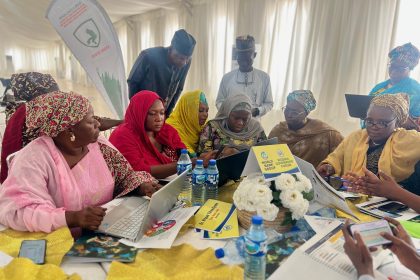
No fewer than 47 Ebonyi indigenes have departed for the United Kingdom on state scholarship, with Governor Francis Nwifuru describing the programme as a strategic and future-driven investment in human capital development.
Human Capital Development: Vice President Shettima Launches HCD 2.0 Strategy

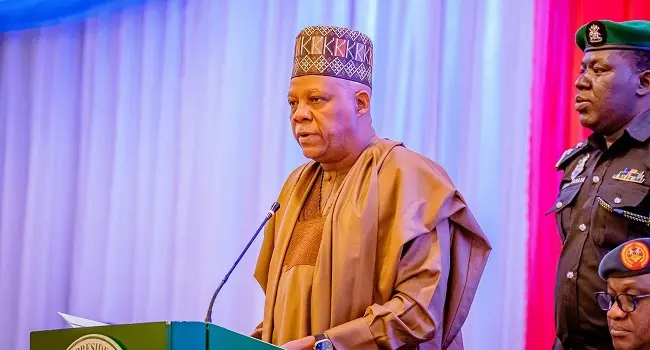
Enam Obiosio In a gathering that underscored Nigeria’s commitment to human capital transformation, Vice President Kashim Shettima recently addressed members of the Steering Committee of the Human Capital Development (HCD) Programme at the State House, Abuja. The event marked the launch of HCD 2.0, a comprehensive strategy aimed at advancing health, education, and economic inclusion for every Nigerian. He emphasized that HCD 2.0 is not merely an initiative but a national commitment to foster a healthier, more educated, and inclusive society. “This day is more than a milestone; it is the beginning of a new phase,” the Vice President declared, highlighting the significance of the new strategy. “We have laid a strong foundation, and now, we officially launch the second phase of the Human Capital Development strategy—HCD 2.0.” This next phase, Vice President Shettima noted, represents a strengthened blueprint and a vision for Nigeria’s future that addresses the evolving challenges in healthcare, education, and economic inclusivity. Vice President Shettima recounted the journey leading up to this moment. In 2018, Nigeria faced a stark reality when its global ranking in human capital development revealed significant deficits in health, education, and employment. To counter these challenges, the Nigerian government introduced HCD 1.0, establishing foundational structures and rallying stakeholders from across the nation in pursuit of a unified goal: a healthy, educated, and productive Nigeria by 2030. The HCD 2.0, however, is designed to build upon this groundwork by adapting to the rapidly shifting global landscape. The strategy seeks to establish an equitable healthcare system, promote inclusive education, and ensure financial accessibility. “Our aim is to ensure that no Nigerian is left behind as we move toward a more inclusive, sustainable society,” he said. One of the core pillars of HCD 2.0 is creating a modern, equitable healthcare system accessible to all Nigerians, regardless of their location or economic circumstances. Vice President Shettima also ighlighted the introduction of digital health platforms, innovative financing, and climate-resilient practices as essential components of this improved healthcare model. “We envision a system that reaches every Nigerian,” he affirmed. Education remains another key focus. He emphasized that HCD 2.0 aims to foster a functional education system with a strong emphasis on digital literacy, gender equity, and financial accessibility. By prioritizing Science, Technology, Engineering, and Mathematics (STEM) education, technical and vocational training, and practical skills, the government is preparing Nigerians for a world increasingly driven by technology and green industries. With the rise of digital economies, HCD 2.0 seeks to bridge Nigeria’s digital divide and boost financial inclusion nationwide. Through fintech solutions, online banking, and digital payment systems, the government is creating pathways for every Nigerian to actively participate in the economy. “Our approach encompasses cross-cutting themes that are essential to the long-term impact of this programme,” Vice President Shettima remarked, emphasizing the interconnected nature of health, education, and economic inclusion. A critical component of HCD 2.0 is its broad governance framework, designed to foster collaboration between federal and state leaders, private sector partners, civil society, and development agencies. He affirmed that the Steering Committee, chaired by himself and including prominent public and private sector leaders, would oversee the implementation and ensure the efficient rollout of the strategy. Vice President Shettima lauded the contributions of the Core Working Group, the Private Sector Partners Group, and the National Champions Forum—a coalition including traditional rulers, youth ambassadors, and advocates for human capital development. Together, these groups will monitor progress, inspire engagement, and work tirelessly to deliver measurable results. As Nigeria inaugurates HCD 2.0, the Vice President set forth ambitious yet attainable targets. By 2030, Nigeria aims to rank among the top 80 countries on the Human Capital Index, reaching a score of 0.6. “These metrics represent more than just numbers; they signify real change in the lives of our people,” he said, pointing to improved healthcare access, enhanced educational outcomes, increased employment opportunities, and a more resilient society. Vice President Shettima’s speech was also a call to action for all Nigerians. He urged policymakers, community leaders, and citizens to recognize the stakes and rally behind the HCD 2.0 initiative. “This is our moment to shape the Nigeria we envision,” he concluded, extending a vision of a Nigeria that stands strong, united, and prepared to meet future challenges. As Nigeria embarks on this transformative journey, the HCD 2.0 strategy promises to bring the country closer to a future where every citizen can thrive in a society that values health, education, and economic inclusion. With this initiative, Nigeria reaffirms its commitment to nurturing the potential of its people and securing a legacy of progress and opportunity for future generations.
Shettima Presides Over 145th NEC Meeting as Peter Obi berates call for a new aircraft for VP

Nigeria Vice President, Senator Kashim Shettima on Thursday, presided over the One hundred and Forty-fifth National Economic Council (NEC) meeting at the Council Chamber of the Presidential Villa in Abuja. Various state governors, Ministers, and other stakeholders were in attendance at the meeting. Thursday’s meeting is the seventh in the year 2024 and focuses on preferring robust solutions to the current economic challenges facing the nation. Meanwhile, the Labour Party (LP) presidential candidate in the 2023 election, Peter Obi, has berated the Speaker of the Borno State House of Assembly, Abdulkareem Lawan, over the demand for a new aircraft for the Vice President, Kashim Shettima. Lawan highlighted that the Vice President’s life is endangered by the recurrent use of a “faulty” presidential aircraft for international commitments. This alarm was raised following Vice President Shettima’s abrupt cancellation of his scheduled appearance at the Commonwealth Summit in Samoa. In a statement via X, Peter Obi stated that the demand for a new aircraft for Shettima shows the Speaker is insensitive and unconcerned about the prevailing economic situation in the country. Peter Obi noted that issues that will benefit the masses should preoccupy leaders rather than being consumed by selfish desires for needless luxury at the expense of the people.
Improved Human Capital Development: Vice President Shettima Advocates for Quality Education, Healthcare

Vice President Kashim Shettima has declared that every child must have access to quality education, equitable healthcare must be the norm, and our workforce must be equipped with the skills necessary to thrive in the 21st-century economy. He made this statement on Saturday ehile launching the Nasarawa State Human Capital Development (HCD) Strategy Document and Gender Transformative Human Capital Development Policy Framework at the Aliyu Akwe Doma Banquet Hall, Lafia. Senator Shettima emphasized the urgent need for targeted interventions to improve educational outcomes and healthcare access in Nasarawa State. He pointed out the alarming rates of out-of-school children and the high maternal and infant mortality rates, stating that Nasarawa Sate cannot afford to overlook these pressing issues. “The future of our nation depends on the quality of education and healthcare we provide today. We must work together to ensure that our children are not left behind,” he asserted. The VeePee called for a collaborative effort among government agencies, private sector partners, and civil society to implement effective solutions. The Vice President also highlighted the importance of equipping the workforce with relevant skills, noting that education should align with the demands of the modern economy. He urged the state government to focus on vocational training and skill development to enhance employability and reduce unemployment among the youth. Shettima commended Nasarawa State for its commitment to the HCD programme, emphasizing that successful implementation requires adequate budgetary allocations, particularly in education. He noted that Nasarawa’s allocation of over 15% of its budget to education exceeds international benchmarks, showcasing a significant step toward achieving these goals. As the state moves forward with its Human Capital Development initiatives, Shettima reiterated the importance of partnerships and collaboration in achieving sustainable progress. “Together, we can create a future where every child has the opportunity to succeed and every citizen has access to the services they need,” he concluded.
Shettima launches Nasarawa State Human Capital Development Plan

It is D-day in Nasarawa State today as the Vice President, His Excellency Senator Kashim Shettima launches the Nasarawa State Human Capital Development Strategy Document in Lafia, the state capital. A release from the focal Nasarawa State Human Capital Development Agency (HCDA) indicates the overarching focus of the strategy as “accelerating growth and development.” The occasion shall also feature the launch of the Nasarawa state Gender Transformative Human Capital Development policy framework. Human Capital Development was adopted as a development strategy by the National Economic Council in 2018. The aim was to address poverty and ensure sustainable economic growth. ” Nigeria’s Human Capital Development program (HCD 1.0) set clear targets and commitments for investment priorities, accelerating investments in human capital, and expanding stakeholder support to drive outcomes in Health, Education, and Labour Force participation in line with the UN Sustainable Development Goals 2030.” With a population of about 215million, expected to double to 400million by 2050, the human capital, apart from a huge reserve of oil and gas, which is a finite resource, is Nigeria’s most sustainable development resource. A huge population alone is however, not enough. Age and educational attainment are two critical attributes required to make the population amenable to development needs. READ ALSO: Human Capital Development and Economic Growth in Nigeria Consequently, the World Bank Human Capital Project defines human capital “as a combination of the knowledge, skills, and health people accumulate throughout their lives that enables them to realise their potential as productive members of society.” It is therefore the position of the NEC that, “For Nigeria to unlock its ‘demographic dividend’ and tap into the economic potential of its working age citizens, the country will need to first enhance its investment in its people – particularly women and children.” It argues that, “Over the past decade, many of the key metrics relating to Human CapitalDevelopment (HCD) in Nigeria have been going in the wrong direction. Nigeria’s performance across all major global HCD indices, including the United Nations Human Capital Index, the Institute of Health Metrics and Evaluation (IHME) ExpectedHuman Capital Index, and the World Bank Human Capital Index, is below the global average, as well as below the average for developing economies in sub-Saharan Africa (SSA),” the NEC, Nigeria’s apex economic policy body posited. According to a statement by Habiba Balarabe Suleiman, the Director General, Nasarawa State HCDA, successful implementation of the state HCD Strategic Plan 2024-2030 “is pivotal to the socioeconomic growth and sustainable development of Nasarawa state.” The launch of the HCD Strategy Document and Nasarawa state Gender Transformative Human Capital Development policy framework by the Vice President opens a new vista in the development aspiration of the state and a benchmark for peer review by other sub-nationals.