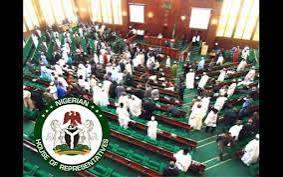
Reps Disown Regional Government Bill 

HOUSE OF REPS

The House of Representatives has disowned a ‘draft bill’ trending online, purportedly for discussion, seeking a return to the regional system of government. Titled, ‘A Bill for an Act to substitute the annexure to Decree 24 of 1999 with new governance model for the Federal Republic of Nigeria’, the draft seeks among others, new extant laws to be cited as “The Constitution of the Federal Republic of Nigeria New Governance Model for Nigeria Act 2024.” The document which has been trending on social media is said to have been drafted by one Dr Akin Fapohunda, who is neither a lawmaker in the Senate or the House of Representatives; an indication that the said draft legislation is a private bill. The preliminaries of the bill read in part, “Whereas Nigeria, its peoples and government have been governed under Decree 24 of 1999 that was handed down by the then military government without the express consent of the people despite the preamble of ‘We, the people.’ “Whereas the said Constitution of the Federal Republic of Nigeria 1999 (as amended) is not autochthonous as it does not evolve from the deliberations and consensus of the Nigerian People; “Whereas the peoples of Nigeria now desire and effectively demand for a change to a constitution based on federal/regional system of government. “Whereas the federal and regional governments are to operate within the provisions of this Constitution, it is within the discretion of the ethnic blocs within the states that constitutes a given region to aggregate or disaggregate as provinces, divisions and districts, while being in control of their affairs without let or hindrance at whatever level of governance.” Dismissing the draft bill in a telephone conversation with Saturday PUNCH, the House spokesman, Akin Rotimi, said, “The Committees on Rules and Business and Constitution Review have confirmed that there is no such bill before them.”

Nigeria Police unveil cybercrime reporting platform

Police confirm killing of 6 persons in Zamfara

The Nigeria Police Force has unveiled a platform for reporting cybercrime. NPF says the platform is in its bid to reinforce its commitment to tackling digital threats. The new portal, managed by the NPF National Cybercrime Centre is now accessible with a new site replacing the old site. The Force spokesperson, ACP Olumuyiwa Adejobi, disclosed this in a statement on Thursday. The statement read, “The Nigeria Police Force is pleased to inform the general public of the launch of a new, more robust, and secure domain for reporting cybercrime-related offences as part of the continued commitment to combating cybercrime and enhancing the safety and security of our digital space. “The new reporting platform, managed by the NPF National Cybercrime Centre (NPF-NCCC), can be accessed at: [https://nccc.npf.gov.ng/ereport/signin]. This upgraded domain replaces the previous site [https://incb.npf.gov.ng] which must be discarded.” The statement stated that the upgraded domain offers enhanced security to protect user information and is user-friendly for efficient reporting. Additionally, it featured improved tracking and response mechanisms for timely action on reported cases, and it urged the public to utilize this platform to aid in the fight against cybercrime in Nigeria. “The upgraded domain includes enhanced security measures to protect user information and ensure confidentiality and is user-friendly for easy and efficient reporting of cybercrime incidents. “It also includes improved tracking and response mechanisms to ensure timely and effective action on reported cases. “The Inspector General of Police urges all members of the public to utilize this new platform for reporting any cybercrime activities as vigilance and prompt reporting can significantly contribute to police efforts in tackling the menace of cybercrime in Nigeria, and even beyond,” it added. It would be recalled that implementing the Cybercrime Act 2015 has been met with different reactions from various quarters. The Act will provide a unified legal, regulatory, and institutional framework for the prohibition, prevention, detection, investigation, and prosecution of cybercrimes in Nigeria.

Reps seek regulation of house rent, activities of landlords

HOUSE OF REPS

On Wednesday, the House of Representatives passed a resolution urging the Federal Capital Territory Administration (FCTA) to devise policies aimed at regulating house rents and landlord activities in Abuja. This decision stemmed from the adoption of a motion presented by Rep. Emmanuel Udo (PDP-Akwa-Ibom) during the House session in Abuja. The resolution emphasized the need for the implementation of monthly rent structures to foster an inclusive rental system and mitigate the arbitrary escalation of house rents in the FCT. Rep. Udo highlighted that Nigeria is ready for an inclusive rental system, which would alleviate the housing strain on working-class families and provide affordable monthly rental options for low and middle-income earners. He underscored that a significant portion of FCT residents, including civil servants and artisans, reside in satellite towns due to their limited incomes, making the current rent hikes burdensome for many. “One-bedroom self-contain goes for between N1 and N1.5 million, while two bedrooms go for between N2 and N3 million while three bedrooms go for between N3 and N5 million,” he said. This, according to him, is due to the current economic hardship for civil servants, who are already grappling with fuel subsidy removal, rising foreign exchange rates, electricity tariff increases, and tax or levies. He said he was convinced that the monthly rent would provide tenants with flexibility, better cash flow management, reasonable move-out options, and a stable income stream. He further urged the federal government to build affordable houses for civil servants in Abuja to reduce the burden of paying exorbitant rents. Adopting the motion, the House mandated the committee on FCT to look into the matter of arbitrary house rent increases in FCT. The House said that the committee should recommend effective policies to regulate the activities of landlords and report back within four weeks for further legislative action.

Senate and House of Representatives to Return to Main Chambers Following Renovation Completion

After a year and a half of conducting plenary sessions in temporary chambers, the Senate and the House of Representatives are preparing to relocate to their main Hallowed Chambers next month as renovation work nears completion. Recent progress indicates that the upgraded and reconfigured hallowed chambers are nearing the final stages of completion. Visible Construction Company Nigeria Limited, the firm responsible for the renovation, has already installed state-of-the-art chairs for federal lawmakers and extended sitting terraces. Tajudeen Olanipekun, the Project Engineer at Visible Construction, assured journalists covering the Senate last week that the remaining work is being carried out swiftly with expertise and precision. The goal is to transform the entire ambiance of the Hallowed Chambers and its surroundings, aiming for project delivery next month. This development aligns with a directive from the President of the Senate, Godswill Akpabio, to the Clerk of the National Assembly (CNA), Alhaji Sani Magaji Tambawal, emphasizing the urgency of the Senate and the House of Representatives returning to their main chambers. During an interactive session with journalists covering the Senate, Akpabio stressed the need for expeditious completion of the renovation works. He noted that the temporary chambers, used since 2022, are not suitable for hosting visitors from outside the country. Journalists covering the Senate conducted on-site assessments of the renovation progress, visiting both Chambers under renovation last Friday. They observed fully transformed, upgraded, and reconfigured hallowed chambers that meet global standards. The renovation project, awarded to Visible Construction Limited by the Federal Capital Development Authority (FCDA) in March 2021 at a cost of N30 billion, includes critical segments of the National Assembly complex. These segments involve office buildings housing accommodation for Senators and Honourable Members, roof watertightness improvements, enhancements to the cooling system, and the replacement of inoperable lifts throughout the complex.

Electoral Bill Passes Second Reading, Paving Way for Electronic Transmission of Election Results

The Nigerian House of Representatives achieved a significant milestone on Wednesday as it passed the Electoral Act 2022 Amendment Bill for Second Reading, brightening the prospect for electronic transmission of election results to minimise fraud in the nation’s electoral process. The Bill sponsored by Hon. Francis Waive, representing the Ughelli North/Ughelli South/Udu federal constituency of Delta State, aims to amend the existing Electoral Act to facilitate the electronic transmission of election results. During the debate on the general principles of the bill, Hon. Waive underscored the inadequacies of the current Electoral Act 2022 and emphasized the importance of modernizing it to accommodate electronic transmission of election results. He argued that such an amendment is essential for strengthening Nigeria’s democracy and combating electoral fraud. In addition to advocating for electronic transmission, Hon. Waive proposed a regular review of the voter register every ten years. This measure, he argued, would contribute to the overall transparency and fairness of the electoral system by ensuring accuracy and integrity in voter data. The advancement of the Electoral Act 2022 Amendment Bill to its Second Reading marks a significant step forward in Nigeria’s electoral reform efforts. If passed into law, it has the potential to usher in a new era of transparency and accountability in the country’s electoral processes.

‘Open Food Reserve, There Is Hunger In Nigeria’ – Reps Urge FG

The House of Representatives has decried the state of hunger currently in Nigeria, appealing to the Federal Government to promptly unlock the food reserves and allocate grains to impoverished citizens. Doing so, the lawmakers believe, will address the prevailing hunger crisis in the country. The call was after the approval of a motion of utmost national significance, put forth by the elected representative of Ifo/Ewekoro Federal Constituency in Ogun State, Ibrahim Isiaka. Isiaka, taking charge of the discussion, highlighted the challenging nature of the cost of living for Nigerians. He expressed his concern over the escalating price of cement, despite having access to all the necessary raw materials for its production. He said, “The House resolves to urge the Federal Government and stakeholders to immediately open the food reserves to address the hunger in our country,” the Lawmaker said. He also called on the apex government to boost food production and distribution.

No plan to increase NYSC’ Allowance-FG

The Federal Government has said it is not certain there will be an increase in the monthly allowance of serving members of the National Youth Service Corps (NYSC). The Minister of Youth Development, Jamila Bio-Ibrahim, made this known on Sunday during an appearance on Channels Television’s Sunday Politics. Bio-Ibrahim said there are no immediate plans to increase the monthly allowance of corps members following the food inflation and increasing cost of living in the nation. The minister stated that the government would find innovative ways of ensuring that corps members’ welfare is well taken of. She said, “We can’t say for sure, we all understand that resources are dwindling, even oil revenues are not as they used to be but we will find innovative ways of ensuring that corps members’ welfare is taken of. ” Recall that former President Muhammadu Buhari, in January 2020, raised allowance for corps members from N19,000 to N33,000, about a year after he signed the new minimum wage bill into law in April 2019. Speaking further, the minister said the government has announced a reform of the NYSC scheme and is planning to make it a revenue-generating scheme and agency. She said, “When it comes to remuneration and looking totally at the holistic funding of the NYSC, we have announced a reform of the NYSC scheme itself. So, we want the scheme to go beyond that social programme of government to be that revenue-generating scheme and agency. “The reforms which transform the NYSC into a revenue-generating agency and prepare the corps members for the job market and to be decently and gainfully employed or to be employers of labour through entrepreneurship and of course, perfect matching into primary assignment and all the support they need in that career path.”

Missing N3bn: Reps Probe Industrial Training Fund

Missing N3bn: Reps Probe Industrial Training Fund

The House of Representatives has given the Industrial Training Fund (ITF) a 48-hour ultimatum to account for missing funds amounting to N3 billion. The directive was issued by the Chairman of the Committee on Finance, James Faleke, during the ongoing hearing on the Medium-Term Expenditure Framework (MTEF) and Fiscal Strategy Paper (FSP) after the agency failed to provide a satisfactory explanation for the fund’s utilization. In a related development, the committee has instructed the Nigerian Electricity Regulatory Commission to clarify within 72 hours why a licensed company, despite receiving N39 billion from the Ministry of Power, has not fulfilled its obligation to provide meters. The committee expressed concern about licensing a company that appears incapable of executing the project. Furthermore, the committee called on the Nigerian Communications Commission (NCC) to account for the expenditure of N291 billion in 2022 on broadband services nationwide. The committee sought detailed information regarding the provision of broadband services, questioning the NCC’s claim that services were extended to airports and markets.

Kevin McCarthy Removed As House Speaker In Historic Vote

Kevin McCarthy Removed As House Speaker In Historic Vote

 House Speaker Kevin MacCarthy has been ousted from his leadership position in a historic vote on Tuesday after a far-right revolt over his reliance on Democrats to pass funding to avert a government shutdown. The final vote was 216-210, with eight Republicans joining all the Democrats to vote to remove McCarthy. It’s the first time a House speaker has been removed in a no-confidence vote. “The office of speaker of the House of the United States House of Representatives is hereby declared vacant,” said Republican Rep. Steve Womack of Arkansas, who was presiding over the chamber.  Rep. Patrick McHenry of North Carolina, a top ally of McCarthy’s and a member of the Financial Services Committee, was then appointed speaker pro tempore. The rules of the 11th Congress state that “in the case of a vacancy in the office of speaker, the next member” named on a list submitted by McCarthy to the clerk of the House in January will become speaker pro tempore until a speaker is elected.  House Republicans met Tuesday night as a conference to discuss their next steps. McCarthy told his colleagues he would not run for speaker again.   “The reason Kevin McCarthy went down today is because nobody trusts Kevin McCarthy,” Rep. Matt Gaetz of Florida told reporters after the vote. “Kevin McCarthy has made multiple contradictory promises, and when they all came due, he lost votes of people who maybe don’t even ideologically agree with me on everything.”  “This represents the ripping off of the Band-Aid and that’s what we need to do to get back on track,” the Florida Republican added. Along with Gaetz, seven Republican members voted to oust McCarthy: Reps. Andy Biggs of Arizona, Ken Buck of Colorado, Tim Burchett of Tennessee, Eli Crane of Arizona, Bob Good of Virginia, Nancy Mace of South Carolina and Matt Rosendale of Montana. A day earlier, Gaetz accused McCarthy of making a “secret side deal” with President Biden on Ukraine aid to get a short-term funding bill passed hours before the government was set to shutdown. The California Republican denied having made any deal in exchange for Democratic votes. Eleven Republicans voted against the earlier motion to table Gaetz’s resolution, an ominous sign of what was to come for McCarthy.  The speaker of the House is not only the leader of the chamber but also second in line for the presidency. Ousting a sitting speaker by vote in the middle of a congressional term is unprecedented in American history, and McCarthy’s allies warned that doing so would set a precedent that would hang over every speaker moving forward. That argument did not persuade Democrats to come to McCarthy’s rescue. “We’re in uncharted territory. We’ve never had this situation before,” Matthew Green, a politics professor at Catholic University, told CBS News. Green said the vote shows the Republican Party has “too many members who don’t like McCarthy personally or otherwise are disdainful of party norms.” “There was a norm that you don’t do this. This rule has been on the books more or less continuously since 1910,” Green said. “You’ve got a party that’s very small and you’ve got a faction of members who are disdainful of these norms, and that makes it extremely difficult to govern.” Democratic leadership members had urged their caucus to vote “yes” on the motion to vacate.  “Given their unwillingness to break from MAGA extremism in an authentic and comprehensive manner, House Democratic leadership will vote yes on the pending Republican Motion to Vacate the Chair,” Democratic Minority Leader Hakeem Jeffries of New York wrote to his caucus.  Up until the vote, McCarthy had expressed confidence to reporters that he would prevail. “I’m an optimist because I think there’s no point in being anything else,” McCarthy said.  

Reps to expose culprits behind oil theft in Nigeria

Reps to expose culprits behind oil theft in Nigeria

The House of Representatives has taken a resolute stance in its battle against crude oil theft and the resultant loss of revenue from the gas sector. Chairman of the Ad-hoc Committee, Rep. Kabiru Rurum, disclosed this ahead of the committee’s investigative hearing scheduled for September 7. He stressed that the oil sector remains the primary source of revenue for the nation and emphasized that this investigation would differ significantly from previous attempts. Rurum acknowledged that while oil and gas constitute the lifeblood of the country’s resources, the problem of oil theft has escalated unabated. He asserted, “The purpose of the committee is to reveal who and who are the architects of what is going on in the area of crude oil theft.” Blaming security agencies alone would be insufficient, according to Rurum. Instead, he called for accountability from all stakeholders in the oil sector, including major players like Chevron and Shell, as well as local communities. The primary objective of the committee is to identify the culprits responsible for crude oil theft and initiate measures to curb this ongoing issue. Rurum emphasized that all stakeholders should present their perspectives during the investigation, with the main goal being to devise strategies to prevent or minimize oil theft in the sector. To ensure a comprehensive examination of the matter, the committee has invited various entities, including the Nigerian Navy, responsible for safeguarding the nation’s waters, as well as the Air Force, Civil Defence, Police Intelligence Agency, and others. Rurum also highlighted the involvement of the Norwegian Embassy, which had previously pledged to assist Nigeria in curbing oil theft. Their input is expected to contribute to potential solutions. The recommendations of this committee will be robust and comprehensive, considering the gravity of the challenges facing the oil sector. The committee is committed to collaborating closely with the National Security Adviser to address the multifaceted issues surrounding crude oil theft. The investigation into crude oil theft and revenue loss from the oil and gas sector was initiated following a motion put forth by Rep. Philip Agbese (APC-Benue). The House of Representatives subsequently constituted the ad-hoc committee to thoroughly examine these issues and ensure that all individuals complicit in oil theft are held accountable.