NRS Targets N40.7tn Revenue from 2026 Tax Reforms — Adedeji

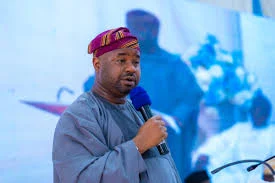
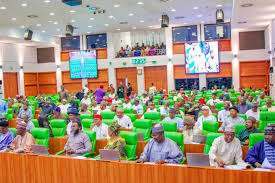
Zach Adedeji speaking at House of Representatives roundtable on Nigeria’s 2026 revenue projections

The Executive Chairman of the National Revenue Service, Mr Zach Adedeji, has said Nigeria’s 2026 tax reforms have positioned the service to generate N40.7 trillion in taxes and royalties. Adedeji disclosed this on Wednesday in Abuja while speaking at a roundtable organised by the House of Representatives Committee on Appropriations for key stakeholders in the financial sector. According to him, the projected revenue reflects the impact of recent reforms that transferred petroleum and solid mineral royalties, alongside other revenue streams, to the National Revenue Service. “In light of the tax reforms transferring petroleum and mineral royalties and other revenues to the NRS, the total target is N40.7 trillion,” Adedeji said. “We believe that with the support of the House, we will achieve what we have proposed.” Strong 2025 Performance The NRS chairman also highlighted the agency’s strong performance in 2025, noting that it exceeded its revenue target by a wide margin. He said the service generated N28.23 trillion in 2025, surpassing its target of N25.2 trillion. “Compared with 2024, we collected N6.5 trillion more in 2025, representing a 30.3 per cent increase, driven largely by non-oil taxes,” he stated. Finance Minister Explains Reform Rationale The Minister of Finance and Coordinating Minister of the Economy, Mr Wale Edun, said Nigeria had previously relied heavily on Ways and Means financing to cover large fiscal deficits. He added that the Nigerian National Petroleum Company had been funding petrol subsidies through an under-recovery arrangement, which he described as unsustainable. Edun said the government was compelled to address these structural distortions and replace them with market-based solutions, leading to the current wave of fiscal and tax reforms. Lawmakers Seek Clarity on Revenue Projections The Chairman of the House Committee on Appropriations, Rep. Abubakar Bichi (APC–Kano), said the roundtable was organised to allow lawmakers to engage directly with the presidential economic team on the 2026 Appropriation Bill. “This is for us to study, consider and approve the request. We decided to engage the President’s team on 2025 performance and the 2026 proposal,” Bichi said. He added that lawmakers also engaged the NRS leadership to gain clarity on the ambitious 2026 revenue projections. “In 2025, we achieved about N28 trillion against a N25 trillion target. We need more information so Nigerians can understand what is going on,” he said.

Diphtheria: Enforce mandatory nationwide immunisation, Reps tell Health Ministry

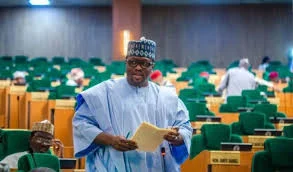
The House of Representatives has tasked the Federal Ministry of Health and relevant agencies under its policy supervision with enforcing mandatory diphtheria immunisation across the country. The concerned agencies under the ministry were listed to include the Nigeria Centre for Disease Control (NCDC), and the National Primary Health Care Development Agency. This resolution followed the adoption of a motion of urgent public importance moved by Rep. Bitrus Laori (PDP–Adamawa) during plenary on Wednesday. The House called for compulsory diphtheria vaccination, testing, and treatment across all healthcare centres in Local Government Areas nationwide. Diphtheria is a bacterial infection caused by Corynebacterium species, affecting the nose, throat, and skin, and in severe cases, the heart. The disease forms a thick, grey coating at the back of the throat, making breathing difficult. However, it is easily preventable through vaccination. Leading the debate, Laori described diphtheria as a growing public health concern, noting that the first major outbreak in Nigeria occurred in Borno State in 2011, claiming 21 lives. He explained that diphtheria spreads through respiratory droplets, contaminated surfaces, and overcrowded, unsanitary environments, making children and individuals with weakened immune systems particularly vulnerable. According to Laori, the current resurgence of the disease poses a serious threat to Nigeria’s already overstretched public health system. He added that while diphtheria had been virtually eliminated in countries like the United States and across Europe due to high vaccination coverage, it continued to thrive in parts of Africa with low immunisation rates. “Diphtheria primarily threatens unvaccinated individuals who travel internationally or come into contact with infected persons. “In countries like Niger, Gabon, and Mauritania, outbreaks have been controlled effectively due to early detection, lab confirmation, and the availability of antitoxins and antibiotics.” “In contrast, Nigeria faces a dire situation, with thousands of reported cases and deaths due to insufficient vaccination,” he added. Laori revealed that between May 2022 and February 2025, Nigeria recorded 41,978 suspected diphtheria cases across several states, including Bauchi, Borno, Jigawa, Kaduna, and Katsina. He noted that Kano and Yobe accounted for the highest numbers, with 24,062 and 5,330 cases respectively. Laori said most infections were in children aged 1 to 14, and only 19.7 per cent were fully vaccinated, adding that the outbreak resulted in 1,279 deaths during that period. He warned that without urgent intervention, the fatality rate could rise, and the disease could spread beyond currently affected states. He also emphasised the need to address low vaccination rates, ineffective treatment options, and delays in diagnosis, which continued to fuel the outbreak. The House further urged the Federal Ministry of Information and National Orientation to intensify public awareness campaigns on the dangers, symptoms, and modes of transmission of diphtheria to help curb the spread and reduce fatalities. In his ruling, Speaker of the House, Rep. Abbas Tajudeen, mandated the Committee on Health and Health Institutions to assess the capacity of healthcare facilities to respond to the diphtheria outbreak. The committee is to report back within four weeks for further legislative action. He also instructed the Committee on Legislative Compliance to ensure implementation of the resolution.

Reps Receive ₦400 Miilion For Constituency Projects — Minority Whip

The Minority Whip of the House of Representatives, Isa Ali, disclosed on Friday that members receive about ₦400 million annually to execute constituency projects through Zonal Intervention Projects (ZIPs) and Special Intervention Projects (SIPs). The lawmaker, representing Billiri/Balanga Federal Constituency, made this revelation during a town hall meeting aimed at keeping his constituents informed of recent developments in the National Assembly and their impacts on the constituency. According to Hon. Ali, the funds are divided into two major categories: 1. Zonal Intervention Projects (ZIPs): ₦179 million is allocated to these projects. 2. Special Intervention Projects (SIPs): ₦40 million is designated for these projects. Constituency Allocation He further explained that an additional ₦200 million is specifically budgeted for the Billiri/Balanga constituency. He said, “If you look at part of the bills I’m sponsoring, it is on federal constituencies and senatorial districts fund development to enable every constituency and senatorial district to have major projects. When you move to most of these constituencies, you will not see Federal Government projects apart from the constituency projects done by members of the National Assembly. “Regarding the amount, particularly in the 10th House of Representatives, which Nigerians call the ‘people’s house,’ we are very open. The Zonal Intervention Project has been in existence for the past 20 years, and the money has not changed; it’s ₦179 million. “We have Special Intervention Projects; this year, it’s ₦40 million. In previous years, it was N30 million. The same applies to ZIPs; in previous years, the money remains the same. We have other interventions like the capital intervention for Balanga/Billiri, which is ₦200 million. In total, we are talking about a little above ₦400 million for each constituency.” Speaking further, the Minority Whip, who is a member of the Peoples Democratic Party, lauded the Federal Government for previously releasing 100 per cent of the projects. “I’m part of the leadership and I’m working hard to ensure the implementation process commences. We will ensure 100 per cent implementation because, to be honest, from 2019 to 2023, the Federal Government tried by releasing almost 100 per cent of all ZIPs and SIPs,” he added. Ali assured his constituents of the quality of projects despite the economic situation, saying, “We are working hard. The finances of the country are under serious challenge, but as a leader, I’m working with my colleagues to ensure that this year’s intervention is also 100 per cent by the releases of the Federal Government.” The Minority Whip disclosed that he inaugurated a committee comprising professionals to ensure the quality of projects.

Reps flays FCT ‘park and pay’ policy

HOUSE OF REPS

By Doris Isreal Ijeoma The House of Representatives Committee on the Federal Capital Territory (FCT) has criticized the “park and pay” system implemented by the Federal Capital Territory Administration (FCTA). During an interactive session with Chinedum Elechi, the mandate secretary for the transportation secretariat, in Abuja on Wednesday, Mukthar Betara, chairman of the committee, expressed concerns about the policy, highlighting reports of harassment faced by residents and motorists from those enforcing it. The FCTA reintroduced the “park and pay” policy in August 2023 following agreements with two concessionaires, aiming to alleviate city congestion and enhance driving conditions. This policy had previously been suspended in April 2014 by a high court ruling that found it unlawful due to lack of legal backing. Betara sought details on the reintroduction process, the policy’s authorization, and how fees are remitted to the Federal Capital Development Authority (FCDA). In response, Elechi confirmed that the policy is supported by a legal framework and that parking is confined to designated areas. “The park and pay are by regulation. We have legal framework. It is part of the way of controlling traffic. ” So, under the part and pay, designated areas are meant to be parks. So, it is legal. It is revenue paid through concessionaires. According to him, there is usually a ration between the concessionaires and the FCT. So, for areas where we have concessionaires, there is a percentage that goes to the concessionaires. ” It is 60 per cent, and 40 per cent goes to FCT. The infrastructure for the work is usually provided by the concessionaire. The revenue goes straight to the revenue account of the FCT, not transportation.” The committee chairman queried the mandate secretary about the contract process, asking how the contract was established. ” In appointing your concessionaires, what procedure did you follow? How much has been remitted to the FCDA from January to date? Who gave you the approval?” Betara asked. Hussaina Olayemi, the director of legal services, transport, explained that the Infrastructure Concession Regulatory Commission and the Abuja Investment Company, the FCT organisation responsible for public-private partnerships, were involved. “After their involvement, the concession was submitted to the federal executive council, for approval. So, we have the FEC approval,” Olayemi stated. The committee criticised the allocation of 60 per cent of revenue to concessionaires while the government receives only 40 per cent. Betara demanded clarification on what infrastructure the concessionaires are providing. Replying, Elechi stated that the concessionaire is responsible for marking roads. However, Mr Betara countered, asserting that no roads in Abuja have been marked by the concessionaire. “The way the concessionaires operate in Abuja, they harass people on the streets. I would have advised you people to have given the VIO this concessionaire. ”Let them take this up so that the whole revenue will go to FCT. Why are you personalising this for an individual?” Betara said.

Reps demand arrest of WAEC officials for lack of accountability

By Doris Isreal Ijeoma On Wednesday, the House of Representatives Committee on Basic Examination Bodies demanded the detention of four West African Examination Council (WAEC) representatives over the lack of accountability. This followed a motion by a member of the committee, Uchenna Okonkwo, during an investigative hearing in Abuja. The committee was piqued that the officials failed to answer their questions to their satisfaction in Abuja. The officials are Amos Josiah Dangut, head of WAEC Nigeria, who represented the registrar; Angus Okeleze, senior deputy registrar; Victor Odu, acting director of finance; and Segun Jerumeh, deputy director of finance. During the hearing, the lawmakers argued with the WAEC officials about whether the examination body was accountable to parliament. Mr Dangut had earlier, in his presentation to the committee, posited that WAEC was not an agency of government and, therefore, not accountable to the parliament. However, the lawmakers insisted that WAEC Nigeria was a creation of an Act of the National Assembly and, hence, should account for all its activities to them. They pointed out that the National Assembly makes appropriation for WAEC. The lawmakers also pointed out that WAEC’s convention dictates that it must submit to the legislation of any of its member countries. Following the arguments, Mr Okonkwo said, “I will like to move a motion that while pending the investigation to look into the activities of WAEC Nigeria, the invited guest before us should be taken into custody. “They should be held at the police post while we seek for solutions for these issues they are bringing upon Nigerians.” Marie Ebikake seconded the motion. One of the WAEC officials kept shouting at the panel that it was being unfair to them. After that, officials were taken away by members of the sergeant at arms of the National Assembly, who detained them in one of the offices for about 15 minutes. However, after a brief closed-door session, the committee decided to allow them to return later with the relevant documents demanded from them. Oforji Oboku, the committee chairman, said they must bring the audited statement of accounts of the examinations body from 2018 to 2024. He also directed that they present relevant documents concerning a N5 billion loan that WAEC accessed in 2022 to buy a custom-made calculator among others. The chairman said WAEC could not operate outside the supervision of the National Assembly. “You are not different from any other agency by saying you are not an agency of government. We are not here to witch hunt you. WAEC is subject to Nigeria’s laws. We have reviewed the position and we have all the powers to oversight you. You cannot come here and say WAEC is not an agency of government,” he said. He said WAEC would be invited at a later date, insisting that failure to produce the required documents would attract sanctions. 

Reps probe missing crude, dirty fuel

HOUSE OF REPS

The Joint Committee of the House of Representatives carrying out a forensic investigation into the challenges affecting the downstream and midstream petroleum sectors has commenced a probe into allegations of importation of contaminated Premium Motor Spirit, also known as fuel, into the country. The committee’s Chairman, Ikenga Ugochinyere disclosed this at the formal inauguration of the panel in Abuja on Monday. The investigative panel will also look into allegations of the non-availability of crude oil to domestic refineries, disruption in distribution and favouritism in the pro forma invoice regime, among others. Briefing newsmen at the event, Ugochinyere said, “The committee will conduct a legislative forensic investigation into the presence of middlemen in crude trading, indiscriminate issuance of licences and alleged unavailability of international standard laboratories to check adulterated products.” He noted that the panel would also probe the possible influx of contaminated products into the country and “the allegation of non-domestication of profits realised from crude marketing sales in local banks, abuse of the PFI regime and importation of products already being produced in Nigeria.” Meanwhile, the panel is set to visit petrol stations nationwide to take samples of their product for laboratory tests to ascertain their quality. The mandate of the joint committee is sequel to the adoption of a motion on July 9, 2024, on the “Urgent need to carry out a legislative forensic investigation into the challenges affecting the downstream and midstream petroleum sectors in Nigeria and other related matters to find out a lasting solution to all challenges,” affecting the petroleum industry. Details later…

House of Reps leadership visits Dangote refinery

By Doris Isreal Ijeoma The leadership of the House of Representatives, led by the Speaker, Tajudeen Abbas, has visited the $ 20 billion Dangote Petroleum refinery in Lagos State. The lawmakers arrived at the refinery located in the Lekki Free Trade Zone in Lagos around 11 am on Saturday and were received by the President of the Dangote Group, Aliko Dangote, and top executives of the company. The lawmakers are expected to take a tour of the 650,000 barrels per day refinery during the visit and have a conversation about the plan to start the supply of petrol next month. The visit marks the second time federal lawmakers will visit the refinery this year following the visit of the Senate leadership, led by Senate President Godswill Akpaio, to the facility in June. The lawmaker’s visit comes days after the Chief Executive of the Nigerian Midstream and Downstream Petroleum Authority, Farouk Ahmed, claimed that the diesel produced by Dangote refinery contains a high sulphur content of about 1,000 parts per million. Ahmed also stated that the Federal Government would not stop the importation of petroleum products, saying Nigeria cannot depend on one refinery to feed the nation. He revealed that the refinery, which has been selling diesel and aviation fuel in Nigeria for months, has not been licensed, stating that it is still at the pre-commissioning stage. “The claim by some media houses that there were steps to scuttle the Dangote refinery is not so. The Dangote refinery is still in the pre-commissioning stage. It has not been licensed yet; we haven’t licensed them yet. They are still in the pre-commissioning. I think they have about 45 per cent completion,” he declared.

Growing Hardship: Reps Slash Salaries by 50% Amid Growing Hardship

In response to the increasing hunger and frustration faced by citizens, members of the House of Representatives have resolved to reduce their salaries by 50 percent for the next six months. The decision followed the adoption of an amendment to a motion’s prayer proposed by the Deputy Speaker of the House, Benjamin Okezie Kalu. Kalu emphasized the need for lawmakers to sacrifice 50% of their N600,000 monthly salaries to support struggling Nigerians. Kalu explained that the salary reduction aims to aid the federal government in combating the escalating cost of foodstuffs and alleviate the hardships faced by the populace. The Deputy Speaker’s amended prayer was to a motion by Rep Isiaka Ayokunle calling on proponents of the planned nationwide protests to throwaway the idea and engage the government in a dialogue. Note that the prices of food items, transportation, electricity tariff amongst other have greatly skyrocketed and is still increasing on a daily basis. Recalled that the Organised Labour have been at loggerheads with the government of President Bola Tinubu over the increase of salaries for workers. Agreeing to cut down their salaries by 50 percent the 360 lawmakers will be forfeiting about N108 million monthly for the next six months. The motion was unanimously adopted by lawmakers through a voice vote and referred to the committees on Humanitarian Affairs, Finance and Budget for compliance.