UN Security Council Endorses Trump’s Gaza Peace Plan, Approves Temporary International Force

New York, November 17, 2025 — The United Nations Security Council on Monday adopted a resolution endorsing a U.S.-proposed peace plan for Gaza and authorizing the deployment of a temporary international force in the enclave, following two years of war between Israel and Hamas. Resolution 2803 (2025), sponsored by the United States, passed with 13 votes in favour and none against, while China and Russia abstained. The text of the resolution welcomes the Comprehensive Peace Plan unveiled by U.S. President Donald Trump on September 29, which outlined a 20-point roadmap for ending hostilities and rebuilding Gaza. The plan’s first phase led to a ceasefire between Hamas and Israel several days after its announcement. Creation of Gaza Board of Peace The resolution further welcomes the creation of a Board of Peace (BoP), described as a “transitional administration” responsible for overseeing reconstruction efforts and political stabilisation in Gaza. It authorizes the BoP to establish a temporary International Stabilisation Force (ISF) “to deploy under unified command acceptable to the Board of Peace.” The ISF, the resolution says, will operate “in close consultation and cooperation” with Egypt and Israel, with member states contributing personnel and resources. 📰 Related Story: UN Secretary-General Guterres Urges Swift Deployment of Gaza Peace Force – The UN chief calls for “urgent mobilisation” of resources to stabilise Gaza and rebuild basic services within six months. U.S. Hails ‘New Course’ for the Middle East Speaking after the vote, U.S. Ambassador to the UN, Mike Waltz, thanked Council members for supporting what he called “a new course in the Middle East for Israelis and Palestinians and all the people of the region alike.” “Today’s resolution represents another significant step towards a stable Gaza that will be able to prosper and an environment that will allow Israel to live in security,” Waltz said. He added that the International Stabilisation Force “will help stabilise the security environment, support the demilitarisation of Gaza, dismantle terrorist infrastructure, decommission weapons, and maintain the safety of Palestinian civilians.” 📰 Related Story: Trump’s 20-Point Gaza Plan: Key Provisions and Reactions – A breakdown of the U.S. President’s proposed roadmap and how it aims to balance Israeli security with Palestinian reconstruction. Arab States Back Plan, Call for Justice Algerian Ambassador Amar Bendjama welcomed the initiative and acknowledged the efforts undertaken by President Trump to advance peace in the region. However, he stressed that “genuine peace in the Middle East cannot be achieved without justice for the Palestinian people, who have waited for decades for the establishment of their independent State.” Bendjama noted that the resolution had received broad support from Arab and Muslim countries, adding that “the Palestinian Authority at the highest level has openly welcomed the initiative.” 📰 Related Story: Palestinian Authority Welcomes UN Vote, Calls It ‘First Step Toward Statehood’ – Ramallah officials say the new UN resolution could revive the long-dormant two-state framework. Russia, China Abstain Explaining Russia’s decision to abstain, Ambassador Vasily Nebenzya said the Council was, in essence, “giving its blessing to a U.S. initiative on the basis of Washington’s promises.” He warned that the resolution handed “complete control over the Gaza Strip to the Board of Peace and the ISF, the modalities of which we know nothing about so far.” China also abstained but did not issue an immediate statement following the vote. Background The two-year Gaza war, which began in late 2023, resulted in thousands of casualties and large-scale destruction across the enclave. The newly endorsed U.S. plan seeks to stabilise the territory, initiate reconstruction, and pave the way for eventual Palestinian self-governance under international supervision. The International Stabilisation Force, to be drawn from multiple countries, is expected to begin deployment within weeks, pending agreement on its command structure and mandate duration.
Israeli war on Gaza: Trump announces peace deal

Hamas and Israel have signed on to the first phase of a peace deal, paving the way for the end of the Israeli war on Gaza. The breakthrough was announced by the US President, Mr. Donald J.Trump. Making the announcement around twelve midnight Nigerian time on his confirmed social media handle, @realDonaldTrump, the President of the United States (POTUS) said, “I am very proud to announce that Israel and Hamas have both signed of on the first phase of our Peace Plan.” He went further to state, “ This means that ALL of the Hostages will be released very soon, and Israel will withdraw their Troops to an agreed upon line as the first steps toward a Strong, Durable and Everlasting Peace.” Mr. Trump who had earlier promised to visit the Egyptian venue of the peace negotiation this weekend assured that “All Parties will be treated fairly!” “This is a GREAT day for the Arab and Muslim world, Israel,all surrounding Nations, and the United States of America.” Further, the President expressed his gratitude to the mediating countries, namely; Qatar, Egypt and Turkey,” who he said worked with the United States “to make this Historic and Unprecedented Event happen.” Mr. Ended the message with the biblical phrase, “blessed are the peacemaker.” The current Israel-Hamas war, now in its third year, began on October 7, 2023. A report by Reuters states that Palestinian health authorities say Israel’s two-year-old ground and air campaign against Hamas militants in the Gaza Strip has killed more than 67,000 people, with nearly a third of the dead under the age of 18.
Israeli Army closes 6 UN-run schools in Shu’afat refugee camp

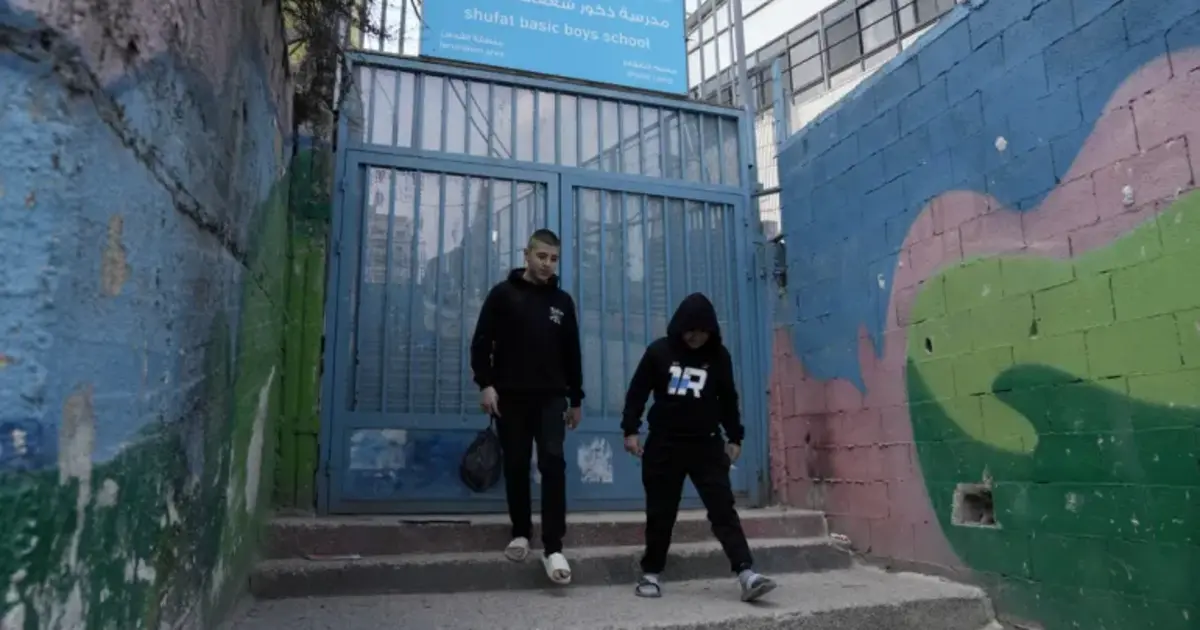
Israeli army forces on Thursday raided six UN-run schools in occupied East Jerusalem to enforce military closure orders, Palestinian authorities said. A statement by the Jerusalem Governorate said Israeli soldiers moved into the facilities in the Shu’afat refugee camp to demand the immediate departure of students and teachers. It called the closure orders of the schools “part of an Israeli systematic escalation against Palestinian education institutions” in East Jerusalem. Earlier, the UN agency for Palestinian refugees (UNRWA) warned that the Israeli closure orders of the six schools risk depriving some 800 Palestinian students of their right to education. Israeli authorities ordered the schools in the camp to close by May 8, citing the lack of a license. Under the orders, no one will be allowed into the schools, including principals, teachers, and other staff. The Israeli closure orders are seen as part of Tel Aviv’s wider campaign against UNRWA and its mandate of serving Palestinian refugees. In October 2024, the Israeli Knesset (parliament) passed two laws banning UNRWA’s operations in Israel and areas under its occupation and prohibiting Israeli authorities from having any contact with the agency. The laws took effect on Jan. 30. Israel alleges that UNRWA employees were involved in a Hamas attack on Oct. 7, 2023, a charge vehemently denied by the UN agency. UNRWA was established in 1949, and has served as a critical lifeline for Palestinian refugees, supporting nearly 5.9 million people across Gaza, the West Bank, Jordan, Syria, and Lebanon.
Tinubu Calls for End to Gaza Conflict, Supports Two-State Solution

In an address at the Arab-Islamic Summit in Riyadh, Saudi Arabia, President Bola Tinubu called for an immediate halt to the ongoing Israeli war on Gaza, stressing the prolonged suffering caused by the conflict. Speaking to heads of state from the Organization of Islamic Cooperation (OIC) and the Arab League, Tinubu highlighted the grave humanitarian situation in Gaza, urging the world to work toward lasting peace. Nigeria’s President reaffirmed his country’s strong support for a two-state solution, advocating for the peaceful coexistence of Israel and Palestine. He emphasized that this solution remains the key to achieving lasting peace, with both nations deserving security and dignity. Tinubu called on global leaders to take collective action, beyond mere condemnation, to end the violence that has devastated so many innocent lives. The President also noted the importance of respecting international law, emphasizing that while nations have the right to self-defense, such actions must be proportionate and mindful of the rights of civilians. He stressed that the lives of innocent people cannot be dismissed as mere collateral damage in the pursuit of political or military goals. Reflecting on Nigeria’s unwavering stance on the two-state solution, Tinubu remarked that it is a vision of equality, mutual recognition, and self-determination for both peoples. He called for dialogue, mutual respect, and an understanding of the historical context to resolve the conflict. The President urged the international community to find new, innovative paths to peace, noting the profound impact of the ongoing violence and the global exposure of the conflict. Tinubu commended King Salman and Crown Prince Mohammed bin Salman for convening the summit and reiterated Nigeria’s commitment to supporting international efforts aimed at achieving peace and stability in the Middle East. He reminded attendees that Nigeria’s own experiences have underscored the importance of respecting diversity and avoiding identity politics in the pursuit of peace.
Israel/Hamas Conflict Could Distort Global Commodity Markets –World Bank

Although the global economy is in a much better position than it was in the 1970s to cope with a major oil-price shock, an escalation of the latest conflict in the Middle East—which comes on top of disruptions caused by the Russian invasion of Ukraine—could push global commodity markets into uncharted waters, the World Bank has said. In its latest Commodity Markets Outlook, released on Monday morning, The Washington based lender said the effects should be limited if the conflict doesn’t widen. The Bank note that oil prices are expected to average $90 a barrel in the current quarter before declining to an average of $81 a barrel next year as global economic growth slows. “Overall commodity prices are projected to fall 4.1% next year. Prices of agricultural commodities are expected to decline next year as supplies rise. Prices of base metals are also projected to drop 5% in 2024. Commodity prices are expected to stabilize in 2025. “The conflict’s effects on global commodity markets have been limited so far. Overall oil prices have risen about 6% since the start of the conflict. Prices of agricultural commodities, most metals, and other commodities have barely budged. “The outlook for commodity prices would darken quickly if the conflict were to escalate,” it said. The report stated that effects would depend on the degree of disruption to oil supplies. According to the global Bank, in a “small disruption” scenario, the global oil supply would be reduced by 500,000 to 2 million barrels per day—roughly equivalent to the reduction seen during the Libyan civil war in 2011. Under this scenario, the oil price would initially increase between 3% and 13% relative to the average for the current quarter—-to a range of $93 to $102 a barrel, the report said. “In a “medium disruption” scenario—roughly equivalent to the Iraq war in 2003—the global oil supply would be curtailed by 3 million to 5 million barrels per day. That would drive oil prices up by 21% to 35% initially—to between $109 and $121 a barrel. In a “large disruption” scenario—comparable to the Arab oil embargo in 1973— the global oil supply would shrink by 6 million to 8 million barrels per day. That would drive prices up by 56% to 75% initially—to between $140 and $157 a barrel. “The latest conflict in the Middle East comes on the heels of the biggest shock to commodity markets since the 1970s—Russia’s war with Ukraine. That had disruptive effects on the global economy that persist to this day. Policymakers will need to be vigilant. If the conflict were to escalate, the global economy would face a dual energy shock for the first time in decades—not just from the war in Ukraine but also from the Middle East,” said World Bank’s Chief Economist and Senior Vice President for Development Economics, Indermit Gill. The World Bank’s Deputy Chief Economist and Director of the Prospects Group, Ayhan Kose, noted that “Higher oil prices, if sustained, inevitably mean higher food prices. If a severe oil-price shock materializes, it would push up food price inflation that has already been elevated in many developing countries. At the end of 2022, more than 700 million people—nearly a tenth of the global population—were undernourished. An escalation of the latest conflict would intensify food insecurity, not only within the region but also across the world.”
13 Hostages Killed By Israeli Airstrikes — Hamas

Al-Qassam Brigades, the military wing of Hamas, on Friday said at least 13 hostages captured by Hamas were killed in Israeli airstrikes on Gaza in the past 24 hours. In a statement, it said “foreigners and Israelis were killed during the intense Israeli attacks in northern Gaza and inside Gaza City during the past 24 hours.’’ Six were killed in the northern Gaza Strip, while seven were killed in separate places in Gaza City, according to the statement. The Israeli army announced that it attacked about 750 targets Thursday night in the Gaza Strip, including underground tunnels, military compounds and sites. It added that the attack had also been on homes of officials, weapons depots and communication rooms in attempting to eliminate activists.
Death Toll Of Palestinians In Gaza Rises To Over 1,200

The death toll of Palestinians in Gaza has tragically climbed to over 1,200 as Israeli airstrikes continue to devastate the region. According to the Gaza Health Ministry, approximately 5,800 people have also sustained injuries. This escalating violence marks the sixth day of intense conflict between Israel and Hamas, the ruling militant group in Gaza. In their efforts, Israel has relentlessly targeted the densely populated and economically disadvantaged Palestinian coastal enclave, further exacerbating the humanitarian crisis. Vital supplies, including food, fuel, and medicines, are severely restricted from entering Gaza, leading to grave concerns about the welfare of innocent civilians. Additionally, Israeli officials report that 1,200 Israelis have lost their lives since the onset of Hamas’ violent attacks on communities and an electronic music festival near the Gaza Strip over the weekend. Among the casualties, 189 Israeli soldiers have tragically perished in the ongoing conflict.