FG Knocks Peter Obi For Faulting 2023 Supplementary Budget

FG Knocks Peter Obi For Faulting 2023 Supplementary Budget

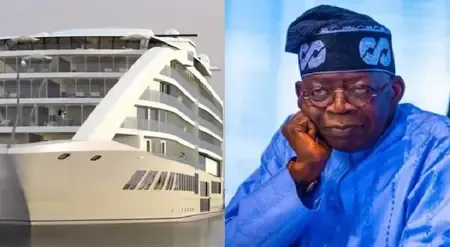
The Federal Government has lambasted Labour Party’s presidential candidate, Peter Obi, for allegedly distorting facts for political gains.  The Minister of Information, Mohammed Idris said this while disagreeing to Obi’s criticism of the 2023 supplementary budget. Idris, while defending the budget, described it as a “bold and pragmatic response” to Nigeria’s economic challenges.  The minister urged Obi to familiarize himself with the details, highlighting allocations for security, agriculture, wage increases, student loans, and social safety nets.  Idris emphasized President Tinubu’s commitment to supporting government functions and addressing urgent needs for national recovery.  The supplementary budget, he clarified, resulted from extensive consultations to align with the needs of the people.  Peter Obi had described the passing of the 2023 supplementary budget into law by President Bola Tinubu as wasteful, berating the government for being insensitive and uncaring about the suffering of Nigerians while squandering resources on a mysterious presidential yacht and fleets of SUVs. Mr Obi’s criticisms come shortly after Mr Tinubu signed the 2023 supplementary appropriation bill of N2.17 trillion into law on Wednesday. “No item of urgent social welfare has yet featured in the supplementary budget being orchestrated by this government. Instead, the items being made to dominate public discourse on the budget include a mysterious Presidential Yacht, Presidential Jets, the furnishing of already lavishly furnished presidential quarters and offices, fleets of luxury SUVs etc,” Mr Obi said. Speaking further, he said, “this portrays a Government that is totally uncaring and insensitive to the suffering of the majority, and indifferent to the mood of the nation. “The government’s overall attitude does not indicate that it is aware that the country is in a huge crisis, nor is the government in tune with the plight of the generality of our people. Even worse is the fact that most of the funding for these profligate expenditures will be largely borrowed. The least that Nigerians expect from the government at this difficult moment is empathy and realism, not lavish indulgence.”  Some line items, specifically presidential yacht and fleets of SUVs, in the supplementary budget sparked reactions from Nigerians. But Mr Tinubu’s government claimed the past regime of former president Muhammadu Buhari started payment for the presidential yacht for the Nigerian navy. Many Nigerians have voiced their concerns and criticism, with a significant number expressing displeasure about how such a luxury item can find its way into the supplementary budget. The Senate Committee on Navy, under the leadership of Gbenga Daniel, a former governor of Ogun State and the current representative for Ogun East Senatorial District, has called for a probe into the matter.

Gov Otu Presents N250bn 2024 Budget For Cross River

Gov Otu Presents N250bn 2024 Budget For Cross River

Governor Bassey Otu of Cross River on Thursday presented a budget of N250 billion for 2024 to the state House of Assembly for approval. Presenting the budget titled: “The Peoples First Budget’’, Otu said that the figure was made up of N154billion capital expenditure and N96billion recurrent expenditure. He said that the budget was aligned with the Sustainable Development Goal (SDG) goal 11, which focused on zero hunger, goal 111 which focused on good health and wellbeing and goal 1V which focused on quality education. “The 2023 budget of quantum infinitum which my administration inherited sought to transform as well as empower citizens through wealth creation and employment generation, improvement of educational standard, access to healthcare among others. “So, we intend to consolidate on the gains made by my predecessor as well as deliver quality service to our people. “For the 2024 fiscal year, the government is expecting N133 billion from the Federal Allocation Account (FAAC) while independent revenue is estimated at N35 billion,” he said. Otu said that the budget would priotise agriculture, education, healthcare delivery, environment, infrastructure, youth and sports development, security, tourism and general administration. The governor said as a newly elected governor, he would continue from where the previous administration stopped by continuing with some of priority projects while adding some innovative ones. “The 2023 budget of quantum infinitum which my administration inherited sought to transform as well as empower citizens through wealth creation and employment generation, improvement of educational standard, access to healthcare among others. “So, we intend to consolidate on the gains made by my predecessor as well as deliver quality service to our people. “For the 2024 fiscal year, the government is expecting N133 billion from the Federal Allocation Account (FAAC) while independent revenue is estimated at N35 billion,” he said.

FG Proposes N26.01trn For 2024 Fiscal Year

Tinubu's Intervention Can't Solve Ondo Crisis - PDP

The Federal Government has proposed the sum of N26.01 trillion for the 2024 appropriation based on oil price benchmark of $73.96 and 21 per cent interest rate. Minister of Budget and Economic Planning, Atiku Bagudu, disclosed this to State House Correspondents at the end of the Federal Executive Council (FEC) meeting on Monday in Abuja. He said that the budget would be presented to the National assembly before the end of the year since President Bola Tinubu was already engaging with the legislative arm towards getting their buy-in. He said that the budget was expected to consolidate on the various economic reforms initiated by the present administration aimed at improving the standard of living of Nigerians and attracting investors. Bagudu said that assumption of the budget was based on the various diplomatic engagements by the president and other government functionaries that were expected to improve inflow and boost exchange rate. Mr Dave Umahi, Minister of Works, also disclosed FEC approved the use of concrete for road projects across the country including those of new ones, depending on the level of completion. He said, ‘’FEC was also informed on the on-going projects and to mitigate so much inflation and variation of the projects, to have some of the projects that have attended completion to be redesigned on concrete and going forward for new projects to be done on concrete. ‘’FEC approved that concept that most of the on-going projects should be designed on concrete pavements depending on the level of completion and if you’re doing Asphalt there are also conditions for that. ‘’FEC also approved the coastal road running from Phase 1 which runs from Lagos to Port Harcourt to Calabar. Phase 2 runs from S4 tearing off from this stretch to Sokoto and to Ogoja. “It was approved to be done on Engineering, Procurement and Construction plus Financing. ‘’Eight roads that were started in the past administration for concessioning that have gone through all the processes were also approved and that the financial closure should be reached November.’’ Umahi also said that a 24-hour approval would be given to any state interested in taking over road projects in their domain, while particular conditions must be met for the agreement to take effect. He said that the project by the states must conform to the standard of the Federal Ministry of Works as well as meet the tolling system through which they would recoup their investment. The minister also disclosed that FEC approved the NNPC and FIRS road projects, which they oversee and fund across the country.

Lawmakers To Take Delivery Of N130m Worth Prado SUVs

Lawmakers To Take Delivery Of N130m Worth Prado SUVs

The House of Representatives has confirmed that the National Assembly is in the process of procuring and distributing utility Prado jeeps, worth N130 million to lawmakers. Rep. Rotimi Akin, the Spokesperson of the House of Reps said this in a statement in Abuja on Sunday night, coming at a time Nigerians are grappling with economic hardship. Akin said the initiative aligned with existing procurement laws, adding that it was a customary practice in previous assemblies. He said the distribution concerned vehicles tied to lawmakers’ oversight functions in the discharge of their duties within the standing committees, and they are not personal gifts. “For the duration of the 10th assembly, spanning from 2023 to 2027, these vehicles will remain the property of the National Assembly. “However, should the government’s extant assets deboarding policy still be in place at the end of the assembly’s tenure in 2027, lawmakers may have the option to purchase the vehicles before they become their property.” He emphasised the importance of the vehicles in enhancing the performance of lawmakers’ duties, especially when it comes to oversight functions in various regions of the country. Akin said the aimed was to ensure that government interventions, programmes, and policies were effectively carried out, no matter where Nigerian citizens reside. He highlighted the percentage of the legislature’s budget as part of the national budget which had steadily decreased over the past decade, currently standing at 0.5 per cent of the federal budget. He urged stakeholders to focus on reducing costs in the right areas while supporting lawmakers in their efforts to fulfill their duties effectively and with integrity. He said the vehicles were work tools and not status symbols, intended to facilitate improved representation, constituency outreach, and oversight functions by elected representatives.

Reps frown at N81.2bn spent by Green Wall Agency to plant trees

Reps to expose culprits behind oil theft in Nigeria

*Expresses displeasure over conflicting financial reports by CBN, OAGF The House of Representatives Ad hoc Committee investigating the utilisation of ecological funds released to the National Agency for the Great Green Wall (NAGGW) has uncovered N81.2 billion allegedly spent to plant 21m trees in 11 states. The investigation is from 2015 till date. Hon.  Isma’ila Dabo, the Chairman of the Committee in Abuja, decried the persistent of environmental challenges in spite of funds put into the programme. He said the funds put by the Federal Government and international partners necessitated the investigation. He said the committee would embark on, on-the-spot assessment tour to all the projects executed under this scheme to ascertain the claims. He said the committee was not out to scandalise any individual or organisation but only to ensure that public funds were utilised for the purpose they were given. “We will not shy away from pointing fingers where necessary, not out of personal animosity but simply in the national interest of our nation.” The 11 states where the trees are planted are: Kebbi, Sokoto, Zamfara, Katsina, Kano, Jigawa, Bauchi, Gombe, Adamawa, Yobe and Borno. The committee expressed displeasure over conflicting financial reports submitted by the Central Bank of Nigeria (CBN) and office of the Accountant General of the Federation (OAGF) to the committee. Piqued by the inability of the agency to substantiate most of the tree planting projects carried out so far, the committee said 80 per cent of trees planted by the agency did not survive. Meanwhile, the documents submitted by the Accountant General of the Federation (AGF), Mrs Oluwatoyin Madein showed that the total sum of N19.378 billion was released from the derivation and Ecology Accounts to the agency from Feb 2019 to date. Responding to questions from the committee, NAGGW Managing Director, Dr Yusuf Bukar, said the Great Green Wall Act was signed by Mr. President in 2015. He said it enabled the agency to implement the Nigerian component of the programme as an initiative of the African Union being implemented in 11 African countries. This according to him, is to address the problem of land degradation, desertification, drought, climate change and livelihood of affected communities. He saud the agency planted 1 million trees in Borno, Yobe and other states, adding that N2.4 billion was released in the first phase and N7.3 billion released in the second phase. He added that the fund accruing into the agency’s account included 15 per cent of the ecological fund for the Great Green Wall, contribution of fund from the natural resources development fund and gifts. Others include loans and grants in aid from national bilateral, multilateral organisations and donors, international and development agencies as well as individuals. He said that the agency often got funds from donor agencies; however, he did not provide relevant documents on the amount received so far.

Fossil fuel subsidies surge to record $7trn

Fossil fuel subsidies surge to record $7trn

The International Monetary Fund (IMF) has said that subsidies on fossil fuel surged to a record $7 trillion in 2022. The Fund in its chart of the week, which focused on climate change, said the impact of the Russia-Ukraine war as governments globally supported consumers and businesses as energy prices spiked. As the world struggles to restrict global warming to 1.5 degrees Celsius and parts of Asia, Europe and the United States swelter in extreme heat, subsidies for oil, coal and natural gas are costing the equivalent of 7.1 percent of global gross domestic product. The World Meteorological Organization says July was the hottest month on record. Data shows that fossil-fuel subsidies rose by $2 trillion over the past two years as explicit subsidies (undercharging for supply costs) more than doubled to $1.3 trillion. Consuming fossil fuels imposes enormous environmental costs—mostly from local air pollution and damage from global warming. The vast majority of subsidies are implicit, as environmental costs are often not reflected in prices for fossil fuels, especially for coal and diesel. “If governments removed explicit subsidies and imposed corrective taxes, fuel prices would increase. This would lead firms and households to consider environmental costs when making consumption and investment decisions. The result would be cutting global carbon-dioxide emissions significantly, cleaner air, less lung and heart disease, and more fiscal space for governments. “We estimate that scrapping explicit and implicit fossil-fuel subsidies would prevent 1.6 million premature deaths annually, raise government revenues by $4.4 trillion, and put emissions on track toward reaching global warming targets. It would also redistribute income as fuel subsidies benefit rich households more than poor ones. “Yet removing fuel subsidies can be tricky. Governments must design, communicate, and implement reforms clearly and carefully as part of a comprehensive policy package that underscores the benefits. A portion of the increased revenues should be used to compensate vulnerable households for higher energy prices. The remainder could be used to cut taxes on work and investment and fund public goods such as education, healthcare, and clean energy,” the global lender said.