May 29: victory lap by callous hegemons

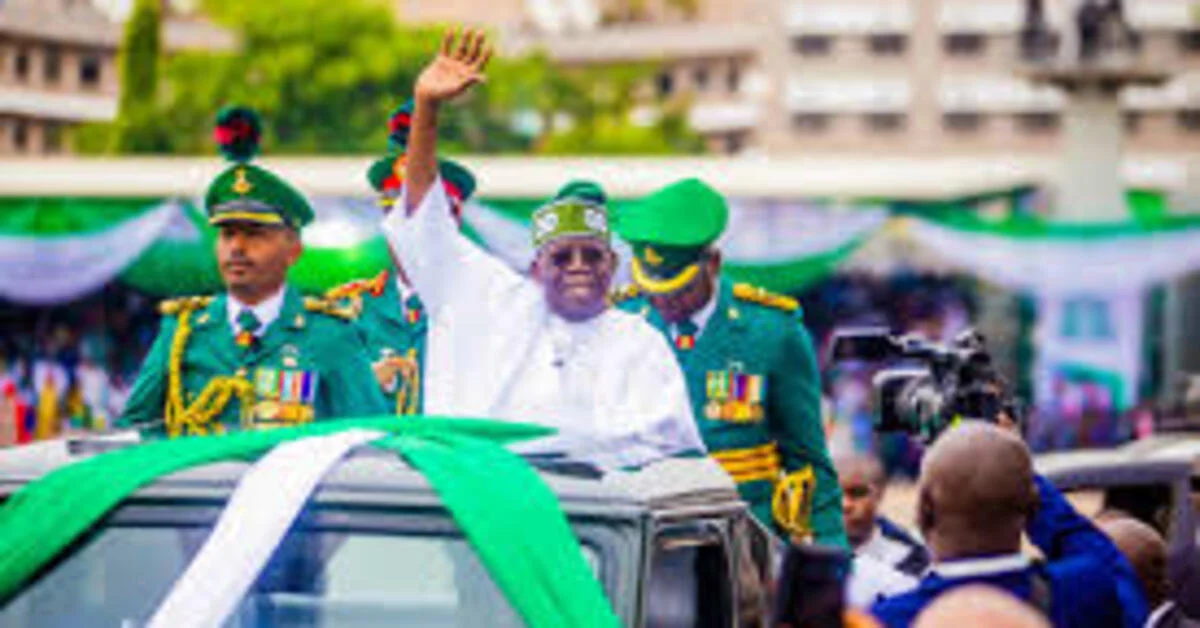
By UGO ONUOHA THE victory lap is on. It has actually been on since May 29, 2023, when this regime assumed office. We are 48 hours away from the regime of Nigeria’s president, Alhaji Bola Ahmed Tinubu, clocking two years in office. For all practical purposes, he is halfway through his tenure. He is constitutionally qualified, in the Nigerian context, to seek a second term in 2027. Though not supported by the evidence before us in terms of delivery of promises, the chorus from his echo chamber has been that the next presidential election will be a no contest, a walkover or a stroll in the park. But some other Nigerians are insistent that Tinubu, in spite of defections, deflections and contrived bandwagon by some opposition politicians, will end up as OTP or one term president. This group says that their conviction about OTP for Tinubu is borne out by his glaring failures midway into his tenure. While the pro-Tinubu camp is pinning their hopes on his reelection on his bogus achievements and contrived popularity, as well as the notorious recurring electoral heists in our country, the opposing team believes that it cannot be business as usual and that the president must swim or sink on the strength of his performance in four years. And if the midterm scorecard is any yardstick then Tinubu should be prepared for a fierce headwind in the run up to the 2027 general election. Victory lap comes in different dimensions and contexts. For our purposes today and with particular reference to the rulership of the All Progressives Congress (APC) political party we will dwell on the cultural angle. The cultural angle of the ongoing awkward victory lap by the APC is supposed to symbolize achievement, triumph, and hard work. It might as well be for the APC apparatchiks. But is that the experience and reality of the majority of our people? I will leave that judgement call to Nigerians as individuals. Another cultural significance of a victory lap is the celebration of successes so as to inspire others to strive for similar achievements. What achievements in this midterm report card is the ruling party celebrating that are worthy of emulation – poor and deteriorating public utilities and infrastructure; debilitating energy deficits; worsening insecurity; in-your-face pillaging of the public till (including the recent announcement of the shutting down of the Port Harcourt refinery for maintenance barely six months after re-streaming it and after expending $1.5bn on repairing the same refinery); failed educational system which high-point is the about 20 million out of school children, deepening poverty, among other troubling indexes of the country. Ostensibly, as part of the victory lap about 22 governors, (ironically about the same number of the then ruling PDP governors endorsed former President Goodluck Jonathan ahead of the 2015 election which he eventually lost), of the APC including governors who shamelessly absconded with the mandate of the electorate which they received on the platform of another political party, converged on Abuja last Thursday to adopt Tinubu as their sole presidential candidate for an election that’s still about two years away. To be sure the congregants acted within their rights. But by so doing they also betrayed anxiety that all is not well in the APC in spite of the bravado of their invincibility. We have witnessed similar posturing in the past. A former ruling party, the People’s Democratic Party (PDP), once vowed that it would remain in power at the centre for a minimum of 60 unbroken years. Where’s the PDP today barely 10 years after losing power? Nowhere. It is castrated. It is impotent. It is gasping for breath. It is fractionalized. Its governors who are the funders of the party given our peculiar political party structure are leaving the party in droves for the ruling APC. It is alive only in name, and remnants of its once imperial glory. The self-styled largest political party in Africa is virtually extinct. It’s a shell which has been hollowed out. If the PDP which at inception remotely resembled a proper political party is currently facing this tragic fate, it will only be left to the imagination what will become of the APC which was a special purpose vehicle (SPV) cobbled together to deliver the presidency of Nigeria to Tinubu. Yes, I can hear you say that it first delivered the presidency to a once eternal presidential candidate, Muhammadu Buhari, who turned out to be a blight on the country. But I know that you know better than that. APC was for Tinubu. Still is. Buhari, the affliction of Nigeria, was used to test the vehicle because of his provincial cult following, and to smoothen the rough edges of the SPV. So the test of the APC will be after the tenure of its owner, Tinubu, in 2027 or 2031 or whenever Nigerians say that they have had enough of the apostle of “emi lo Kan”, a corrosive and corruptive slogan that has become the USP (unique selling proposition) of this regime. The APC hegemons and sundry subscribers know, or should know what governance is, but we will remind them since they have chosen selective amnesia. For good governance to be acknowledged in a democratic jurisdiction of which we pretend to be one, there must be a manifest presence of a responsible and responsive leadership, efficient and transparent management of resources, credible institutions, and policies that promote the well-being of citizens. Leaders, (in contrast to rulers), and institutions should be seen to be accountable to citizens for every action and decision; decision – making processes and information about same should be open, transparent, accessible, and understandable; citizens should have opportunities and platforms to participate in decision – making processes and contribute to policy formulation and their implementation. And also critical to good governance is the upholding of the rule of law over and above individuals and institutions no matter how highly placed they may be. Good governance promotes equity, fairness, and justice as well