NiMet Rejects N5 Trillion Loss Claims, Says Reports Are Baseless and Misleading

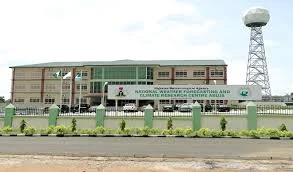
NiMet has dismissed claims that Nigerian farmers lost N5 trillion due to poor weather forecasts, insisting the reports are misleading and lack credible evidence.
Hunger, insecurity: Tinubu declares emergency on food security

President Bola Tinubu on Monday declared a national emergency on food security, urging expanded irrigation infrastructure and participatory water resource management nationwide. Tinubu made the declaration while opening the 6th African Regional Conference on Irrigation and Drainage in Abuja. He was represented by the Secretary to the Government of the Federation, Sen. George Akume. He urged African nations to adopt innovative strategies in addressing the continent’s irrigation and water management challenges. He described the conference theme, “Tackling Irrigation Development and Water Management Crisis in Africa”, as a clarion call to action for sustainable agriculture and economic resilience. “Africa continues to face major challenges in unlocking its irrigation potential due to inadequate infrastructure, financial constraints, climate change, and governance issues. “This conference offers a vital platform for us to collectively chart a path forward”. Tinubu stated that the country had more than 3.1 million hectares of irrigable land located around key river basins such as the Niger and Benue. In his remarks, the Minister of Water Resources and Sanitation, Prof. Joseph Utsev, said the government had completed several landmark initiatives under the Transforming Irrigation Management in Nigeria (TRIMING) project. He announced that its successor, the Sustainable Power and Irrigation for Nigeria (SPIN) project, would address outstanding gaps while optimising the economic value of water resources to support food security. “With the TRIMING project winding down, Nigeria is poised to begin implementation of the SPIN project in partnership with the World Bank. “This initiative will consolidate on the successes of TRIMING and expand our irrigation potential,” Utsev said. According to the minister, the TRIMING project, which spanned more than seven years, delivered notable achievements, including the completion of the Dadin-Kowa and Bakolori irrigation schemes and 90 per cent completion of the Middle Rima Valley irrigation project. It also supported ongoing interventions in Ondo, Kwara, Benue, Kebbi, Edo, Adamawa, and Oyo States. He also noted that the project established Water Users Associations (WUAs), farmer management centres, and supported market linkages for key value chains such as rice and tomato. The minister further revealed that River Basin Development Authorities (RBDAs) had developed more than 153,000 hectares of irrigable land and were being partially commercialised to attract private sector investment. He also referenced the 2025 Flood Outlook and Risk Management Strategy, aimed at minimising flood-related impacts on agriculture. “This conference is a platform for knowledge exchange, innovation, and collective commitment to resolving Africa’s pressing irrigation and water management issues,” he added. The Head of the Civil Service of the Federation, Dr Didi Wilson-Jack, called for renewed commitment across all tiers of government to ensure national food security. Former Permanent Secretary of the Ministry of Water Resources, Mr Godknows Igali, underscored the urgency of strategic planning, particularly in the face of Nigeria’s growing population. He stressed the importance of professional staffing and proper management of river basins, adding that sub-national governments must play an active role in water governance and food systems. Gov. Babagana Zulum of Borno, raised concerns over the shrinking farming seasons caused by climate change, warning that unpredictable rainfall patterns were creating uncertainty among farmers. “Our fertile lands are turning to dust. Irrigation is now a necessity, not a luxury. “Innovation must not be seen as a privilege of the few, we must empower women and youth who are at the frontline of agriculture,” Zulum said He appealed to development partners to show greater responsiveness to the challenges of water access and rural farming in Africa. President of the International Commission on Irrigation and Drainage (ICID), Dr Marco Arcieri, described the conference as both timely and essential. “This could be a turning point. We’ve celebrated big ideas and set tangible goals to confront the pressing challenges. “We remain committed to supporting Africa as it faces population growth and climate stress,” Arcieri stated. Mr Ibrahim Musa, who leads the African Regional Working Group, expressed optimism that the conference would lead to innovative approaches and actionable outcomes in addressing Africa’s unique irrigation development needs. The conference continues in Abuja until April 17, with technical sessions, policy dialogues, and field visits to irrigation sites across Nigeria.
OIL PRODUCTION AND IMPACT ON FOOD SECURITY AND CLIMATE CHANGE

By John A. Jia, Ph.D. The 1996 World Food Summit defined food security as “when all people, at all times, have physical and economic access to sufficient safe and nutritious food that meets their dietary needs and food preferences for an active and healthy life.” So, Food Security is “the measure of an individual’s ability to access food that is nutritious and sufficient in quantity.” On the other hand, Wikipedia explains Oil and Gas Production as “the process of extracting crude oil and natural gas from underground reservoirs and bringing them to the surface for processing and distribution. It further explains that “The petroleum industry is responsible for the exploration, extraction, refining, transportation, and marketing of petroleum products.” Various components of the process listed here can have impacts on Climate leading to climate change. How then can oil and gas production have direct or indirect impacts on food security – preventing access to sufficient, safe and nutritious food meeting dietary needs and food preferences? Oil and Gas production have key activities that make it possible for it to happen if not well managed namely: •Seismic Operations – in layman’s terms, is the search for oil using various technologies to survey and ‘see’ under the ground to discover reservoirs holding the oil deep in the ground. The “surveys allow professionals to identify prospects, assess potential resources, reduce risk and even quantify reserves – in short, to make well-informed decisions that drive successful exploration efforts.” •Drilling of appraisal wells/Production Wells to confirm that what was ‘seen’ under the ground is good enough for additional investments to develop the field and recover the volumes – the discovery is in commercial quantities. An appraisal Well may be developed into a Production Well. •Field Development – involves the process of drilling, building of non-oil and gas infrastructure (NOGI) and Oil and Gas Infrastructure (OGI) for extraction, processing, handling and exporting or sale of the oil produced. •Production operations – utilization of all the infrastructure (Wells, Flowlines, Pipelines, Flowlines, Production Stations, Gas Plants, and Tank Farms including export facilities) for daily extraction of crude oil/gas, processing and sale/export. •Abandonment – loosely speaking involves management of NOGI and OGI facilities and the environment after the life of the Field. This will not be discussed in this article for lack of space for this article. All the above steps have various aspects that can interact with the environment to impact Food security and Climate change. According to FAO and others, there are 5 dimensions or components of Food Security namely: Availability, Access, Utilization, Stability and Sustainability. While many biological factors like population increase, changing diets, pests and pathogens, environmental changes, conflict, poverty/unemployment, et cetera, can reduce food security, each step involved in the Oil and Gas production can also have direct or indirect negative impacts on availability, access, utilization, stability and sustainability of food security especially in the Niger Delta of Nigeria. Seismic activities for oil and gas exploration can disrupt farming operations. The noise, vibrations, and movement of heavy machinery can affect soil structure, water flow, and crop growth. For example, in Nigeria’s Niger Delta, seismic surveys have been reported to have caused soil compaction and water contamination, reduced agricultural productivity and harming local farmers’ livelihoods. As the activities often involve the use of chemicals that may contaminate surface and ground water sources, there is potential for water contamination. Polluted water can affect irrigation systems, leading to poor crop yields and unsafe drinking water for livestock. Chemical spills during seismic surveys in agricultural areas can lead to contamination of water sources, which then impacts the health and productivity of crops and livestock. Another impact is the Destruction of Natural Habitats. Clearing land for seismic lines can destroy forests, wetlands, and other natural habitats, reducing biodiversity. This loss of biodiversity can impact pollinators, soil health, and natural pest control, which are essential for sustainable agriculture. The Amazon rainforest, a critical ecosystem for global biodiversity, has been reported to have seen significant habitat destruction due to oil exploration, threatening indigenous food systems and biodiversity. Seismic exploration can lead to the displacement of local communities, including farmers. Displaced communities may lose access to their agricultural lands, leading to food insecurity. How does this stage of Oil and Gas activity impact on climate change thus affecting food security? You have Greenhouse Gas Emissions, an occurring decimal throughout the oil and gas production value chain. Seismic activities are part of the oil and gas extraction process, which is a significant source of greenhouse gas emissions. The burning of fossil fuels contributes to global warming and climate change. Methane emissions from natural gas extraction are a potent greenhouse gas, significantly more effective at trapping heat in the atmosphere than carbon dioxide. Seismic surveys often require clearing large areas of land, leading to deforestation and land degradation. Forests act as carbon sinks, and their destruction releases stored carbon dioxide into the atmosphere, exacerbating climate change. Example, in the Congo Basin, deforestation for oil exploration has released large amounts of carbon dioxide, contributing to global climate change. Healthy ecosystems such as forests, wetlands, and grasslands sequester carbon dioxide from the atmosphere. Seismic activities that damage these ecosystems reduce their ability to absorb carbon, increasing atmospheric carbon levels. An example is the destruction of mangroves for oil exploration which reduces their capacity to sequester carbon, thus contributing to higher atmospheric CO2 levels. Also, climate change, driven in part by fossil fuel extraction, leads to more frequent and severe natural disasters such as floods, droughts, and hurricanes. These events can devastate agricultural systems, further threatening food security. Rising global temperatures contribute to more intense droughts in agricultural regions, affecting crop yields and food availability. Drilling involves land take, utilization of drilling mud, generation of drill cuttings which may be oily depending on the depth at which the cuttings are generated. The land taken (and in some cases may be significant) is no longer available for food production. The land may have been rightly acquired but is
Shettima Arrives US For AfDB’s World Food Dialogue

Vice President Kashim Shettima has arrived in the United States of America to participate at the African Development Bank (AfDB) World Food Prize-facilitated Norman Borlaug, International Dialogue slated for Iowa. Mr Stanley Nkwocha, Senior Special Assistant to the President, Media and Communications, Office Of The Vice President, disclosed this known in a statement on Sunday in Abuja. He explained that as the special guest, Shettima would deliver a keynote address at the event which would commence on Oct. 24. “In the itinerary of the Vice-President while in the U.S. are high stake meetings across some states of the U.S. with manufacturers, investors and top government officials. “On the Norman Borlaug International Dialogue, Shettima will be joining the late UN Secretary-General Kofi Annan’s organisation, AGRA; World Food Prize laureates; Ghana President, John Kufuor and AfDB President, Akinwunmi Adeshina. “Others are at the event are former President Olusegun Obasanjo; Presidents Felix Tshishiked and Joaquim Chissano; Joyce Banda; Ameenah Gurib – Fakim and IFAD President, Kanayo Nwanze as distinguished African leaders who in the past used the event to canvas support for agricultural development and food sufficiency in Africa.” Nkwocha said the vice president would use the platform to speak on the potentialities and endowments of Nigeria’s agricultural sector. He also said that Shettima would woo investors and push for commitments in achieving President Bola Tinubu’s mandates and programmes for Nigeria’s agro-food sector.
FG Obtains $163m AfDB Loan To Boost Wheat Production

The Vice President, Kashim Shettima has disclosed that the Federal Government had obtained 163 million dollars loan from the African Development Bank to support wheat production in the country. Shettima stated this at the palace of the Emir of Argungu, Alhaji Sumaila Mera, when he paid a condolence visit to the Emirate and family of late Sheikh Abubakar Giro. He re-affirmed the determination of the Tinubu administration to fulfill all its promises to Nigerians, particularly in the agricultural sector. The Vice President also assured that food security would receive serious attention from the government. “We have obtained 163 million dollars loan from the African Development Bank to support wheat production. The scheme would be launched soon. “We need 10,000 hectares of land in Kebbi State. But the scheme would be well executed in Jigawa State with a cultivation of 50,000 hectares of land to boost wheat production.” In his remarks, the Emir of Argungu, Mera, who prayed for the unity and progress of Nigeria, thanked President Tinubu and Vice President Shettima for their support.
FG launches 5-year national strategy on potato

The Federal Ministry of Agriculture and Food Security has launched a five-year National Strategy on Potato. Speaking at the event on Thursday in Jos, the Permanent Secretary of the ministry, Dr. Ernest Umakhihe, said that the strategy would run from 2023 to 2028. Represented by Mr Abdullahi Abubakar, the Director, Department of Agriculture of the ministry, Umakhihe said that the move was timely, following President Tinubu’s recent directive on the intensification of crop production. The permanent secretary said that the move would usher in an era of productive competitiveness in the Nigerian potato industry. He explained that the essence of the strategy was aimed at ensuring sustainable food and nutrition security in the country Umakhihe added that the move also aimed at catalysing the rapid transformation of the Nigerian potato sector into a commercially viable sub-sector of the agricultural value chains into a major export product. “Our goal is to stimulate economic growth through various agricultural value chain activities, thereby creating employment opportunities and improved livelihoods for our teeming youths and women. “Let me assure you that food and nutrition security is a priority for the ministry and we are committed to achieving it. “The ministry is embarking on massive production, processing, value addition and product development to be the bedrock for driving our industries. “I have no doubt that the Nigerian Potato industry has the potential to become globally competitive given the country’s strong comparative advantage in production,” he said The permanent secretary maintained that potato could be commercially grown in twelve states, adding that it holds well for the activities of many stakeholders. He said government is aware of the challenges farmers are currently facing, adding that modalities have been adopted towards addressing them. “The ministry is aware of the challenges in the agricultural sector, nevertheless I assure that necessary measures are taken to address them accordingly. “Proactive initiatives, such as this National Potato Strategy creates avenue for inclusive collaborations to chart the way forward. “I am optimistic this potato strategy document would be a springboard for the realisation of Nigeria’s aspiration to achieve food and nutrition security,” he added. The permanent secretary thanked GIZ, a German organisation for supporting the initiative. He explained that it is supporting the national strategy through its global programmes, Green Innovation Centres for the Agriculture and Food Sector-Nigeria (GIAE), and the International Potato Centre (CIP) Nairobi, Kenya.
IFAD, FG distribute agro equipment to 840 rural farmers

The International Fund for Agricultural Development (IFAD), together with the Federal Government, has distributed N109 million worth of agro equipment to 840 rural farmers in Enugu State. The exercise, which took place at the Michael Okpara Square, at the weekend, was part of IFAD/FGN’s-assisted Value Chain Development Programme (VCDP). The items distributed included 500 bags of fertilizers, 10 tricycles, 55 water pumps, 115 knapsack sprayers, five fufu pounder, 50 seed planters and five rice milling machines. Others were five haulers and polishing machines, 10 grater cassava polishing machines, 20 rice harvesters and 25 starter packs for confectioneries. Also, 40 of the 840 farmers supported were empowered with POS. In a speech at the event, Gov. Peter Mbah expressed his administration’s readiness to support the IFAD/FGN programme in the state. Mbah, represented by the Secretary to the State Government, Prof. Chidiebere Onyia, thanked IFAD/FGN for the partnership with the state. He commended the organisation for its commitment in assisting farmers through its programmes aimed at increasing food production in the state. He further lauded IFAD for focusing largely on women empowerment, saying that the approach would help to reduce poverty in rural communities. He directed that all the equipment, which must be given to the farmers, should be closely monitored. He urged the beneficiaries to put the items to proper use in order to realise the set goals of the empowerment programme. In a speech, the National Coordinator of IFAD-VCDP, Dr Fatima Aliyu, thanked Mbah for paying off the outstanding four years arrears of the counterpart funds. Aliyu described the governor’s gesture as a testament of the State Government’s commitment toward the development of agriculture and poverty reduction in the state. Aliyu advocated the judicious use of the equipment by the beneficiaries, urging them not to disappoint the State Government that had immensely supported the programme. “Please don’t disappoint your governor, he cares for you. “That is why he paid all the outstanding counterpart funding. “Please, use them well,” Aliyu said. She said that the VCDP had made progress from support to market values. She further said that the programme had supported over 4,000 farmers, constructed rice and cassava processing centres. Other amenities, according to her, included water, solar-powered boreholes, market stalls, mini bridges, culverts for easy transportation for farmers and offtakers and creches. Aliyu disclosed that the organisation had also used a programme, tagged, “Gender Action Learning System” to change the mindset of women in the state. “We have made impact and we are achieving our programme development goals in Enugu State and elsewhere,” she said. Earlier in a welcome address, the State Programme Coordinator, Dr Edward Isiwu, said that the VCDP programme was tailored along market development and productivity enhancement, rice and cassava value chains. According to him, the programme is aimed at reducing rural poverty, increasing food security, and accelerating economic growth on a sustainable basis. Isiwu said that they had built five cassava mills and over six rice mills and created employment for people. He disclosed that the pilot programme was being implemented in five Local Government Areas (LGAs) of Aninri, Udenu, Enugu East, Nkanu East and Isi-Uzo.
Rising demand pressures spark global food concerns –FAO

The Food and Agriculture Organisation of the United Nations (FAO) has warned that India’s 20 July prohibition of non-parboiled Indica exports has fostered expectations of greater sales in other origins, amplifying upward pressure already exerted on prices by seasonally tighter supplies and Asian purchases. The Un Agency in its July edition of its Food Price Index, added that this upward pressure of rice prices raises substantial food security concerns for a large swathe of the world population, especially those that are poorest and who dedicate a larger share of their incomes to purchase food. It also warned that export restrictions can bear adverse consequences on production, consumption and prices that last beyond the duration of their implementation and risk exacerbating high food domestic inflation in many countries. The report revealed that global food commodity prices rose in July, influenced by the termination of the Black Sea Grain Initiative and new trade restrictions on rice. The report which tracks monthly changes in the international prices of globally-traded food commodities, said food prices averaged 123.9 points in July, up 1.3% from the previous month while 11.8% below its July 2022 level. It states that the increase was driven by a sharp jump in the FAO Vegetable Oil Price Index, which rose 12.1% from June after seven months of consecutive declines. International sunflower oil prices rebounded by more than 15% in the month, due mostly to renewed uncertainties surrounding the exportable supplies after the Russian Federation’s decision to end implementation of the Black Sea Grain Initiative. World prices for palm, soy and rapeseed oils increased on concerns over output prospects in leading producing countries. The FAO Cereal Price Index declined by 0.5% from June, driven by a 4.8% drop in international coarse grain quotations due to increased seasonal supplies of maize from ongoing harvests in Argentina and Brazil and potentially higher-than-anticipated production in the United States of America. However, international wheat prices rose by 1.6%, their first monthly increase in nine months, due to uncertainty over exports from Ukraine as well as continued dry conditions in North America. The FAO All Rice Price Index increased by 2.8% on the month and 19.7% on the year to reach its highest nominal level since September 2011.
Subsidy: Rice millers commend Tinubu’s plans for farmers

The Abakaliki Rice Millers Association in Ebonyi has hailed the Federal Government’s plans to boost farm produce in an effort to cushion the effect of the removal of fuel subsidy. President Bola Tinubu, on Monday in a nationwide broadcast, assured Nigerians of adequate food sufficiency and security. According to Tinubu, the government will ensure staple foods are available and affordable. “To this end, I have ordered the release of 200,000 metric tonnes of grains from strategic reserves to households across the 36 states and FCT to moderate prices. “We are also providing 225,000 metric tonnes of fertiliser, seedlings and other inputs to farmers who are committed to our food security agenda,” Tinubu added. Reacting to the development on Tuesday, Mr Linus Nkwuda, Chairman of the millers association said that President Tinubu’s plans to boost agriculture was a welcome development. Nkwuda, however, decried the way inputs and seedlings meant for farmers had been diverted in the past. He appealed to the federal government to distribute such items directly to the farmers. “The items; fertilizer and seedlings as listed by the President during the broadcast, are very important to all farmers. We are happy. “We need those items to succeed. Loans are also important. We commend the President and urge him not to involve political farmers during implementation,” he said. Mr Kenneth Chigozie, Secretary of Rice Farmers Association of Nigeria (RIFAN), Abakaliki branch, also urged the president to work directly with the farmers at the hinterland in the efforts to ensure food security. Chigozie noted that working directly with farmers would ensure transparency in the distribution of farm inputs meant for its members. Chigozie, however, expressed worry about how the farmers had suffered since the removal of fuel subsidy, adding that members were faced with challenges associated with the high cost of production. He described the cost of inputs, such as seedlings, herbicides, pesticides and fertiliser as well as hiring of labourers, as worrisome. “We are happy, President Tinubu is remembering us, the farmers. His promises to us during the nationwide broadcast are a welcome development. “Our prayer is that, let those items and monies attached come to us directly,” Chigozie added.
FG distributes subsidized farm inputs to farmers in Kano

The Federal Government on Monday kick-started the distribution of subsidized farm inputs to farmers in Bunkure Local Government Area of Kano State. The Permanent Secretary of the Federal Ministry of Agriculture and Rural Development, Dr. Ernest Afolabi, announced this during the inauguration of the distribution event in the ATASP-1 States, including Jigawa, Kebbi, Niger, and Sokoto. Dr. Ernest Afolabi, represented by Malam Tanimu Ibrahim, the Director of Planning and Policy Coordination, stated that the distribution marked the beginning of the 2023 delivery of subsidized inputs to approximately 60,000 farmers across the participating states. The program, which was initiated in March 2015, aims to enhance food and nutrition security, attract private-sector investments in agriculture, reduce post-harvest losses, and add value to local agricultural produce. Under the Commodity Value Chain Development component, the Federal Government, through the ministry, has been providing crucial production inputs to support farmers, emphasizing the importance of transparency, accountability, and efficiency in the input delivery process. To make the program more efficient, the government approved the introduction and use of an ICT platform for input delivery to farmers this year, highlighting the significance of this notable improvement. The Permanent Secretary reaffirmed the current administration’s commitment to boost agricultural production in the country, emphasizing the vital role of agriculture in achieving food security. Governor Abba Yusuf commended the initiative, represented by his deputy, Alhaji Aminu Gwarzo. He reiterated his administration’s dedication to providing farmers with affordable avenues to access soft loans from credible financial institutions, thus enhancing food security in the state. Alhaji Faruk Mudi, Chairman of the All Farmers Association of Nigeria (AFAN) in Kano State, assured that the farmers would utilize the inputs efficiently to produce diverse food crops, reflecting their commitment to agricultural growth and sustainability.