Altered After Parliament: Nigeria’s Tax Laws and the Crisis of Executive Power

Portrait of Dahiru Ali, journalist and analyst covering Nigerian governance, politics, and economic reform.”

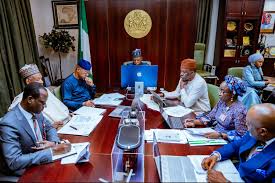
Allegations that Nigeria’s newly enacted tax laws were altered after parliamentary approval have sparked a heated debate over executive overreach, legislative authority, and the integrity of the country’s governance. With discrepancies between certified and gazetted versions of key tax laws, analysts warn that the controversy could have far-reaching legal, economic, and political consequences.

Hon. David Olofu: When Preparation Meets the Moment

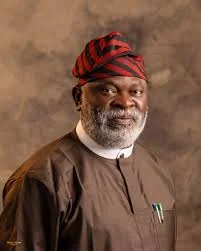
Hon. David Olofu, former Benue State Commissioner for Finance and Budget and senatorial aspirant for Benue South.

Hon. David Olofu moves from the policy backroom to the public stage, meeting journalists in Abuja to signal his bid for the Benue South Senate seat in 2027—framing experience, grassroots connection, and quiet conviction as his case for leadership.

Forgeries, taxations and the reign of Rehoboam

Ugo Onuoha is a Nigerian journalist and columnist who writes FINGERPRINTS, a commentary on governance, power and social justice in Nigeria.

By UGO ONUOHA “A profligate regime should not expect Nigerians to willingly submit to a new tax regime that looks like an exercise in extortion. The administration gets its priorities wrong. At a time that virtually all federal highways have collapsed and become deathtraps, this government prioritises the construction of a N15 trillion coastal highway from Lagos to Calabar.” A little over three months into the presidency of Alhaji Bola Ahmed Tinubu, on September 5, 2023, I wrote an opinion piece titled “100 days of Rehoboam” in this space and elsewhere. Rehoboam was a king of the divided kingdom of ancient Israel. He was the son of King Solomon and the grandson of King David, both of whom were also past rulers of a united Israel. Rehoboam caused Israel to be divided through policies that inflicted pains on his people. He was reckless. He was proud. He was unfeeling. He took counsel from his scatter head fellow young men. He told the Israelites that the privations they suffered under his father should be regarded as a child’s play. And that while his predecessors chastised them with a whip, he would chastise them with a scorpion. And he verily proceeded to do so. Rehoboam and Tinubu share similarities and dissimilarities. Rehoboam was a monarch. Tinubu is not a king in spite of his pretending to be one. Rehoboam was born into royalty. Tinubu was not. Indeed Tinubu’s birth and early years are still subjects of conjectures and controversies. Rehoboam was a young man when he ascended the throne of his fathers, and so could be excused on account of youthful exuberance. Tinubu was an old man when he was installed as president of Nigeria though his true age is only known to himself and himself alone. There’s no verifiable evidence of when he was born and where. Unlike Rehoboam, Tinubu takes no counsel from anyone. He said this much himself when, without consultations and without a Cabinet, he unilaterally removed the so-called petrol subsidy. Tinubu at 100 days in office] has been like that proverbial bird that perched on a tree branch—the branch has remained unsettled and the bird can’t stop dancing to unheard sounds. Since his inauguration on May 29, 2023, exacerbated hopelessness has been the lot of Nigerians. Tinubu himself can only pretend to have peace of mind…” On September 5, 2023, I wrote this about Tinubu and Rehoboam. “[Tinubu at 100 days in office] has been like that proverbial bird that perched on a tree branch – the tree branch has remained unsettled and the bird can’t stop dancing to unheard sounds. Since his inauguration [as president] on May 29 [2023], exacerbated hopelessness has been the lot of Nigerians and Tinubu himself can only pretend to have had peace of mind. If he has had the presence and prescience of mind, he would not have been enmeshed in serial fumbling from one policy somersault to another from the removal of the so-called petrol subsidy, [devaluation of the Naira], student loan and [the] proposed payment of N8,000 per month for six months to a specified number of poor Nigerian families, and planning to lead the Economic Community of West African States [ECOWAS] to war on Niger Republic [when the military in that country seized political power]”… In Igbo Tinubu is a classical case of ‘akwu rere ere n’ikwo puru epu’ which transliteration in English language will roughly read: rotten palm fruits being pounded inside a decayed mortar. The finished product is better left to the imagination…” When Rehoboam became the king, the older advisers in the palace pleaded with him “to heed the cry of the people and lighten the heavy load of labour and taxes that Solomon had laid on them, but the younger elements who had grown up with the new king counselled otherwise. He took the counsel of his mates. The consequences of the actions of the new and rash King Rehoboam are well documented in the chronicles of the kings of Israel in the Holy Bible book of 1Kings. In Tinubu’s rash and irrational decisions [on] the first day and [subsequent] weeks of his reign, he appears to have borrowed a leaf from the wicked and unthinking  King Rehoboam”. One of the undoings of Rehoboam was that he insensitively raised taxes on his people and so lost more than half of his kingdom. The northern part of Israel split away, taking its own path separate from the southern kingdom of Judah. But Nigeria is not a monarchy and bears no resemblance to the old kingdom of Israel. Does that mean that Nigeria splitting is unthinkable? With the new tax laws set to come into effect in a matter of days, Tinubu who rules like a monarch may yet be treading the path of King Rehoboam. Rehoboam raised taxes on his people at a time they were already complaining of privations and pains, Tinubu is poised to also raise taxes on Nigerians at a time the people are groaning under the weight of a multiplicity of harsh economic policies of the regime. And he appears not to be bothered. He is irritated by wise counsel that he steps on the brakes and allows Nigerians to breathe. Instead, he empowers the relevant agency of government to execute a secret contract with a so-called tax consultant in France which may lead to handing over Nigeria’s tax data to a foreign company. Tax data is a national security issue that should not be traded as a favour to a friend. Tinubu and the president of France, Emmanuel Macron, are known to be buddies. The frequent ‘working visits’ of our president since he assumed office a little over two years ago had been to Paris, France, unlike his predecessor, Muhammadu Buhari, who made London his tourism and medical destination, and the former archbishop of Canterbury his bosom friend. And a go-to man. A profligate regime should not expect Nigerians to willingly submit to a new tax regime that looks

Retain SSB Tax In 2024 Fiscal Policy, CSOs Tell FG

Retain SSB Tax In 2024 Fiscal Policy, CSOs Tell FG

The national SSB Tax coalition, Gatefield Nigeria, National Action on Sugar Reduction, One Campaign amongst other Civil Society Organisations, have tasked the Federal Government to retain the SSB tax in the 2024 fiscal policy. According to the coalition, it will ensure the purpose of the policy is achieved as well as ensure that the government benefits from its implementation.  The CSOs, who made the call at a meeting which also had in attendance representatives from the Ministry of Finance, Budget, and National Planning, Ministry of Education, National Orientation Agency and others also called for the establishment of an inter-agency Adhoc committee on SSB Tax that would harmonise the views of all stakeholders. The recommendation was made in a communique at the just concluded National conference on Sugar Sweetened Beverages (SSB) Tax orgainsed by Corporate Accountability and Public Participation Africa (CAPPA) in collaboration with the Federal Ministry of Health and Social Welfare Wednesday in Abuja, further called on relevant stakeholders, including traditional and religious institutions, educational institutions, civil society organizations, the media, and healthcare professionals to actively engage in other to curb the SSB menace.  According to them, “the proceeds from the SSB tax should be earmarked to the health sector to support and strengthen public health systems in Nigeria.  “Stakeholders must commit to engaging central budget agencies to improve public healthcare and influence increased allocation to the healthcare sector.  “Need for the establishment of a monitoring, evaluation, and accountability framework to track the implementation and impact of the current SSB tax policy. This must be reviewed periodically.  “Need for complementary regulatory instruments like Front-of-Pack Labeling, restricting availability and marketing of SSBs in school environments among others to offer consumers more information about products.  “State authorities must strive to bring Nigerians into its social health insurance scheme to achieve universal healthcare coverage and the Federal Government and regulatory authorities must design and enforce penalties for companies that default on SSB tax obligations.”

Tinubu Orders Speedy Implementation Of Tax Reforms Report

What Tinubu Told Lawmakers During 2024 Budget Presentation

President Bola Tinubu has instructed his Special Adviser on Policy Coordination, Hadiza Usman, to work with the Office of the Secretary to the Government of the Federation to coordinate the recommendations of the Presidential Fiscal Policy and Tax Reforms Committee for swift implementation across all Ministries, Departments, and Agencies.  This directive was issued during a meeting with the Chairman of the reforms committee, Mr. Taiwo Oyedele, who presented a 30-day report on “quick wins” at the Aso Rock Villa in Abuja. Special Adviser to the President on Media and Publicity, Ajuri Ngelale, revealed that President Tinubu met with Mr. Zack Adedeji, the Acting Chairman of the Federal Inland Revenue Service, and Mr. Taiwo Oyedele, the Chairman of the tax policy review committee.  The President emphasized the need for effective synergy in implementing tax policy recommendations across government institutions. President Tinubu has also prioritized the recommendations of the tax policy review committee at the next Federal Executive Council meeting scheduled for Monday, October 30, 2023. The aim is to expand the tax net, reach the 18% tax-to-GDP threshold, and enhance public service provision without burdening vulnerable segments of the population. The Presidential Committee on Fiscal Policy and Tax Reforms, established on July 7, 2023, is responsible for tax law reform, fiscal policy coordination, harmonization of taxes, and revenue administration. Its mission is to improve tax morale, promote a healthy tax culture, and encourage voluntary compliance with tax regulations by utilizing tax and other revenues effectively.

We Won’t Increase Taxes, FIRS Assures Companies

We Won't Increase Taxes, FIRS Assures Companies

Acting chairman of the Federal Inland Revenue Service (FIRS), Zacch Adedeji, has allayed fears being expressed by corporate organisations that the resolve of FIRS to increase the country’s tax-to-GDP ratio to 18 per cent from 10.86 will lead to a hike in taxes. According to a statement by Special Adviser on Media and Communication to the Ag Executive Chairman, FIRS, Dare Adekanmbi, Adedeji said such resolve would not necessarily lead to increase in taxes or introduction of new taxes as the President Bola Tinubu-led administration is determined to create a wholesome environment for businesses to flourish. The FIRS chairman had said the agency under his leadership would in the next three years achieve an eight per cent raise in tax-to-GDP ratio to surpass Africa’s average of 16.5% without stifling investment or economic growth. The plan had triggered muffled apprehensions among entities corporate that the decision could cause an increase in tax rates or introduction of new ones. Addressing representatives of top large tax-paying companies during a get-together at Four Points by Sheraton in Lagos on Wednesday, Adedeji said, “Our belief, understanding and vision as a revenue-generating agency is not to introduce any new tax as we only want to use data to improve compliance.” A statement by his Special Adviser on Media and Communication, Dare Adekanmbi, quoted the FIRS chairman as saying that the invited companies and those willing to voluntarily carry out their tax obligations have nothing to be afraid of. “Our plan is simple. We want to grow tax revenue and we only want to tax prosperity and not poverty. Therefore, it is not in our interest to kill the trees that bear the fruits. My first ‘love letter’ to you is to appreciate what you have done. So, you don’t have anything to be afraid of. “We will not collect what is not due to us. But we don’t want anyone not to pay what is due to us. Fair engagement is our plan. Rest assured that the 18% tax-to-GDP target will not translate to increase in taxes. “If you have been listening to Mr Taiwo Oyedele who is the chairman of the Presidential Committee on Fiscal Policy and Tax Reforms, you will have known that part of the mandate of the committee is to reduce the number of taxes,” he said. According to him, the purpose of the engagement with the companies is to factor their inputs into the strategic action plan being mapped out in order to address challenges hampering tax revenue collection. He lauded the invited companies for their high sense of responsibility, urging them to continue to discharge their tax obligation diligently.   “I must also commend your commitment to upholding high tax compliance standards and responsible corporate citizenship, which sets you apart as the top taxpayers in Nigeria. “This aligns perfectly with our vision of making taxation the pivot of national development through voluntary compliance. Your respective industries play a pivotal role in generating substantial tax revenue for government and in shaping economic and fiscal stability of the nation. “We are not unmindful of the challenges facing businesses in Nigeria with the ongoing reforms to improve economic performance. These are painful but necessary choices we must make as a nation to attain our full potential,” he said. The chairman, while responding to some of the concerns raised by representatives of the companies such as multiplicity of taxes, duplication of tax oversight on corporate entities, promised to address the issues raised. Some of the companies at the event included Nestlé Nigeria Plc, ExxonMobil, Shell, Guinness, Nigerian Breweries Plc, Flour Mills, Dangote Group, MTN, British American Tobacco company, First Bank, Access Bank, Guaranty Trust Bank, Zenith Bank Plc, KC Gaming Limited (Bet9ja), Airtel, Seplat, BUA Cement, Nigeria Liquified Natural Gas, NNPC Limited and others.

FG Proposes N26.01trn For 2024 Fiscal Year

Tinubu's Intervention Can't Solve Ondo Crisis - PDP

The Federal Government has proposed the sum of N26.01 trillion for the 2024 appropriation based on oil price benchmark of $73.96 and 21 per cent interest rate. Minister of Budget and Economic Planning, Atiku Bagudu, disclosed this to State House Correspondents at the end of the Federal Executive Council (FEC) meeting on Monday in Abuja. He said that the budget would be presented to the National assembly before the end of the year since President Bola Tinubu was already engaging with the legislative arm towards getting their buy-in. He said that the budget was expected to consolidate on the various economic reforms initiated by the present administration aimed at improving the standard of living of Nigerians and attracting investors. Bagudu said that assumption of the budget was based on the various diplomatic engagements by the president and other government functionaries that were expected to improve inflow and boost exchange rate. Mr Dave Umahi, Minister of Works, also disclosed FEC approved the use of concrete for road projects across the country including those of new ones, depending on the level of completion. He said, ‘’FEC was also informed on the on-going projects and to mitigate so much inflation and variation of the projects, to have some of the projects that have attended completion to be redesigned on concrete and going forward for new projects to be done on concrete. ‘’FEC approved that concept that most of the on-going projects should be designed on concrete pavements depending on the level of completion and if you’re doing Asphalt there are also conditions for that. ‘’FEC also approved the coastal road running from Phase 1 which runs from Lagos to Port Harcourt to Calabar. Phase 2 runs from S4 tearing off from this stretch to Sokoto and to Ogoja. “It was approved to be done on Engineering, Procurement and Construction plus Financing. ‘’Eight roads that were started in the past administration for concessioning that have gone through all the processes were also approved and that the financial closure should be reached November.’’ Umahi also said that a 24-hour approval would be given to any state interested in taking over road projects in their domain, while particular conditions must be met for the agreement to take effect. He said that the project by the states must conform to the standard of the Federal Ministry of Works as well as meet the tolling system through which they would recoup their investment. The minister also disclosed that FEC approved the NNPC and FIRS road projects, which they oversee and fund across the country.

IMF Advocates Fiscal Adjustments As Solution African Countries’ Debts 

Beware Of China, India, Saudi Arabia Loans, IMF Warns Nigeria

The International Monetary Fund (IMF) has urged African governments to re-anchor fiscal policy through a credible medium-term strategy to avoid a debt crisis. According to the Fund in its report ‘How to Avoid a Debt Crisis in Sub-Saharan Africa’, it stated that to avoid a debt crisis, African countries seek to achieve key debt targets. The Bretton Woods Institute said the average debt ratio in the region has almost doubled in 10 years adding that the average debt ratio to gross domestic product (GDP) has increased to 60 percent as of 2022, which is a 30 percent rise compared to the figures of 2013. According to the Fund, this is what makes debt repayment costlier. “In most sub-Saharan African countries, fiscal policy focuses excessively on short-term goals and is not guided by a clear medium-term strategy. This lack of anchoring has resulted in frequent breaches of fiscal rules and ever-increasing public debt levels. “A more strategic approach to fiscal policy would be preferable by setting explicit debt targets that integrate key policy trade-offs between debt sustainability and development objectives, rather than focusing narrowly on short-term fiscal deficits. “The paper suggests a novel approach to estimating country-specific medium-term debt anchors, which ensures that debt service costs remain manageable. “The region’s ratio of interest payments to revenue, a key metric to assess debt servicing capacity and predict the risk of a fiscal crisis, has more than doubled since the early 2010s and is now close to four times the ratio in advanced economies,” the IMF said. In the report, the IMF said more than half of the low-income countries on the continent are at high risk or already in debt distress as at the end of last year. The multilateral also said mobilising more domestic revenue through the elimination of tax exemptions or digitalising filing and payment systems is key to avoiding a debt crisis as well. “Sub-Saharan African countries tend to rely excessively on expenditure cuts to reduce their fiscal deficits. “Although this may be warranted in some circumstances, revenue measures, like eliminating tax exemptions or digitalizing filing and payment systems, should play a greater role.” The IMF noted that mobilising domestic revenue is less detrimental to growth in countries where initial tax levels are low, whereas the cost associated with reducing expenditures is particularly high given Africa’s large development needs.

Crude Export Earnings Hit N5.6trn In Q2 Amid Naira Float

Crude Export Earnings Hit N5.6trn In Q2 Amid Naira Float

There was a major improvement in export earnings in the second quarter of 2023, as a result of the floating of the naira which ensured earnings from crude oil exports swells. Crude oil receipts rose 8.5 per cent to N5.6 trillion. This represents 79.6 per cent of total exports. “The improvement in export earnings was mainly spurred by crude oil receipts which rose 8.5 per cent quarter-on-quarter (q/q) to N5.6 trillion (about 79.6 per cent of total exports) though production level was unimpressive as per national Bureau for Statistics (NBS) data (down 19.2 per cent q/q to 1.22mbpd). “Noteworthy, we suspect that the improvement in oil receipt was also impacted by exchange rate revaluation gain given that the Central Bank of Nigeria (CBN) switched from a hard-pegged exchange rate regime to a managed float in June 2023, causing the official conversion rate of oil proceeds to rise from N461/$ to over N650/$. Hence, nullifying the effect of lower crude oil price in the second quarter ($78.13/bbl.) relative to the first quarter ($81.11/bbl.).”, said analysts at Afrinvest. Data from NBS showed that the value of Nigeria’s total trade (imports and exports combined) improved over the preceding quarter (up 5.8 per cent) but trailed the level attained in the corresponding period of 2022 by 7.6% to settle at N12.7 trillion. For the third consecutive quarter, Nigeria recorded a positive trade balance amounting to N1.3 trillion in the second quarter, aided by the faster growth in export earnings (up 8.1 per cent q/q to N7.0 trillion) as against import expenses (up 3.0 per cent q/q to N5.7 trillion). Similarly, non-crude oil and non-oil exports also grew 6.8 per cent and 5.6 per cent q/q to N1.4 trillion and N688.7 billion respectively. “We attribute these gains to the recovery in the broader economy from the negative knock-on effect of pre-election jitters and poor implementation of the naira redesign policy in the first quarter (GDP expanded 2.5 per cent vs. 2.3 per cent in the first quarter)”, said Afrinvest. It is important to highlight that Agricultural goods remain Nigeria’s largest source of non-oil export earnings (4.0 per cent of export share), while Manufacturing, Raw material goods, and Solid mineral goods trailed with 3.0 per cent, 2.1 per cent, and 0.5 per cent, respectively. Cashew nuts (shelled and unshelled), sesame seeds, and cocoa beans combined accounted for 65.7 per cent of the total N278.4 billion Agric exports in the period – an indication that cash crop exports could be a major source of non-oil foreign exchange (forex) earnings for Nigeria if adequate investment is made on procuring modern farming equipment and insecurity is wholistically checked. In terms of trade performance with other regions, the previous quarter’s trend was sustained as Nigeria booked a surplus with three of its five trading regions – America (N178.5 billion), Europe (N1.2 trillion), and Africa (N510.5 billion) – while a deficit was recorded in trade with Asia (N584.5 billion) and Oceania (N98 billion). In terms of destination, the Netherlands (11.2 per cent), the US (10.2 per cent), and Indonesia (7.8 per cent) were the top export hubs by share while China (22.2 per cent), the US (16.1 per cent) and Belgium (8.0 per cent) topped imports origin.

FCTA’s N34bn ground rent debtors will be penalised, says Wike

FCTA’s N34bn ground rent debtors will be penalised, says Wike

The Minister of the Federal Capital Territory (FCT), Mr Nyesom Wike, says owners of landed properties owing the FCT Administration (FCTA) ground rents, amounting to N34 billion would be penalised. Wike stated this when members of the House of Representatives Adhoc Committee Investigating Failure of Mass Transportation in Nigeria, visited him in Abuja on Tuesday. He warned allottees owing the FCT Administration ground rents to either pay or have their property revoked and reallocated to those who could pay. “I have calculated the debt of nonpayment of ground rent, which is about N34 billion, and I am going to collect all of those back. I don’t care, all I want is for the rent to be paid,” he said. The minister said that the list of the people owing FCTA ground rent would be published on Thursday, adding that they would be given two weeks to pay. According to him, whoever does not pay, his land will be revoked and be given to whoever will pay so that the necessary services will be rendered. “People want to live in a beautiful city but don’t want to pay their dues which is impossible.” He said that the decision became necessary following a decision to tie projects to Internally Generated Revenue to enable contractors complete abandoned projects. Wike complained about the poor budgetary allocation to the FCT and appealed to the lawmakers to assist in improving its budgetary provisions. The minister also said that he would overhaul the Abuja Urban Mass Transport Company (AUMTCO), expressing displeasure that AUMTCO buses were loaned out without maintenance. Earlier, Chairman of the Ad-hoc Committee, Mr Afam Ogene said that his committee visited the minister to find solutions to epileptic mass transportation in the country and the FCT. Ogene described the development as “worrisome”, saying that over N16 billion had been invested in mass transportation during the Subsidy Reinvestment and Empowerment Programme (SUR-P) with little services being rendered. He expressed relief with the ongoing transformation of the Abuja Light Rail transport system, and traffic lights across the city. “We are here to encourage you to look into transportation and reorganize it. We will support you to do it and it will also solve problems of one chance in the city,” he pledged.