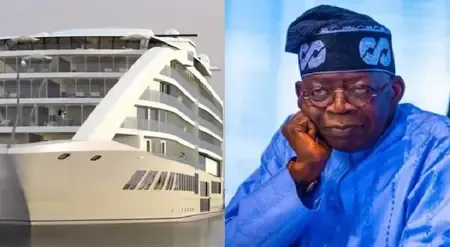
FG Knocks Peter Obi For Faulting 2023 Supplementary Budget

The Federal Government has lambasted Labour Party’s presidential candidate, Peter Obi, for allegedly distorting facts for political gains. The Minister of Information, Mohammed Idris said this while disagreeing to Obi’s criticism of the 2023 supplementary budget. Idris, while defending the budget, described it as a “bold and pragmatic response” to Nigeria’s economic challenges. The minister urged Obi to familiarize himself with the details, highlighting allocations for security, agriculture, wage increases, student loans, and social safety nets. Idris emphasized President Tinubu’s commitment to supporting government functions and addressing urgent needs for national recovery. The supplementary budget, he clarified, resulted from extensive consultations to align with the needs of the people. Peter Obi had described the passing of the 2023 supplementary budget into law by President Bola Tinubu as wasteful, berating the government for being insensitive and uncaring about the suffering of Nigerians while squandering resources on a mysterious presidential yacht and fleets of SUVs. Mr Obi’s criticisms come shortly after Mr Tinubu signed the 2023 supplementary appropriation bill of N2.17 trillion into law on Wednesday. “No item of urgent social welfare has yet featured in the supplementary budget being orchestrated by this government. Instead, the items being made to dominate public discourse on the budget include a mysterious Presidential Yacht, Presidential Jets, the furnishing of already lavishly furnished presidential quarters and offices, fleets of luxury SUVs etc,” Mr Obi said. Speaking further, he said, “this portrays a Government that is totally uncaring and insensitive to the suffering of the majority, and indifferent to the mood of the nation. “The government’s overall attitude does not indicate that it is aware that the country is in a huge crisis, nor is the government in tune with the plight of the generality of our people. Even worse is the fact that most of the funding for these profligate expenditures will be largely borrowed. The least that Nigerians expect from the government at this difficult moment is empathy and realism, not lavish indulgence.” Some line items, specifically presidential yacht and fleets of SUVs, in the supplementary budget sparked reactions from Nigerians. But Mr Tinubu’s government claimed the past regime of former president Muhammadu Buhari started payment for the presidential yacht for the Nigerian navy. Many Nigerians have voiced their concerns and criticism, with a significant number expressing displeasure about how such a luxury item can find its way into the supplementary budget. The Senate Committee on Navy, under the leadership of Gbenga Daniel, a former governor of Ogun State and the current representative for Ogun East Senatorial District, has called for a probe into the matter.
FG’s Fiscal Deficit To Further Decline In Q3, Q4 -MPC

Some members of the Monetary Policy Committee (MPC) of the Central Bank of Nigeria (CBN) have projected that the federal government’s fiscal deficit will continue to decline in the third and fourth quarters of 2023. Their projections are predicated on the recent efforts by the government to manage expenditures better and also improve oil and non-oil revenues. Their prediction contained in their various personal statements during the last MPC meeting, as posted on the CBN website. In his personal statement, the Permanent Secretary, the Federal Ministry of Finance, Budget, and National Planning, Aliyu Ahmed, said: “The fiscal deficit is expected to decline in the third and fourth quarters of 2023 on the back of recent efforts by the new government to manage expenditures better and also improve oil and non-oil revenues. “With expenditure reprioritization and fiscal wisdom at both the federal and state levels, there is an expectation that the government debt ratio may fall at least marginally by the end of 2023. “Speaking on the fiscal sector, Adenikinju Adeola, a member, explained that both government revenue and expenditure underperformed between January and May 2023. He explained that the Federal Government’s retained revenue stood at N1.67 trillion, lower than the pro-rata target of N1.96 trillion due to the underperformance of Federation Account Allocation Committee (FAAC) receipts and gross independent revenue. However, on the positive side, he stated: “Total FGN expenditure as of May 2023 was N4.76 trillion, 27.8 percent lower than the budget estimate of N6.606 trillion. The shortfall came mainly from allocations for debt service, interest on Ways and Means, and capital expenditure. “Overall budget deficit reduced by -18.15 percent in the first five months of 2023. “The underperformance of the budget is especially felt in the capital expenditures, thus impacting negatively on economic development”, he added. On his part, another member, Obadan Mike, noted that although the new government is making serious efforts to boost revenue generation, fiscal deficits and associated public debt accumulation will continue to elicit deep concerns. Meanwhile, the MPC members also called for a review of border closures to increase food supply in the country while expressing concern about the decline in growth of the agricultural sector in the first quarter of 2023. Adenikinju said, “The continuous closure of the borders should also be reviewed. This is to expand food and non-food supply to the economy and force down domestic prices, especially food. Also expressing concern about the declining growth in the agricultural sector, Ahmed said: “The decline in growth in the agriculture sector is particularly worrisome, given its role in food production and employment generation. “Targeted intervention by the fiscal and monetary authorities in the agriculture sector is crucial to ensuring medium- to long-term food security and price moderation. The recent initiative by the CBN to offload grains from the national strategic grain reserves to lower food prices could not have come at a more auspicious time. “There is also a need to leverage the African Development Bank (AfDB) Agro Pocket Wallet to support farmers in the production of grains and fertilizers.”
Difficult but necessary reforms needed to ramp up tax revenue – JTB

For Nigeria to attain optimum tax revenue collection capacity across the Federal, States and Local Government tax authorities, the country must make hard but necessary reforms that would yield long term benefits. This was the position stated by the Chairman of the Joint Tax Board (JTB), Mr. Muhammad Nami, who is also the Executive Chairman of the Federal Inland Revenue Service (FIRS) at the 153rd Meeting of the Board which held today in Abuja with the theme: “Harmonization and codification of taxes at the National and Sub-national levels: Key to achieving a tax friendly environment in Nigeria.” Nami, while delivering his address to the Board stated that for progress to be made in taxation, tax authorities must continue to explore and adopt measures and innovative initiatives that will lead to the optimisation of tax revenue for all levels of government. “As the new administration’s attempt to address the many socioeconomic challenges facing the nation on many fronts, it becomes imperative for all the levers of State to shake-off any lethargic antecedents and focus on the goal of a national resurgence. “The unique and privileged offices we occupy as drivers of the nation’s tax administration processes presents us with a rare opportunity to take hard, but necessary decisions that are expected to yield long term benefits and add immense value to our collective prosperity as a nation. “In recent years, especially since the dawn of our current democratic dispensation, the importance of taxation has continued to be reiterated and reinforced by all, and the critical role that tax-revenue plays in funding government and governance cannot be over-emphasized. “However, as we continue to make progress in our unique model of taxation, it is appropriate that we continue to explore and adopt measures and innovative initiatives that will lead to the optimization of tax revenue for all the levels of government, in more efficient, more effective, more inclusive, and more sustainable ways. “It is only by achieving this, that our efforts as tax administrators can trigger the manner of activity required in the productive sectors of our economy, towards achieving the immense economic potentials that we are capable of,” Mr. Nami said. The Chairman of the Joint Tax Board further assured Executive Chairmen of State Revenue Authorities present that given the thrust of the current administration’s tax policy direction, the country was on the pathway to eradicating multiplicity of taxes as a core of its overall economic regeneration objectives. Chairman, Presidential Fiscal Policy & Tax Reforms Committee, Mr. Taiwo Oyedele, while delivering a presentation on the theme of the meeting highlighted that multiple taxation was causing low tax morale in the country, as well as discouraging investments, while creating room for corruption and making doing business difficult. The Presidential Fiscal Policy and Tax Reforms Committee Chairman further noted that the solution to the country’s revenue challenges is not to introduce more taxes, but to focus on the few taxes that are high yielding, noting that with these, tax authorities would be able to collect far more than is currently being collected. Oyedele stated that for the government to raise more revenue, it needed to get to a point where the total number of taxes collected at the Federal, State and Local government levels would be at a single digit. “We also need to clarify on taxing rights. We need to integrate tax collection functions—that is, all revenues that are to be collected must be collected by a single revenue agency. Government must also do well to fund our tax agencies well. We also need to harmonise revenue administration and simplify our approach to tax compliance,” Oyedele said. He further advocated for the country’s tax authorities to use more technology, review the country’s constitution and tax laws, as well revisit Nigeria’s concept of fiscal federalism.