CBN Mulls New Recapitalisation For Banks

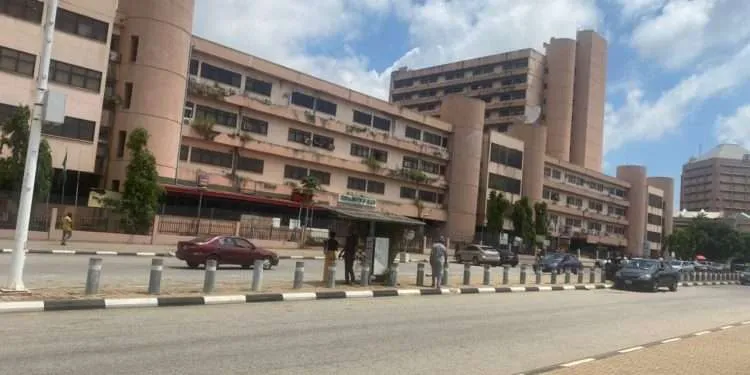
The Central Bank of Nigeria (CBN) says it is planning to implement a new round of banking recapitalisation for the Deposit Money Banks (DMBs). Mr Olayemi Cardoso, the CBN Governor, announced this at the 58th Annual Bankers’ Dinner organised by the Chartered Institute of Bankers of Nigeria (CIBN) on Friday night in Lagos. The planned recapitalisation means that DMBs will be required to raise additional capital to meet the demands of Nigeria’s economy. Cardoso noted that President Bola Ahmed Tinubu in his Policy Advisory Council report on the national economy, had set an ambitious goal of achieving a Gross Domestic Product (GDP) of one trillion dollars by 2030, with clearly defined priority areas and strategies. According to him, it is important that banks have a role to play in the anticipated one trillion dollars economy by 2030. Cardoso said going by the huge developmental role the apex bank would want the banks to play in the next seven years, it had become imperative to demand their recapitalisation. To achieve the target, Cardoso said that Nigeria needed to experience a more rapid and inclusive economic expansion. “The administration has already commenced this journey through fiscal reforms, including the removal of petrol subsidies and the unification of the foreign exchange market rate. “Considering the policy imperatives and the projected economic growth, it is crucial for us to evaluate the adequacy of our banking industry to serve the envisioned larger economy. “It is not just about the stability of the financial system in the present moment, as we have already established that the current assessment shows stability. “However, we need to ask ourselves: Will Nigerian banks have sufficient capital relative to the financial system’s needs in servicing a $1.0 trillion economy in the near future? In my opinion, the answer is “No!” unless we take action. “Therefore, we must make difficult decisions regarding capital adequacy. As a first step, we will be directing banks to increase their capital,’’ he said. The CBN governor also announced the approval of another round of Open Market Operations (OMOs) to mop up excess liquidity from the banking system. OMOs are the main monetary policy instrument, through which the central bank buys or sells securities with financial institutions in the open markets, thereby influencing the amount of money in circulation and/or interest rates. Cardoso said, “An OMO auction was recently held with a stop rate of 17.5 per cent for the one-year tenor, attracting oversubscription of N350 billion. “Another round of OMO has been approved to further reduce excess liquidity. “Offering N108.1 billion worth of Treasury Bills with three tenors to the investing public, which can help reduce liquidity in the banking system and support government fundraising.’’ Cardoso said the apex bank would use its monetary policy tools to keep inflation low and stable. He said, “the Central Bank of Nigeria is committed to achieving monetary and price stability. This is not just a technical objective, but it has real-life implications for the well-being of our citizens. “Through targeted policies, transparent market operations, and coordination between monetary and fiscal authorities, we can ensure a more stable exchange rate, control inflation, and create an enabling environment for businesses and individuals to thrive.’’ He noted that the apex bank had taken steps to improve the effectiveness of its monetary policy tools and to strengthen the transmission mechanism so that its policy decisions have a greater impact on the economy Cardoso added that the ability of the monetary policy committee to influence the economy through its decisions had been weakened because the channels through which monetary policy was transmitted had become disrupted. The CBN governor said the apex bank was planning to make changes to the country’s foreign exchange regulations by developing new guidelines and legislation. He stated that banks and foreign exchange operators would be consulted before making any final decisions.
Tweaking The CBN Act, NASS Must Tread With Caution

The ongoing effort by the National Assembly to tinker with the Central Bank of Nigeria’s Act, 2007, has been generating heated debate within the polity. The concern has been the rationality of the exercise. This effort is spearheaded by two distinguished Senators, Senators Steve Karimi and Darlington Nwokocha. The bills are – ‘A Bill to Amend the Central Bank of Nigeria Act 2007, and Matters Connected Therein’, and An Act to Amend the Central Bank (establishment) Act 2007 to Make the Central Bank More Transparent and Accountable in its Operations and to Ensure Enhancement of its functions and for Connected Matters’. The crux of the two amendments already consolidated by the Senate is the ban on the CBN governor and his deputies from partisan politics, reconstitution of the CBN Board; subjection of CBN staff remuneration to the Salaries and Wages Commission; and ceding the position of the Board Chairman to a person outside the CBN. Also proposed prohibition of use of foreign currency in local transactions. Until this proposal, the Governor doubles as the Board Chairman. The preoccupation of the sponsors of the bills is to enhance transparency and efficiency of the Central Bank of Nigeria, and to strip its governor of certain powers. The Senate Committee on Banking and Finance is saddled with the responsibility of reviewing and working on these bills for the Senate to take a position. Whatever is the expectation of the sponsors, it is important that the National Assembly does not in a spasm of emotion erode the independence of the Bank. CBN Act 2007 had settled this. It was a common knowledge that the immediate past CBN governors hiatus and unprofessional conduct by engaging in partisan politics may have warranted this quest.His action was an infraction,and antithetical to his oath of office. It was also against the norms of central banking ethics. Anger against a rare singular infraction should not be used as an excuse to cripple a vital organ of government as the CBN. It amounts to throwing the baby away with the bath water. An International Monetary Fund (IMF) working paper titled: The Role of Board Oversight in Central Bank Governance: The Legal Design Issues describe the Central Banks as a public law institution established to fulfill essentially sovereign functions delegated to them by the State. It admitted that certain central bank laws explicitly prohibit certain operations. Continuing, the paper said, for a central bank to be effective, it must enjoy a high level of autonomy vis-à-vis both political institutions and private economic interest. This autonomy it enumerated as: institutional, functional, personal, and financial. Institutionally it said the central bank should not be influenced by the State or private third parties in its decision-making in the context of the performance of its functions, e.g., through ministerial instructions. Functional points to its capability to implement its functions without direct governmental interference, and Personal ensures that key decision makers of the central bank (Governor and members of the Executive Board, Monetary Policy Committee and Oversight Boards) are autonomous from political and private economic interest. The Financial entails the capability of the bank to pursue its mandate by way of the financial means required to do so (the emphasis is mine). Banning the CBN governor and his deputies from partisan politics is a good proposal, and well approved. But to appoint/impose an outsider as the chairman of the board other that its governor is incongruous with global central banking practice. Typical of our clime, as being proposed will not augur well for a critical institution as the CBN. The infraction of its former governor – highly condemned, is not an excuse to deal a fatal blow on the Bank. It amounts to killing a fly with a sledgehammer. Subjecting its staff salaries to an external body violates the financial independence of the Bank. Infractions committed by its former governor have nothing to do with staff welfare. There are other organs of government earning far higher than the CBN staff, yet the legislators turned the blind eye. Why are all eyes on the CBN? Are the Nigeria National Petroleum Plc staff salaries a subject of scrutiny by the National Salaries and Wages Commission, the Debt Management Office (DMO), the Nigeria Deposit Insurance Corporation (NDIC), and many others? It is public knowledge that the staff of some of these agencies earn fantastically higher, (excluding other perks) than CBN staff. The Central Bank of Nigeria like its peers is the heart of the monetary system of the country. Nigeria’s economy is influenced heavily by the actions it takes, thus, any spasm of irrational decisions to alter or whittle what international investors and global partners would see as an erosion of the Bank’s independence, will further hurt the already fragile economy. It Was the Central Bank of Nigeria during the COVID-19 pandemic that ensured the stability of the economy while other organs of government were at a loss on what to do. The CBN should not be politicized. What happened under Godwin Emefiele was a rash decision that should be treated in isolation. Amending the Act is not investor friendly, and it should be jettisoned. It will also encumber the effectiveness of monetary policy, and once the institution is seen as an appendage of the political class, there will be loss of faith, and confidence, in the economy. Ultimately, the economy will suffer for it. Mr. Uche Tochukwu, a financial expert, said tweaking the CBN Act Now because of what happened under Godwin Emefiele will hurt the economy and the integrity of the CBN. He welcomed the decision of the lawmakers to ban the Governor and his deputies from partisan politics but frowned at appointing an outsider as the Bank’s Board Chairman. He said it is an aberration. Tochukwu called the attempt to subject the CBN staff salary to Salaries and Wages Commission as meddlesomeness. What about their own opaquely fatty allowances the public has decried? Doing that, they advised, will kill the morale of the staff. Are we even sure
Foreign Telcos Reject New NCC Funds Repatriation Policy

Airtel Nigeria and some other foreign telecom companies operating in Nigeria have rejected the Corporate Governance provision by the Nigerian Communications Commission (NCC) on the repatriation of funds. Section 14 (16) of the Corporate Governance Guidelines published by the NCC, which the operators are frowning at states: “The Board shall ensure a licensee seeking to repatriate funds over 30 per cent of its annual net profit shall obtain the prior written approval of the Commission.” Expressing their displeasure during a public inquiry on the draft guidelines, the telecom operators, including IHS Nigeria, ATC Nigeria, and Airtel Nigeria argued that the provision would discourage investments even as it contradicts existing laws on the repatriation of funds by foreign companies operating in Nigeria. In its written submission during the inquiry, a tower company, ATC Nigeria Wireless Infrastructure Limited, stated: “Repatriation of funds ensures that foreign investors successfully reap the dividend of their investment (particularly when the licensee has mainly foreign investors). Waiting for the approval of the NCC before funds are repatriated will lead to investor dissatisfaction and affect the smooth operation of the company. “We respectfully suggest that the approval of the NCC be obtained where the repatriation involves a significant amount that might jeopardize the company’s operations. The repatriation threshold that would require the approval of NCC be fixed at 80 per cent.” Expressing similar concern over the same provision, Airtel Nigeria in its submission to the regulator said the Section 14(16) Guidelines are in contravention of Section 15(4) of the Foreign Exchange (Monitoring and Miscellaneous Provisions) Act Chapter F34, 1995 18 which guarantees unrestrictive transferability of returns from Foreign Direct Investment. “It is also at variance with the Federal Government’s policy guaranteeing 100 per cent repatriation of profit from investments in the country. This pre-approval requirement from the Regulator to repatriate more than 30 percent of net profit could discourage Foreign Direct Investment (FDI) in the industry. According to HIS Nigeria, the provision has far-reaching implications and would only create bottlenecks and discourage investments, both local and foreign. “Given that foreign shareholders and bondholders are entitled to receive dividends and interest respectively depending on the capital structure of the entities, the inability to timely meet interest repayments portends a negative connotation for the country especially as lenders would be reluctant to extend further credit to local borrowers and this eventually adversely impacts sovereign credit ratings. “Requiring prior written approval of the Commission to repatriate funds is unduly restrictive and at variance with the policy position of the current government administration which has expressed the desire to attract foreign investments. Meanwhile, the Nigerian Communications Commission in its response to the operators’ concern said it had taken note of all their submissions and would take care of it in its ongoing review of the document.
SEC emphasizes strong regulation’s role in boosting banks’ growth

The Securities and Exchange Commission (SEC) has said the remarkable growth witnessed in the Nigerian banking industry over the past decade is partly attributable to the capital market and SEC’s comprehensive regulatory approach. Mr. Lamido Yuguda, Director General of SEC said this at the 2023 Chartered Institute of Bankers (CIBN) graduates’ induction and prize award recently in Lagos. He said, “The harmonious relationship between the capital market and the banking sector is further exemplified by our role in facilitating capital raising, mergers and acquisitions for banks. “By streamlining the listing process and ensuring adherence to high standards of transparency and corporate governance, we enable banks to tap into the securities market as a means to secure funds from a diverse range of investors “This synergy between the banking industry and the capital market is illuminated by the fact that only 4 out of the 25 banks that emerged from the Central Bank’s 2004 recapitalization exercise did not access the capital market before compliance.” Yuguda charged the graduates on professionalism and adapting to changes in the financial world. “Distinguished graduates, as you embark on your banking careers, remember the importance of integrity, good moral conduct, and adaptability. “The financial world is evolving rapidly due to technology and global changes. Embrace these shifts as unique and timely opportunities to contribute positively to the banking industry”, he said. He said the theme, “Navigating the Pathways of Banking Excellence,” aptly encapsulates the journey that each of them embarks upon. “I extend my sincere gratitude to the Chartered Institute of Bankers of Nigeria for its determined commitment to nurturing industry-ready professionals. Your dedication resonates with our shared vision of fostering a resilient, well-regulated financial ecosystem that can withstand challenges and foster sustainable growth. “The most renowned professionals are celebrated today for building business empires and nurturing thoroughbred professionalism, achieving success through proper conduct, steadfast dedication, and a meticulous approach that allowed them to refine their long-term visions and goals. He said the CIBN’s vision aligns with the Commission’s quest for transparent and fair conduct in securities business by ensuring that operators in the capital market play according to the rules. “The Commission also recognizes individual and corporate players whose conducts not only ensure compliance but do more to make investment an interesting endeavour. “As regulators and professional bodies, we must ensure that our onboarding processes for new entrants are robust enough so that only fit and proper persons find their way into the very exciting careers in the financial market. “Similar to what obtains in the money market, the Commission’s engagement spans a spectrum of activities, including registration, surveillance, proactive regulation, and robust enforcement mechanisms, all aimed at nurturing a fair and transparent market environment. “Even though the CBN is unrelenting in ensuring full compliance by banks and other financial institutions through relevant departments, the professional bodies, especially the CIBN must leverage continuous assessment to ensure that bankers demonstrate probity and ethical conduct at all times. “As the financial market continues to evolve with the increasing need to embrace financial technology, we must keep fine-tuning the regulatory frameworks that guide our continued operation in the market,” he said. He said the culture of transparency mandated by the Investments and Securities Act empowers investors to make informed decisions.
CIBN backs Tinubu on exchange rate unification

The Chartered Institute of Bankers of Nigeria (CIBN) has commended President Bola Tinubu for unifying the Naira exchange rate to save the country from financial crisis. The President/ Chairman of Council of CIBN, Dr Ken Opara, said this at the 2023 Lagos Bankers Night with the theme, “Exchange Rate Unification: Global Implications, Organisation’s and the Country,” on Friday night in Lagos. According to him, the institute has always advocated transparency and a free market that would allow the interplay of supply and demand. He said, “The Chartered Institute of Bankers of Nigeria totally supports the Central Bank of Nigeria’s reform as it relates to the unification of the exchange rate and other measures basically taken to ensure the true value of the Naira. “As a matter of fact, we have been advocating for this and during the week, Dr ‘Biodun Adedipe, leading other scholars, and Mr Laoye Jaiyeola of the Nigeria Economic Summit Group, gathered at the Bankers House to applaud the reform, especially as it relates to the unification of the exchange rate. “We have seen that the effort that the Central Bank of Nigeria has initiated is already yielding dividend. “We can see that the exchange rate between the Naira and the dollar has started coming down which means it is a good initiative that is well thought out.” Opara said that the institute recently organised a half year economic review, where captains of industries also spoke in support of the reform. He urged Nigerians to take advantage of the good opportunities that the reform had presented, saying wherever there are challenges lie in opportunities. The CIBN president pledged the institutes continued commitment to making contributions and suggestions relating to what should be done to support and grow the country. He said, “As it is the concept of the industry; we played this role very well when the industry was facing challenges and we will continue to do that because we believe that the banking industry is very solid, stable and efficient.” He described the payment system in Nigeria as “the best” all over the world, stressing that it is a system that one could consummate transactions on an online real-time basis. Opara said this showed that the banking industry and its regulator had done well in stabilising what an effective payment system. He debunked media reports that its Lagos branch was not in support of the exchange rate unification, describing as “untrue”, but calculated to cause panic. Chief Consultant of B. Adedipe Associates Ltd. (BAA Consult), Dr ‘Biodun Adedipe, said that the exchange rate unification, which was not new in Nigeria, had gone through the route before with different appellations. “Let me trade very quickly what I brand as Nigeria’s journey to exchange rate unification. “Nigeria has gone through this route before but with different appellations like devaluation, correction, alignment, depreciation, all of which are matter of semantics. “The simple interpretation of this is to remove the premium on the official rate and the parallel market or road side market. “Of course, this is a typical Bretton Woods recipe; keep premium within five per cent to decentivise round tripping and then find liquidity to sustain it. “This is the easy way out; but, it never brings enduring solution to the persistent crisis in the external sector of the Nigerian economy.”. According to him, there are 54 evidence-based research documents to establish that free float is not always the most appropriate for all economics. Giving historical illustrations, the expert noted that exchange rate movements had a more significant impact on all other prices more than interest rates adjustment. He said the only period that Nigeria experienced a successful and stable rate convergence in the country was when it had a significant external reserve. Adedipe said it took the country an average of two to six weeks for the parallel market rates to diverge from the official exchange rate during each episode of premium removal. He added that speculative attack on the currency occured each time there was no clear sight to a stable and enduring supply. President Bola Tinubu, had during his inauguration on May 29, said his administration would seek to bring the different exchange rate regimes being operated across the country’s foreign exchange channels under a single regime. However, in June, Tinubu through the Special Adviser on Special Duties, Communications, and Strategy, Dele Alake, announced the implementation of a unified exchange rate to save the country from a financial crisis. He emphasised that his decision to implement a managed float, similar to his approach to fuel subsidy removal, was in the best interest of Nigeria.
Market operators hail NGX’s N32.74m fine on Unity Bank, 7 others

Market operators have commended the Nigerian Exchange Limited (NGX) for the recent N32.74 million fine slammed on Unity Bank, Conoil and six other quoted companies for failure to file their unaudited financial statement after the regulatory due date. The companies were sanctioned during the current year 2023 for their inability to meet the regulatory requirements during the first quarter of 2023. The companies include Presco Plc, Ardova Plc, Briclinks Africa Plc, Universal Insurance Plc, Unity Bank Plc, Conoil Oil Plc, FBNH Plc, and Caverton Offshore Support Plc. Also, Presco Plc was fined N9.4 million, Ardova, N7.2 million, and Universal Insurance Plc will pay N4.7 million as fine accounting for a cumulative fine of N21.3 million and represented 65.05 per cent of the total fines levied on defaulters. The Managing Director of Crane Securities Limited, Mr. Mike Eze, while reacting to the development said the action of NGX would boost investor confidence in the market because it is sending a signal for investors to get companies’ financial reports as at when due. He added that investors needed to make informed decisions before choosing which stock to buy and this can only be achieved if there is adherence to good corporate governance by the quoted companies. “It is not a new thing, and it does not come to us as a surprise. We have constantly written to the exchange and raised the issue at annual general meetings that there is a need to know the status of these companies to enable us to take investment positions,” he noted. Also, the President of Progressive Shareholders Association, Mr Boniface Okezie, said it was better for Nigerians to have a few companies that are ready to play by the rules than to have all the companies in the world that are not ready to satisfy post-listing requirements. Okezie said that penalizing companies for non-compliance with the rules of listing on NGX was a welcome development, as it will lead to more appropriate pricing of securities. “We must always abide by the rules, sanctions would make the companies sit up and post their results as and when due, thereby providing investors, analysts, and stockbrokers the platform to predict the real value of the companies”. The Exchange in its X-Compliance report explained that the initiative was designed to maintain market integrity and protect the investors by providing compliance-related information on all listed companies. “Financial information which is periodic disclosure and ongoing material events disclosure should be released to The Exchange promptly to enable it efficiently perform its function of maintaining an orderly market”.