Money Laundering: Gbajabiamila Seeks Creation Of Gaming Regulatory Associations To Tackle Menace

Mr Lanre Gbajabiamila, the Director-General of the National Lottery Regulatory Commission, has proposed the establishment of Africa Gaming Regulators Association to address money laundering and terrorism financing in Africa. Gbajabiamila made the proposal while presenting a paper at the ongoing 2023 International Gaming Regulators Association (IGRA) Conference in Botswana. He also called for the establishment of West Africa Gaming Regulators Association (WAGRA) to facilitate regional cooperation and collaboration. Gbajabiamila said money laundering, terrorism financing and syndicate gaming were serious threat to the gaming industry in Africa. He, however, called for an urgent need to address the issues. “These associations will play a crucial role in information sharing, developing standard guidelines, and advancing regulatory efforts to combat money laundering, gambling-related crimes, and other illicit activities within the African gaming industry. “The African gaming industry’s rapid expansion is marred with challenges that need urgent attention. Although it has great potential and has emerged as a crucial driver of economic growth and government revenue. “It possesses the capacity to generate employment opportunities, attract foreign investments, promote tourism, improve income, technological advancements, and an increasing interest in gaming activities. “In the same vein, terrorists can exploit this industry to finance their operations covertly. “However, the gaming industry comes with risks, such as, money laundering which allows criminals to hide their illegally obtained funds by disguising them as legitimate winnings from gambling activities,” Gbajabiamila said. He said the African gaming industry had demonstrated capacity to drive economic growth, generate employment, attract foreign investments, and promote tourism. Gbajabiamila said the industry had the risk of being exploited for money laundering and financing terrorist activities. This, he said, called for the implementation of stringent regulations to combat money laundering, while fostering innovation in the gaming sector. Gbajabiamila listed lack of synergy among African states and the absence of robust global standards to monitor money laundering as other challenges of the industry. He noted that regulatory disparities among African nations create vulnerabilities that can be exploited by criminals, noting that to address these challenges, there must be collaboration implementing “Know Your Customer” procedures. Gbajabiamila also called for the reporting of suspicious transactions, conducting regular audits, and promoting information sharing among regulatory bodies. “Syndicate gaming involving illegal gambling activities operated by organised criminal groups poses another threat. “I advocate for stronger regulations, information sharing, and regional cooperation to tackle this issue. “The proposed solutions should include the harmonisation of gaming regulations, enhanced financial intelligence units, public awareness campaigns, the utilisation of technology, strengthening legal frameworks, and the establishment of specialised units. “There should be international cooperation and capacity building as vital aspects of the strategy,” he added. “The fight against money laundering, terrorism financing, and syndicate gaming in the African gaming industry requires close coordination among African nations, strong legal framework and robust enforcement mechanisms.” “The establishment of AGRA and WAGRA is a significant step towards achieving these objectives,” he said.
NDLEA intercepts fake $20m on Lokoja-Abuja Highway

A ‘Stop-and-Search’ operation by operatives of the NDLEA on the Lokoja-Abaji (FCT) Highway has yielded 20 million counterfeit dollars. Spokesman of the NDLEA stated on Sunday in Abuja that the fake currencies were recovered from a bus travelling from Lagos and heading to Abuja. He stated that the 53-year-old driver of the vehicle, Onyebuchi Nlededin, was arrested. Babafemi stated also that one Jude Ndubuisi (52) was arrested in a raid on Aug. 17 while in possession of 2.2kg of methamphetamine at Kabusa village, FCT. He added that the suspect was earlier arrested on July 7, 2022 for being in possession of 20.75kg of Indian hemp and that he was on court bail when he was nabbed for yet another drug crime. “Another raid on two notorious drug joints in the FCT – “Dei-Dei’’ and Tora-Bora Hills, led to the recovery of 82.8kg skunk, 1.8kg Rohypnol and 1.2kg diazepam on Wednesday, Aug. 16. “In Osun, NDLEA operatives destroyed clusters of Indian hemp plantations measuring about 3.5 hectares (more than 7.5 tons) at Mopatedo in Ifedayo Local Government Area of the state on Saturday, Aug. 19 “Two suspects – Sunday Otogbo (40), and Peter Makra (35), were arrested inside the Indian hemp farms. “An additional 30kg of Indian hemp and 16.9kg of Indian hemp seeds were also recovered from the farms,’’ he stated. Babafemi added that three other suspects – Ndubuisi Okorie (44), Ebilima Emmanuel (38), and Okechukwu Smart (40), were arrested on Aug. 19 in connection with 168kg of Indian hemp seized from them. The suspects were arrested when their vehicle was intercepted on the Owerri-Onitsha Expressway, he stated. “A shipment of 6,000 capsules of tramadol, 1,200 tablets of `swinol’, 155 bottles of codeine syrup and 20 tablets s of Molly was equally seized on the same road on Sunday Aug. 13. “A follow-up operation at Oyigbo area of Port Harcourt, led to the arrest of the owner of the consignment, Remigius Ogechukwu (33),’’ Babafemi added. He stated also that a teenager, Boniface Odinakachukwu (19), was arrested with 99.4kg skunk at Isikwe Road, Achi in Oji-River Local Government Area of Enugu State on Friday, Aug. 18. The NDLEA spokesman added that a wanted 19-year-old bandit, Aliyu Mohammed Altine, was arrested by NDLEA operatives on Illela-Sokoto Road with some wraps of skunk on Thursday, Aug. 17. Altine was on the wanted list of the police and has since been handed over to the police in Sokoto State for further investigation, Babafemi stated.
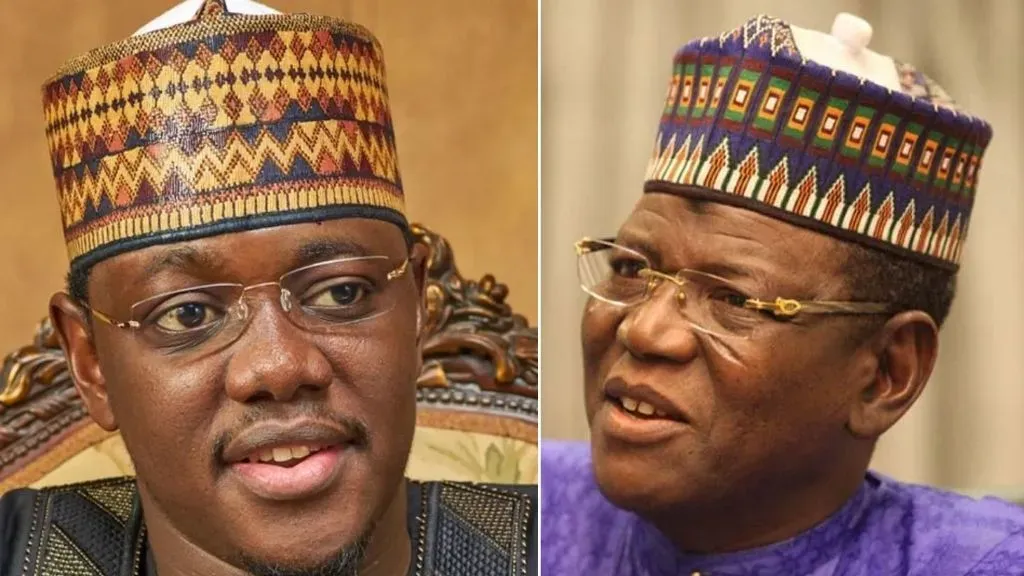
Lamido’s N712m Money Laundering Case: HEDA hails EFCC’s appeal

Anti-corrupt group, Human and Environmental Development Agenda (HEDA Resource Centre) has commended the Economic and Financial Crimes Commission (EFCC) on its appeal of the recent judgment of the Court of Appeal, Abuja judicial division. The Court discharged the former Governor of Jigawa State, Alh. Sule Lamido and his two sons, Aminu and Mustapha Lamido of corruption and money laundering charges on the grounds that the prosecution had filed the charge at the wrong judicial division of the Federal High Court. Earlier, the EFCC had charged the former Governor and his two sons with money laundering offenses at the Abuja judicial division. After presenting six witnesses, the anti-graft agency closed its case, and the defendants subsequently filed a no-case submission. However, Justice Ojukwu of the Federal High Court dismissed the no-case submission, ruling that the defendants had a case to answer. Dissatisfied with the ruling, the defendants decided to appeal to the Court of Appeal. A panel of three jurists, led by Hon. Justice Adamu Waziri, reviewed the case and concluded that the money laundering charge should have been filed in Jigawa State, where the alleged offenses were committed. Based on this finding, the Court of Appeal discharged the defendants. In response to the judgment, HEDA Resource Centre’s Chairman, Olanrewaju Suraju, expressed concerns, citing a precedent set by the Supreme Court in the case of Dele Belgore. In the Belgore case, the Supreme Court also overturned a no-case submission ruling by the Federal High Court. However, unlike the Lamido case, the Supreme Court ordered the case to be re-filed and prosecuted in the appropriate judicial division, which was Kwara State. Suraju also highlighted another relevant case, that of Senator Orji Uzor Kalu & Ors, wherein the Supreme Court overturned the judgment of the Federal High Court due to jurisdictional issues. In that case, the Supreme Court ordered a re-trial of the defendants, instead of discharging them. He stressed that an appellant whose appeal is based on an application or an interlocutory appeal, and not on the final judgment of the trial court, should not be discharged by the appellate court. Such discharges could set a wrong precedent, suggesting that technical errors may lead to acquittal. Suraju therefore called on the EFCC, as the prosecutor, to pursue further appeal at the Supreme Court. He emphasized that Nigerians cannot afford a precedent that fails to ensure consequences for money laundering, corruption, and misappropriation of public funds. The EFCC’s response and the potential implications of further appeal will be closely watched, as the case involves high-profile individuals and raises important questions about the judicial process surrounding corruption cases in Nigeria.