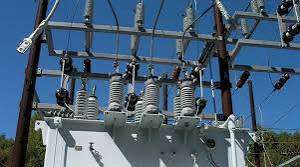
FG Moves To End Electricity Subsidy

Nigeria’s Power Minister, Adebayo Adelabu, has announced an end to electricity subsidies, citing a national debt of 1.3 trillion naira to GenCos and 1.3 billion dollars owed to gas companies. Adelabu in a press conference on Wednesday revealed that despite a budget allocation of 450 billion naira for subsidies this year, the ministry requires over 2 trillion naira to sustain the subsidy program. As part of the proposed changes, state governments will now be permitted to independently generate power to supply their states. Addressing the recurring issue of grid collapses, Adelabu attributed these incidents to various factors including gas shortages, aging infrastructure within the grid, limited capacity to evacuate generated power, and the destruction of power stations in the North-East region. He further disclosed that the Transmission Company of Nigeria has shelved over 100 projects due to contract variations caused by fluctuations in forex rates. Consequently, the company will refrain from awarding new contracts until existing projects are completed. In a bid to address power challenges in remote areas, Adelabu announced a budget allocation of over 50 billion naira in 2024 for the construction of mini grids. Adelabu issued a stern warning to electricity distribution companies (DisCos), cautioning that those found negligent in their duties risk having their licenses revoked. In a move to bolster security for power infrastructure, the minister revealed reaching out to the National Security Adviser, Nuhu Ribadu, for assistance in providing adequate security measures.

Google Signs Power Purchase Agreement for Offshore Wind Projects

In a significant move towards greening its power supply, technology giant Google has inked its largest-ever power purchase agreement (PPA) with offshore wind projects situated off the coast of the Netherlands.  This strategic initiative aligns with Google’s commitment to meeting climate targets while promoting sustainable energy solutions. As reported by Reuters, renewable power project developers are increasingly opting for long-term PPAs to ensure revenue security, while corporate buyers like Google are eager to secure a stable supply chain to fulfill their clean energy goals. Google’s landmark offshore wind PPA entails the procurement of 478 megawatts (MW) of power from two cutting-edge wind farms developed by Crosswind & Ecowende Consortia.  These joint ventures, helmed by energy giants Shell and Dutch utility Eneco, exemplify collaborative efforts in advancing renewable energy initiatives. Additionally, Google has revealed smaller-scale renewable PPAs in Italy, Poland, and Belgium, underscoring its global commitment to sustainable energy practices.  However, specific financial details of these agreements remain undisclosed. Matt Brittin, President of Google in EMEA, emphasized the company’s overarching ambition to operate on carbon-free energy round the clock by 2030.  This vision necessitates clean energy solutions across all grids where Google operates, signifying a steadfast dedication to environmental sustainability. While many companies pursue renewable energy goals on an annual basis, typically matching PPAs or renewable energy certificate purchases with their yearly electricity consumption, Google stands out with its forward-thinking approach.  The tech giant aims to synchronize each hour of electricity consumed with an equivalent hour of clean power production, a methodology hailed by proponents for its accurate reflection of companies’ actual energy usage patterns.

Why There’s Shortage Of Electricity In Nigeria – FG

Minister of Power, Bayo Adelabu has  attributed the ongoing poor power supply in Nigeria to a low supply of gas to generating companies (GenCos). Adelabu emphasized the government’s commitment to resolving the issue promptly. Adelabu stated that following discussions with GenCos and Distribution companies (DISCOs), investigations revealed the primary cause of the setbacks in the new year to be the insufficient supply of gas to GenCos.  The minister personally visited facilities in Olorunshogo, Ogun State, and Omotosho, Ondo State, to assess the challenges firsthand. Addressing the indebtedness to GenCos by the Nigeria Bulk Electricity Trading Company (NBET), Adelabu acknowledged the sector’s liquidity challenge and assured that efforts are underway to validate the debt and determine a fair resolution. To ensure a steady gas supply, the minister urged GenCos to establish contractual arrangements with gas suppliers, recognizing that concessions may be necessary.  He expressed the government’s commitment to working collaboratively to stabilize the power sector and emphasized the formation of a committee involving all stakeholders. The committee’s mandate is to develop recommendations for resolving gas supply and liquidity challenges, aiming for a more reliable and consistent power supply.  Adelabu also revealed plans to initiate discussions with the Minister of State for Petroleum Resources to underscore the importance of prioritizing Gas to Power.

Poor power supply stunting growth of Nigeria’s vibrant manufacturing sector

MANUFACTURING INDUSTRY

The power sector that is the livewire of any economy has refused to work efficiently in Nigeria. This has rubbed off on the manufacturing sector as many have had to close shop due to the high cost of alternative energy. Experts are in consensus that except the power sector works efficiently, getting the manufacturing sector back to its feet would be a herculean task, BENJAMIN ORISEMEKE writes.    Once a manufacturing hub in the West African sub-region, that has not been the case for over two decades as a sector that once stood strong is now lying prostrate due to several factors that still hold the Nigerian economy down. From the days of the Electricity Company of Nigeria (ECN) through the numerous attempts to commercialise the sector to when it was changed to the Power Holding Company of Nigeria (PHCN) and finally unbundled and privatized, one thing still remains constant, which is that the same structural issues continue to dug the sector. There was, however, a glimmer of hope when in November 2013, the Goodluck Jonathan administration sold the generation and distribution part of the sector. Many thought the sector would be able to achieve its potentials but alas, despite all the promises by investors of turning the sector around, it has been the same old stories. Dire Straits Current operating figures reveal that Nigeria’s power sector is in dire straits. The sector experiences many broad challenges related to electricity policy enforcement, regulatory uncertainty, instability in gas supply, transmission system constraints, and major power sector planning shortfalls that have kept it from reaching commercial viability. In 2022, the Nigerian Electricity Regulatory Commission (NERC) numbers showed that independent power plants (IPPs) accounted for 31.2% of total Generating Companys’ (GenCos) capacity. This indicates a 300 basis points decline from 2021 due largely to gas constraints and faulty machinery. In addition, on average, only five IPPs: Azura-Edo (26%), Odukpani (19%), Okpai (16%), Afam VI (15%), and Rivers IPP (8%) jointly accounted for circa 84% of the power generated from the 12 independent power producers in the last four years, due partly to gas constrain. The World Bank’s 2020 Ease of Doing Business report showed that 47 percent of Nigerians lack access to electricity supply. This drastically reduced the contribution of the private sector to the economy As of 2021, the African Development Bank (AfDB) in a report put Uganda’s electricity sector as the continent’s best-regulated sector. According to AfDB’s 2021 Electricity Regulatory Index, other strong performers included Kenya and Tanzania, Namibia, and Egypt. Nigeria placed 23rd on the ranking, South Africa (10th), and Ghana (17). Grid performance data from the Federal Ministry of Power in March showed that electricity generation on the national grid was 4,456.8MW. An analysis of randomly picked figures from the grid performance data indicated that power generation had stayed above the 4,000MW mark for months, while the country had yet to record any total grid collapse this year, unlike in 2022. Also, according to the data, on March 2 and 3, 2023, power generation on the grid was 4,859.8MW and 4,962.7MW respectively, while it was 4,753.9MW on February 23, 2023. A recent report by the electricity Think tank Group, comprising the Society for Planet and Prosperity, GCA Capital Partners Climate Advisors, indicates that about 75 percent of electricity consumed in Nigeria, comes from diesel and petrol-powered generators. The Manufacturing sector bears the brunt The lack of adequate power supply in Nigeria is crippling the economy. That significantly explains why many manufacturing companies have relocated to other countries in West Africa, where the power supply is stable. Recent data from the Manufacturers Association of Nigeria (MAN) revealed that between 2015 and 2019, 320 manufacturing companies shut down operations and others left the country due to unstable power supply.  Diesel and petrol-powered generators are reported to account for about 25,000MW, while the national grid provides about 4,000MW, far less than what is needed for economic growth and development. Available records indicate that business owners spend about N6.05 trillion on generators. Experts say economic loss due to grid collapse is 2 per cent of Nigeria’s Gross Domestic Product (GDP). Also, most of the MSMEs have identified unreliable electricity as a major challenge to their businesses. Even MSMEs are willing to switch to renewable energy. Figures from the Nigeria Electricity Regulatory Commission (NERC) show that in one year, electricity consumers paid N750 Billion as tariffs, while the national grid reportedly suffered system collapse up to 50 times. According to a World Bank report, as a result of poor power supply in Nigeria, businesses lost an excess of N96.4 trillion in the last nine years. This amounts to an average yearly estimate of $29billion. Small and big businesses that depend on diesel for their operations are struggling to survive due to the high cost of the product. Changing the narrative Already, the epileptic power situation has caused quite a number of small businesses to close shops resulting in job losses. Creditors such as banks and other private equity also share in the losses when they can’t get their money back. The high cost of running manufacturing plants on generators is one of the reasons most local companies have failed to be competitive or carry out new employment.   In spite of the scary scenarios, it is not all gloom and doom for the country’s manufacturing sector. Experts are confident that with the massive work in the sector in the last 8 years, it is bound to experience a new lease of life. This is coupled with the legislation that now empowers States to establish their own power plants. During his inaugural speech Monday in Abuja, President Bola Ahmed Tinubu, said “his administration shall continue the efforts of the Buhari administration on infrastructure. Progress towards national networks of roads, rail and ports shall get priority attention”, he said. Experts have opined that to get the country’s manufacturing sector working again, the present administration must fix the power sector.   Experts Speak Regional Director for Infrastructure West &

Electricity: Nigeria needs $3.5bn annually to generate 40,000mw by 2030- FG

Power Plant

*As REA targets N7bn from investors Nigeria needs a $3.5 billion investment annually to generate 40,000 megawatts (MW) of electricity by 2030. This was even as the Rural Electrification Agency (REA) was targeting additional N7 billion revenue from its first investors’ matchmaking for Solar Naija Programme (SNP). Speaking at the investor match-making event, which the REA organised in Abuja, the Minister of Power, Engr. Abubakar Aliyu, disclosed that it would cost Nigeria an annual investment of $3.5 billion to attain 40,000MW by 2030. With 23 power generating plants connected to the national grid, Nigeria has the capacity to generate 11,165.4 MW of electricity. As at last January, Nigeria’s available power generation capacity in the First Quarter of 2022, according to a Nigerian Electricity Regulatory Commission (NERC) First Quarter 2022 Report published on January 6, 2023, decreased to 4,712.34MW from 5,465.72MW in the Fourth Quarter of 2021. It stated that in the First Quarter of 2022, the average hourly generation of all available units decreased by 190.58MWh/h (-4.44 per cent) from 4,294.02MWh/h in 2021/Q4 to 4,103.11MWh/h. The Commission attributed the decrease to incessant technical faults, gas constraints, as well as undulating load demand patterns that have continued to affect the amount of energy generated by power plants. Represented by the Ministry’s Director of Investment, Mrs. Eyo Babalola, Aliyu noted the Ministry was the fulcrum of the actions with which the government is transforming the industry from a public to a private sector-driven one. He said that, with the recent legislation that has empowered state governments to generate and distribute electricity, there are limitless investment opportunities in the sector. The Managing Director of REA, Engr. Ahmad Salihijo Ahmad, informed the Rural Electrification Fund (REF) is undergoing some slight reforms to work with private investors for impact financing. He explained the essence of the reform was to ensure there is a revolving fund that could suffice when there are non-viable areas. Meanwhile, the REA is targeting additional N7 billion revenue from its first investors’ matchmaking for SNP. The Programme aimed at providing the opportunity for potential investors to pitch their financial offerings to developers, clearly stating the selection criteria and key terms. In a statement by the Agency on Thursday, the Agency hinted that the event would facilitate networking and matchmaking forum that brings together key investors and high-performing developers (pre-evaluated by the SPN team) in the power sector. The event was organized in collaboration with the Power Africa Nigeria Power Sector Program (PA-NPSP, USAID). The Solar Power Naija Programme was launched as part of the Economic Sustainability Plan (ESP) to achieve the roll out of 5 million new solar connections in off grid communities. It stated that program is expected to generate an additional N7 billion increase in tax revenues per annum and $10 million in annual import substitution. The objectives of the programme is to expand energy access to 25 million individuals (5 million new connections) through the provision of Solar Home Systems (SHS) or connection to a mini grid, Increase local content in the off grid solar value chain and facilitate the growth of the local manufacturing and assembly industry and Incentivize the creation of 250,000 new jobs in the energy sector. Speaking during the event, Ahmad encouraged partnerships like these to boost energy access in communities. “As the implementing agency for Nigeria’s off-grid strategy, the REA has been working to support private developers by creating an enabling environment to facilitate investments in various ways, including access to data, policy support, grants, capacity development, stakeholder management, and most importantly financing for Developers,” he said. The Acting Deputy Missions Director, USAID Nigeria, Stephan Menard, in his remark, encouraged private developers to key into the project.  “I encourage the private developers to take advantage in accessing financing towards improving the lives of Nigerians by delivering sustainable energy access,” he said. The Head, Solar Power Naija Programme, Barbara Izilien, looked forward to better days. “We hope, with this approach, we will be able to build quick partnerships that would lead to new connections, and further count towards our target of electrifying a minimum of five million households, serving a minimum of 25 million Nigerians,” he said. The Solar Power Naija Programme, implemented through the REA, is actively working on catalysing access to financing for developers in the off-grid sector to achieve the programme targets. The event witnessed the signing of Memorandum of Understanding (MoU) between the REA and Chapel Hill Denham through the Solar Power Naija Programme. The MoU is aimed to facilitate financing to developers for off grid electrification projects.