Education: name, policy not Nigeria’s problem

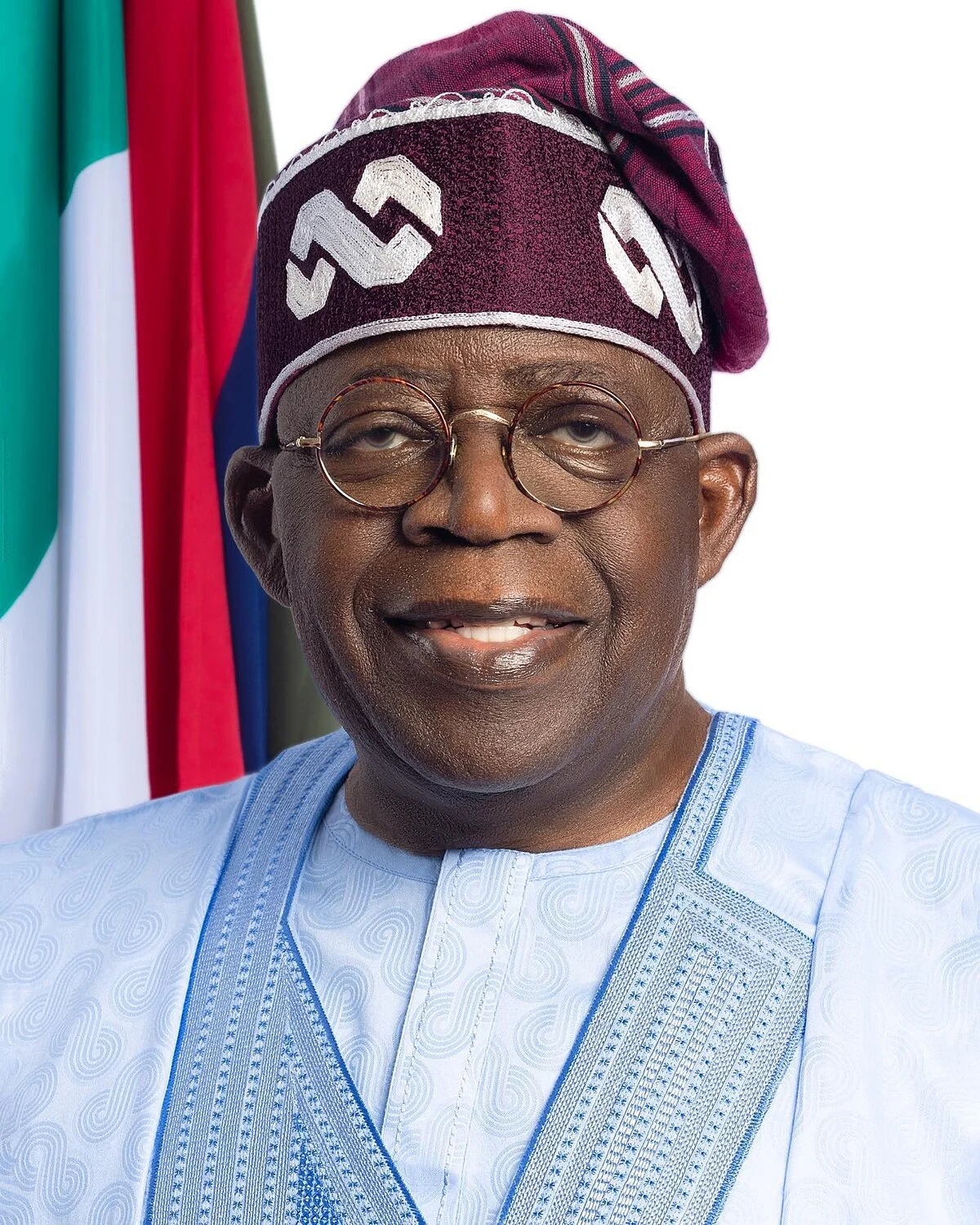
AFTER my parents fled Lagos for Mgbidi in the then Eastern region (later East Central State and now Imo State) at the onset of the Biafra – Nigeria civil war in 1967, they registered their children at Central School (primary) in our village. We had been dislocated from St. Jude’s Primary School in the Ebute Metta area of Lagos. Central School was comparable to St. Jude’s in infrastructure, teaching staff, and the quality of instructions. This should not come as a surprise because both schools were run by the Missionaries. They were also located in the bowls of expansive premises. However, Central School had a slight edge because it had a very big green and lush field which served as a football pitch, and for track and field sports events. The only drawback was that the field was located across a major road (now an expressway), the Onitsha – Owerri freeway. On that other side of the road also was the headmaster’s official residence which overlooked the field, and slightly to the left was the ‘i’ shaped teachers’ quarters. If we took time to write about some basic features of what was basically a rural school in the 1960s, it is only because we will have cause to return to it in the course of our engagement today. And it is also because of the recent policy flip flops and our nation’s apparent unseriousness over education since the ill-advised seizure of public primary and secondary schools by the military when soldiers assumed political power in the 1960s. Tunji Alausa replaced Prof. Tahir Mamman as education minister in the last underwhelming reshuffle of the Cabinet of Nigeria’s president, Alhaji Bola Ahmed Tinubu. The president had said at the time of the Cabinet changes that he dropped some ministers because Nigerians assessed them poorly. But it could be a matter of coincidence that the changes happened at about the same time that the sacked minister was entangled with the controversial subject of the minimum age for the admission of our young adults or children into tertiary institutions. He was reported to have said that any child who was younger than 18 years would be ineligible for admission into the university. Some Nigerians and parents were alarmed and incensed especially because of the suddenness and alleged lack of consultations before the pronouncement. It was reckoned that many kids who were already in the terminal classes in secondary schools may be compelled to idle away for two to three years at home with the attendant risks before they become eligible to sit for the joint admissions and matriculation board examination for admission. The fight was loud, strident and very public. The spat may not be solely responsible for the ouster of the minister, but it may not be entirely unconnected with his sacking. That minister’s removal has, however, not cured Tinubu’s regime’s proclivity to put its own foot in its own mouth. His has been a case of one week, one controversy. Some of the president’s men and women speak from both sides of their mouths, and often long before they think through any issue. The other day, it was one presidential aide who wrote in a blog post that the federal government was at the cusp of increasing tariffs on electricity yet again. Nigerians screamed. Producers and manufacturers kicked and baulked at the proposed hike, saying that energy already accounts for a substantial percentage of their operational costs and household expenses. The government backed down, at least for now. The aide later went on a long-winding explanation of how the message was misunderstood, and how what was written was twisted and taken out of context. Last week was the turn of the federal ministry of education. READ ALSO: CSOs allege powerful elite depleting Nigeria’s mineral resources The minister was reported to have said that the federal government had scrapped the junior secondary school and the senior secondary school segments in Nigeria’s school system. In their place our children will subsequently be made to undertake a straight 12-year basic education before admission into the university if qualified. A national newspaper reported the ‘new policy’ thus last week Friday: The federal government has announced the scrapping of all junior secondary schools (JSS) and senior secondary schools (SSS) in the country and introduced a compulsory 12-year uninterrupted basic education model after which a Nigerian child can aspire to higher education. With this development, the Nigerian government is seeking the abolition of the 6-3-3-4 education system and replacing it with 12-4. This is even as it has sought the approval of the national council on education (NCE) to officially adopt 16 years as the minimum entry age requirement into the country’s tertiary institutions. The NCE is the apex policy-making agency in the education sector. Alausa was said to have spoken in Abuja in the presence of the commissioners for education in Nigeria’s 36 states and the education secretary of the federal capital territory (FCT), officials of agencies and parastatals under the education ministry, as well as representatives of development partners. The minister reportedly elaborated by saying that by subsuming secondary education into basic education, students will benefit from uninterrupted learning up to the age of 16, and that the new policy would align with global best practices. He claimed that the reform would reduce dropout rates by eliminating financial and systemic barriers that currently prevent students from completing secondary education. “Extending basic education to 12 years will ensure a standardized curriculum that is uniformly implemented across the nation. This will also facilitate early exposure to vocational and entrepreneurial skills, preparing students for both higher education and employment. Many developed nations have implemented similar systems where basic education spans 12 years, ensuring that students acquire foundational knowledge before specialising at tertiary levels”. The minister rightly said that “When students receive an extended period of compulsory education, they are better equipped to join the workforce with relevant skills. This reform will also reduce child labour and other social
NELFUND Approves N20bn Loan for Over 192,000 Students

The Nigerian Education Loan Fund (NELFUND) has approved a loan of N20.1bn for 192,906 students across public universities in Nigeria. This disbursement, which was finalized as of January 1, 2025, aims to support students in their educational pursuits. Bayero University in Kano will receive the highest share, with N1.3bn allocated for 11,683 students. The University of Maiduguri follows closely, as 12,198 students will benefit from N1.27bn. READ ALSO: Africa has what it takes to develop itself – Tinubu Other universities like the University of Jos, Federal University Dutsin-Ma, and the University of Ibadan also received substantial amounts to support their students. Some institutions received smaller amounts, with Gombe State Polytechnic and Abia State Polytechnic receiving funds for only a few students. These smaller loans include amounts such as N122,000 for four students at Gombe State Polytechnic and N106,300 for two students at Abia State Polytechnic. Previously, NELFUND had disbursed N110bn to students across Nigeria, according to an update from the fund’s Managing Director, Akintunde Sawyerr.
Senate amending UBEC Act for improved funding, others

A bill to amend the Universal Basic Education Commission (UBEC) Act has successfully passed its second reading in the Nigerian Senate. The proposal, put forward by Senator Adamu Lawal Usman of Kaduna Central, seeks to bring changes to various sections of the Act. ALSO READ: FG Begins Payment of Delayed November Salaries Among the key changes are improved measures for early childhood education, clearer guidelines for appointing members of the commission, and stricter enforcement of regulations for implementation agencies. The bill also includes provisions to raise funding for education from two to five percent and ensure that intervention funds are directly allocated to local government education sectors. With the second reading completed, the bill has been sent to the Senate Committee on Secondary and Basic Education for further review.
Tinubu Reshuffles University Leadership Over Alleged Irregularities

President Bola Tinubu has ordered a leadership overhaul at two federal universities following allegations of irregularities in appointments and governance. At Nnamdi Azikiwe University, Awka, Anambra State, the President removed Vice Chancellor Prof. Bernard Ifeanyi Odoh, Registrar Mrs. Rosemary Ifoema Nwokike, and dissolved the institution’s Governing Council. The council, chaired by Ambassador Greg Ozumba Mbadiwe, was accused of appointing an underqualified vice chancellor without adhering to procedural guidelines. Reports suggest that the council’s actions sparked tensions between the university’s Senate and its management. Similarly, Tinubu dismissed Engr. Ohieku Muhammed Salami, Pro-Chancellor and Chairman of the Governing Council of the Federal University of Health Sciences, Otukpo, Benue State. Salami faced allegations of misconduct, including the unlawful suspension of the Vice Chancellor and threats directed at officials of the Federal Ministry of Education, despite warnings to reverse his actions. The Federal Government reaffirmed its commitment to maintaining adherence to laws governing educational institutions, urging university councils to focus on fostering stability and upholding standards in their operations.
Education Minister Whatsapp Number Hacked

The WhatsApp telephone details of Prof Tahir Mamman, the Minister of Education have been hacked
FG to spend N47.5bn on upgrading secondary schools

The National Senior Secondary Education Commission on Wednesday revealed that a total of 50 selected senior secondary schools will undergo infrastructural upgrades nationwide as part of its mandates as an intervention agency. The Executive Secretary of the Commission, Dr. Iyela Ajayi, made this known during the groundbreaking ceremony for one of the 50 selected secondary schools in Koton Karfe, Kogi state. Speaking during the ceremony, Iyela noted that a NEEDS assessment was conducted across the various selected schools. He further noted that the rehabilitation of the schools followed the mandate given by the President, Bola Tinubu. Iyela noted that the upgrade of the 50 schools in the first phase will cost N47.5bn. A NEEDS assessment is a systematic process for determining and addressing needs, or “gaps”, between current conditions, and desired conditions, or “wants.” Iyela said, “This is just the first phase, when this phase is completed then we can then report to the president and Minister and say we have finished completion of this phase so they can come and complete this project and we will move unto the next phase. So those schools that are not going to benefit from the first phase I want them to be patient after the first phase we will come to them. “The intervention for the first phase will cover about N47.5bn for the 50 schools.” NSSEC was established in 2021 under the administration of the former president Muhammadu Buhari with its mandates covering Senior Secondary Schools across the country.
BREAKING: FG, ASUU begin meeting over strike

The Federal Government has commenced a pivotal meeting with the Academic Staff Union of Universities (ASUU) in Abuja.
Controversy Brews as VC Appoints Self Director of University Institute

Controversy Erupts as VC of FUHSO Appoints Himself Director of University Institute
FG denies slashing allowances of foreign students stranded in Russia, Morocco, others

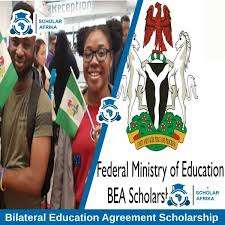
By Doris Isreal Ijeoma The Federal Government says it has no plan to slash scholarship students’ allowances as recently projected in the media. The Minister of Education, Prof. Tahir Mamman, stated this during a meeting with the leadership of the National Association of Nigerian Students, NANS, in Abuja on Friday. There was a report that the ministry, through the Federal Scholarship Board, announced a slash in allowances of foreign scholars stranded in Russia, Morocco, and Algeria among others. The slash in scholars’ allowances under the federal government’s Bilateral Educational Agreement Scholarship, BEA, was attributed to the economic crises. Mr Mamman said that there was no slash in scholars` allowances but rather an adjustment due to Foreign Exchange fluctuations, FOREX. “We want to clarify what has been in the media on allowances paid to scholars under the Bilateral Scholarship Agreement. “We want to place it on record that the ministry and the Federal Government for that matter have not slashed the allowances due to students. “What happened is some adjustments in the amount due to them because of FOREX fluctuations, and as soon as we get the balance we have applied for, we will pay them. “But for now, what is in the budget is what we can pay. So, there is no slash, we will even be happy to increase, so this is what has led to the adjustments,” he said.
Economic hardship: FG slashes stranded foreign scholars’ allowances

The Federal Government, through the Federal Ministry of Education, has announced a slash in allowances of foreign scholars who are currently stranded in Russia, Morocco, and Algeria, among others by 12.7%. The ministry attributed the development to economic crises. Nigerian students studying in Russia, Morocco, Algeria, China, Hungary, and other countries, on the Federal Government’s scholarship lamented their unpaid stipends for eight months running. The students are studying under the Federal Government’s Bilateral Educational Agreement Scholarship. The BEA scholarship is for the purpose of education exchange between Nigeria and the partnering countries. The Federal Scholarship Board is supervising the scholarship under the Federal Ministry of Education. The government’s decision to slash the scholars’ allowances was contained in a memo signed by the Director of the Federal Scholarship Board, Ndajiwo H.A., on behalf of the Minister of Education, Prof. Tahir Mamman. “After due consultations, the Federal Scholarship Board has come up with adjustments in line with budgetary provisions in the payment of BEA scholar’s supplementation allowances for the 2024 academic year,” the memo, dated July 23, 2024, and addressed to the scholars’ association, read. According to the memo, the monthly allowances were slashed from $500 to $220; the graduation allowance from $2500 to $2000; and the PG research allowance was slashed from $1,000 to $500, among others. The total for the payments initially paid was $5,650 per student but will now be $4,370 “The Scholars’ Association is hereby notified that due to the prevailing economic situation, the payment mandate for the BEA scholars’ allowances will be as per the new adjustment. “The balances for the years 2023 and 2024 owed to scholars will be paid as soon as the funds are made available,” the ministry said.