Terrorists Kill Soldier, Kidnap Mother In Kaduna

Nigerian Army Forces Eliminate Bandit, Seize AK47 Rifle in Kaduna Operation

A soldier identified as Yahaya Ayuba (Zabuyia), lost his life while bravely resisting gunmen who invaded his home in Anguwan Rimi village, Zango Kataf Local Government Area of Kaduna State.   The assailants also abducted his stepmother during the incident which occurred late Sunday night. Family member Mr. Kantiok Solomon confirmed the heartbreaking news, recounting how the gunmen, armed with AK-47 rifles, barged into the house while Ayuba was conversing with his family members.  Despite his courageous efforts to protect his stepmother, Ayuba was fatally shot when the gunmen noticed his uniform. This isn’t the first time such violence has struck the community, leaving residents like Angelo Tagwai deeply unsettled. Urging swift action, Tagwai called upon security forces to rescue the abducted woman and bring the perpetrators to justice. Efforts to reach the Kaduna State Police Public Relations Officer, ASP Mansir Hassan, for comment were unsuccessful at the time of reporting.

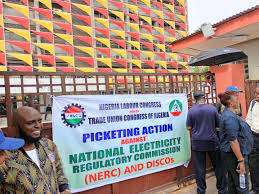
Electricity tariff hike: NLC, TUC Picket NERC, DisCos offices today

If they keep their words, the Nigeria Labour Congress (NLC) and the Trade Union Congress (TUC) will today, picket the office of the Nigerian Electricity Regulatory Commission (NERC) and the distribution companies (DisCos)’s premises nationwide over the hike in electricity tariff. This is following a hike in the tariff for electricity consumers who enjoy at least 20 hours of daily power supply. “We write to inform you of the picketing action scheduled to take place in the offices of the NERC and Electricity Distribution companies (DISCOS) in all states, including the FCT,” the unions said in a joint statement by NLC’s Ag General Secretary Chris Uyot and his TUC counterpart Anka Hassan. “The action will jointly take place on Monday, 13th of May, 2024 nationwide simultaneously. “Therefore, the two Labour centres are directed to work together to carry out this important action. “While counting on your usual cooperation, kindly accept the assurances of our goodwill and highest regards.” Though the NERC had reviewed the tariff, the labour unions said they were picketing the agency’s office as well as the premises of distribution companies after a Sunday reversal deadline failed. The recent tariff hike for electricity consumers has continued to draw comments from several quarters. With inflation rising to new highs and Nigerians grappling with the removal of petroleum subsidy, the increase in tariff was met with stiff opposition. Human rights lawyer Femi Falana (SAN) had claimed that the Federal Government was raising funds for the “cash-strapped” DisCoS with the tariff hike. But while defending the move, the Minister of Power Adebayo Adelabu said the Federal Government will pay about N1.8trn in electricity subsidy in 2024. He argued that the Electricity Act, 2023 made provisions for the review of tariffs twice yearly. “Review of tariff is actually legal once it is within the exclusive responsibility of the Nigerian Electricity Regulatory Commission (NERC),” he said on an edition of Channels Television’s Politics Today. “The Act actually provides for review twice in a year, every six months,” he said. Following the clapback generated by the move, the House of Representatives asked NERC to suspend the implementation of the tariff hike.

Cybersecurity Levy Targeted at Financial Institutions, Telecoms, Not Individuals, Senator Buba clarifies

Senator Shehu Umar Buba, the Chairman of the Senate Committee on National Security and Intelligence, has clarified that the recently imposed cybersecurity levy announced by the Central Bank of Nigeria (CBN) is not targeted at individuals or ordinary bank customers. The Senator who sponsored the amendment bill told Economic Confidential that the levy is aimed explicitly at financial institutions and telecom companies, the most vulnerable sectors to financial crimes and cyber fraud, to enhance cybersecurity measures and national security in the country. He noted that the relevant section of the Cybercrime Act is very clear about the businesses that are required to pay the levy, not the citizens. “The Act is very explicit about who is responsible for the payment, not Nigerian citizens or individuals. The relevant Section of the Cybercrime Act 2015 listed the businesses required to pay the levy: telecommunications companies, Internet Service Providers, Banks, Insurance Companies, the Nigerian Stock Exchange, and other Financial Institutions. “The organisations in the sectors have been listed in previous circulars by the Central Bank of Nigeria, especially in 2018. The new circular by the CBN further provided many exemptions.” Senator Buba also clearly explained the amount payable as a cybersecurity levy. “It is either 0.005 or 0.5% arithmetically. The figure in the principal act was 0.005 as a fraction, which was converted to the percentage that became 0.5% in the amendment. Therefore, the statistics in fractions and percentages are the same. The legislator highlighted that the passage of the amendment bill was a collaborative effort of various stakeholders. “The passage of the amendment bill was a collaborative effort involving the government, industry players, civil society, and academia in the contributions and active participation in the public hearing before and endorsement by the two chambers of the National Assembly. After rigorous processes, President Bola Ahmed Tinubu signed the bill into law in February 2024.” The Senator acknowledged the concerns of Nigerians, civil groups, and other stakeholders about the current economic situation but was reassured that implementing the cybersecurity law was not meant to punish citizens. He emphasised that the levy is a collective effort to protect national security and the economy, with the financial burden primarily falling on the specified businesses. The Cybercrime (Prohibition, Prevention, etc.) (Amendment) Act 2024, which President Tinubu signed into law in February, imposes a 0.5 percent (0.005) levy equivalent to half the value of all electronic transactions by the businesses specified in the Second Schedule of the Act. The levy will be remitted to the National Cybersecurity Fund, which the Office of the National Security Adviser (ONSA) shall administer. The circular announcing the levy also exempted some transactions from the cybercrime levy, including loan disbursements and repayments, salary payments, intra-account transfers, and other financial transactions.

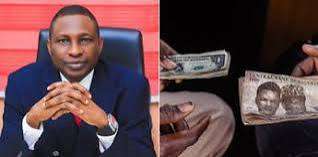
EFCC Warns Embassies Against Demanding Dollars For Services

The Economic and Financial Crimes Commission, EFCC, has warned embassies not to demand foreign currency for goods and services in the country. The chairman of EFCC, Ola Olukoyede, gave the strong warning in a special memo addressed to the Minister of Foreign Affairs. In the memo dated May 5, 2024, the EFCC chair made it clear that it was illegal for embassies to collect any currency apart from Naira in Nigeria. Part of the memo reads: “I present to you the compliments of the Economic and Financial Crimes Commission, EFCC, and wish to notify you about the Commission’s observation, with dismay, regarding the unhealthy practice by some foreign Missions to invoice consular services to Nigerians and other foreign nationals in the country in United States Dollar. “This practice is an aberration and unlawful as it conflicts with extant laws and financial regulations in Nigeria. Section 20(1) of the Central Bank of Nigeria Act, 2007 makes currencies issued by the apex bank the only legal tender in Nigeria. “It states that ‘the currency notes issued by the Bank shall be the legal tender in Nigeria on their face value for the payment of any amount’. “This presupposes that any transaction in currencies other than the naira anywhere in Nigeria contravenes the law and is, therefore, illegal. “The refusal by some Missions to accept the naira for consular service in Nigeria and also comply with foreign exchange regulatory regime in fixing the exchange of the cost of their services is not only illegal, but represents an affront on the Country’s sovereignty symbolized by the national currency. “It undermines Nigeria’s monetary policy and aspiration for sustainable economic development. “This trend can no longer be tolerated, especially in a volatile economic environment where the country’s macroeconomic policies are constantly under attack by all manner of state and non-state actors. “In light of the above, you may wish to convey the Commission’s displeasure to all embassies in Nigeria and restate Nigeria’s desire for their operations not to conflict with extant laws and regulations in the country,” the EFCC boss warned.

Dana Air sacks workers, see why

Dana Air, in response to an ongoing operational audit by regulatory authorities, has announced the temporary disengagement of some staff members.  The decision, communicated by the airline’s Head of Corporate Communications, Kingsley Ezenwa, aims to ensure compliance with aviation standards and facilitate a thorough review of operational procedures. Dana Air reaffirmed its commitment to cooperating with authorities and supporting affected staff during this period of uncertainty.  The airline is actively engaging stakeholders and pursuing dialogue with lessors to navigate through the audit process.  In light of the ongoing audit, Dana Air has made the decision to temporarily disengage some staff members pending the conclusion of the audit. “This decision has been made to ensure efficient management of resources and to facilitate a thorough review of operational procedures. “The Management of Dana Air extends its sincere appreciation to all staff members for their resilience and dedication during this period of uncertainty. It recognises the difficulties that staff have had to endure and assures them that every effort is being made to resolve the situation promptly.”

President Tinubu Commissions Lithium Processing Factory in Nasarawa

President Bola Ahmed Tinubu, represented by the senate President, Godswill Akpabio, on Friday, unveiled a Lithium processing factory constructed by Avatar New Energy Materials Limited, a Chinese company. The event, held at Kama Otto in Nasarawa Local Government Area, exemplified a robust partnership between the federal government, the state, and private investors. Dignitaries at the event included the Nasarawa State Governor, Engr. Abdullahi Sule, Governor Usman Ododo of Kogi State, Minister of Solid Minerals Development, Dele Alake, federal lawmakers, former state leaders, and traditional rulers. President Tinubu, in his address, hailed the collaboration as a testament to Nigeria’s commitment to economic diversification. He emphasized the strategic significance of the Lithium Company, foreseeing its role in positioning Nigeria as a major player in the global Lithium market. Tinubu stated, “Realising the benefits of Lithium and other mineral resources, our administration will continue to pay particular attention to the maximum utilisation of the product for the benefit of our people.” Furthermore, he articulated the government’s aspiration for comprehensive value chain processing of Lithium and other minerals. Tinubu urged both domestic and international companies to engage with Avatar Company, emphasizing its pivotal role in Nigeria’s growth trajectory. Acknowledging the support received during the previous Presidential election, Tinubu expressed gratitude to the people of Nasarawa with the tangible contribution of the Lithium processing factory. He underscored the transformative impact of Nigeria’s participation in the production value chain of Lithium, heralding a new era of technological partnership and empowerment. Governor Abdullahi Sule commended President Tinubu and the local communities for their instrumental support in attracting such investment to Nasarawa. He highlighted the remarkable transformation of the region, previously plagued by security challenges, into a conducive environment for industrial development. The Minister, Dele Alake emphasized the profitability and feasibility of similar ventures, noting the increasing interest from investors. He advocated for robust protection of Lithium battery companies from foreign competition, citing their pivotal role in Nigeria’s economic resurgence.

Cybersecurity Levy Not Punitive – Sen Buba,

The Chairman of the Senate Committee on National Security and Intelligence, Senator Shehu Umar Buba, has addressed the controversy surrounding the proposed implementation of the Cybersecurity levy by the Central Bank of Nigeria (CBN). The levy is provided for in the Cybercrimes (Prohibition, Prevention, etc) (Amendment) Act, 2024. He clarified that the levy is not punitive as it has numerous exemptions to protect and relieve ordinary citizens, particularly the poor. According to him, the exemptions include salary payments, intra-account transfers, loan disbursements and repayments, and other financial transactions. Senator Buba said the amendments to the Cybercrimes Act were a collaborative effort with the National Assembly’s ICT and Cyber Security Committee. The committee also underwent a transparent public hearing process, receiving contributions from various stakeholders. Both Houses of the National Assembly unanimously passed it before President Bola Ahmed Tinubu signed it into law. Senator Umar emphasised that the provisions for the cybersecurity levy have been in place since 2015 but were delayed due to unclear interpretations and applications. “The Cybercrimes Act of 2015 has provisions for imposing a cybersecurity levy since its enactment, but the vagueness of Section 44 led to different interpretations until the 2024 amendments. The levy is 0.5%, equivalent to half a per cent of the value of all electronic transactions by businesses specified in the Second Schedule to the Act. “The amendments addressed crucial gaps in the Act and empowered the nation to implement the National Cybersecurity Programme effectively. They also seek to realign and empower the country to combat the inadequate funding and disruptive effects of cyber threats on national security and critical economic infrastructures,” he said. Senator Umar underscored the criticality of the cybersecurity levy’s implementation, stating that its prudent utilisation will bolster the nation’s capacity to evaluate, execute, upgrade, and fortify the security of national critical economic infrastructure, thereby safeguarding the nation’s cyberspace. The Committee commended the Office of the National Security Adviser and the Central Bank of Nigeria (CBN) for initiating the operationalising the cybersecurity levy, highlighting its benefits far outweigh its drawbacks. He expressed appreciation to the leaders and representatives of MDAs at the federal and state levels, as well as to all stakeholders who contributed to this effort’s success. While maintaining that the Committee’s mandate is to create laws that align with the aspirations of Nigerians, he appealed for public support, assuring that the policy will yield maximum benefits for citizens in the shortest possible time. Following the enactment of the Cybercrime (Prohibition, Prevention, etc) (Amendment) Act 2024 and under the provision of Section 44 (2)(a) of the Act, a levy of 0.5 per cent (0.005) equivalent to half per cent of all electronic transactions value by the business specified in the Second Schedule of the Act is to be remitted to the National Cybersecurity Fund, which the Office of the National Security Adviser shall administer. Though the announcement created controversy, the circular exempted some transactions from cybercrime levy. The exemptions included loan disbursements and repayments, salary payments, intra-account transfers within the same bank or between different banks for the same customer, intra-bank transfers between customers of the same bank, and Other Financial Institutions (OFIs) instructions to their correspondent banks. The exemption also applies to interbank placements, banks’ transfers to CBN and vice versa, inter-branch transfers within a bank, cheque clearing and settlements, and Letters of Credit (LCs). Others include banks’ recapitalisation-related funding only bulk funds movement from collection accounts; savings and deposits including transactions involving long-term investments such as treasury bills, bonds; and commercial papers; government social welfare programmes transactions, e.g. pension payments; non-profit and charitable transactions including donations to registered non-profit organisations or charities; educational institutions transactions, including tuition payments and other transaction involving schools, universities, or other academic institutions.  

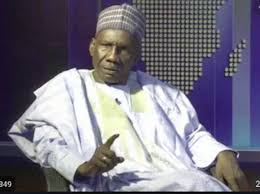
Tinubu’s appointees are misfits and weak- Dikwa

The Dean of Borno Elders Forum, Prof Khalifa Dikwa, says members of the elite in the northern region of the country are unhappy with President Bola Tinubu because of his “misfit and weak appointees” as well as his “anti-people policies”. The political analyst, who featured on Channels Television’s Politics Today programme on Wednesday, said northern elite are “not happy because each of these policies affect the north entirely”. “Most of the appointees are either misfits or weak or to the wrong places,” the elder statesman said, adding that the appointments by the Tinubu administration are “lopsided”. Prof Dikwa said even “the southern elite should be annoyed because Nigeria is more than Lagos”. He further described as “provocative”, the 0.5% cybersecurity levy on electronic transactions recently introduced by the Central Bank of Nigeria (CBN), and asked the President to immediately order the apex bank to suspend the implementation of the new policy. “This is not the time, it’s wrong timing. Why are they provoking the people of this country? They have taken enough,” he said.

2027: Mega Party Prepares to Unseat Tinubu

Renowned political economist and former presidential candidate, Professor Pat Utomi, has announced plans for the formation of a new mega-political party aimed at unseating the ruling All Progressives Congress (APC) in the 2027 general elections.  Utomi, who criticized the current political landscape for its failure to deliver effective governance, emphasized the need for a drastic change.  The proposed party will merge two distinct groups: the ‘mea culpa’ cohort, consisting of former politicians acknowledging past failures, and the ‘new value’ cohort, comprising forward-thinking individuals from various political backgrounds.  Utomi highlighted the importance of promoting value-driven citizenship, integrity, and respect for the dignity of people.  “The nature and the structure of our politics is such that even good people, when they enter these existing political parties, will play to their interests,” Utomi explained.

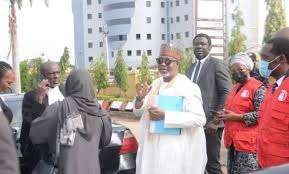
Alleged N2.7bn Fraud: Fmr Aviation Minister, Sirika, Daughter, others arraigned …granted 100m bail each

The Economic and Financial Crimes Commission (EFCC) Thursday, arraigned and granted bail of N100 million each to a former Minister of Aviation, Hadi Sirika, his daughter, Fatima and two others. Justice Sylvanus Oriji of High Court of the Federal Capital Territory, Maitama, ordered the defendants be remanded in the Correctional Centre should they failed to meet the bail conditions. Sirika, who served under President Muhammadu Buhari administration alongside Jalal Sule Hamma and Al-Durag Investment Ltd was docked on a 6-count amended criminal charge over abuse of office to the tune of N2.7 billion. Before plea taking, the prosecution counsel, Rotimi Jacobs SAN, informed the court of an amended charge by the EFCC dated May 7, and filed on May 8, which was not opposed by counsel to the defendants. The defendants had pleaded not guilty, and Jacobs urged the court for expeditious hearing of the case. Sequel to not guilty plea, Kanu Agabi SAN, counsel for Sirika (1st defendant) informed the court of his client’s bail application dated May 6. Reacting, Jacobs told the court that all the defendants are on administrative bail and urged the court to grant bail on the condition that will make them appear for their trials. Meanwhile, ruling on the bail application, Justice Oriji granted bail to each of the defendants in the sum of N100m with two sureties each. The court held that the sureties must own landed property within the FCT with valid land titles and must depose to an affidavit of means. The court also restricted the defendants from traveling abroad without its permission. Justice Oriji ordered that the defendants should be remanded in prison custody if they fail to meet up with the bail conditions. Meanwhile, the matter has been adjourned till 10, 11, and 20 June for commencement of trial.