Nigeria’s forex inflow grows by 4% to $17.6bn –CBN

NIGERIA FOREX

Nigeria’s total forex inflow into the economy increased by 4% quarter-by-quarter (q/q) to $17.6 billion. According to the latest Quarterly Statistical Bulletin (QSB) of the Central Bank of Nigeria (CBN), the key driver of the rise in forex inflow in Q4 relative to the previous quarter was forex revenues from autonomous sources, which climbed by 18 percent q/q to $11.4 billion. In contrast, forex inflow through the CBN, which accounted for about 35 percent of the total forex inflow, decreased by -15 percent q/q to $6.2 billion. However, on a year-to-year (y/y) basis, forex inflow into the economy declined by -15 percent y/y to $17.6 billion in Q4’22. Based on the data, the total outbound flow of forex (outflow) from the Nigerian economy declined by -9 percent q/q and -27 percent y/y to $9.1 billion during the quarter. The data, taken together, imply a net forex inflow of $8.5 billion in Q4‘22. This compares favourably with $7.0 billion and $8.3 billion in Q3‘22 and Q4’21, respectively. The outflow of forex through the CBN decreased by -12 per cent q/q to $7.5 billion. This accounted for 83 percent of total forex outflows in Q4’22. The forex outflows from the CBN largely constitute payments made to service external debts and third-party transfers for government ministries, departments and agencies (MDAs). The combination of total forex flows (inflow and outflow) through the CBN resulted in a net outflow of $1.3 billion. The net outflow position largely mirrors the increased demand pressure on Nigeria’s gross official reserves, which has maintained a downward trend in the past months. Autonomous outflow of forex increased by 11 per cent q/q to $1.5 billion during the quarter. Combined, autonomous forex flows through the economy resulted in a net inflow of $9.8 billion. On an aggregate basis, the total forex inflow into the Nigerian economy fell by -23 per cent y/y to $73.0 billion in financial year of 2023 (FY’22), while the total forex outflow decreased by 2 per cent y/y to $41.0 billion. This resulted in a net forex inflow of $31.4 billion in 2022. It is significantly lower than the $52.7 billion recorded the previous year. “We continue to advocate for effective monetary and fiscal policies toward attracting foreign direct and portfolio investments into the economy,” CBN said.

Infrastructure Financing: AfDB approves $15m loan for Nigeria

Dr

The Board of Directors of the African Development Bank (AfDB) has approved $15 million loan for Infrastructure Credit Guarantee Company Limited (InfraCredit) to support infrastructure financing in Nigeria. Nigerian Anchor reports that InfraCredit is a specialized Nigerian credit guarantee company that mobilises long-term capital from institutional investors, including pension funds and insurance companies, to support infrastructure projects. According to the Bank, the subordinated loan is to strengthen InfraCredit’s capital base and help close Nigeria’s infrastructure financing gap. The financing, which will enable InfraCredit to leverage domestic capital markets to bolster access to long-term local currency infrastructure financing in Nigeria, complements a 2019 investment into InfraCredit made by the AfDB and other partners to help unlock domestic institutional capital for infrastructure. The loan comes at a time when InfraCredit is seeking to raise capital to finance an additional $375 million in infrastructure over the next few years, primarily by leveraging private sector financing. “The African Development Bank is pleased to continue to support an innovative financial institution – InfraCredit – which has objectives that align closely with our priorities to mobilise institutional financing for the delivery of infrastructure for Nigeria in key sectors including transport, energy, water, agriculture and infrastructure,” the Director General of the Bank’s Nigeria Country Department, Lamin Barrow said. The company’s green finance track record and commitments under its Clean Energy Transition Strategy and Roadmap and Green Finance Framework fits with the AfDB’s commitments to promote low-carbon development and mitigation, leveraging climate finance from private sector sources, Barrow said. “We are delighted and very pleased with the confidence that AfDB has demonstrated in the opportunity ahead for InfraCredit to scale its development impact of unlocking domestic institutional investments for long-term local currency infrastructure finance in Nigeria that will create jobs and support local economic growth. This second round investment will strengthen our guarantee issuing capacity and bring AfDB’s total investments in InfraCredit to $25 million, which is a strong signal of commitment to the long-term growth of InfraCredit and the Nigerian economy,” InfraCredit CEO, Chinua Azubike, said. The AfDB’s Acting Director for Financial Sector Development, Ahmed Attout, explained why AfDB made the support. “The support demonstrates our continuing confidence in InfraCredit and recognition of the role it plays in Nigeria’s infrastructure development. The African Development Bank is committed to capacitating the various players within Africa’s capital markets and stimulating the mobilisation of long-term funding into Africa’s infrastructure,” he said.

Petrol price drops slightly to N254 per litre in April 2023 – NBS

PETROL NOZZLE

The average retail price of a litre of petrol witnessed a drop from N264.29 in March to N254.06 in April 2023, the National Bureau of Statistics (NBS) has said. This is according to the NBS Petrol Price Watch released in Abuja on Friday. It stated that the April 2023 price of N254.06 represented a 3. 87 percent decrease over the price of N264.29 recorded in March 2023. However, the average retail price of a litre of petrol increased on a year-on-year basis from N172.61 recorded in April 2022 to N254.06 in April 2023. It stated that the April 2023 price of N254.06 represented a 47.18 percent increase over the price of N172.61 recorded in April 2022. “On state profiles analysis, Taraba paid the highest average retail price of N320.00 per litre, followed by Imo at N310.55 and Jigawa at N305.00. “Conversely, Sokoto paid the lowest average retail price of N195.00, followed by Benue at N198.13 and Kogi with N206.11,” it stated. Analysis by zone, the NBS said, showed that the South-East recorded the highest average retail price in April 2023 at N291.15, while the North-Central recorded the lowest at N208.88. The NBS also stated in its Diesel Price Watch Report for April 2023 that the average retail price paid by consumers increased by 28.69 per cent on a year-on-year basis. It explained that the retail price moved from a lower cost of N654.46 per litre recorded in April 2022 to a higher cost of N842.25 per litre in April 2023. “On a month-on-month basis, the price increased by 0.17 per cent from N840.81 per litre recorded in March 2023 to an average of N842.25 in April 2023,” it added. On state profiles analysis, the report said the highest average price of diesel in April 2023 was recorded in Adamawa at N980.33 per litre, followed by Bauchi at N934.46, and Borno at N900.50. On the other hand, the lowest price was recorded in Bayelsa at N708.04 per litre, followed by Kebbi at N773.33 and Anambra at N773.56. In addition, the analysis by zone showed that the North-East had the highest price at N895.42 per litre, while the South-South Zone recorded the lowest price at N807.59 per litre.

We collected N58.1bn revenue in 2022, not N77.1bn – KADIRS

Nasir El Rufai

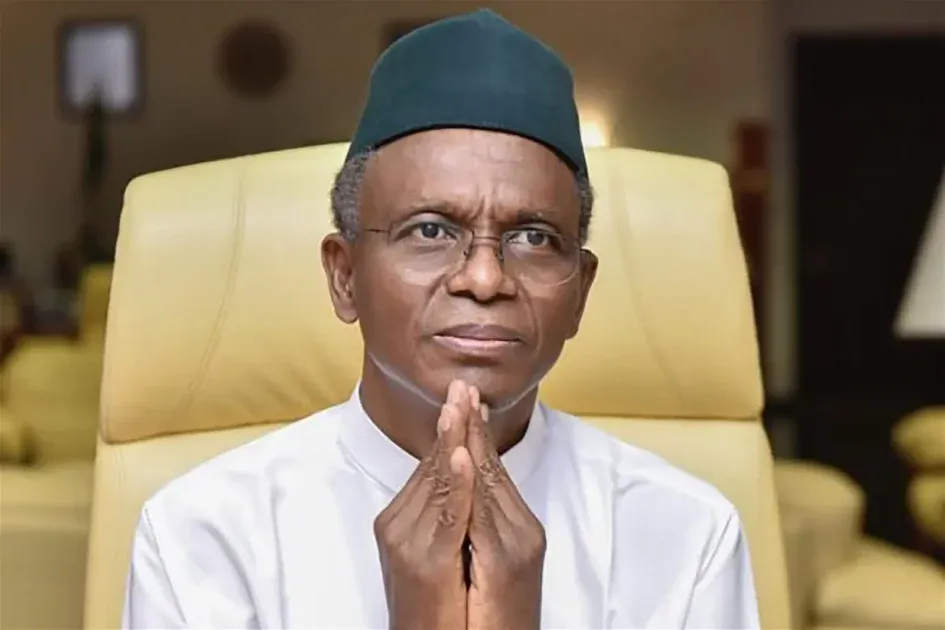
The Kaduna State Internal Revenue Service (KADIRS) has refuted the Auditor General Report on IGR which put the revenue generated by the state in 2022 at N77.1 billion. The Executive Chairman of the service, Dr Zaid Abubakar refuted the figure in a statement in Kaduna on Thursday. He said that the actual Internally Generated Revenue (IGR) for 2022 was N58.1 billion. The Citizens Accountability Report (CAR) on the implementation of the 2022 budget claimed that the government generated N77.1 billion IGR in 2022. According to the report disseminated to citizens on May 10, the N77.1 billion represents 87.1 per cent of the N88.5 billion targeted IGR for the year. CAR is a series of graphic and tabular illustrations of the content of the Audited Financial Statements prepared by the State Audit Office for citizens, to ensure accountability of public funds. The accountability report is based on the 2022 financial year and reports on state budget, revenue, and expenditure. Similarly, the 2022 4th Quarter Budget Performance Report, produced by the Office of Accountant General with support of the State Planning and Budget Commission, puts the IGR figure at N59.98 billion. According to the report, published on the Planning and Budget website in Jan. 2023, the N59.98 billion represents 80.5 per cent of the N74.5 billion IGR target for the year. Abubakar, however, said that the reports citing IGR collection figure for 2022 different from N58.1billion did not emanate from the authorised agency of the Kaduna State Government and should be disregarded. He said that the Kaduna state has maintained a steady trajectory of growth in its IGR – N44.9 billion in 2019, N50.8 billion in 2020, N52.9 billion in 2021 and N58.1 billion in 2022. “These remarkable strides owe much to the legal and institutional reforms undertaken since 2015 to strengthen the ability to collect revenues and to block leakages. “The Tax Codification and Consolidation Law enacted by Gov. Nasir El-Rufai Government appointed the Kaduna State Internal Revenue Service (KADIRS) as the sole collector of government revenues. “It also outlines all the taxes and levies payable in the state and prohibits the cash collection of revenue by any public officer. “These efforts have been remarkably successful, quadrupling the IGR from less than N13 billion in 2015 to N52.9 billion in 2021 and rising to N58.1 billion in 2022,” the chairman said. The KADIRS boss noted that the unprecedented levels of IGR collection in the state have been a notable feature of the El-Rufai administration. According to him, the reforms that led to the successes in IGR have created a viable platform for the incoming government to build on for further progress in expanding state revenues. Reacting to the conflicting 2022 IGR figures released by different government agencies, Mr Yusuf Goje, a public finance analyst described the development as “very disturbing”. Goje blamed part of the problem to the unrealistic budget of the government, leading to suspicion on the credibility of published budget performance data. He said the development shows lack of synergy and coordination around data management among relevant government agencies. Goje stressed that if KADIRS refuted the Budget Performance Report and Auditor General Report on IGR, “then it means someone is fabricating the data. Who could this be? “This calls for reform on information management such that responsible government agencies would validate all data before it would be made public,” he said. According to him, putting out conflicting data by different government agencies only deepens citizens’ suspicion on published government data. “This is disturbing because the essence of the Open Government Partnership that the state government signed unto is for citizens to have accurate and unquestionable data. “When we are talking about transparency, we are talking about data that is usable for citizens to effectively engage the governance process. “This conflicting data has cast a doubt on the credibility of official government data.” Goje called on the government to urgently explain the situation to rebuild citizens’ confidence on available government data.

Lack of credit access stifling economic growth—FG

MINISTER OF TRADE AND INVESTMENT

The Federal Government has said that poor access to credit especially for small and medium enterprises was contributing to stifling Nigeria’s economic growth. The Minister of Industry, Trade, and Investment, Otunba Adeniyi Adebayo, said this at the National Workshop on Bankruptcy and Debt Collection in Nigeria. The event with the theme “Creating A 21st Century Credit-Oriented Economy’’, was organized by the Nigerian Office for Trade Negotiations (NOTN) in collaboration with AELEX. Adebayo expressed concern that the credit system in Nigeria faced numerous challenges with many businesses unable to access credit due to finance scarcity, high interest rates, and stringent lending conditions often imposed by financial institutions. “The lack of access to credit has stifled economic growth, leading to a decline in investment and job creation. “This is a trend that we have to reverse for the greater interest of the national economy going forward,” he said. Adebayo said that the outcomes of the workshop must ensure the institutionalization of a vibrant and sustainable credit system in the country. According to him, it should sufficiently incentivize financial institutions to lend to especially Micro, Small and Medium Enterprises (MSMEs). “This is critical towards enhancing the overall competitiveness of the national economy, leading to increased productivity, economic growth and employment generation, as well as the promotion of entrepreneurship and increased benefits from the country’s participation in international trade,” he said. The minister recalled that in March 2022, the Federal Executive Council approved the proposal to establish the Nigerian Bankruptcy Commission with Debt Collection Offices in the 36 States of the federation and the Federal Capital Territory (FCT). He said that the commission was established to provide an effective legal and institutional framework to regulate business behaviour and reduce the challenges associated with enforcement of trade-debt contracts in the regular courts. According to him, this is as the debt collection office would be equipped with the expertise, resources and specific focus to ensure that customers pay their trade debts on time. “If successfully implemented, the commission will not only be complementary to the ongoing reforms under the Presidential Enabling Business Environment Council (PEBEC). “It will also significantly contribute to the creation of a modern 21st Century credit-oriented economy for the benefit of producers, retailers and consumers in Nigeria,” he said. The minister expressed the federal government’s commitment to promote financial inclusion by ensuring that all Nigerians have access to financial services, regardless of their income level or location. Adebayo said that it would contribute positively to financial stability as well as enhance trade and economic growth. Earlier, Mr. Fred Agah, Director-General/Chief Trade Negotiator, Nigerian Office for Trade Negotiations (NOTN) emphasized the need for a review of the regulatory and institutional framework for bankruptcy and debt collection. According to him, it will help producers get credit for their products and consumers to get goods and pay later. He said that the framework would facilitate definitive procedures for loan recovery and risk management as well. “Even when a growing concern runs into trouble, the priority as to how assets will be shared among creditors is clear. “So, you either have a claim on a particular asset or at least you know that this can help you and you can even retrieve the goods while it is still being delivered to the creditor,” he said. The event recorded lecture topics including “The inter-relationship between bankruptcy, debt collection and trade and overview of the bankruptcy and debt collection system in Nigeria.

Troops destroy 38 illegal refineries, apprehend 29 oil thieves

Local Refineries

Troops of Operation Delta Safe (OPDS) have destroyed 38 illegal refining sites and apprehended 29 suspected oil thieves in the last two weeks, the Defence Headquarters has said on Thursday. The Director, Defence Media Operation, Maj.-Gen. Musa Danmadami, who said this in Abuja at the bi-weekly news conference on the operations of the armed forces, said the troops conducted patrols, raids, anti-illegal oil refining and swap buggies operations at different locations within Bayelsa, Delta and Rivers states. He said this was aimed at denying oil theft and other criminal elements freedom of action. Danmadami said the troops, in the conduct of Operation Octopus Grip and other operations, discovered and destroyed illegal refining sites with 24 wooden boats, 169 storage tanks, 152 ovens and 19 dugout pits. According to him, the troops also recovered 551,500 litres of crude oil, 394,500 litres of Automotive Gas Oil (AGO), 16 vehicles, four motorcycles and one tricycle. Other items recovered were two pumping machines, one outboard engine, one generator, one speed boat, four weapons and 132 assorted ammunition, while 29 economic saboteurs were also arrested. “All recovered items and apprehended suspects have been handed over to the appropriate authority for further action. “Additionally, it is worthy to mention that the sum of N448.3 million were denied to the oil thieves. “Relatedly, the air component conducted a series of air operations within the joint area of operation. “Notably, an air interdiction was conducted at Abacheke general area, observed to be active with illegal oil bunkering activities. “Consequently, the target was struck, destroying all illegal refining equipment at the location,” he added. In the South-East, Danmadami said the troops of Operation UDO KA had sustained an offensive against the outlawed Indigenous People of Biafra/Eastern Security Network and other criminal activities in the zone. He said the operational activities resulted in killing of two terrorists, arrest of seven suspected terrorists and rescue of four kidnapped victims within the period under review.

Applauding the Godwin Obla Foundation Kidney Centre in Benue 

GODWIN OBLA

The date was January 20, 1961, and the occasion was the inauguration of the 35th President of the United States. After taking his oath of office, the young incoming President John F. Kennedy called out to his people- “And so, my fellow Americans: ask not what your country can do for you – ask what you can do for your country.”  This call continues to resonate with every patriotic citizen with a commendable sense of “civic action and public service”. Last April 17, 2023 was a memorable day in the ancient city of Otukpo, the traditional headquarters of the Idoma nation, Benue South Senatorial District. Long neglected by succession administrations at both federal and state levels, Otukpo town is currently enjoying some reawakening in infrastructure, following the siting of a Federal University of Health Sciences (FUHS) by President Muhammadu Buhari.  Further to the flurry of amenities that are being put in place to support the effective takeoff of the university, a private individual made a humongous intervention of a magnitude never witnessed in the annals of individual philanthropic gestures in Idomaland, if not the entire Benue State. This was the commissioning of an ultramodern Kidney/Dialysis Centre, built and equipped by the GODWIN OBLA FOUNDATION, initiated and funded by Chief Godwin Odumu Obla, SAN, in furtherance of his ceaseless philanthropic giving-back-to-the-society Program, and donated to the Teaching Hospital of the Federal University of Health Sciences, Otukpo.  It was a day of sober reflections, a day of long but inactive political knives, a day of nostalgic regrets, and a day of hope, as well as a day of appreciation. Indeed, it was a day of mixed emotions. Most of all, 17th April 2023 would go down as a day of realization and challenges.  The premises of the former General Hospital, where the Centre is located, is a colourful beehive of activities as people from far and near thronged the venue to appreciate Chief Godwin Odumu Obla, the first Senior Advocate of Nigeria from Benue South Senatorial District for his show of love towards his late wife, expressed in his determination to provide such needed health care facilities, the absence of which led to her untimely demise. The JUDITH OGWA OBLA KIDNEY CENTRE is named after Chief Godwin Obla’s wife who passed on in the United States of America on 21st March, 2022, due to complications arising from a protracted battle with diabetes which resulted in kidney failure. Her passing on to eternal glory was a glaring manifestation of the unacceptable gap between health facilities in Nigeria and other more advanced societies, prompting her husband to promise a well-equipped health Centre for his people back home.  For a man who has always regarded a promise to be a debt, Chief Obla pulled all available resources together and within four months the Centre became ready for handover, Project fully completed and appropriately equipped and furnished. Apart from handing over the state-of-the-art KIDNEY CENTRE to FUHSO’s Council, the Vice Chancellor of the first Federal Government-established Medical University, Prof Innocent Ujah, had a memorable 17th April 2023, as an avalanche of academic endowments totaling N40 million naira was thrust at FUHSO, still by the GODWIN OBLA FOUNDATION.  Some of these included the Judith Ogwa Obla Prize for Best Graduating Student in Nephrology; Joseph Elagbaje Obla Snr Prize (to honor his late father) for Best Graduating Student in Internal Medicine; GODWIN ODUMU OBLA Prize for Best Graduating Student in Urology; and Dr Idoko Edwin Obe Prize for Best Overall Graduating Student (in memory of the first Idoma Medical Doctor). Each of the four endowments is to attract an annual cash gift of not less than a million naira.  The GODWIN OBLA FOUNDATION and FUHSO signed agreement papers to legitimize the handover, which also included the public presentation of the real bank cheques to Prof Innocent Ujah.  The Director General of GODWIN OBLA FOUNDATION, Elder Michael Uba Obande, JP, had, in his speech while welcoming dignitaries to the historic occasion, given a brief exposition on the FOUNDATION which is committed to upholding the biblical Good Samaritan principle of extending assistance to the needy. He told the audience that GODWIN OBLA FOUNDATION has already impacted lives positively through its Projects in such areas as the Benue Judiciary, St Francis College, Wesley High School, and New Vision Institute of Technology (all in Otukpo). The mammoth crowd which witnessed the great event included Benue State Deputy Governor Benson Abounu, Deputy Governor-elect Sam Ode, Distinguished Senator Abba Moro, House of Reps Member Ottah Agbo, Och’Idoma V, Catholic Bishop Michael Apochi and other members of the clergy as well as members of both Obla and Ugbo families. The Obla, the centre benefactor had advised the Vice Chancellor of the university, Innocent Ujah, a professor of Obstetrics and Gynecology, to set up a team of eminent medical professionals based in the US to fashion out “a proper clinical governance structure.” To ensure staff discipline, Mr. Obla said Close Circuit Television (CCTV) cameras would be installed at the centre to capture medical personnel activities as they relate to patients’ care. He explained that the facility would serve as a research and training centre to assist government in planning, policy and decision-making.

N300m FG projects in progress – Tracka

Kva Installation

Three Federal Government projects worth N289.5 million are currently going well, according to three different reports on the projects by Tracka. Nigerian Anchor reports that the projects include: Procurement and Installation of 300KVA Transformer at Umueze Eziala Obizi, Ezinihitte, Imo State; Construction & Furnishing of General Hospital with Solar Inverter & Borehole in Lemu, Gbako LGA, Niger State; and Construction of Solar Streetlights in Bida/Gbako/Katcha Federal Constituency, also in Niger State. Reporting on the N8.5 million project in Imo State, Tracka said that the residents are pleased with the project.. “N8.5m was allocated to the Procurement and Installation of 300KVA Transformer at Umueze Eziala Obizi, Ezinihitte, Imo (State) in the 2022 FG Budget. “We tracked and report that the transformer has been installed, and now serving the community. “Residents say the power supply has improved compared to when they had only 1 transformer,” it tweeted on its official handle @TrackaNG on Thursday. On the health care project in Niger State, Tracka noted that the project is ongoing at a slow pace. Tracka also reported that the contractor of the N94 million project has not been seen on-site since February 2023. “N94m was allocated to the Construction & Furnishing of General Hospital with Solar Inverter & Borehole in Lemu, Gbako LGA, Niger (State) in the 2022 FG Budget. “We report that the project is ongoing but at a slow pace and the contractor has not been seen on-site since February 2023. This is the third year since the project started. “We urge the @NphcdaNG (National Primary Health Care Development Agency), the implementing agency, to ensure the project is completed in due time to cater to the resident’s health needs,” it tweeted. Tracka reported that the N187 million electricity project in Niger State has delivered 100 streetlights installation so far. “N187m was allocated to the Construction of Solar Streetlights in Bida/Gbako/Katcha Federal Const., Niger in the 2022 FG Budget.

Name Change: Ministry of Aviation now Ministry of Aviation and Aerospace

AVIATION MINISTER SIRIKA

The Ministry of Aviation will now be known as the Ministry of Aviation and Aerospace. This was disclosed on Thursday in a statement on the Ministry’s Twitter handle @fmaviationng. According to the statement, the Federal Executive Council (FEC) approved the change of nomenclature of the Federal Ministry of Aviation to the Ministry of Aviation and Aerospace with immediate effect. “The new nomenclature is in line with the nature of the sector, being under the exclusive management and regulation of the Federal Government,” the statement added.