FCCPC summons MultiChoice over planned price hike

The Federal Competition and Consumer Protection Commission (FCCPC) has summoned MultiChoice Nigeria to explain its decision to raise subscription prices, a move set to take effect on March 1, 2025. In a statement released on Monday, the FCCPC directed MultiChoice Nigeria’s Chief Executive Officer to appear before an investigative hearing at its headquarters on February 27, 2025. The Commission cited Sections 32 and 33 of the Federal Competition and Consumer Protection Act (FCCPA) as the basis for the summons. The action follows MultiChoice’s formal announcement of the price adjustment, raising concerns over frequent price hikes, possible abuse of market power, and anti-competitive practices in Nigeria’s pay-TV industry. The FCCPC noted that Nigerian subscribers face repeated increases, while reports suggest MultiChoice applies different pricing models in other countries. The regulatory body warned that if the company fails to provide a satisfactory explanation or is found to have violated fair market rules, it could face penalties, sanctions, or other corrective actions. To address these concerns, the FCCPC is working with the industry regulator and other relevant agencies to ensure fair pricing and protect consumers in the pay-TV market.
Air Peace Airfares: Keyamo lashes out at FCCPC

He says about the Federal Competition and Consumer Protection Commission (FCCPC): “We cannot have an agency of government floating all over the place, having all the powers. That means if there is problem with yam pricing, they will go and call the agricultural minister.” Mr. Festus Keyamo, the Aviation and Aerospace Development Minister lampooned the FCCPC for their lack of circumspection for coming to the media space to attack Air Peace without due regard to the effort the ministry is putting in to develop the aviation industry. Earlier this December, FCCPC had threatened to probe Air Peace over what it called “exploitative practices”, especially “significant price hikes for advance bookings on certain domestic routes” following consumer complaints. Mr. Keyamo, while appearing on Arise TV this Sunday, berated the FCCPC for their statement, calling it “very carless.” READ ALSO: What is the Arab Spring and How did it Start? “I think it was a very careless statement – I say that with all apologies – by the agency, without even consulting the core agency involved in regulation, which is the NCAA,” the Minister said. “We cannot have an agency of government floating all over the place, having all the powers. That means if there is problem with yam pricing, they will go and call the agricultural minister.” “They should have contacted the NCAA for them to look at the figures and the books which we have been doing, so we would have given them facts. But to single out a few airlines while we are struggling to expose them to the world for them to get more enhanced capacity was a bit careless,” Mr. Keyamo, SAN, reasoned.
FCCPC Uncovers Smuggled, Sub-standard Sugar in Nigeria

The Federal Competition and Consumer Protection Commission (FCCPC) has raised concerns over the circulation of adulterated sugar in Nigeria, reportedly smuggled from Brazil. Investigations have revealed that various brands, including Grupo Moreno, Terous, and USI S. Joao, are entering the market without proper registration or the necessary Vitamin A fortification. These products, lacking critical labeling such as production dates and batch numbers, pose significant health risks and threaten the integrity of Nigeria’s sugar industry. The smuggled sugar, which bypasses regulatory checks, creates unfair competition for local producers and contributes to price manipulation. Without proper fortification, it exposes consumers, particularly vulnerable groups like children and pregnant women, to health issues like blindness and immune deficiencies. In response to this, the FCCPC is working with NAFDAC, the Nigeria Customs Service, and other agencies to tighten enforcement and disrupt the supply chain of these substandard goods. Consumers are urged to check for proper labeling, including NAFDAC registration, before purchasing sugar products.
Hardship: Why Nigerian govt needs to reopen borders – FCCPC

The Federal Competition and Consumer Protection Commission (FCCPC) has appealed to the Federal Government to reopen the country’s borders to allow for legitimate importation of food items to combat hunger among Nigerians. The commission said that reopening borders would facilitate food importation, while stabilizing market prices. It made the call during an advocacy meeting with traditional rulers and other stakeholders held at the Emir’s palace in Bauchi. Acting Executive Chairman of the Commission, Adamu Abdullahi, highlighted the FCCPC’s ongoing efforts in advocacy and public awareness regarding price gouging and other unfair trade practices in Nigerian markets. Abdullahi explained that the Commission’s visit aimed to sensitize stakeholders on their rights and help them identify counterfeit products and proper channels for lodging complaints. “As mediators, we ensure that substandard products are repaired, replaced, or refunded to the consumer if they are unsatisfied with their purchase,” Abdullahi stated. He expressed concern about escalating commodity prices due to the recent appreciation of the naira against the dollar, calling the situation unacceptable. “The FCCPC remains dedicated to promoting fair competition, protecting consumers, and fostering a regulated marketplace. We encourage citizens to be vigilant and actively report any violations,” he added. Responding, the Emir of Bauchi, Rilwanu Sulaiman Adamu, expressed concern over the rising prices in markets, particularly for food items, which he noted are causing hardship for citizens. Represented by the District Head of Lame, Alhaji Yakubu Aliyu Lame, the Emir urged the Federal Government to take urgent action to reduce food prices, stressing the suffering of ordinary Nigerians. Rilwanu Sulaiman Adamu assured that the traditional institution in the state is ready to help raise public awareness about the commission’s activities to ensure the message reaches the targeted audience.
FG Reopens Abuja Store After Being Sealed Over Misleading Pricing

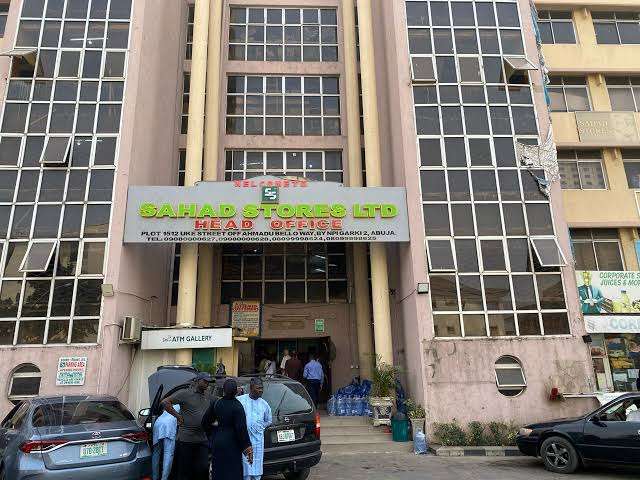
The Federal Competition and Consumer Protection Commission (FCCPC) has reopened Sahad Stores, a popular supermarket in Abuja, following its temporary closure on Friday, February 16. The closure was prompted by the store’s alleged lack of transparency in pricing practices, as revealed by FCCPC investigations. The commission accused Sahad Stores of displaying lower prices on shelves while charging higher prices at checkout, leaving customers with no choice but to pay inflated amounts. This was labelled as “violations involving misleading pricing and lack of transparency” by the FCCPC. In a statement issued by the acting Executive Vice Chairman, Adamu Abdullahi, on Saturday, it was confirmed that Sahad Stores had been reopened after a temporary closure. The FCCPC conducted random checks and found that deceptive practices persisted, prompting the initial closure under Section 18(f) of its authority. The statement highlighted the reopening on February 16, 2024, at around 7 p.m., following a commitment from Sahad Stores to implement transparent pricing practices. The FCCPC emphasized the importance of businesses displaying transparent pricing information, especially during challenging economic times. The commission reiterated its commitment to combating exploitative or misleading practices and protecting consumer rights. It urged all businesses to adhere to fair and transparent pricing practices, emphasizing potential penalties outlined in Section 115 of the Federal Competition and Consumer Protection Act (FCCPA) 2018. Providing background information, the FCCPC recalled its initial investigation on January 8, 2024, which revealed misleading pricing practices at Sahad Stores. Following this, the commission issued a summons to the store’s staff to discuss corrective measures on February 12, 2024, but they failed to appear without justification, raising concerns about potential violations under Section 33(3) of the FCCPA.
FCCPC Vows To Probe Death Of Abuja ‘One Chance’ Victim

The Executive Vice Chairman, Federal Competition and Consumer Protection Commission (FCCPC), Babatunde Irukera, has inaugurated a nine-man investigative panel to ascertain the cause of death of Greatness Olorunfemi at the Maitama District Hospital in the Federal Capital Territory, Abuja. According to Irukera, who is also a member of the panel, the Patients’ Bill of Rights would be one of the major considerations that the panel will look at to determine if anything went wrong as well as strengthening the value chain to prevent avoidable fatality. Irukera further explained that the bill was aimed at effectively addressing the issue of consumer abuse in the health care sector. He said the bill will set a transparent benchmark that empowers consumers to recognize, demand and insist that their rights be respected, while guiding providers about the scope and extent of their obligations to patients. “Under the bill, patients can demand rights to relevant information in a language and manner they understand, right to timely access to detailed and accurate medical records and available services, right to transparent billing and full disclosure of any cost and right to privacy and confidentiality of medical records. “Others are right to clean, safe and secure healthcare environment; right to be treated with respect, regardless of gender, race, religion; right to receive urgent, immediate and sufficient intervention and care in the event of an emergency and right to decline care subject to prevailing laws upon full disclosure of the consequence of such a decision. “The Patients’ Bill of Rights is really just an aggregation of rights that patients have. Different instruments whether ethical codes, legislation, global practices and responsibilities by law. So, it will certainly be one of the considerations that I expect the panel would look at in determining what went wrong if anything went wrong. “Beyond looking at what went wrong, more importantly, how to strengthen the value chain so that where preventable, we will not experience avoidable fatalities and even when fatality is not preventable, if there is anything that can strengthen the process to dignify people I am sure those will be the considerations,” he said. Former Vice-President Yemi Osinbajo had in July 2018 launched the bill, which is meant to articulate the rights of patients in the health care sector Earlier, the Mandate Secretary, Health Services & Environment, Dr. Adedolapo Fasawe, said the with seven-day ultimatum to submit their report and recommendations will ascertain the clinical status at the time of arrival of the patient Ms. Greatness Olorunfemi at the Maitama Districts Hospital and any progression to and until her death. She said the panel will determine the role of parties in the matter and her unfortunate death in order to make recommendations for similar situations like this case “This accountability may involve recommending legal actions, disciplinary measures, or policy changes to prevent similar incidents from occurring in the future,” she said. She further said, the panel will investigate, unravel and recommend on the way forward to forestall future occurrence.
FCCPC releases fresh list of approved loan Apps

*Places 20 Apps on watchlist The Federal Competition and Consumer Protection Commission (FCCPC) has released a fresh list of 154 companies it has given full approval to operate loan apps in the country, bringing the total now to 194. While the earlier published list of approved companies was taken down by the Commission for what it called ‘clean-up’, the new list just released is more detailed as it added the apps operated by each company under the approval list. The release of apps associated with the companies will allow customers to identify the companies behind the app they are using and also curtail cases of app duplicity by the companies. Aside from the companies given full approval, the Commission said 40 other companies have been issued conditional approval. This brings the total loan app companies recognized by the FCCPC to 194. Meanwhile, the Commission said it has also placed 20 loan apps suspected of engaging in unethical practices under its watchlist. These apps include those it recently requested Google to remove from the Play Store. According to the FCCPC, the loan apps that have been placed under the watchlist include Getloan, Joy Cash-Loan, Camelloan, Cashlawn, Nairaloan, Eaglecash, Moneytreefinance Made Easy, Luckyloan, and Cashme. Others are Crediting, Swiftkash, Hen Credit loan, Nut loan, Cash door, Cashpal, Nairaeasy gist loan, Swiftcash, Easynaira, Secucash, and Creditbox-Africa. The Chief Executive Officer of the FCCPC, Babatunde Irukera recently disclosed that many unapproved loan apps are still available on the Google Play Store, despite an agreement with Google that they should be removed. Irukera said the Commission would continue to engage with Google to clarify how and why apps that have not received relevant regulatory approvals are available on Google’s platform. “Under the Guidelines, only DMLs that have been subjected to regulatory scrutiny and compliance evidenced by written approval from the Commission are allowed on Playstore. The Commission notes that some DMLs have resorted to the use of Android Package Kits (APK) file formats to reach consumers outside of the Google Play Store. This appears to be a device by some of these DMLs to evade or avoid regulatory compliance,” he said. Irukera added that compliance with the Guidelines is mandatory for all DMLs regardless of whether they intend to be placed on Playstore, operate by APK file formats, or any other means for that matter. According to him, failure to comply with the Guidelines is a violation of law and renders any such operation illegal.
Infractions: Delist Easynaira, 17 others from Playstore, FCCPC tells Google

The Federal Competition and Consumer Protection Commission (FCCPC) has asked Google to immediately delete Swiftcash, Easynaira, and 16 other loan apps from the Play Store over regulatory infractions. CEO of the commission, Babatunde Irukere in a statement disclosed that the affected loan apps have been operating on the Google Play store without regulatory approval or in violation of the Limited Interim Regulatory/Registration Framework and Guidelines for Digital Lending. Other apps to be removed from the Google platform include Getloan, Joy Cash-Loan, Camelloan, Cashlawn, Nairaloan, Eaglecash, Moneytreefinance Made Easy, Luckyloan and Cashme. The removal order also affects Crediting, Swiftkash, Hen Credit loan, Nut loan, Cash door, Cashpal, and Nairaeasy gist loan. Irukera said the Commission would continue to engage with Google to clarify how and why apps that have not received relevant regulatory approvals are available on Google’s platform (Playstore). “Under the Guidelines, only DMLs that have been subjected to regulatory scrutiny and compliance evidenced by written approval from the Commission are allowed on Playstore. The Commission notes that some DMLs have resorted to the use of Android Package Kits (APK) file formats to reach consumers outside of the Google Play store. “This appears to be a device by some of these DMLs to evade or avoid regulatory compliance,” he said. Irukera added that compliance with the Guidelines is mandatory for all DMLs regardless of whether they intend to be placed on Playstore, operate by APK file formats, or any other means for that matter. According to him, failure to comply with the Guidelines is a violation of law and renders any such operation illegal. Meanwhile, the FCCPC boss said all approved digital lenders will now have to revalidate their registration by submitting their information to the Commission. “DMLS operating by any means or on any platforms whatsoever are hereby required to provide evidence of compliance with the Guidelines within five (5) days from the date of this Release. Also, all existing and approved DMLS providing digital lending services through APK file formats in addition to Playstore, are required to provide evidence that such APK operations are in compliance with the law. “All previously approved DMLs or otherwise must revalidate the information provided to the Commission by filling DL Form 01 and resubmit the same,” the Commission said in the statement released on Wednesday. The need for revalidation of registration by the DMLs may not be unconnected with the recent discovery that some of the approved lenders are also engaging in illegal practices of harassing and defaming their customers to recover their debt.