Naira Rallies Across Markets, Trades Below N900/$1 At P2P

CBN Mulls New Recapitalisation For Banks

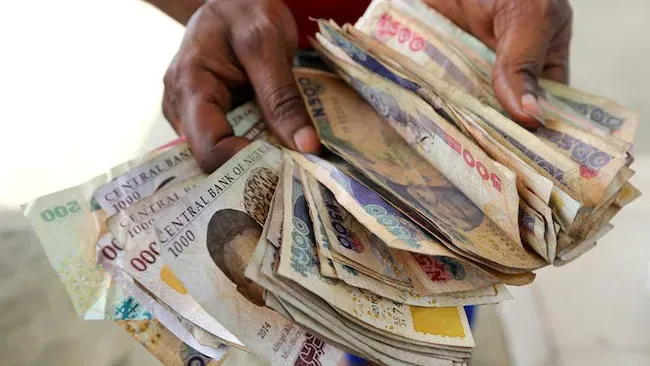
For the first time since August 2023, the exchange rate dipped below the N900 to $1 mark on peer-to-peer (P2P) platforms, including Binance, indicating a robust turnaround for the Naira. Data from the acclaimed Binance Crypto trading platform showed the exchange rate at an impressive N855 to $1. This development highlights the naira’s impressive recovery trajectory. The black market, often regarded as an unofficial gauge of the currency’s vigour – has listed exchange rates ranging from N1000 to N1,100 for $1 in cash transactions. Several black market dealers shared the sentiment that the naira’s rally might be linked to the recent influx of positive news reports, notably those highlighting the government’s progress in clearing forex backlogs. A black market operator, requesting anonymity, mentioned that the market may be transitioning from ‘panic buying’ to ‘panic selling,’ a stark reversal of the previous trend. On the official front, the Nigerian Autonomous Foreign Exchange Market (NAFEM) witnessed the Naira closing at an encouraging N776.14, marking its strongest finish since October 13th of the current year, a notable improvement from the preceding day’s close of N793.2. The breakthrough below the N900 threshold on the p2p market is being celebrated as a considerable psychological triumph by Nigerian government officials and their surrogates on social media. The Naira commenced the week trading at N1,110 last week Monday, experienced a slight dip to N1,180 on Tuesday, and then exhibited a positive trend on Wednesday and Thursday, closing at N1,175 and N1,125, respectively. The most astounding surge occurred last Friday, with the Naira selling at N950/$. Naira rebound may not be unconnected with augmented foreign exchange inflows, deft policy interventions by the Central Bank of Nigeria (CBN), and stringent measures against illegal financial activities. It would be recalled that the CBN focused on Tier 2 Nigerian banks and international banks with over 75 to 80 per cent of the foreign exchange forward contracts obligations cleared. Findings show that Citigroup ($72 million), Stanbic ($125 million), and Standard Chartered ($63 million) are among the companies that are receiving forex futures deliveries last week The FG also stated that it expected to spend $10 billion to settle FX obligations, support the country’s FX market, and stabilize the naira. Minister of Finance Wale Edun, said that forex liquidity will improve in the coming weeks. He further highlighted that discussions with sovereign wealth funds willing to invest and provide advances along with investments are in advance phases. A US multinational financial services firm, JP Morgan, on Wednesday projected that the naira would trade at N850/$ at the Investors’ and Exporters’ forex window before the end of 2023. However, the US bank said the recent efforts to restore a flexible forex regime may be sustained given the willingness to accompany it with tighter monetary conditions.

Naira Redenomination Is Speculators’ Antics

Supreme Court Affirms Old, New Naira Notes As Legal Tender 

The issue of Naira redenomination started gaining traction on social media around September 2023. It was believed that the trending misinformation was the handiwork of some drunks in a Chinese bar”, idled, and needed to ruffle the economy’s feathers. The Central of Nigeria has denied the trending malicious story. Unperturbed though, the perpetrators retreated awhile, and recently, the malicious misinformation started gaining traction on social media. One may wonder what their motive is. No soothsayer is needed to know that economic saboteurs are at work again, but to gain what? The attack on the Naira is one of the many products of corruption bedeviling the nation. Others include untamed obnoxious taste for foreign items, and utter disdain for locally produced items (often of better quality than their foreign counterparts), mono-economy, – dependence on oil, forgetting that the foundation and strength of the economy was agriculture. Monumental legacies adorned the nooks and crannies of the country that are attestation to what agriculture did before the petrol-dollar craze. Agriculture was later neglected. The scramble for fast buck from oil till date incapacitated the economy. No effort was made to diversify the economy. At a time in the history of this economy, a regime once told the world that Nigeria’s problem was not money but how to spend it. Profligacy became the order of the day. Corruption crept in, and scrambles for power to get a bite of the oil ‘cake caused successive military coups. This was in connivance with corrupt civilians. Every successive administration embarked on primitive acquisition of wealth stolen from our commonwealth. Mediocrity reigned, leadership selection became “paddy-paddy, and merit took a flight. Some past leaders sought power for power’s sake, clueless of what to do with it. The economy was on autopilot, burdened, and still suffering from those uncoordinated and rudderless inactions. The economy has been in chains while the masses bear the brunt. The descent to this ignoble state started before1986 and became a reality with the introduction of Structural Adjustment Programme (SAP). It was the onset of gradual destruction of all economic fibers of Nigeria. A leader at the time frustratingly retorted that ‘the Nigerian economy defied all economic theories.’ Little did he know that vultures and vampires had taken over the economy, and ever since the economy has been under attack. Still the only legacy we hold onto, the Naira, is under serious threat now. They took over and destroyed all the refineries, made them non-functional despite trillions of Naira spent to fix them. They destroyed the Power Holding Company of Nigeria (PHCN),and bought them over under the disguise of privatization, leaving us with what we have today – darkness. The Nigerian Airways, and Nigeria National Shipping Line are all moribund, yet investors who professed competence and business acumen bought them. They hijacked the Nigeria National Petroleum Company (NNPC) making all refineries derelict. Fuel importation and subsidy was introduced through which the economy was sucked. No past regime had the political will to end the obnoxious regime. But since this regime took the bold decision to remove fuel subsidy and harmonize the exchange rate, the economic vampires and the vultures have swooped on the economy, baring their fangs ferociously on the Naira. While other oil producing nations are reaping bountifully from oil, building infrastructure, and bettering the welfare of their citizens, Nigeria, the 6th oil producing nation in the world is wallowing in poverty, corruption, darkness, yet its leaders are unperturbed. Those calling for the redenomination of the Naira are the faceless ‘owners’of Nigeria, attacking the economy with the main aim of wrecking it to enable them to take it over. They have gained, and still gaining bountifully from every crisis of the past.They are determined to destroy the Naira. Their grouse may have been the current administration’s gut to take away the fuel subsidy. They have the war chest – hoarded foreign and local currencies, through the BDCs they own. They are rich and entrenched individuals, using their ill-gotten wealth to attack the Naira. Their call for the redenomination is to cause disaffection between the government and Nigerians, thereby bending the hands of the government backward. When in 2006 the Republic of Zimbabwe redenominated its currency at the rate of 1,000 old Zimbabwean note to one Zimbabwean dollar, it was because of hyperinflation. The newly independent nation probably got carried away with the euphoria of independence and forgot to do the real business of governance. Things spiraled out of control, the currency began to lose value because of the taste for foreign goods, no effort to develop local capacity, and the currency suffered. The Republic of Ghana that plied same route thought it had no better option than to redenominate in 2007. If it must be recalled, Ghana’s hyperinflation between 1977-1983 hovered between 116% and 123%. The reason the government gave for taking the action was to reassert the monetary sovereignty of Cedi. The government was conscious of the fact that if Ghanaians should lose confidence in the currency and begin to embrace other foreign currencies as store of value, there will be problems. Another reason it gave was years of economic decline that took a toll on the Cedi. In fact, it was to arrest the spiraling hyperinflation that threatened the country, and to also make it easy for accounting and statistical purposes. According to the authorities, they believed it would be easier to maintain by setting 10,000 Cedis to be 1 Ghana Cedi. Has the Nigerian economic situation reached what can be compared to the Zimbabwe or Ghana situation? The answer is No. The problem with Nigeria is corruption and greed, self-centeredness, obnoxious foreign taste, and disdain for what she produces. Nigerians do not eat what they produce, nor produce what they eat. What the purveyors of this malicious misinformation set to achieve is to arm-twist the government and the CBN to do their bid and redenominate to suit their criminal desires.They are presently clueless about what the government is doing going forward

Despite Slight Appreciation, Naira Still Weak – Report

Naira Plunges Across Forex Segments Amid Liquidity

In spite of the slight appreciation of the Naira at the weekend, the World Bank has listed Nigeria’s local currency as being among the worst-performing currencies in Sub-Saharan African in the first ten months of 2023. According to figures obtained from Aboki forex, the naira was bought and sold for 1,140/$ and 1,150/$1 at the weekend on the parallel section of the foreign exchange market as against the 1,310/$ on Thursday. Over the past two weeks, the Naira has been hitting new lows, as it sold as low as N1300/$ at the black market, and N848/$ at the official market. However, within the past few days, the currency has been on an upward swing, as it appreciated to N789.84/$ on Friday. But in a report by the World Bank the Nigerian Naira has posted a year-to-date depreciation of about 40 per cent, making it the weakest currency in Sub-Saharan Africa, alongside the Angolan Kwanza. Other currencies with significant losses include the South Sudanese pound which has depreciated by about 33 per cent YTD, the Burundian Franc which has depreciated by 27 per cent YTD, the Congolese Franc (18 per cent), Kenyan Shilling (16 per cent), Zambian Kwacha (12 per cent), Ghanaian Cedis (12 per cent), and Rwandan Franc (11 per cent). In the report, it highlighted that between March 2020 and June 2023, there was a widening disparity between the parallel market exchange rate and the official exchange rate. The disparity widened to as much as 80 per cent in November 2022 and dropped to 60 per cent in June 2023. The prioritization of strategic sectors and the imposed price ceilings and trade restrictions pushed transactions to the parallel market, which started to account for a large share of the foreign exchange transactions in the country, including for remittances, tourism, and exports of non-oil products. After the unification and liberalization of the exchange rates in June 2023, the NAFEX rate converged to the parallel one, closing the gap. However, resistance toward the increasing pressure on the Nigerian naira coupled with limited supply of FX at the official window has led to the reemergence of the parallel market premium. Figures obtained from the Central Bank of Nigeria on movement of foreign reserves showed that the country’s external reserves recorded $76.82m accretion in one week, after it moved up from $33.249bn on October 19, 2023 to $33.326bn as of the end of October 26, 2023. It had earlier lost $841.75m in three months after it fell from $34.07bn as of July 7, 2023, to $33.23bn as of October 5, 2023. Meanwhile, an economist and Chief Executive Officer, Centre for the Promotion of Private Enterprise, Dr Muda Yusuf, attributed the naira appreciation to the Supreme Court judgment that brought finality to the litigation around the presidential election. He said the judgment removed uncertainty in the economy. “The pronouncement that the President made about efforts to boost the liquidity in the forex market may have also affected the level of confidence and influenced expectations because if people have expectations that liquidity will improve and the naira will appreciate, they would quickly begin to offload the dollars they have at a lower rate. “We need to seize the opportunity to push down the demand for foreign goods. We must reduce the demand for the dollars. We can have the naira appreciate better.”

Naira Hits All-Time N1065/$ Low, As BDC Operators Seek Urgent Reforms

Naira To Reach ‘Fair Value’ Of N750/$ By Year’s End – FG

The nation’s currency, the Naira, experienced a historic low on Wednesday in the parallel market, with the unofficial exchange rate reaching an unprecedented N1065 to the US dollar. On Tuesday, the Naira closed at N1060 to the dollar on the unofficial market, driven by a shortage of dollars, leading to a rapid depreciation of the currency. Additionally, the Naira weakened by 8.9 percent to N848.12 against the dollar in the official Investors and Exporters (I&E) forex market on Tuesday, according to data from FMDQ. Foreign exchange trades took place within the range of N700 to N981 per dollar, with the dollar’s trading volume surging to $133 million, according to an investment note by the Lagos-based investment banking firm Chapel Hill. The Central Bank of Nigeria (CBN) had relaxed foreign exchange controls in mid-June following criticism of monetary policy measures by President Bola Tinubu and a pledge to end the multiple exchange rate regime. The official rate briefly aligned with the parallel market, plunging 40 percent, but the spread began to widen again. Until Tuesday, the official rate remained near N800 to the dollar, while the street rate surpassed N1,000 to a dollar. Foreign exchange operators attributed the Naira’s depreciation to persistent illiquidity in the market in the absence of central bank intervention. The widening premium between the official rate and the black market is a sign that the exchange rate has not found a clearing price. The Chairman of the Association of Bureau de Change Operators in Nigeria (ABCON), Aminu Gwadabe, explained that the Naira’s rapid devaluation is due to significant liquidity driving up demand for unavailable dollars in the market. He also pointed to uncertainties, loss of public and international confidence in the economy, rising inflation, and a low interbank market interest rate, which have reduced the appeal for alternative investments. Gwadabe recommended abolishing the I&E window and allowing willing buyers and sellers to dictate price mechanisms with legislative backing.

FX Policy: LCCI Tasks CBN On Creative Financing Options

No Plans To Re-Denominate Naira, Says CBN

The Lagos Chamber of Commerce and Industry (LCCI) have urged the CBN to adopt creative financing options for clearing the short to medium-term backlog of foreign exchange. LCCI noted that the new FX policy of the CBN unbanning the 43 items that were excluded from accessing FX at the official market is a market-friendly step towards unifying the exchange rates and is expected to curtail inflationary pressures in the short term. The body also said the policy change was expected to reduce the demand pressure on the parallel market and ensure there is a gradual convergence in FX market rates. The President/Chairman of Council, LCCI, Asiwaju Michael Olawale-Cole, said this in a statement at the weekend, adding that the policy would promote orderliness and professional conduct by all market participants to ensure market forces determine exchange rates on a willing buyer- willing seller principle. “The Chamber recommends that the CBN adopt creative financing options for clearing the short to medium-term backlog and establish a mechanism to address forex unification under the current system. “The Chamber believes the authorities must pursue the right monetary policy reforms to improve the investment climate and boost investor confidence. We call on the CBN to ensure transparency and accountability in banks’ foreign exchange dealings at the Investors & Exporters window”. Recall that the CBN recently lifted the forex ban on 43 items and also promised to intervene in the FX market from “time to time”. The apex bank had in 2015 restricted the items from accessing FX from the I&E window, saying they were “not valid for foreign exchange and could be produced in the country. Items affected include rice, cement, palm kernel, meat and processed meat products, poultry, soap, and cosmetics among others. But in a statement, the bank’s Director of Corporate Communications Isa AbdulMumin said the ban has been lifted. “As part of its responsibility to ensure price stability, the CBN will boost liquidity in the Nigerian Foreign Exchange Market by interventions from time to time. As market liquidity improves, these CBN interventions will gradually decrease,” the Thursday statement read. “As part of its responsibility to ensure price stability, the CBN will boost liquidity in the Nigerian Foreign Exchange Market by interventions from time to time. As market liquidity improves, these CBN interventions will gradually decrease.” “The CBN has set as one of its goals the attainment of a single FX market. Consultation is ongoing with market participants to achieve this goal,” CBN added.

Diminishing Naira Will Push Inflation To 18-Year High Of 27.67% – Rewane

Diminishing Naira Will Push Inflation To 18-Year High Of 27.67% - Rewane

Chief executive Officer of Financial Derivatives Company Limited, Bismarck Rewane has projected that inflation is set to rise to 27.57 per cent due to a weak naira. This is the ninth consecutive rise in inflation rates.Analysts say it would represent the highest figure ever reached since September 2005.“Nigeria’s headline inflation is expected to increase again in September, rising to 27.57 per cent from 25.80 per cent in August. “Price increases were most notable in the food basket, predominantly commodities with high import content such as flour, semovita, noodles, and sugar. “With prices rising, fingers are pointing towards the exchange rate as the major inflation culprit. The naira crossed the psychological threshold of N1,000/$ in the parallel market, pushing up imported inflation despite the relative stability in global food prices. The Food and Agricultural Organisation of the United Nations (FAO) food price index was relatively flat at 121.5 points (pts) in September.”, said Rewane. Apart from the weak naira, drivers of inflation includes higher logistics costs and money supply growth (36 per cent year-on-year (y-o-y), saying the price of diesel, the major fuel used by trucks for logistics and distribution purposes, surged to a record high of N1,030/litre during the period. “Notably, month-on-month inflation, which is a more current measure of price movement, is expected to decline marginally to 2.78 per cent from 3.18 per cent in August, largely due to the harvest season impact. This suggests that inflation is likely to reach an inflection point and could begin to taper in the first quarter of 2024.

Naira Weakens Despite CBN’s Intervention

Naira Plunges Across Forex Segments Amid Liquidity

Since the unification of all the official foreign exchange (FX) windows, the Naira has continued to depreciate against the US dollar, down by 39.6 per cent to N765.83/$ as of 11 October 2023 from N462.88/$ at the I&E Window. Based on the half-year financial markets report of the Central Bank of Nigeria, it has maintained its intervention in the foreign exchange market in an attempt to alleviate demand pressures and ensure exchange rate stability. A total of $6,439.33 million was sold at the foreign exchange market made up of spot sales of $1,557.47 million and forward sales of $4,881.86 million. The spot sales comprised $612.41 million sold at the inter-bank Secondary Market Intervention Sales (SMIS) window, $455.31 million sold to Small and Medium Enterprises (SMEs), $441.75 million for Invisibles, and $48.00 million sold at the I&E window while the bank purchased a total of $655.53 million in the FX market. However, the shocks of the policy have been more pronounced at the parallel market leading to a steep depreciation of the Naira to N1020/US$ on 10 October 2023. With little control over the depreciation of the nation’s currency, the then acting governor of the Central Bank of Nigeria (CBN), Mr. Fola Shonubi, announced plans to put in place new policies that would guide the dealings of FX to boost supply in the market. Apparently, the measures put in place have not been effective as demand for FX continues to rise amidst an acute shortage of supply. “We have always argued that while we believe the unification of the various FX rates is a pro-market policy that will be positive for the economy in the long term, the short to medium-term impact will be hard too hard on the average consumer. “A focus on rate convergence without structural reforms to increase the supply of FX will be a case of treating the symptoms while ignoring the underlying cause of the problem which is an acute shortage of supply amidst a growing demand for FX. Meanwhile, while crude oil sales and Foreign Portfolio Investments (FPIs) are two major sources of FX that have declined significantly, Oil production remains depressed, reported at 1.57 mbpd in September (highest so far this year) and are yet to see any significant foreign capital inflows. According to the Nigerian National Petroleum Company Limited (NNPCL), between September 30 and October 6, 128 crude oil theft incidents were recorded across the oil-producing areas of the Niger Delta. In the specific timeframe mentioned, there were numerous illicit activities in the oil sector. These included 17 cases of unauthorized connections, 27 illegal refineries, 11 infractions related to vessel tracking systems (AIS), and 49 instances of wooden boat arrests.

Chinese Yuan Gains Strength, Reaches 7.1856 against US dollar

Chinese Yuan Gains Strength, Reaches 7.1856 against US dollar

The Chinese currency, renminbi, also known as the yuan, exhibited strength against the US dollar on Monday as its central parity rate was set at 7.1856, marking an increase of 27 pips. This adjustment was reported by the China Foreign Exchange Trade System. In China’s spot foreign exchange market, the yuan is granted a fluctuation range of two percent in either direction from the central parity rate during each trading day. The determination of the central parity rate for the yuan against the dollar relies on a weighted average of prices provided by market makers before the commencement of the interbank market’s operations on each business day.

Naira loses, exchanges at N773.42 at investors, exporters window

Naira loses, exchanges at N773.42 at investors, exporters window

The naira depreciated against the dollar on Wednesday as it exchanged at N773.42 at the Investors and Exporters window. It lost by 0.35 per cent compared with N770.72 for which it exchanged for the dollar on Tuesday. The open indicative rate closed at N781.49 to the dollar on Wednesday. A spot exchange rate of N799.90 to the dollar was the highest rate recorded within the day’s trading before it settled at N773.42. The naira sold for as low as N738 to the dollar within the day’s trading. A total of 169.07 million dollar was traded at the investors and exporters window on Wednesday.

Naira appreciates 4.31% at investors, exporters window

Naira records 0.22% appreciation at Investors, Exporters Window

On Friday, the Naira displayed a remarkable appreciation of 4.31% against the dollar at the Investors and Exporters window, reaching an exchange rate of N743.07. This significant gain was in contrast to the previous day’s rate of N776.50. The open indicative rate also closed favorably at N782.28 to the dollar on the same day. During the day’s trading, the spot exchange rate peaked at N799 to the dollar before ultimately settling at N743.07. Interestingly, the Naira was observed to have been sold as low as N475 to the dollar within the same trading session, indicating some fluctuations in the market. The Investors and Exporters window witnessed substantial activity, with a total of $121.08 million being traded on Friday. This volume of transactions reflects the ongoing dynamics in the foreign exchange market and the interests of investors and exporters in Nigeria’s currency market. The Naira’s gain at the Investors and Exporters window indicates some positive sentiment and demand for the local currency in recent trading activities. However, it is essential to keep an eye on market conditions and various economic factors that could influence future fluctuations in the exchange rate. As with any currency, the Naira’s value can be influenced by factors such as the country’s trade balance, foreign direct investments, foreign reserves, and government monetary policies. A stable and competitive exchange rate is crucial for the Nigerian economy to attract foreign investments, ensure price stability, and enhance international trade. Overall, market participants, investors, and policymakers will continue to closely monitor the Naira’s performance in the coming days to gauge the currency’s strength and stability in the face of economic challenges and global market trends.