Readiness 2030: EU agrees on €150bn defense loan fund

Further to its new defense strategy codenamed Readiness 2030, EU member countries have agreed to establish a loan fund worth 150 billion euros (169.5 billion dollars). The fund shall be deployed to finance arms purchases, according to a report by The Financial Times on Monday, citing officials familiar with the decision. The fund will be backed by the national budgets of EU member states. While member countries had already expressed support for the initiative, the agreement is expected to be formally signed on Wednesday. On March 19, the European Commission unveiled a new defense strategy, initially called ReArm Europe, later renamed Readiness 2030, aiming to raise EU defense spending to 1.5 per cent of GDP. The strategy’s estimated cost is 800 billion euros over the next four years, with 650 billion euros to come from national budgets and the remaining 150 billion euros through loans. To support this plan, the European Commission would offer budgetary concessions to member states and reallocate some regional development funds toward defense spending. The move came amid rising tensions in Europe. Russia had consistently raised concerns about NATO’s growing military presence near its western borders, calling it a threat to regional stability. The Kremlin had stated that while Russia posed no threat to other nations, it would respond to actions it considered potentially dangerous to its security. In a 2024 interview with U.S. journalist Tucker Carlson, Russian President Vladimir Putin reiterated that Moscow had no intention of attacking NATO countries. He accused Western leaders of exaggerating the Russian threat to distract from domestic issues.
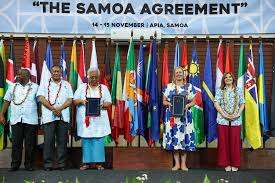
76 Countries Including Nigeria Sign Controversial Samoa Agreement (Full List)

The Samoa agreement focuses on economic development, security, environment, migration, mobility, and climate change other areas include investment opportunities, sustainable development, and mutually beneficial cooperation, among others. The Samoa agreement has been signed by 79 countries across the world to address various aspects of the economy. The objective of the Samoa agreement is to serve as the legal framework for EU relations with these 79 countries. These include 48 African, 16 Caribbean, and 15 Pacific countries. The agreement covers 2 billion people and aims to strengthen the capacity of the EU and the ACP (African, Caribbean, and Pacific countries) to address global challenges together. Here are the full list of countries to benefit from the Samoa Agreement: African Countries: 1. Algeria 2. Angola 3. Benin 4. Botswana 5. Burkina Faso 6. Burundi 7. Cameroon 8. Cape Verde 9. Central African Republic 10. Chad 11. Comoros 12. Congo 13. Côte d’Ivoire 14.Democratic Republic of the Congo 15. Djibouti 16. Egypt 17. Equatorial Guinea 18. Eritrea 19. Eswatini 20. Ethiopia 21. Gabon 22. Gambia 23. Ghana 24. Guinea 25. Guinea-Bissau 26. Kenya 27. Lesotho 28. Liberia 29. Libya 30. Madagascar 31. Malawi 32. Mali 33. Mauritania 34. Mauritius 35. Morocco 36. Mozambique 37. Namibia 38. Niger 39. Nigeria 40. Republic of the Congo 41. Rwanda 42.São Tomé and Principe 43. Senegal 44. Seychelles 45. Sierra Leone 46. Somalia 47. South Africa 48. South Sudan 49. Sudan 50. Tanzania 51.Togo 52. Tunisia 53. Uganda 54. Zambia 55. Zimbabwe Caribbean Countries: 1. Antigua and Barbuda 2. The Bahamas 3. Barbados 4. Belize 5. Dominica 6. Dominican Republic 7. Grenada 8. Guyana 9. Haiti 10. Jamaica 11. Saint Kitts and Nevis 12. Saint Lucia 13. Saint Vincent and the Grenadines 14. Suriname 15. Trinidad and Tobago Pacific Countries: 1. Cook Islands 2. Fiji 3. Kiribati 4. Marshall Islands 5. Micronesia 6. Nauru 7. Niue 8. Palau 9. Papua New Guinea 10. Samoa 11. Solomon Islands 12. Tonga 13. Tuvalu 14. Vanuatu
EU Commits €500m To SGBV Fight In 5 Years

The European Union says it has committed the sum of 500 million Euros over a five-year period to address Sexual and Gender Based Violence globally. In his goodwill message EU Ambassador to Nigeria and ECOWAS, Samuela Isopi, who said this at the Strategy and Knowledge Sharing Workshop on SGBV for First-Time First Ladies in Nigeria, added the money is part of the body’s commitment towards addressing SGBV. She said, “Our two flagship SGBV programmes; the Spotlight Initiative and the Rule of Law and Anti-corruption (RoLAC) Programme, have been quite instrumental in advancing this agenda. With a global envelope of 500 million Euros, the Spotlight Initiative is a clear demonstration of the EU’s commitment towards addressing SGBV. As the Spotlight Initiative comes to an end next month, a new SGBV programme is now in the pipeline, and we hope implementation can begin in 2024. While appreciating the intentional effort being put into the SGVB fight in Nigeria, Isopi urged the First ladies to continue to drive the fight of reducing SGVB to its barest minimum. Emphasising the importance of timely, coordinated response to the SVGB scourge, the Ambassador said it would require fundamental actions that guarantee the safety and security of vulnerable women and children not only in Nigeria but across the world. “We urge the government to take ownership by allocating more funding and ensuring that the SGBV designated institutions have all they require to address the needs of the people. Sexual Assault Referral Centres and specialised SGBV courts are best practices, and as the new administration both and federal level begin to settle in their various roles, we need to set the SGBV agenda so that they begin to give this the much-needed focus that it deserves. “We hope that this meeting serves to further prioritise SGBV intervention as well as raise public awareness on what we consider to be one of the most heinous crimes in our society. We also hope that this meeting will explore ways to continue raising a call to action that asks everyone to take concrete steps to question, call out, and speak up against acts of gender-based violence (GBV). In her keynote remarks, UN Women Representative in Nigeria, Ms. Beatrice Eyong noted that increasing cases of violence against women has become a huge concern. According to her, 1 in 3 women have experienced violence. “Globally, an estimated 736 million women—almost one in three—have been subjected to physical and/or sexual intimate partner violence, non-partner sexual violence – 26% of women aged 15 and older have been subjected to intimate partner violence,” Eyong said. Sustainable Development Goal (SDG) 5, seeks to achieve gender equality and women’s empowerment through addressing violence and all forms of discrimination against women and girls. She said there was a need to change the approach to addressing SGVB in order to achieve results. “It is critical for us to adopt a perpetrators-centred approach in holding people accountable for SGBV and survivor-centred approaches in reaching out to survivors of SGBV. I acknowledge that the NGWF has been especially instrumental in championing essential services. Excellencies, we call on your support to ensure that these services which are a lifeline for survivors and their communities remain invested in. “These violations also impede on the dignity, sanctity of life and fairness that are at the core of the international and national legal frameworks to which Nigeria subscribes. Sexual and Gender-Based Violence and harmful practices, in all their forms, violate the core principles of the United Nations Declaration of Human Rights, adopted by the UN General Assembly in 1948, the Convention on the Elimination of All Forms of Discrimination Against Women (CEDAW), adopted by the UN General Assembly in 1979, the Maputo Protocol, adopted by the African Union in 2003, the 1999 Constitution of the Federal Republic of Nigeria (As Amended) and the Violence Against Persons Prohibition (VAPP) Law signed into 2015 and already domesticated in your various states Excellencies with strong hope for Kano to join soon,” she added. She urged the First Ladies to sustain advocacy on the Gender Equal and Opportunities Bill that not only addresses economic violence but also advocates for affirmative action and inclusion of women.