Reps Summon Dangote Refinery, NMDPRA Over Downstream Sector Tensions

(l-R): Faruk Ahmed, Aliko Dangote, Hon Ikenga

Abuja — The House of Representatives Joint Committee on Petroleum Resources has invited the Dangote Petroleum Refinery and the Nigerian Midstream and Downstream Petroleum Regulatory Authority (NMDPRA) to an emergency meeting following a dispute that threatens stability in Nigeria’s downstream petroleum sector. Chairman of the committee, Ikenga Ugochinyere, disclosed this after an emergency meeting held in Abuja on Monday, warning that escalating tensions between key industry players could undermine recent gains achieved in fuel supply, pricing, and regulation. Ugochinyere said the committee’s intervention had become necessary as Nigeria continues efforts to stabilise the petroleum market in the post-fuel subsidy era. “We are guarding the hard-won stability in the downstream sector. Sustainable solutions require that we identify and address the critical issues, which is why we have invited the leadership of Dangote Refinery and the NMDPRA,” he said. The lawmaker explained that the renewed tension followed concerns and allegations raised by Africa’s richest man, Alhaji Aliko Dangote, against the petroleum regulator. He noted that several petitions submitted to the committee relate to the issuance of import licences and questions surrounding the capacity of domestic refineries to meet Nigeria’s daily petroleum consumption. According to Ugochinyere, the committee will comprehensively examine all outstanding matters when both the refinery and regulatory authorities appear before lawmakers. He stressed that resolving the disagreement is critical to maintaining investor confidence and ensuring uninterrupted fuel supply amid ongoing reforms in Nigeria’s oil and gas sector.

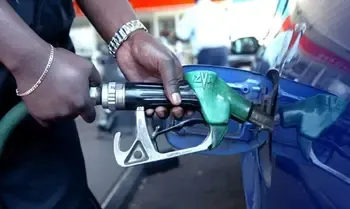
Petrol Increased To N626.21 In September- NBS

Petrol Increased To N626.21 In September- NBS

The National Bureau of Statistics (NBS), says the average retail price of a litre of petrol increased from N191.65 in September 2022 to N626.21 in September 2023. It made the declaration in its Petrol Price Watch for September 2023 released in Abuja on Saturday. It stated that the September 2023 price of N626.21 represented a 226.75 per cent increase over the price of N191.65 recorded in September 2022. “Comparing the average price value with the previous month of August 2023, the average retail price increased by 0.08 per cent from N626.70. “On state profiles analysis, Taraba paid the highest average retail price of N665.56 per litre, followed by Borno and Benue at N657.37 and N641.29, respectively. “Conversely, Rivers, Delta and Jigawa paid the lowest average retail prices at N602.55, N605.88 and N617.42, respectively,’’ it stated. Analysis by zones showed that the North-East recorded the highest average retail price in September 2023 at N638.33, while the South-South recorded the lowest at N618.47 per litre. The NBS also stated in its Diesel Price Watch Report for September 2023 that the average retail price was N890.80 per litre. It explained further that the September 2023 price of N890.80 per litre amounted to a 12.77 per cent increase over the N789.90 per litre paid in September 2022. “On a month-on-month basis, the price increased by 4.27 per cent from the N854.32 per litre recorded in August 2023,’’ it added. On state profile analysis, the report said the highest average price of diesel in September 2023 was recorded in Kano at N967.78 per litre, followed by Anambra at N950.95 per litre and Niger at N950.55 per litre. On the other hand, the lowest price was recorded in Bayelsa at N840.16 per litre followed by Katsina at N840.55 per litre and Rivers at N840.82 per litre. In addition, the analysis by zones showed that the South-East has the highest price at N918.06 per litre, while the South-South recorded the lowest price at N863.97 per litre. 

Low carbon hydrogen to define energy transition – GlobalData

Low carbon hydrogen to define energy transition - GlobalData

GlobalData, a leading data and analytics company, has said that low-carbon hydrogen is gaining traction as a critical component to achieving energy transition and long-term decarbonization goals. Experts say the hydrogen market has progressed rapidly in recent years due to its growing application in industries such as transport, industrial, energy, aerospace, defense, and construction sectors. According to GlobalData, the global demand for pure hydrogen stood at nearly 74MMT per year in 2021, of which low carbon hydrogen accounted for a minuscule share of 0.89%. Low-carbon hydrogen, including green hydrogen, has generated tremendous interest as a sustainable option to achieve long-term climate goals or net-zero targets. Power Analyst at GlobalData Srinwanti Kar, noted that “Various countries such as the US, Canada, Germany, Spain, France, Australia, and India have framed hydrogen roadmaps, strategies, mandates, and targets to develop a hydrogen economy in general and low carbon in particular. These plans are focused mainly on scaling up hydrogen production capacity, reducing costs, and bolstering supply chain infrastructure.” The company in its latest report “Low-Carbon Hydrogen Market Report, Update 2023 – Global Market Outlook, Trends, and Key Country Analysis,” observes that during 2021-2022, the low-carbon hydrogen sector took the first big strides as a number of projects were announced as part of the strategy towards energy transition. Kar continues: “Significant policy support and governments’ commitment to decarbonization is spurring investments in the hydrogen space. The momentum that has been built along the entire value chain is accelerating cost reduction in hydrogen production, retail, and end-applications.” In November 2022, at COP27, the World Bank Group announced the formation of the Hydrogen for Development Partnership (H4D), a new global project to increase the deployment of low carbon hydrogen in developing countries. “North America leads the market in terms of low carbon hydrogen active production capacity, followed by the Middle East and Africa, Europe, and Asia Pacific. As of February 2023, the global low carbon hydrogen production capacity was 1,698ktpa (Kilo Tonnes Per Annum), which is anticipated to reach 1,11,326ktpa in terms of high case scenario and 66,321ktpa in terms of low case scenario by 2030. Suitable planning at the funding level, constructive regulatory framework, and proper infrastructure may facilitate and accelerate the pace of projects,” Kar added. As of February 2023, a total of 152mtpa (Metric Tonnes Per Annum) of the low carbon hydrogen capacity is in the pipeline, of which 1.9mtpa is in construction, 136.7mtpa in feasibility, and 6.4mtpa in front end engineering design (FEED) stage.