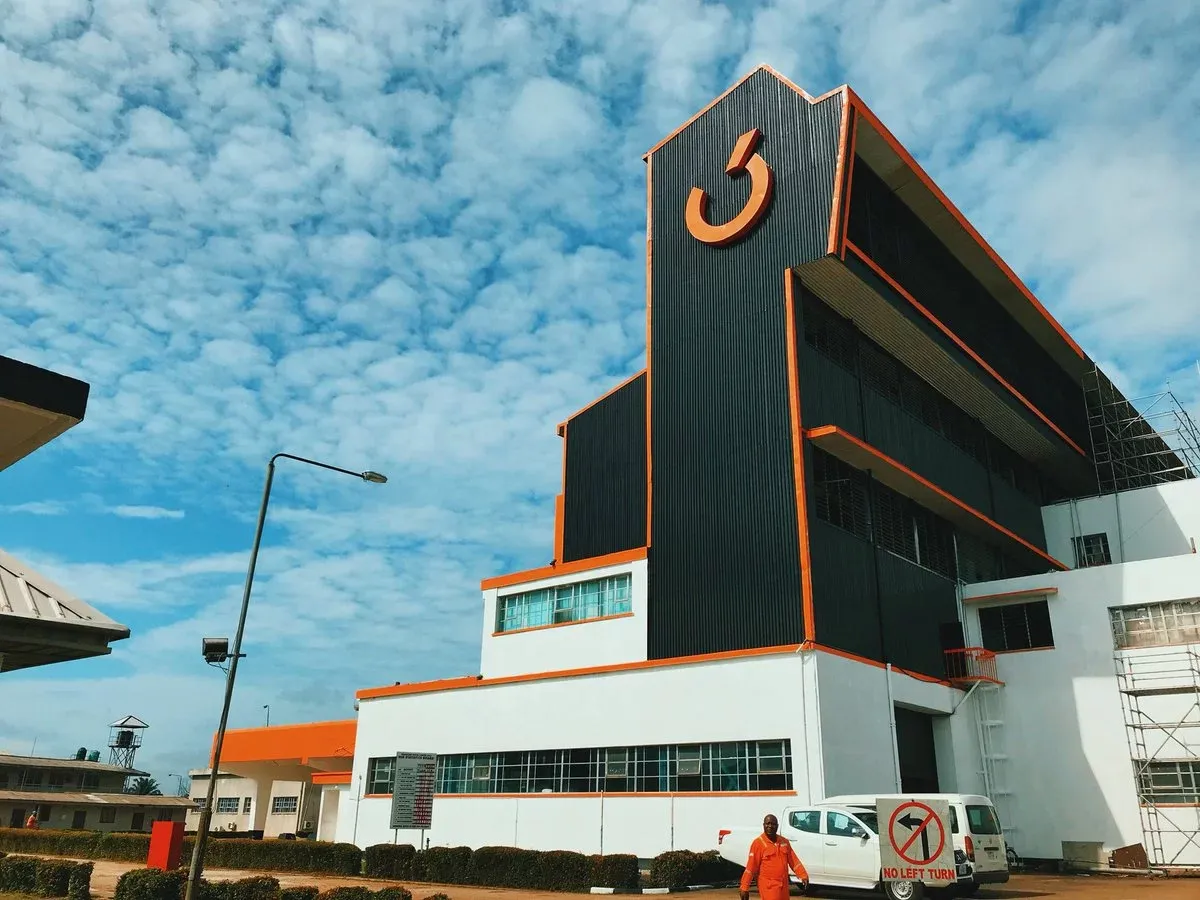
Kaduna Refinery Ready By Q4 2024, Lokpobiri Assures

The Minister of State for Petroleum Resources (Oil), Senator Heineken Lokpobiri, has revealed that the ongoing quick-fix project at the Kaduna Refinery and Petrochemicals Company Limited, KRPC, will be back on stream by the end of 2024. The Minister disclosed this during an inspection tour of Kaduna Refinery & Petrochemicals while assessing the progress of work on the ongoing quick-fix project of the Refinery in Kaduna on Saturday. A statement signed by the NNPC Limited management on its official X handle, formerly Twitter, Lokpobiri said he is confident that the refinery will be restreamed by the end of 2024, considering the “significant level of progress” he has witnessed on the tour. The Minister, who observed that he would continue to hold key players involved in the rehabilitation process of the nation’s refineries accountable, also pledged Federal Government support in ensuring the timely delivery of the project. According to the Minister, there is an urgent need to get the refinery back on stream for the nation’s economic prosperity and energy security, which are both paths to sustainable development. Speaking earlier, Group Chief Executive Officer of NNPC Ltd., Mele Kyari, reassured the minister that the fuel plant at the refinery will be delivered by the end of 2024. Kyari said that all hands are on deck to bring the refinery back on stream, stressing that the contractor has since mobilized to the site and the needed equipment for the quick-fix activities is already in place. “We are very confident that we will get the appropriate financing to get to the end of it, and ultimately, we will start to deliver value to Nigerians again. We plan the quick fix for 60,000 barrels per day so that we can start making money from this plant and we can continue the other part of the refinery to bring it up to its full-fledged capacity. This will also tally with the completion of the Build, Operate, and Transfer (BOT) on the pipeline so as to have a reliable pipeline delivery infrastructure,” the GCEO stated. The inspection tour, which was preceded by the 14th refineries rehabilitation steering committee meeting, also had in attendance NNPC Limited’s Executive Vice President, Downstream, Adedapo Segun; Executive Vice President, Upstream, Oritsemeyiwa Eyesan; Managing Directors of the three refineries; and a host of other members of the Committee.
FG Inaugurates Lagos P-CNGi Pilot Conversion Centres

The Federal Government has inaugurated a Compressed Natural Gas (CNG) vehicles pilot conversion centre in Lagos State, through the Presidential-CNG Initiative (P-CNGi). Mr Micheal Oluwagbemi, Chief Executive Officer of P-CNGi, while speaking at inauguration of the FEMADAC Station on Saturday, described the step as significant development. Oluwagbemi said the CNG centre would bring more environmentally sustainable and economically viable future for Nigeria. The facility is situated at KM 42, Lekki-Epe The P-CNGi Steering Committee has announced that seven CNG conversion centres have been established in the country. He said the initiative had also at the weekend handed over converted buses to State House in Abuja. Oluwagbemi said the event was immense significance for Nigerians and the global movement towards responsible energy choices. “Today, as we officially open the Lagos Conversion Centre, we go beyond the inauguration of a facility; we extend a hand to a greener, more sustainable, and affordable future. “We are not just changing how we fuel our vehicles; we are changing lives, one job at a time. “The commissioning of the first of Lagos P-CNGi Pilot Conversion Centres is historic, as it is the first of many such facilities planned under the P-CNGi initiative,” Oluwagbemi said. The engineer said that the initiative with the theme: “Energy Revolution: Powering Tomorrow, Today,” represented Nigeria’s commitment to transitioning to cleaner and more affordable energy solutions. The P-CNGi chief executive officer said that CEO said that the conversion centre was not only a symbol of Nigeria’s dedication to environmental responsibility, but also a beacon of hope for its citizens. He said that the initiative would create jobs and greener opportunities. “More than 1,000 of such centres are planned nationwide in the next few years, with 55,000 conversions planned under the Palliative Program that have kicked off, designed to reduce the cost of transportation, especially mass transit for poor Nigerians. “This works by collaborating with private sector is to expand the conversion centre network of Nigeria from seven to at least 70, while creating over 2,000 jobs converting vehicles from PMS to CNG Bifuel that runs cheaper, cleaner and better. “By embracing Compressed Natural Gas (CNG) technology, the initiative addresses the twin challenges of sustainability and fiscal responsibility, which have become integral in the modern world. “This initiative aligns with President Bola Tinubu’s commitment to easing the impact of fuel subsidy removal on Nigerians by reducing energy costs,” Oluwagbemi said. According to him, the conversion of vehicles to CNG is not just a transition to cleaner energy, it is a promise to generate employment opportunities and stimulate economic growth. The CEO said that the inauguration aligned with the overarching goal of P-CNGi to foster innovation in the energy sector, ultimately benefitting the people of Nigeria. He added: “In a world where environmental consciousness and responsible energy choices are paramount, P-CNGi’s efforts underscore Nigeria’s commitment to leading this global movement. “The initiatives programme director aptly noted, “Challenges will emerge, but with our unwavering commitment, innovative spirit, and collaborative efforts, we are poised to overcome them.”
Don’t Expect Stable Power After Vandalizing Electricity Grid, TCN Tells Nigerians

The Transmission Company of Nigeria (TCN) has issued a stern warning to Nigerians, stating that the persistent vandalism of its installations has put the stability of the national electricity grid in jeopardy. In a statement posted on its official social media account, the TCN expressed deep concern over the alarming rate at which its facilities are being vandalized across the country. The company firmly stated that Nigerians should brace themselves for an unstable electricity grid if this destructive trend continues. The TCN did not mince words when it criticized the general public for allowing vandals to run rampant, emphasizing that the consequences of this negligence would directly impact grid stability and expansion. TCN said: “The rate of vandalism of TCN’s installations nationwide is becoming alarming. We cannot eat our cake and still have it. We cannot continue to vandalize power infrastructure or look the other way when such activities are ongoing and expect grid stability and expansion.” This warning comes in the wake of concerning reports revealing the extent of the damage caused by vandals. Between January 2022 and September 2023, a total of 108 power transmission towers were destroyed. Additionally, in May, nine TCN transmission towers were vandalized in Ogun State. These incidents have occurred in various regions, including Benin, Abuja, Lagos, Enugu, and Kano. Notably, some of these attacks have been attributed to the Boko Haram terrorist group, further highlighting that the issue extends beyond mere theft and accidents, constituting a deliberate act of sabotage against the nation’s power infrastructure.
Transcorp’s generating capacity to hit 1200MW by December

Transcorp Group has said it hopes to raise Nigeria’s power capacity by 300MW by the end of 2023. Speaking on AriseTV, Group Chief Executive Officer of Transcorp Group, Owen Omogiafo, said that resounding the gas challenge will enable the company to achieve its milestone. According to the Transcorp GCEO, despite the gas and transmission challenges, the company still witnessed an impressive improvement in its power business in the first six months of this year (2023). “Transcorp has an installed generation capacity of nearly 2000MW, and in the first half of the year, we focused greatly on improving our mechanical available capacity and we took our capacity to about 900MW. “There were still some challenges with gas and transmission, but notwithstanding that, we saw a great improvement in our power business. Going by the strategy we are working with now, by year end, we will have about 1,200MW of available capacity.” On the Abuja Electricity Distribution Company (AEDC) acquisition, Omogiafo explained that Transcorp as part of a consortium that acquired a 60 per cent stake in AEDC was driven by the need to drive Nigeria’s economic recovery as no industry or sector can operate without power. Experts have opined that lack of a stable power supply continues to be a drawback to the country’s development. Manufacturers Association of Nigeria (MAN) has said that its members spent the sum of N144.5 billion on alternative power sources in 2022. She noted that the power sector is critical if the country’s real sector is economic growth.