Lamido’s N712m Money Laundering Case: HEDA hails EFCC’s appeal

Lamido's N712m Money Laundering Case: HEDA hails EFCC’s appeal

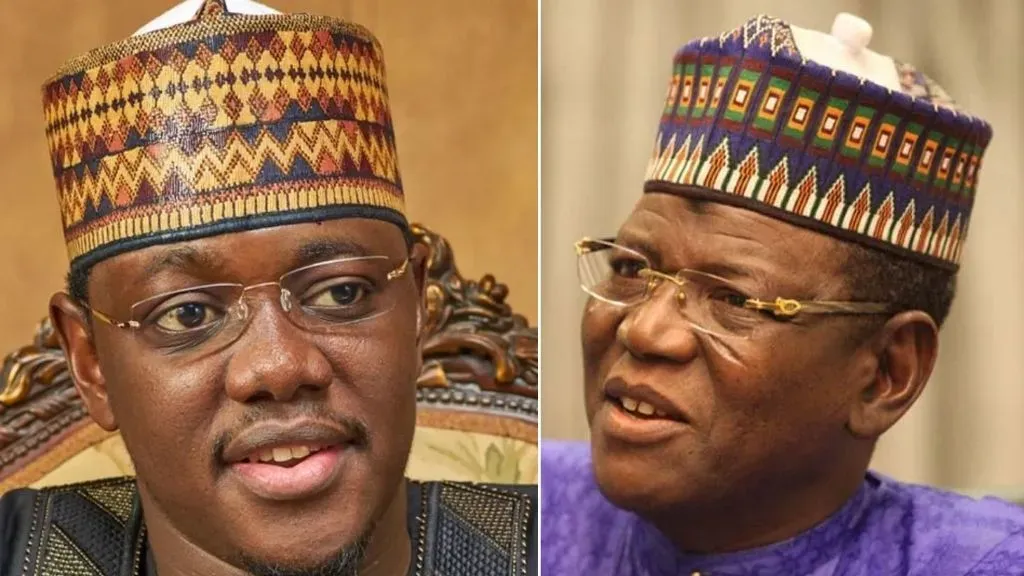
Anti-corrupt group, Human and Environmental Development Agenda (HEDA Resource Centre) has commended the Economic and Financial Crimes Commission (EFCC) on its appeal of the recent judgment of the Court of Appeal, Abuja judicial division. The Court discharged the former Governor of Jigawa State, Alh. Sule Lamido and his two sons, Aminu and Mustapha Lamido of corruption and money laundering charges on the grounds that the prosecution had filed the charge at the wrong judicial division of the Federal High Court. Earlier, the EFCC had charged the former Governor and his two sons with money laundering offenses at the Abuja judicial division. After presenting six witnesses, the anti-graft agency closed its case, and the defendants subsequently filed a no-case submission. However, Justice Ojukwu of the Federal High Court dismissed the no-case submission, ruling that the defendants had a case to answer. Dissatisfied with the ruling, the defendants decided to appeal to the Court of Appeal. A panel of three jurists, led by Hon. Justice Adamu Waziri, reviewed the case and concluded that the money laundering charge should have been filed in Jigawa State, where the alleged offenses were committed. Based on this finding, the Court of Appeal discharged the defendants. In response to the judgment, HEDA Resource Centre’s Chairman, Olanrewaju Suraju, expressed concerns, citing a precedent set by the Supreme Court in the case of Dele Belgore. In the Belgore case, the Supreme Court also overturned a no-case submission ruling by the Federal High Court. However, unlike the Lamido case, the Supreme Court ordered the case to be re-filed and prosecuted in the appropriate judicial division, which was Kwara State. Suraju also highlighted another relevant case, that of Senator Orji Uzor Kalu & Ors, wherein the Supreme Court overturned the judgment of the Federal High Court due to jurisdictional issues. In that case, the Supreme Court ordered a re-trial of the defendants, instead of discharging them. He stressed that an appellant whose appeal is based on an application or an interlocutory appeal, and not on the final judgment of the trial court, should not be discharged by the appellate court. Such discharges could set a wrong precedent, suggesting that technical errors may lead to acquittal. Suraju therefore called on the EFCC, as the prosecutor, to pursue further appeal at the Supreme Court. He emphasized that Nigerians cannot afford a precedent that fails to ensure consequences for money laundering, corruption, and misappropriation of public funds. The EFCC’s response and the potential implications of further appeal will be closely watched, as the case involves high-profile individuals and raises important questions about the judicial process surrounding corruption cases in Nigeria.

Certificate Scandal: Court orders probe of lawyer prosecuting Stella Oduah

Certificate Scandal: Court orders probe of lawyer prosecuting Stella Oduah

A Federal High Court in Abuja on Tuesday ordered the arrest and investigation of a lawyer, Ibrahim Mohammed, for filing a criminal charge against Sen. Stella Oduah in the name of the EFCC while serving in the Nigerian Police Force. Justice James Omotosho gave the order shortly after Mohammed announced appearance for the Nigerian Police in the charge marked: FHC/ABJ/CR/275/2023 filed against Oduah. When the matter was called, Oduah, who was the sole defendant in the case, and her lawyer, were not in court. The drama, however, occurred when Justice Omotosho asked Mohammed if the defendant had been served. The prosecuting lawyer told the court that the Investigating Police Officer (IPO) in the case informed him that Oduah, who represented Anambra North Senatorial Distinct in the 9th National Assembly, could not be served because when she was called on phone, and she said she was indisposed. The judge then asked who signed the charge which the lawyer was holding and which office was he representing. Mohammed responded that he was seconded to the EFCC but redeployed back to the police in November last year. He added that he resumed at the legal department, Police Headquarters in January. Justice Omotosho, who inquired further, asked why he signed the charge on June 22 when he was no longer in the anti-graft agency since November 2022. The lawyer said he mistakenly put the EFCC in Benin as his office while preparing the charge. The charge has the Legal and Prosecuting Department, EFCC, No 1, Court Road, GRA, Benin City as the prosecuting lawyer’s address. Responding, Justice Omotosho said: “Will a reasonable man believe you? You will go to EFCC and explain this. I will call for an investigation of the counsel. The judge, in a short ruling, however, ordered Mohammed to be handed over to the anti-corruption agency for a thorough investigation. “In view of the fact that Ibrahim Mohammed signed this charge on June 22, and has admitted that he left the EFCC in November 2022, this court makes an order that the EFCC investigates and reports back to the court. Counsel shall report to EFCC immediately,” he declared. The head of the police in FHC, Titus Okuba, led Mohammed out of the courtroom. The EFCC was expected to arraign Stella Oduah before Justice Omotosho today (Tuesday) on allegations bordering on perjury and document falsification. The ex-lawmaker is being accused of misrepresenting facts about whether or not she participated in the National Youth Service Corps (NYSC) and was issued a certificate to that effect. She was alleged to have falsified documents with which she got into public offices, including being a minister and a senator in the fresh charge.

Illegal mining, thwarting Nigeria’s economic wellbeing – EFCC

Illegal mining, thwarting Nigeria’s economic wellbeing - EFCC

The Economic and Financial Crimes Commission (EFCC) has identified illegal mining and other criminal activities as major threats to the Nigeria’s economic growth and stability. Acting EFCC Executive Chairman, Mr. Abdulkarim Chukkol, said this at a one-day workshop which the commission organised for journalists. The theme of the workshop was “Effective Reporting of Economic and Financial Crimes” held on Thursday at the organisation’s Zonal Command in Ilorin. Represented by the Zonal Head, Mr. Michael Nzekwe, the EFCC chair noted that cybercrime was a major criminal activity, perpetrated by undergraduates and fresh graduates of Nigerian tertiary institutions. “The commission has been active in tackling their criminality and will continue to ensure that extant laws against illegal miners are enforced. “Our work is engaging because the commission has been combatting the menace of corrupt practices, going by its impressive records of convictions, asset forfeitures and other tangible proofs of accomplishments over the years. “The reporting has also been arduous because our work is not static and media have always been keeping pace with our speed and energy. “This workshop is one of the modest efforts of the commission to build synergy and foster a more engaging relationship with the media,” he said. The anti-graft Czar urged Nigerians not to wait until they suffer any loss on economic and financial crimes before they move against corrupt practices, as they remained a threat to all. “It is not only by being a victim of these crimes that we suffer losses, we also suffer limitations when our neighbours, colleagues, institutions and nation fall prey to them. “I charge the nation’s journalists on patriotism as you owe our nation and the entire world an obligation of exposing every shadiness and criminal acts through reporting. “Journalism is the best gateway to whistle blowing and I charge the media to deploy more time, energy and commitment in exposing all fraudulent activities in our midst,” he said. 

Culture of financial impunity gradually ending, says FRC boss

Fiscal Responsibility Commission FRC

Barr. Victor Muruako, the Chairman, Fiscal Responsibility Commission (FRC), says the culture of financial impunity in the country is gradually disappearing. Muruako made the remark while receiving the Nigerian Economics Students Association (NESA), University of Nigeria, Nsukka, in a courtesy visit and study tour to the Commission on Friday in Abuja. Muruako said the Commission which was set up by the Fiscal Responsibility Act No. 31 of 2007 and started operation in 2009, had recorded giant strides since its inception. “We have indeed made some landmark achievements from when we first began as a Commission to where we are today. “First and foremost, the culture of impunity is definitely disappearing. Although corruption cannot just evaporate like that, but you can see today that, unlike before, people are now being held accountable for whatever they do. “If you think you have gotten away with any wrongdoing, you might be surprised, what you have done will just appear on the social media and definitely one way or the other you must answer for it. “So, I can tell you that from that perspective, people are more responsible,” he said. He noted that in terms of budget implementation, the situation is far better than what used to obtain before now. “In the past, Mr President would just release his budget speech few days to the end of the year and that is it. “But now, with the Act and the Commission as well as our engagements with relevant stakeholders, including Ministry of Finance, the Budget Office and the National Assembly, we now have series of activities that carefully culminate in the federal appropriations act. “Examples include the engagements with Civil Society Groups, the alignment with the Medium Term Expenditure Framework, the public hearings that are carried out, and alot of other processes. “All these are definite steps towards planning in such a way that the budget is no more the way that it used to be. So, there are lots of gains in that area. “There must be careful planning because if you fail to plan, then you have already planned to fail,” he said. The FRC boss said that the Commission had also made alot of giant strides in the aspect of revenue generation. He explained that the ability of the Commission to come up with the template for the calculation of operating surplus which was quite acceptable, had really yielded alot of revenue. “Earnings to the Consolidated Revenue Fund of the Federal Government have greatly increased. I can tell you that year upon year, we have continued to improve in that area. “We have been working in collaboration with other stakeholders, particularly the National Assembly, the Office of the Budget Office of the Federation, Ministry of Finance and Accountant General of the Federation. “So, you check the quantum of remitances. For the first time ever, in 2021, the Independent Revenue of the Federal Government hit the trillion Naira mark. “This can obviously be traced to a lot of activities by the Commission – and we are still counting. “Also, our project verification exercise, which is based on the Budget Implementation Report (BIR) which we receive from the Budget office of the Federation is used to verify some of these projects and, in the process, we find our reports have greatly improved with regards to some of the Federal Government projects. “On, the issue of public debts, which is part of the challenge we face in the country, we have tried a lot in improving, through our monitoring exercises at the subnational level. “I can assure you that today, it won’t be easy for any government just to walk in and obtain loan just like before, without any checks and balances because the Fiscal Responsibility Act clearly outlines the conditions you must fulfil before you can borrow and on what terms and for what. “Yes, it is not yet uhuru and we still have some challenges along that line, but definitely, it is a work in progress,” he said. Speaking on the study tour of the Commission by UNN Economic Students, Barr Muruako remarked that there is a need to continue to embark on youth sensitization so as to help in instilling the culture of fiscal discipline in the lives of the leaders of tomorrow. He noted that the Commission had been embarking on sensitization programmes for quite sometime. “This is because one of the problems we identified with issues of instilling fiscal discipline in public officials is that it is very difficult to change adults, as bad habits die hard. “So, at the Commission, one of our key strategies is to reach out to the “leaders of tomorrow”; the public-officials-to-be. “We want to catch them young while they are still at that early stage and we started this by setting up what we call ‘Army of Fiscal Responsibility Enthusiasts’, ” he said. He added that the Commission had an understanding with the National Youth Service Corps (NYSC) to transverse all the orientation camps across the country and carry out enlightenment and sensitization programmes. “We engage the Corp members and distribute our flyers and literatures so as to make them understand what we are doing. “We also explain to them on the need for them to buy into it because fighting corruption is not as simple as it may look. It is something that you have to deliberately plan for. “So, we continue these youth programmes in such a way that we have to reach out even to some educational institutions. “The essence is to put the students through with what we are doing here and explain to them in detail what it means to be fiscally responsible. “These students you are seeing today will obviously be in positions of responsibility tomorrow. They will be involved in the managing of public finance in the country, either in the private or public sector. “What they will learn will also help them even in personal finance management. “So, fiscal responsibility is not only

Salary Padding: Tinubu suspends IPPIS Assistant Director, others

IPPIS

President Bola Tinubu Suspends Assistant Director In Charge Of IPPIS, Others In OAGF For Salary Padding. Many civil servants across several Ministries, Departments and Agencies (MDAs), including the Revenue Mobilisation Allocation and Fiscal Commission (RMAFC) and Office of the Accountant General of the Federation (OAGF) have been suspended for alleged salary padding on the Integrated Personnel and Payroll Information System (IPPIS). The allegation was confirmed by RMAFC Chairman, Mohammed Bello Shehu, who said those identified had been placed on suspension pending investigation. The affected workers were found to have manipulated the IPPIS system to pad their salaries above their threshold. An Assistant Director at the OAGF in charge of staff salary was alleged to have connived with some staff to pad up the salaries of unspecified number of lower level staff. The scheme was discovered when a level 7 officer whose salary should be in the range of N60,000 was paid over N400,000, which was in the range of a salary package of a Director. The salary padding racket had been on for a while among a small clique of civil servants in different MDAs with the IPPIS office with the OAGF as the epicentre. Reacting to the development, the OAGF in a statement said it was, “in receipt of enquiries over alleged ‘salary padding’ on the IPPIS involving some unspecified MDAs.” “In the meantime, a staff suspected to be connected with the breach has been suspended to allow for thorough investigation. “All necessary steps are being taken to strengthen the controls around the IPPIS payment platform and an independent forensic audit of the entire payroll system is underway to ascertain if the reported breach is isolated or widespread,” Shehu said. He said if the indicted officials were found culpable of the salary padding allegations, they would be handed over to the appropriate authorities for prosecution.

Internet Fraud: EFCC arrests 52 suspects

Police, DSS Neutralise 3-Man POS Robbery Gang

Operatives of the Lagos Zonal Command of the Economic and Financial Crimes Commission (EFCC) have arrested 52 suspected internet fraudsters in Ogun. Its Spokesperson, Wilson Uwujaren, said this in a statement on Friday in Abuja. According to him, the suspects are Olamilekan Ayuba, Ogundeyi Kayode, Abdulrahman Abiodun, Blessing Omokaro, Olasupo  Ridwan, Adetola Salau, Adeola Ideraoluwa, Victor Osikwemeh, Taiwo Ayobami, Eleshin Ademola, Ayomipo Adelere, Shogbesan Quadri, Sanni Qudus. “Others are: Olanite Oluwatosin, Olatunbosun  Alameen, Aderemi  Adekunle, Olawunmi  Tosin, Ayobado  Olatunde, Ariyo  Taofik, Olugbade David, Olumayowa  Adedayo, Aremu  Alabi, Akintosoye  Pelumi, Fatoye Akanbi and  Adio  Oyebanji. “Also arrested  are:  Adekoya Samuel, Adebayo Taiwo, Olawale Bayole, Emmanuel Benjamin, Omotosho Ayobami, Usman Boluwatife, Adewale Adeniyi, Obadina Olawunmi, Ashiru Abdullahi, Ahmed Mubarak, Idowu Kazeem, Olukoya Emmanuel, Yusuf Lukman. “The suspect also include: Agesin Eniola, Tajudeen Mustapha, Falola Olalekan, Usman Funsh, Bolaji Usman, Ayiyon Naoh, Mohammed Adeoye, Babatunde Seun, Afela Mustapha, Yusuf Habeeb Olanrewaju, Alao Ayomide, Oyeleye Uman Abduljelil Raji, Adeniyi Abdulmojeeb,” he said. He said that they were arrested during sting operations between June 7 and  June 8, following intelligence received by the commission about the activities of some individuals involved in computer-related fraud in some areas of the state. He said that items recovered from the suspects included mobile phones, laptop computers and cars. Uwujaren said that the suspects would  be charged to court after investigations are concluded

EFCC arrests 33 internet fraud suspects in Ilorin, Maiduguri

Police, DSS Neutralise 3-Man POS Robbery Gang

The Economic and Financial Crimes Commission (EFCC) in its bid to curb the tide of internet fraud related crimes among youths, has arrested 33 cybercrime suspects in Ilorin and Maiduguri. The Economic and Financial Crimes Commission (EFCC) Spokesperson, Mr Wilson Uwujaren, said this in a statement on Tuesday in Abuja. According to him, 20 of the suspects were nabbed in Ilorin, while the other 13 suspects were arrested in Maiduguri. “The suspects arrested in Ilorin include Habeeb Abubakar, Abiola Abiodun, Atitebi Samuel, Emmanuel Oborirhwoho, John Adamson, Mayowa Akinola Victor, Oluwafemi Ola, Abdullahi Isiak, Orji Roland, Martinson Adegboyega and Kolawole Temidayo. “Others are Orimadegun Ishola, Tijani Quadri, Adebisi Kazeem, Umar Abdulkareem, Adebisi Teslim, Okunlola Ayomide, Quadri Lekan, Ukueni Great and Adeyeye Usman. “They were arrested at Egbejila, Airport Road and Offa Garage areas of Ilorin following credible intelligence on their alleged criminal activities,” he said. He said that items recovered from them included different brands of phones, laptops and exotic cars. Uwujaren said that those arrested in Maiduguri included Wilson Akpotaire, Adamu Mohammed, Adetoro Opeyemi, Musbahudeen Opeyemi and Bolanle Alhassan-Olaitan. “Others are Joshua Ohaneye, Yusuf Philip, Mohammed Tijjani, Ahmed Andrew, Sangari Amilah, Maina Matakun, Oshalaiye Augustine and Kefas Victor. “They were picked up around Tashan Bama Road, Maiduguri, Borno State, on Monday, June 5. “Items recovered include different brands of mobile phones and the suspects will be arraigned in court as soon as the investigations are concluded,” he said. 

2023 Budget: We’ve nothing to hide, NDDC tells NASS

Lauretta Onochie NDDC

Following concerns by the lawmakers in the Upper Chamber of the National Assembly over the budget of the Niger Delta Development Commission (NDDC), the Commission has told the Senate it has nothing to hide. The Senate, on Wednesday, May 10 at its session, constituted an ad hoc committee to probe the financial activities of the NDDC for 2021 and 2022 Budget estimates.  The Senate also stood down consideration of the 2023 Budget of the NDDC for further clarification on the figures contained in the budget. While appreciating the concerns raised by the Senate, the NDDC, in a statement by its Director, Corporate Affairs, Dr. Ibitoye Abosede, said that the Commission would continue to respect its oversight functions. The NDDC said that it was ready to cooperate with the investigative committee insisting that it was committed to transparency and accountability in its operations. “It is important that we clarify that the Senate has not accused the Board and Management of the NDDC of corruption or misappropriation of N1.4 trillion. “The Senate only thinks that the funds were expended without approval or appropriation by the National Assembly. This misunderstanding can be quickly resolved by providing the necessary documents and explanations. “The NDDC also wishes to explain that the delays in submitting its budgets and audited accounts to the National Assembly were due to factors beyond its control, such as bureaucratic bottlenecks and frequent leadership changes.  “The Commission has, however, taken steps to address these issues to ensure timely compliance with all statutory requirements. “We appeal to the general public to refrain from making hasty judgments based on the Senate’s decision. The NDDC assures all stakeholders of its dedication to the development of the Niger Delta region and the welfare of its people,” the Commission said.