Tinubu ‘Recreating’ Nigeria in the Image of Lagos – Atiku

Former Vice President Atiku Abubakar has launched a scathing attack on President Bola Tinubu, accusing him of creating a government that prioritizes his personal interests and those of his family and associates over the welfare of Nigerians.  Atiku, who ran as the Presidential candidate for the Peoples Democratic Party (PDP) in the last election, revealed this in a statesmen signed by his spokesperson, Paul Ibe. He revealed that Tinubu’s influence is deeply embedded in both Lagos and federal public enterprises. Atiku drew parallels between Tinubu’s influence in Lagos through firms like Alpha Beta and Primero and his increasing federal influence.  “Just as these firms manage critical sectors in Lagos, Tinubu is extending this control to the federal level,” Atiku claimed. He expressed concern over recent developments with the Nigerian National Petroleum Corporation (NNPC), particularly the controversial acquisition of OVH, a company partly owned by Wale Tinubu’s Oando. “NNPC Retail’s acquisition of OVH, under opaque terms, is indicative of the ongoing misuse of public resources for personal gain,” Atiku said. The former Vice President criticized the handling of NNPCL’s management, including the retention of Mele Kyari as GMD and the appointment of Pius Akinyelure as Chairman, both of whom are closely tied to Tinubu. He described the situation as an example of “illogical business transactions and abuse of office.” Atiku also cast doubt on the impartiality of legislative investigations into the NNPCL’s dealings, pointing to the potential conflict of interest involving Senator Opeyemi Bamidele, who heads the panel and has close ties to Tinubu. Additionally, Atiku highlighted concerns over the Lagos-Calabar Coastal Highway project, which is now under litigation.  The Organized Crime and Corruption Reporting Project (OCCRP) has reported on the close ties between Tinubu’s son, Seyi, and Gilbert Chagoury, who was awarded the contract without competitive bidding. Atiku described this as a conflict of interest that underscores a troubling pattern of favoritism and corruption. “This situation exemplifies how Tinubu’s influence permeates key national projects, raising serious questions about transparency and fairness in government dealings,” Atiku concluded.

Kano Corruption Agency to Quiz Kwankwaso’s Nephew

NNPP BoT Expels Rabiu Kwankwaso, Dissolves NWC

Kano State Public Complaints and Anti-Corruption Commission (PCACC) has secured a post no debit on account linked to the alleged local government contract scam in the state, blocking N160million while moving to recover N440million.   This is as investigators of the commission are expected to continue the quizzing of some of the key figures in the investigation.   It was also gathered that Musa Garba Kwankwaso, nephew of the leader of the Kwankwasiyya Movement, Senator Rabiu Kwankwaso, will be quizzed by the investigators, on Thursday.   He is expected to answer questions regarding the involvement of his company, Novomed Pharmaceuticals, in the alleged contract scam.   The contract, said to have been awarded without due process, involves each local government paying about N9 million monthly, amounting to N396 million in total every month.   The scandal came to the fore when Bello Galadanchi, a United States-born Nigerian filmmaker and content creator, alleged that the state government directed each of the 44 local government councils to pay about N10 million for the drug supply, with the contract awarded exclusively to Novomed Pharmaceuticals.   According to Galadanchi, 25 local governments, including Tofa, Bebeji, Dambatta, Dawakin Tofa, Doguwa, Kumbotso, Tudun Wada, Gezawa, Ungogo, Warawa, Ajingi, Kabo, Kura, Madobi, Bichi, Gwarzo, Rogo, Garun Mallam, Takai, Shanono, Kiru, Makoda, Nasarawa, and Gabasawa, have already made payments for August to the company’s account.   Critics had alleged lack of transparency in the dealings of the local governments’ interim management committees appointed by Governor Yusuf in March, after the tenures of the elected council chairmen expired.   Governor Yusuf had, late last week, distanced himself from the contract by denying prior knowledge of the deal and ordering an immediate probe into the matter.   In an exclusive interview with Daily Trust, the chairman of the PCACC, Muhuyi Magaji, said: “We’ve already issued invitations to about five or six individuals, including the permanent secretary of the Ministry for Local Governments, the Director of Planning, and the Director of Local Government Inspection”.   He said the commission also summoned the chairman of the Association of Local Governments of Nigeria (ALGON) in Kano State, the state secretary of the association, as well as the chairman of the Local Governments Directors of Personnel Management Forum. Also invited is the public relations officer of the forum.  

Ganduje Reacts As Kano Gov’t Speaks on Allegations Over Missing Corruption File

Abba Kabir Yusuf, Gov, Kano State

Former Kano State Governor, and Chairman of the All Progressives Congress (APC), Abdullahi Umar Ganduje, has fired back at the Kano State government over allegations that he masterminded the disappearance of a corruption file from a courthouse. Ganduje denied the allegations, accusing the state government of orchestrating the violence that led to the file’s disappearance. In a statement, Ganduje’s Chief Press Secretary, Edwin Olofu, claimed that the state government was responsible for the violence and the missing file. Olofu stated that the allegations against Ganduje were baseless and comical and that the state government was trying to divert attention from their own culpability. Not done, former Governor Ganduje called for a federal investigation into the matter, demanding that those responsible for the violence and the missing file be brought to justice.

Court to continue Bello’s trial despite pending appeal

Yahaya Bello Pays N497m WAEC Fees For 15,033 Students

By Vivian Michael The Federal High Court, Abuja, has refused to stay proceedings on the Federal Government case brought against the former governor of Kogi State, Yahaya Bello. Justice Emeka Nwite in his ruling held that proceedings on the alleged money laundering case instituted by the Economic and Financial Crimes Commission (EFCC) will continue September 25, despite the appeal filed by the defendant. At the resumed trial, Wednesday, counsel to the Defendant, Abdulwahab Mohammed, SAN, told the court that they had filed an application for stay of proceedings on the case, pending the determination of the appeal pending before the Court of Appeal on an arrest warrant. He submitted, “Your lordship is functus officio. Heavens will not fall if the court stayed proceedings awaiting the outcome of the Court of Appeal. “We are relying on the provision of the Constitution which overrides the EFCC Act which the prosecution is relying on”. Responding, counsel to the EFCC, Kemi Pinhero, SAN, opposed the application. He maintained that the defendant had not shown any Court of Appeal document showing that the court wants the lower court to stay proceeding. At that point, the trial Judge, Justice Emeka Nwite asked whether, having received the application and affidavit, and being aware of the pending appeal, it would not amount to judicial rascality for his court to continue proceedings on the matter. “Won’t it amount to judicial rascality to continue this case when there’s an issue of jurisdiction?” The judge further asked. But the prosecution Counsel, Pinheiro, SAN, said, “it is not really an issue of jurisdiction”, adding that, mere filing of an affidavit could not suffice as the case was not a civil case and urged the court to stick to the matter of the day, which was the ruling on the arguments presented on June 27. However, counsel to Bello told the court that the Judge was misled on the 27th of June and that the request was for the proceedings of that day to be expunged. “They are asking your lordship to undo the work of the Court of Appeal. To avoid controversy and in order not to render the appeal nugatory, this should not continue. Even if Yahaya Bello were to be here, you cannot arraign him,” he argued. “The Affidavit filed on 16th July 2024, is to bring to your lordship’s attention the notices of appeal filed against your lordship’s ruling on 23rd April and 10th May. This appeal was transmitted to the Court of Appeal on 23rd of May and appellant’s brief of argument was filed on the 31st of May. Motion for stay has also been filed at the Court of Appeal. The two appeals basically challenge the jurisdiction of this court to entertain the charges ab initio. “We urge your lordship to expunge the record of the proceedings on 27th June because at that time, an appeal had been entered and the proceedings should not have happened. The court was functus officio,” Abdulwahab argued. According to him, the court insisting on hearing the matter would bring the court into conflict with the Court of Appeal. Reacting, EFCC stated that one of the appeals sought to have his Lordship stay further proceedings until the determination of the appeal. He, however, noted that the judge was bound by his own rulings and, therefore, had the discretion to determine whether to proceed or not, noting that the first authority that the Defendant’s Counsel cited was a 1999 case that predated the EFCC Act 2004. “This same position was canvassed on behalf of Mustapha, SAN in 2016 case, Mustapha v FRN, and the court held that proceedings can only be stayed where there is a Court of Appeal order to that effect and they relied on Section 306 of ACJA. In Chukwuma v IGP, a 2018 case, the court held something similar,” he submitted. Responding on point of law, Abdulwahab said, “We have two notices of appeal – one is on mixed law and fact and the other is on jurisdiction. The authorities he has cited are different from jurisdiction. Chukwuma v IGP is on admissibility of document and not jurisdiction. “In Chief Cletus Ibeto v FRN, which is an ongoing criminal appeal, all the facts are on all fours with the recent case. The lower court stayed proceedings because of the issue of Jurisdiction and now the argument at the court of appeal is on Section 306. That is how it is supposed to be.” In his ruling, Justice Nwite said, “The grant of stay of proceedings is at the court’s discretion, and since it is an issue of discretion no one can give an authority for the judge to rely on. The judge only needs to exercise this power judicially.” However, the judge, who had asked before going on recess, whether it will not amount to judicial rascality to continue the case when there was an issue of jurisdiction, changed his position and noted that the defendant wanted to use the appeal to delay proceedings. Justice Nwite maintained that there have been previous Court of Appeal judgments on such matters. He also granted the application for withdrawal of the Defendant’s Counsel, Adeola Adedipe, SAN, from the case and referred the matter of professional misconduct by the two Defendants’ counsel to the Legal Practitioners Disciplinary Committee (LPDC) to conduct investigation on possible infractions. Justice Nwite said, having stated the law, “the question is whether there was an undertaking by Abdulwahab and Adedipe, SAN, which was breached to amount to contempt of court.” Meanwhile, the matter has been adjourned to September 25, for Bello’s arraignment.

Why Some religious organisations are more corrupt than public offices — EFCC boss

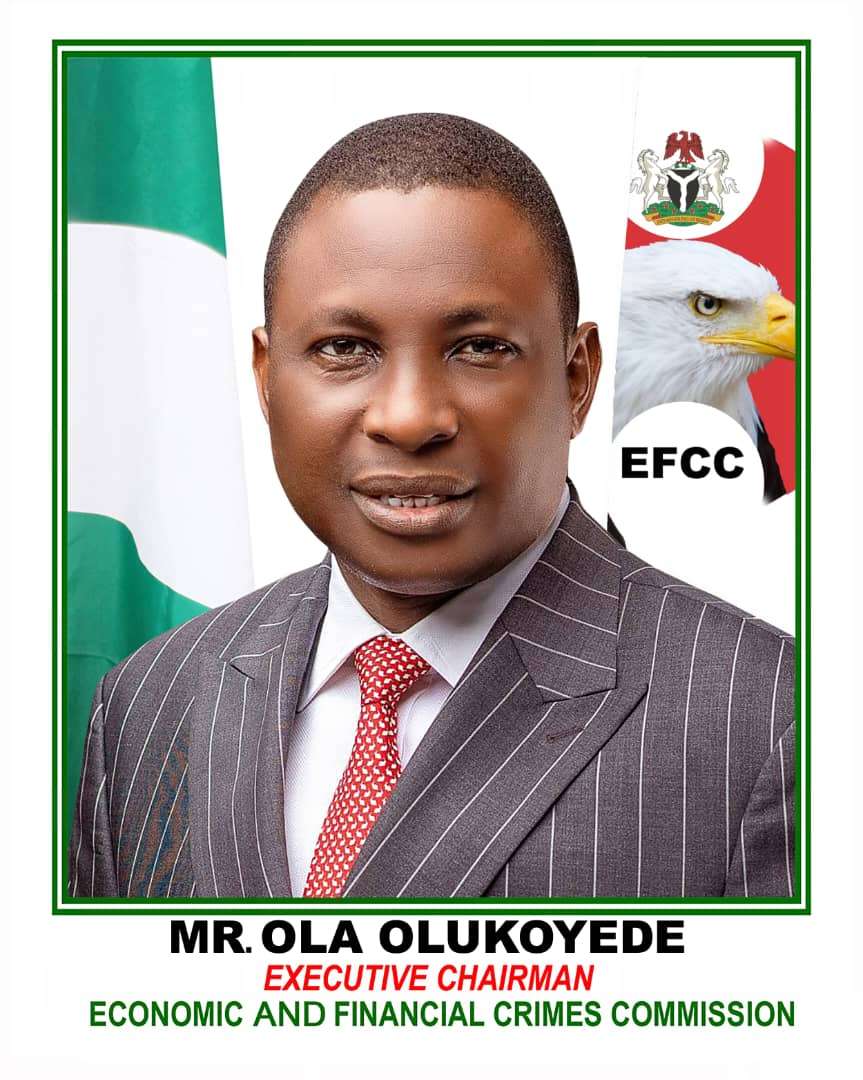
By Doris Isreal Ijeoma Chairman of the Economic and Financial Crimes Commission, EFCC, Mr Ola Olukoyede has alleged that some religious organisations are “more corrupt” than public offices in Nigeria. Olukoyede spoke at a leadership conference organised by the Redeemed Christian Church of God, RCCG, in Lagos on Friday. The EFCC boss disclosed that his organisation recently recovered “how many millions from a religious organisation.” Olukoyede accused religious leaders of looking at the “speck in someone else eyes, but meanwhile; there is a log in yours.” He, however, urged clerics to use their platform “not only to preach but also to demonstrate” good characters to their congregation. He said: “Just this last week, I have had cause to recover how many millions from a religious organisation,” the EFCC boss said. “They appointed you a pastor, and that is when you become a big man. We don’t even know what you are doing to earn a legitimate living. You live on the ministry and the church or mosque money. You can’t even explain the source of your wealth. “Some religious organisations are more corrupt than public offices. I have evidence towards that. You look at the speck in someone else eyes, but meanwhile, there is a log in yours.” In January, Olukoyede said the EFCC uncovered a religious sect laundering money terrorists in Nigeria.