EFCC Rejects Sanwo-Olu’s Legal Challenge Over Alleged Arrest Plans

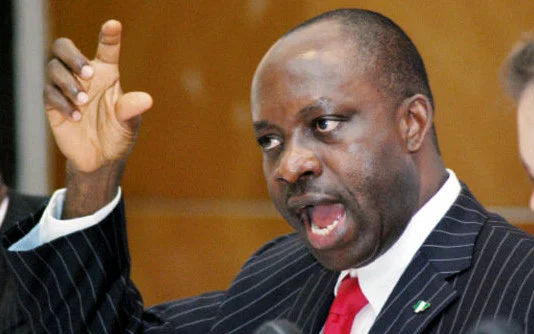
The guilty is always afraid. That explains the current judicial play being simulated by Lagos State Governor, Babajide Sanwo-Olu who has sued the Economic and Financial Crimes Commission (EFCC) against any future trial in the event that any evidence of stealing is found against him. According to the Nigerian constitution state governors and the president of the country are immune from criminal prosecution while in office. Further to this however, Mr. Sanwo-Olu has sued the EFCC to insist that even if evidences of stealing are found against him, he should not be tried for the theft after his term of office. Miffed by this affront on the performance of its duties, the EFCC has asked a Federal High Court in Abuja to dismiss the case filed by Babajide Sanwo-Olu, which challenges potential investigations and arrest plans after his tenure.  The anti-corruption body described the governor’s claims as speculative, arguing that they lack legal merit. Sanwo-Olu, in his lawsuit, sought several declarations to protect his fundamental rights.  Among his requests, he asked the court to affirm his right to privacy and prevent any perceived harassment or intimidation by the EFCC during or after his term as governor.  He alleged that political opponents might use the agency to orchestrate his arrest based on unfounded corruption allegations. In its response, the EFCC maintained that no investigation or arrest threats had been made against Sanwo-Olu.  The agency clarified that it follows due process in all cases, using official channels for communication and investigation. The EFCC further argued that Sanwo-Olu’s concerns are hypothetical and intended to mislead the court. The case, initially filed in June, was updated on October 31. Justice Joyce Abdulmalik has scheduled the next hearing for November 26.  There are indications that the suit may be withdrawn before the adjourned date.

EFCC Vs Yahaya Bello: Court adjourns to January 21 for ruling or arraignment

A Federal High Court in Abuja has adjourned hearing in the money laundering case brought against the immediate-past Governor of Kogi State, Yahaya Bello, by the Economic and Financial Crimes Commission, to January 21, 2025. At the resumed hearing on Wednesday, Counsel to the Economic and Financial Crimes Commission, Kemi Pinheiro, SAN, told Justuce Emeka Nwite that he had two witnesses already in court. He said his first application was to formally apply that the court should enter a plea of not guilty on behalf of the defendant, even in his absence. “My first application is to formally enter a plea of not guilty to the defendant, even in his absence. The second point is, not withstanding his physical absence, it is in full compliance with Section 276 of ACJA. Flowing from that entry my lord, it is a humble request that we call the first witness,” he stated. Pinheiro, in defending his application to enter a plea of not guilty for the defendant, said “the right to plead guilty or not guilty is a right that can be waved by the defendant. “My lord should hold that the defendant has waved that right. “What prejudice will the defendant suffer if my lord enters a plea of guilty or not guilty in his absence? Even if he was in court and pleaded not guilty, the situation will still be the same. The entry of plea of not guilty by your lordship is an invitation to the prosecution to come and prove the veracity of the allegations,” he added. Michael Adoyi, who appeared for the defendant, however kicked against this, saying that the Prosecution’s application was made contrary to a subsisting order of the judge. “Our first point of response to the application made by the learned senior counsel to the complainant is that the application is made contrary to the subsisting order of this honourable court, even made this morning – that no application can be entertained by this court in the absence of the arraignment of the defendant. “The prosecution has stated severally that the court cannot demonstrate helplessness. The court cannot demonstrate any helplessness in any proceeding and if at all helplessness exists in this proceeding, that helplessness is demonstrated by the prosecution,” he said. Adoyi argued that the court, in a criminal trial, is immune and distinct from the prosecution. Citing Supreme Court verdicts on similar matters, he said, “The application made by learned senior counsel for the complainant this morning is a dangerous invitation to this honourable court to aide the prosecution in the performance of its duty of presenting the defendant before the court for arraignment and subsequent trial.” He argued that civil proceeding was different from criminal proceeding.The Defendant’s Counsel noted that the prosecution’s application could not be anchored on any of the provisions of the ACJA, 2015 that he had cited, as “those provisions do not excuse the need for physical presence of the defendant.” “In view of this, we urge my lord to refuse the application made by the senior counsel to the complainant,” he said. The Prosecution Counsel, however, told the court to dismiss Adoyi’s arguments and go ahead with his ruling on entering a plea of not guilty for the Defendant. Justice Nwite, however, said it might not be possible to deliver the ruling this year. “It may not be possible to deliver this ruling this year. You know I am just coming as vacation judge. So what are we agreeing on now learned silk?” he asked. Pinheiro said the matter would be for ruling and/or arraignment of the defendant. The Judge thereafter adjourned to 21st January, 2025 for ruling on the application by the EFCC and/or arraignment. Recall that, at the last hearing on September 25, the Counsel to the defendant, A.M. Adoyi, had told the court that the issue of arraignment of the defendant was the subject matter of an appeal entered by the defendant at the Supreme Court with the Appeal Number: “SC/CR/847/2024 and SC/CR/848/2024”. He said the most appropriate thing to do was to await the decision of the Supreme Court in the aforesaid appeal before taking any step for arraignment so as not to pull the rug off the feet of the Supreme Court.

EFCC Seeks Adjournment In Case Against Ex-Governor, Yahaya Bello

The Economic and Financial Crimes Commission (EFCC) has requested an adjournment of the hearing against the immediate-past Governor of Kogi State, Yahaya Bello, and two others until November 14, 2024. The request was made during a session at the FCT High Court, where complexities arose regarding the arraignment process. Rotimi Oyedepo, SAN, representing the EFCC, explained that the adjournment was necessary to ensure the presence of Yahaya Bello, who had been previously summoned through public notice. Oyedepo clarified the situation around the summons and the pasting of charges, following Justice Maryann E. Anenih’s interjection that only the summons were ordered to be publicized. The legal proceedings became contentious as JB Daudu, SAN, who represented the second defendant, objected to the EFCC’s request for adjournment. Daudu argued that all defendants should be treated independently and criticized the EFCC’s approach, equating it to using one defendant as a “human shield.” He expressed readiness for arraignment and opposed the unnecessary delays affecting his client. A.M. Aliyu, SAN, representing the third defendant, aligned with Daudu’s stance and sought to move an application for bail. However, Oyedepo countered that since the charges involved allegations of conspiracy, a joint arraignment was necessary, making individual bail applications premature. Despite the heated exchanges and legal arguments, Justice Anenih decided against the immediate consideration of bail, directing that formal applications should be submitted in writing. The judge then set the dates of November 14th and 20th for the response to the summons and potential arraignment of the defendants.

Supreme Court Reserves Judgement In Governors Suit Challenging EFCC’s Establishment

The Supreme Court has reserved its judgment on a significant legal challenge brought by 16 state governments against the constitutionality of the laws that establish the Economic and Financial Crimes Commission (EFCC). The case, presided over by Justice Uwani Abba-Aji and a seven-member panel of justices, reached this phase on Tuesday after extensive arguments from the involved parties’ attorneys. Originally initiated by the Kogi State Government through its Attorney General and Commissioner for Justice, the suit has seen multiple states join as co-plaintiffs. The states involved in the suit, marked SC/CV/178/2023, include Ondo, Edo, Oyo, Ogun, Nasarawa, Kebbi, Katsina, Sokoto, Jigawa, Enugu, Benue, Anambra, Plateau, Cross-River, and Niger. In a turn of events, the Attorneys General of Anambra, Adamawa, and Ebonyi have withdrawn from the case, with the Supreme Court panel granting their request. The suit addresses critical questions about the federal scope of anti-corruption enforcement, challenging the legal foundation of the EFCC’s establishment under current laws. The decision of the Supreme Court will be keenly awaited, as it holds substantial implications for federal and state powers in the governance and administration of justice. ReplyForwardAdd reaction

Anambra Withdraws From Suit Against EFCC, NFIU, ICPC

The Anambra State Government announced on Tuesday its decision to withdraw from a legal suit challenging the legality of the Economic and Financial Crimes Commission (EFCC). This lawsuit, initially filed by the Kogi State Government, seeks to declare the operations of the EFCC, the Nigerian Financial Intelligence Unit (NFIU) and the Independent Corrupt Practices Commission (ICPC) as unconstitutional. Through a notice dated October 20, Anambra’s Attorney General, Prof. Sylvia Ifemeje, informed the Supreme Court of the state’s decision to step back from the case. Meanwhile, Osun State, represented by its Attorney General, Mr. Oluwole Bada, sought to join the suit and consolidate its own grievances against the EFCC with those of Kogi State. Osun State is pursuing similar reliefs, seeking to challenge the EFCC’s authority. At Tuesday’s hearing, a seven-member panel of the Supreme Court, led by Justice Uwani Abba-Aji, also noted the absence of Sokoto State, which had previously been a co-plaintiff but did not send a legal representative. Other states present in the case include Kogi, Kebbi, Katsina, Jigawa, Oyo, Benue, Plateau, Cross River, Ondo, Niger, Edo, Bauchi, Adamawa, Taraba, Ebonyi, Imo, and Nasarawa. Representing the federal government, Attorney General of the Federation and Minister of Justice, Prince Lateef Fagbemi, SAN, did not oppose Anambra’s request to withdraw from the case. The case stems from a collective legal action by 16 states against the EFCC, arguing that the anti-graft agency was not constitutionally established by the administration of former President Olusegun Obasanjo. The states claim that section 12 of the 1999 Constitution was violated, as the EFCC Act, passed by the National Assembly in 2002 and later amended in 2004, did not receive the required approval from a majority of state Houses of Assembly. The plaintiffs assert that the EFCC’s establishment under the United Nations Convention Against Corruption did not comply with constitutional requirements, rendering its operations illegal in states that did not consent to the law. They argue that, based on the supremacy of the 1999 Constitution, any act inconsistent with it should be considered null and void. Kogi State, in its submissions to the Supreme Court, raised six key issues and sought nine major reliefs. Among them is a request for a declaration that the EFCC, the Nigerian Financial Intelligence Unit (NFIU), or any other federal agency does not have the power to investigate or manage funds belonging to Kogi State or its local government areas without state consent. Kogi also contends that federal agencies lack the authority to issue directives regarding the administration of state funds.

16 States Challenge EFCC Legality in Supreme Court

In what many insinuate may be the case of corruption fighting back, 16 state governors are challenging the legality of the Economic and Financial Crimes Commission (EFCC). The Supreme Court is set to hear the significant case on October 22, involving a legal challenge to the Economic and Financial Crimes Commission (EFCC) initiated by 16 state governments.  The suit, led by Kogi State, contests the constitutionality of the EFCC’s establishment, claiming it violates constitutional provisions regarding state assembly agreements. The case, now marked as SC/CV/178/2023, involves Kogi and fifteen other states, including Ondo, Edo, and Oyo.  A panel of seven Justices, headed by Justice Uwani Abba-Aji, has accepted the states as co-plaintiffs, allowing their arguments to be consolidated for more efficient proceedings. During a hearing, representatives from the involved states presented their cases. Kogi State’s legal counsel emphasized the need for clarity on procedural matters, suggesting that states wishing to join should be officially recognized as co-plaintiffs.  Justice Abba-Aji agreed and scheduled the next hearing for October 22. The plaintiffs asserted that the EFCC was established without the requisite approval from the majority of state assemblies, rendering it illegitimate.  Among the reliefs sought, Kogi State demanded a declaration that the Federal Government and its agencies lack authority over its funds and cannot investigate financial matters related to the state. This legal action occurs in the backdrop of ongoing investigations into the previous Kogi governor, Yahaya Bello, for alleged corruption.  Additionally, Kogi’s legislature recently enacted a law to create a state anti-graft agency, which the governor stated is not intended to undermine the EFCC’s authority.

EFCC apprehends 24 for internet fraud in Benin

Court Adjourns Suit Challenging Olukoyede As EFCC Chairman To 2024

Operatives of the Economic and Financial Crimes Commission (EFCC), Benin Zonal Command have arrested 24 suspected internet fraudsters at different locations within Benin city, the Edo State capital.

Bobrisky/EFCC Investigation: HoR bars media coverage

The House of Representatives has prohibited journalists from covering the investigation into the N15 million corruption accusations involving the Economic and Financial Crimes Commission (EFCC) and the Nigerian Correctional Services (NCS) related to the prosecution of Bobrisky.   This decision follows an earlier invitation extended to the press to report on the proceedings.   The Joint Committees on Financial Crimes and Reformatory Services of the House of Representatives has officially informed the House press corps that reporting on the investigation into serious corruption claims involving the EFCC and NCS in the Bobrisky case is prohibited.  

The Economic and Financial Crimes Commission (EFCC) has arrested former Taraba State Governor, Darius Ishaku, over allegations of N27 billion fraud.   Top sources within the commission confirmed that the former governor was arrested on Friday and was still in the anti-graft agency’s detention as of Friday evening.   One of the sources revealed that at least 15-count charges had been filed against Ishaku and he would be arraigned in court soon as evidence against him had been compiled.   Ishaku is a member of the Peoples Democratic Party and served as the governor of Taraba State from May 2015 to May 2023.   In May 2021, the anti-graft agency also arrested three officials who served under his government for allegedly involved in a N21 billion scam.   It was learnt that the state officials were a permanent secretary, a Director of Finance and Account and a cashier in the Ministry of Local Government and Chieftaincy Affairs.   It was gathered further that alleged stolen public funds under the Ishaku government were withdrawn from the state’s accounts through cheques in tranches of at least N10 million each.  

EFCC Raids Private Hostels In Usmanu Danfodiyo University Sokoto

…Arrests Multiple Students   Close to 24 hours after its operatives raided private hostels at the Usmanu Danfodio University last Friday night and arresting scores of students, the Economic and Financial Crimes Commission (EFCC) is yet to give reasons for the action.   Eyewitnesses revealed that the raid occurred in the Kwakwalawa and Gidan Yaro communities in Sokoto, with dozens of students picked up by the EFCC operatives. Students recounted that the officials stormed their hostels around 4 am, indiscriminately arresting several students.   “It was like a scene from a movie,” said a student who wished to remain anonymous. “We thought they were kidnappers at first, but then we saw the EFCC logo on their vests.”   The students claimed that the EFCC operatives did not provide any explanation for the arrests or produce any warrants.   “This is unacceptable,” said another student. “We demand answers from the EFCC. What were they looking for? Why did they arrest our colleagues?”   This incident bears a striking resemblance to a similar event in February, where EFCC officials raided hostels outside the Federal University of Technology, Akure (FUTA) campus, arresting several students. In that incident, students reported that their properties were destroyed, and many were assaulted and brutalized, including female students.