CBN Eyes Explicit Inflation-Targeting Framework To Enhance MP Effectiveness

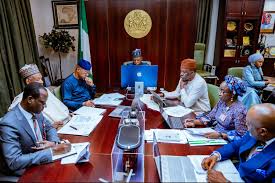
The Central Bank of Nigeria (CBN) is set to adopt an explicit inflation-targeting framework to enhance the effectiveness of its monetary policy. The Governor, Central Bank of Nigeria (CBN), Mr. Olayemi Cardoso who disclosed this in Lagos while unveiling his policy direction at the Chartered Institute of Bankers of Nigeria (CIBN) bankers’ night, said that the details and requirements for this framework are currently being finalized alongside the fiscal authorities. He said the CBN will provide forward guidance, enhance transparency, and maintain effective communication with the public to anchor expectations and build trust among stakeholders. He said under the economic agenda of President Bola Ahmed Tinubu’s administration, the government has set an ambitious goal of achieving a Gross Domestic Product (GDP) of $1.0 trillion over the next seven years, with clearly defined priority areas and strategies. He said attaining this substantial target necessitates sustainable and inclusive economic growth at a significantly higher pace than current levels. The administration has already commenced this journey through fiscal reforms, including the removal of petrol subsidy and the unification of the foreign exchange market rate. On achieving President Bola Tinubu’s Agenda, he said Nigerian banks do not have sufficient capital in servicing a $1.0 trillion economy in the near future. He said the first step to be taking by the CBN will be directing banks to increase their capital while technology will continue to play a critical role in delivering financial services and enhancing financial inclusion. “Therefore, we must make difficult decisions regarding capital adequacy. As a first step, we will be directing banks to increase their capital,” he added. He stated that from his observation some licensees are operating outside the approved activities, breaching the boundaries set for them, insisting that any intentional or unintended non-compliance will be subject to sanctions, as operators have the responsibility to ensure that they are licensed for the activities they undertake. Speaking further he said “Concurrently, as we conduct a comprehensive review of the licensing framework for payment services, we will engage in extensive consultations to develop a new regulatory and compliance framework that is suitable for the technology-driven payment services sector. “Looking ahead for the industry, banks should reassess the responsible banking framework to ensure that the requirements are effectively integrated into their strategies. I am aware that some banks have made commendable progress in this regard. “The Central Bank of Nigeria is taking steps to enhance its in-house capacity so that it can assist other banks that still have progress to make in implementing their sustainability principles. The governor said the primary mandate of the CBN is to ensure price stability, in addition to other objectives such as issuing legal tender currency, safeguarding external reserves, promoting a sound financial system, and providing economic and financial advice to the government. He mentioned that In line with CBN strategy to refocus on its core mandate, the CBN will discontinue direct quasi-fiscal interventionist activities and instead utilize orthodox monetary policy tools for implementing monetary policy. According to him “Our monetary policies will aim to achieve price stability, foster sustainable economic growth, stabilize the exchange rate of the naira, and reduce interest rates to facilitate borrowing and investments in the real sector. In order to ensure the proper functioning of domestic and foreign currency markets, clear, transparent, and harmonized rules governing market operations are essential. “New foreign exchange guidelines and legislation will be developed, and extensive consultations will be conducted with banks and FX market operators before implementing any new requirements” The CBN governor pointed out that the major challenges affecting the nation’s economy include high and rising inflation, inadequate foreign exchange supply, depreciation of the exchange rate, limited external reserves, weakened output, and high unemployment. These challenges according to him have led to increased interest rates, discouraging investments in productive activities. He said within the banking system, high inflation has affected asset quality and solvency ratios. Additionally, the persistent depreciation of the naira poses a significant risk for domestic banks with foreign exchange exposures. He assured Nigerians that while it is indeed a formidable challenge, it is not insurmountable, adding that with the right policy measures, we can overcome these obstacles and pave the way for progress and prosperity. He said the removal of petrol subsidy and the adoption of a floating exchange rate, among other government policies, are anticipated to have positive effects on the economy in the medium-term. These measures are expected to enhance investor confidence, attract capital inflows, stimulate domestic investment, and ultimately improve the level of external reserves. Additionally, they are expected to contribute to the stabilization of the domestic currency. He said despite the challenging global and domestic macroeconomic environment, Nigeria’s financial sector has demonstrated resilience in 2023, with key indicators of financial soundness largely meeting regulatory benchmarks. He mentioned that stress tests conducted on the banking industry also indicate its strength under mild-to-moderate scenarios of sustained economic and financial stress, although there is room for further strengthening and enhancing resilience to shocks. He said although the banking sector demonstrated soundness and resilience, there is still much work to be done in fortifying the industry for future challenges. He said in recent years, the continuous decline in Nigeria’s crude oil production has further weakened our already inadequate economic diversification. This has led to a decline in government revenue and foreign exchange inflows, while simultaneously witnessing a growth in public expenditures and a deterioration in macroeconomic indicators, which has constrained our policy options. Consequently, we have seen the fiscal deficit and public debt increase, placing additional strain on external reserves and contributing to exchange rate instability.
Come, Invest In Nigeria’s Bubbling Economy, Tinubu Tells US

President Bola Tinubu has invited the United States business community to come and invest in Nigeria’s ‘bubbling’ economy. Tinubu, who rang the closing bell at the Nasdaq Stock Market in New York on Wednesday, called on the United States business community to invest in Nigeria’s “bubbling market”. The President, who is attending the ongoing 78th session of the United Nations General Assembly, was accompanied to the bell ceremony by the President of the U.S.-Africa Business Center (USAfBC) at the U.S. Chamber of Commerce, Scott Eisner. The closing bell ceremony, held at the seven-storey tower of the Nasdaq headquarters in New York, signifies the end of a trading session. “I am happy to bring Nigeria to your doorsteps and honoured that we’re here today with a bubbling maket that will evolve the West African subregion,” Tinubu said. “The greatest economy is Nigeria. There is an immense opportunity in Nigeria that you can invest your money without fear. “We’ve removed a lot of the bottlenecks. We’ve cleared the subsidy that is corrupt and we’ve also retooled the exchange rate to a reliable, dependable one-figure floating of the exchange naira.”
FG raises N4.46trn bonds in 8 months

The Federal Government raised the sum of N4.46 trillion from the bond market in the last eight months. The result is that the interest rate on 30-year FGN bonds increased to 15.85 per cent in August 2023 from 14.3 percent in July 2023. The Debt Management Office (DMO) received N5.42 trillion total subscriptions as against N2.88 trillion offered during the period amid monetary policy tightening by the Central Bank of Nigeria (CBN) and global uncertainties. An analysis of the bond market activity during the period revealed that FGN bonds recorded 53 percent oversubscription as interest rates continued on a steady trajectory. The DMO has conducted four auctions in 2023, which were oversubscribed despite a hike in inflation rate and investors’ diversification into the stock market. While the information on the buyers of corporate bonds are publicly disclosed, other publicly available reports indicate Pension Fund Administrators (PFA), asset managers, banks, and institutional/foreign investors are among the largest buyers of FGN Bonds. The auction results released by DMO indicate strong investors’ demand for FGN bonds, as the total amount allotted exceeded the total amount offered. It also suggests investor confidence in the Nigerian economy and the ability of the government to meet its debt obligations. A breakdown showed that in the first quarter (of 2023, total subscription to FGN bonds stood at N2.61trillion while the DMO allotted N1.996 trillion out of the N1.080 trillion offered to the investing public. In the second quarter of 2023, investors were also offered N1.080 trillion FGN bonds; it witnessed N2.503 trillion subscriptions. The DMO eventually allotted N2.23trillion. However, a July 2023 auction revealed that subscriptions stood at N945.14billion as against the N360 billion offered. The DMO allotted N657.84 billion. At the just concluded FGN bond auction in August, the four instruments were 14.55 per cent April 2029 FGN bond; 14.70 per cent June 2033 FGN bond; 15.45 per cent June 2038 FGN bond; and 15.70 per cent June 2053 FGN bond. They were valued at N90 billion each, making a total offer of N360 billion. In spite of current market conditions, the auction received a total subscription of N312.56 billion and amount allotted to successful bidders for the four instruments was N230.26 billion. Investors’ appetite for the 15.70 June 2053 (30-year bond) remained strong, with a bid-to-cover ratio of 2.71 times. Allotments were made at 13.85 per cent for the 14.55 per cent April 2029 instrument and 15.00 per cent for the 14.70 per cent June 2033 instrument. Also, “15.20 per cent was for the 15.45 per cent June 2038 instrument and 15.85 per cent for the 15.70 per cent June 2053 instrument,” the DMO said. The federal government had proposed to borrow over N11 trillion to finance the proposed 2023 budget deficit. Findings by Economic Confidential revealed that FGN Bonds auctioned were re-openings with rates below the inflation rate. The debt office in 2023 maintained four tenor bond auctions between January and June and each FGN bond offer was oversubscribed. Meanwhile, finance experts have attributed the strong demand for FGN bonds to attractive yields, which offer investors high returns on their investments. They added that the oversubscription also revealed that investors have confidence in the government’s ability to meet its debt obligations. The appetite for FGN bonds indicates that PFAs, and Nigerian investors prefer investment instruments with less volatility that assures them of their capital returns albeit with low yield on investment. But, in recent years, Nigeria’s rising debt profile has been a topic of concern, as Vice President, Highcap Securities Limited, Mr. David Adnori warned that the country’s debt levels are unsustainable. DMO stated in January that Nigeria’s public debt could rise to N77 trillion if the country’s “ways and means” are securitized. “Ways and means” refer to the CBN’s lending to the federal government. The DMO said that the securitization of ways and means” is not unusual and is a common practice in many countries, but it is not a decision that can be made by the DMO alone. Adnori expressed concerns that Nigeria’s rising debt levels could become unsustainable if not managed properly. The government has argued that borrowing is necessary to finance critical infrastructure projects and stimulate economic growth. The Chief Executive Officer of the Centre for the Promotion of Private Enterprise, Dr Muda Yusuf, said the FG had notified the general public of borrowing more in 2023. According to him, “With all the volatility and foreign exchange issues, it makes sense to borrow at the domestic market rather than borrowing from the international market. It is all a reflection of our macro economy environment challenges and weak fiscal policy of the government. All this borrowing also is a reflection of the weak financial position of the government and it will continue like that.” He noted that the oversubscription to FGN bond is a lucrative investment, stressing that the low risk involved attracted investors. He added, “Anything sovereign has the lowest risk and nothing will go wrong with it except the country is collapsing completely. All over the world, sovereign bonds have the lowest risk and secondly it is an investment outlet for investors to invest their money.” On his part, the Chief operating officer of InvestData Consulting Limited, Mr. Ambrose Omordion, said, “We know that previous government borrowing was high. Excessive borrowing by the previous government at the expense of the private sector, which is the engine room of the economy, brings to question the soundness of their economic strategy. “The careless use of debt as a financing tool is fraught with calamitous dangers. Even more disheartening is when the debts are principally used to finance consumption or to unwisely finance a few secondary infrastructures (Roads and Rail). “These will neither enhance the productive momentum of Nigeria’s light industries nor make the economy self-reliant. The disorderly growth of the economy the last administration pursued can only mislead the country into an abyss if public borrowing is not curtailed to lower cost of funds so that production will be competitive.”
Naira falls record all-time low of N900 at parallel market

The naira plunged to a record low of N900/$1 on the parallel market on Tuesday, as demand for foreign currency outstripped supply with traders quoting the exchange rate as high as N900/$1 for “inflows” and N895/$1 for cash trades. The peer-to-peer market, where cryptocurrency traders exchange forex, also saw the exchange rate soar above N900/$1. Meanwhile, in the official Investor and Exporter Window, the exchange rate closed at N774.78/$1 while the NAFEX rate was N776. The official market also faces supply constraints, with daily turnover averaging $80 million since July. Forex traders attributed the depreciation of the naira to supply constraints saying there were more buyers than sellers in the market and that the situation was unlikely to improve anytime soon. When asked about the source of the increased demand, traders mentioned a diverse set of buyers, including importers, foreign travellers, and speculators. There are concerns among some traders that the state of depreciation is unlikely to improve as demand continues to rise unchecked. Analysts explained that there was a huge backlog of unmet forex demand in the official market, estimated at $8-10 billion. Some of this demand also spills over to the parallel market, as buyers struggle to find enough supply to meet their needs in the official market. The exchange rate between the naira and dollar has weakened by 16 per cent since the reunification of the exchange rate windows. This compares to a depreciation of 2.5 per cent between January 1 and June 14th. The exchange rate weakened by 22.9 per cent in the whole of 2022. The naira has been under pressure in the parallel market for several weeks, as the supply of forex from official sources remains inadequate. On July 1st, the beginning of the second half of the year, the exchange rate in the parallel market was around N772/$1. However, a surge in demand from various segments of the economy, such as importers, foreign travelers and speculators, has triggered exchange rate volatility.
MPC: Aligning fiscal, monetary policy for economic growth

The benefits of collaboration in any human endeavour cannot be over-emphasised. Every part jointly fitted together produces the whole.Monetary policy affects financial conditions and the level of bank reserves. Whereas, fiscal policy can put money directly into or out of people’s pockets. Without fiscal policy as a tool to fight inflation, the federal government is working with one hand tied behind its back.The fiscal approach is anchored by the Federal Government whose role is mainly to moderate the excesses of other operators in the economy, and provide law and order and enabling operating environments.The Central Bank acts alone when it hopes that its policies would change the economic dynamics without any input from the fiscal side.Fiscal policy can slow spending directly by raising taxes or reducing government direct payments without necessarily having the intermediate step of raising the unemployment rate.Modest upfront fiscal contraction would reduce the cumulative amount of monetary tightening necessary, thereby improving the odds of avoiding recession.In this regard, analysts opine that the CBN must not operate in isolation, but collaborate with fiscal authorities to achieve sustainable economic results. Ineffective policiesMost economic policies were not as effective as they ought to be during the last administration due to the lack of collaboration on the part of fiscal and monetary authorities as everyone seems to be running their ‘own thing’ as it were.While the Finance Ministry appears to be focused only on borrowing from all possible quarters and increasing tariffs to raise more revenue for the government, the CBN was preoccupied with shielding the Naira from unnecessary pressure through rampant importation of items that could have been produced locally, thereby depleting the foreign reserves and spiking exchange rate.Analysts note that one of the dilemmas of Nigeria is fiscal indiscipline that is seen in the actions of the political office holders. In the last dispensation, while the CBN was trying to grow the economy through expansionary policies targeted at increasing capital flows (or credit) to the real sector, the fiscal authorities, on the other hand, were raising taxes on many items that affect their activities, which the CBN was trying to expand.And that was why at every opportunity, suspended CBN Governor, Godwin Emefiele always called for an alignment between fiscal and monetary policies.According to Emefiele, the country’s monetary and fiscal authorities must “collaborate and work in harmony to accelerate Nigeria’s economic development even as he added that “finding a sustainable solution requires a broadened participation of colleagues from the fiscal side.”Speaking at the 149th meeting of the Monetary Policy Committee of the Central Bank of Nigeria (CBN), the Apex Bank’s Acting Governor, Folashodun Shonubi, said there was a need for fiscal and monetary authorities to align together to be able to address present economic challenges.Reading the communiqué at the end of the two-day meeting, Shonubi noted that subsidy removal, exchange rate liberalization and disbursement of palliatives, would have pass-through effects on inflation. He therefore, called “monetary and fiscal authorities to sustain collaboration towards addressing the inflationary pressure and incentivize domestic investment to reduce unemployment and boost output growth.The Monetary Policy Committee “…enjoined the Federal Government to continue to explore policies to improve investor confidence in the Nigerian economy and pave the way for foreign and domestic investments.“Members emphasized the need to attract investments, particularly, to auto manufacturing, aviation, and rail industries to boost non-oil revenues.”Experts have continuously argued that all these can only happen when both of them work in harmony. For instance, from time to time, the Federal Government comes up with its fiscal policies based on national economic philosophy and objectives, to aid or readjust the economy.CBN then makes monetary policies to ensure availability of money at the right cost, adequate volume and appropriate type to facilitate the cost effectiveness of production and trade. However, we saw monetary authority make incursions repeatedly into the economic policy territory hitherto exclusively reserved for the fiscal authority in Nigeria.This has then made the CBN a punching bag for every frustration in the economy in regards to monetary and fiscal balancing of macroeconomic issues. Breaking from the pastIn trying to break away from the past mistakes, President Bola Tinubu quickly appointed seasoned economist Wale Edun as his Special Adviser on Monetary Policy. The objective was to have the two sides coming together to align policies before they become public document.And true to type, Nigerians did see it in the MPC decision as the monetary policy rate hike was by 25 basis points contrary to what analysts and industry players had projected.In arriving at the decision, the MPC considered the outlook for the domestic economy with the policy options to either hold or hike the policy rate to offset the moderate increase in headline inflation.With headline inflation still on the rise due to the effect of fuel subsidy removal and the naira float which is driving the prices of goods and service upwards, the Apex Bank new that raising rates like in previous times will be counter-productive to what the monetary authorities wanted to achieve with the policy reforms that has been embarked upon by the fiscal authorities.Knowing that when the palliatives begin to flow, there would be much liquidity in the system, the Committee had to be proactive in line with current thinking.According to the CBN Governor, “Considering the option to hold, the Committee reviewed the impact of the continued rise in inflation on various macroeconomic variables, noting the potential dampening effect on output growth. Members agreed unanimously that the previous series of rate hikes had indeed greatly moderated the pace of price increases.“The option to continue to hike the policy rate, albeit moderately, also presented a strong alternative. This is premised on the expected liquidity injections into the economy from the recent policy developments and the likely impact on inflation.“The Committee remained cautious in arriving at a policy decision as Members noted the need to continue to support investment which will ultimately lead to the recovery of output growth. The balance of these arguments thus leaned in favour of a
Tinubu meets UK Foreign Secretary on economy, security

President Bola Tinubu is expected to meet UK Foreign Secretary, James Cleverly, who is on a 4-day African visit, on Wednesday. Cleverly, who will spend two days in Nigeria, is on a three-country visit where he is prioritising future-focused, mutually-beneficial partnership. A statement from the UK Foreign, Commonwealth, and Development Office disclosed that a number of funding would be unveiled during Cleverly’s visit to make Nigeria’s agriculture sector more resilient to climate change. It said that the funding would help more than four million people develop better farming practices and reduce harmful carbon emissions. Cleverly’s meeting with Tinubu and the National Security Adviser, Nuhu Ribadu will focus on the UK-Nigeria partnership and key common priorities. ‘’It will also include how to increase bilateral trade and investment, economic development, regional issues, and strengthened security cooperation.’’ Total trade in goods and services (exports plus imports) between the UK and Nigeria was 7.6 billion pounds in the four quarters to the end of the first quarter of 2023. This is an increase of 48.4 percent or 2.5 billion pounds in current prices from the four quarters to the end of the first quarter of 2022.
NLC’s planned shutdown of the country illegal, FG insists

The Federal Government has told the Nigeria Labour Congress, NLC, that its plan to shut down the country on Wednesday, August 2, under the guise of industrial action is illegal. The NLC had threatened to embark on nationwide protest from August 2 following the failure to reach an agreement with the government on the recent increase in the pump price of petrol. The Federal Government had instituted a case at the National Industrial Court, Abuja, seeking to stop the NLC from embarking on the strike action. The court had also made an order stopping the NLC from going ahead with the strike pending the hearing and determination of the suit. But despite the court order, labour unions have insisted on the mass protest. The Solicitor-General of the Federation and Permanent Secretary in the Ministry of Justice, Mrs Beatrice Jedy-Agba, in a letter to the NLC, through their lawyer, Mr Femi Falana, SAN, said parties before the court are supposed to maintain the status quo, to respect the pendency of the matter. In the letter with reference number MJ/CIV/ABJ/316/23 and dated July 31, 2023, the solicitor-general said, “Parties are expected to maintain the status quo even in the absence of a restraining order. However, there was no threat of contempt of court in the clarification provided by this Ministry. Undoubtedly, drawing the attention of NLC and the public to the pendency of the order cannot be equated with threats. “The issue of peaceful protests and police permit are also not in contention, however, you may wish to be guided by the contents of the Communique issued by the National Executive Council of NLC at the end of its meeting of 27th July 2023. The decision or projected cause of action by NLC is directed principally in furtherance of issues connected with a hike in fuel price and consequential matters of palliatives and workers’ welfare. We assert that it is grossly inappropriate to lead the public protest in respect of issues relating to or connected with the fuel price increases, which are currently before the court! “From the Communique, it is apparent that the current move by NLC goes beyond peaceful protest by issuing a seven-day ultimatum for government to meet the demands and also embark on a nationwide action to compel the government to reverse alleged anti-worker policies. “Furthermore, uncontroverted media reports have established that NLC is not planning a peaceful protest but intends to ground the government by endangering public peace, instilling fear in the masses, and precipitating a further crisis. To buttress the above, the Assistant General Secretary of NLC, stated thus: ‘Nigerians should be prepared. That’s what we are saying. Being prepared means you have to stock food in your house and be economical with your movement at this particular point in time so as to avoid being stranded…’ “ “In the same vein, the Nigeria Union of Petroleum & Natural Gas Workers and National Union of Electricity Employees confirmed that they were working towards grounding the supply of fuel and the national electricity grid. The Ag. General Secretary of NUEE stated thus: ‘The NUEE is an affiliate of the NLC and I’ve told you that we will join the strike action. The issue is that if there’s a deadlock between labour and the government; that means that the mass protest is still going on, and definitely electricity workers, as an affiliate of the NLC, will partake in the mass protest. So, all workers in the power sector will join the mass protest on Wednesday, August 2, 2023. It is binding on every staff member to join the strike action. So, if it results in a blackout, the only option is for the government to listen to us if it wants power to return.” “We reiterate that the interim order clearly restrained NLC from embarking on industrial action of any nature. It is common knowledge that a strike is only a form of industrial action. NLC has expressed the intention to embark on a nationwide action to force the government (employer) to agree to its demands. Furthermore, the participation of workers in the protest will result in restriction, or imitation on, or a delay in the performance of work. The foregoing, inclusive of the purported peaceful protest (in view of its intended aims or purposes), undoubtedly amounts to industrial action. “It is incumbent on your law firm to sensitize the labour unions that peaceful protests are no justification for disrupting or shutting down essential services, which is tantamount to a strike action.”
Tinubu to address Nigerians amid nationwide hardship

On Monday, July 31, 2023, President Bola Ahmed Tinubu will deliver a broadcast to the nation at 7 pm. The announcement was made on Monday morning by Dele Alake, the presidential spokesman, urging television, radio stations, and other electronic media outlets to tune in to the network services of the Nigerian Television Authority (NTA) and Radio Nigeria for the broadcast. Though the specific content of the address remains undisclosed, it comes at a time when the country is grappling with widespread hardship due to the removal of fuel subsidy, leading to an increase in petrol prices. President Tinubu has consistently appealed for calm, assuring the public that the government is diligently working to improve living conditions and alleviate the prevailing challenges. Interestingly, this address coincides with an upcoming nationwide protest by the organized labour, which is parleying civil society organisations as they prepare for an industrial action on August 2, and the ongoing strike by the Nigerian Association of Resident Doctors (NARD). The NARD has rejected the recent 25% increment in basic salary announced by the federal government, demanding the full restoration of the Consolidated Medical Salary Structure to its original value as approved in 2009. The association, represented by its president, Dr. Orji Emeka Innocent, secretary-general Dr. Chikezie Kelechi, and publicity and social secretary Dr. Umar Musa, vows to continue the nationwide total and indefinite strike action until the government takes significant steps to address their demands, including the release of the circular on the One-for-One policy for the replacement of exited clinical workers to ease work overload caused by brain drain. As Nigerians await President Tinubu’s address on Monday night, the nation is at a crucial juncture, grappling with pressing issues that demand immediate attention and resolution.
Nigeria eyes $5bn from outsourcing industry in 2024

The Nigerian Export Promotion Council (NEPC) has said Nigeria targets to earn $5 billion dollars from the outsourcing industry in 2024. NEPC’s Executive Director, Dr Ezra Yakusak said this at the National Conference on International Trade-in-Service organised by the council on Wednesday in Abuja. According to Yakusak, the outsourcing industry has the capacity to boost human capital, drive the economy and bring about emerging technologies. He said that some of the services outsourced are financial, advertising, courier, customer support services, logistics, etc. “In recent years, Nigeria has become an increasingly attractive destination for outsourcing, particularly in areas of call center operations, software development, and back office support. “The country’s high population and relatively low labour cost, favourable time zone, and English proficiency make it an appealing location for business seekers to outsource certain tasks or functions,’’ he said. According to him, Nigeria is moving gradually and focusing more on the export of services because it is an area that has been neglected for a long time. He said it was a sector where we could get high revenue exchange earnings. “It has so much potential but if our services sector is well harnessed we can earn more than the 4 .8 billion dollars we are earning from our products. “We are looking at five billion dollars in 2024,’’ he said. Yakusak said trade in services had emerged as the driving force that shapes the global economic landscape of countries. “In essence, the future of global trade is services,’’ he said. Also speaking, Dr. Evelyn Ngige, Permanent Secretary, Ministry of Industry, Trade and Investments, said that outsourcing, particularly in the field of information technology-enabled services revolutionised the global business landscape. Represented by Mr. Suleiman Audu, Director of Trade in the ministry, Ngige said that the sector transcended geographical boundaries and enabled organisations to leverage expertise. She added that it reduced costs and improved efficiency by tapping into talent pools around the world. “Nigeria, with its immense human capital, has the inherent potential to become a leading player in this transformative industry. “The country boasts of a large pool of educated and skilled professionals, including an English-speaking workforce, which is advantageous for English-language outsourcing services. “Nigeria has seen growth in areas such as call centers, data entry, software development, and content moderation,’’ Ngige said. She said that to harness opportunities presented by outsourcing and ITES, Nigeria must adopt a multi-faceted approach that encompasses several key areas. Ngige emphasised that it was essential to create a competitive location and conducive business environment for the growth of the outsourcing industry. “This involves implementing policies that create a favorable business climate, ensuring ease of doing business, and providing a level playing field for both local and international players. “We must streamline bureaucratic processes, simplify regulatory frameworks, and offer attractive incentives to investors and businesses seeking to establish or expand their operations in Nigeria,” Ngige said.