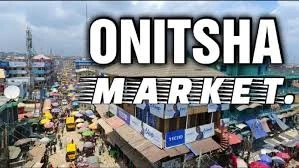
ONICCIMA Calls for Dialogue as Anambra Shuts Onitsha Main Market

The Onitsha Chamber of Commerce, Industry, Mines and Agriculture (ONICCIMA) has called on the Anambra State Government to resolve the closure of Onitsha Main Market through dialogue, warning that prolonged shutdowns over sit-at-home activities could worsen economic losses, disrupt supply chains, and threaten livelihoods across the state.
Food To Drive Nigeria’s Inflation Trend, Says Firm

CAPE Economic Research and Consulting has stated that food inflation will continue to drive inflation in Nigeria. In its Economic Newsletter for November, which was made available to NATIONAL ANCHOR on Friday, the economic think- tank said headline food and core inflation are expected to rise to 27.41, 31.01, and 22.50 percent respectively. While noting that inflation would heighten though at a moderate pace, the firm said the impact of food prices and exchange rates may play a strong role. “However, housing and utility prices had a more robust impact in October 2023 than in September 2023. This suggests that the impact of an increase in energy prices and exchange rate continues to permeate into the economy and would continue to reflect over a 12-month period at the least, through a base effect,” it said. On the Federal Accounts Allocation Committee (FAAC) allocation, the research firm noted that there may be a moderation in FAAC distribution for October 2023 adding that it may not dampen inflationary pressure significantly. “The Federation Account Allocation Committee (FAAC) distributed the total sum of N903.48 billion among the three tiers of government in the month of October 2023 for revenue collected in September 2023. The amount distributed was lower than the N923.01 billion shared in September 2023 by N19.53 billion representing a decrease of 2.1 per cent. “A further breakdown shows that the Federal Government received N320.54.25 billion; States, N287.07 billion Local Government, N210.90 billion. Thirteen percent derivation fund distributed among beneficiary states amounted to N84.97 billion. Revenue allocation to all the three tiers of government generally declined in October 2023 except for the 13 percent derivation fund. “The decline was driven by the shortfall in non-oil. receipts, particularly, Companies Income Tax (CIT), Import and Excise Duties, and Value Added Tax (VAT). Collections from Petroleum Profit Tax (PPT), and Oil & Gas Royalties increased during the period,” it said.
Matawalle Drained Zamfara State’s Resources Within 4 Years – Commissioner

The Zamfara State Commissioner for Budget and Economic Planning, Abdulmalik Gajam, has accused the immediate former governor of the state, Bello Matawalle, of misappropriating the state’s resources during his tenure. In a video interview, Gajam highlighted significant neglect in essential sectors such as water, health, education, and the economy under Matawalle’s leadership but said that Matawalle, who is now the Minister of State Defence, spent as much as N50 million on massage chairs Gajam referenced statistics from Analysts Data Services and Resources (ADSR), indicating Zamfara State ranked poorly among other Nigerian states. According to the data, Zamfara fared poorly in economic output, importation, business competition, industrialization, healthcare, education, and ICT, ranking at or near the bottom across these sectors. “We met Zamfara State in security crisis. When we talk about economic output, Zamfara is 32 out of 37. Importation, Zamfara is 32 out of 37, business competition and industrialization, Zamfara is 35 over 37. “When we talk about healthcare, Zamfara is 26 out of 37, when we talk about education, Zamfara is 30 out of 37. When we talk about ICT, Zamfara is 34. This is based on the statistics that were done by ADSR, the scorecard of the Nigerian states. “Overall, the average mark was 45 but Zamfara State was under 40. We were 36 over 37. That means we are last, we’re taking the Z status,” Mr Gajam said. He said that the state is facing a debt servicing burden of over N30 billion, and the current administration has paid over N20 billion to date. Furthermore, Gajam accused Matawalle’s administration of mishandling funds intended for healthcare services, resulting in a lack of equipment, manpower, planning, and policy in primary healthcare centres. Mr Gajam accused Mr Matawalle’s administration of misappropriating money meant for healthcare services in the state. “There is nothing to show in healthcare. Even those primary healthcare centres when you go around now you can’t even take animals into those structures. You built a primary healthcare centre with World Bank money and did substandard work. At the end of the day, there is no equipment, no manpower, there is no planning and no policy. “We still have emergencies in Mafara Local Government, in Anka Local Government, children are dying of cholera. “We don’t have a functioning education system. What will amaze you is the idea that the past administration spent three years without paying for WAEC or NECO for our students. “The past administration spent more than 15 billion in naira in the Government House alone and now if you go to Zamfara State there is no government office that’s functioning; we’re even renovating them. They bought massage chairs of 50 – 50 million naira when people were hungry, when they were dying of insecurity and illiteracy and malnutrition,” he said. The commissioner said Mr Matawalle also failed to construct roads. He said the former governor didn’t build any road as long as five kilometres in the four years he was in office.” “The legacy the past governor left: he bought Hilux vehicles and dashed them away to bandits. The evidence is there. He was giving asylum to bandits in the Government House. People that killed…even in the barbaric era, there had never been a time where an Emir or a king would give asylum to somebody that kills people,” Mr Gajam added. He highlighted the previous government’s failure to pay for WAEC or NECO examinations for students, spending over N15 billion in the Government House while essential government offices remained non-functional and under renovation. Additionally, Gajam criticized the lack of road construction during Matawalle’s tenure, emphasizing that the former governor failed to build any road exceeding five kilometers. Gajam also alleged that the previous governor purchased Hilux vehicles and gave them to bandits, providing asylum to individuals involved in criminal activities. These allegations depict a state of disarray and mismanagement during Matawalle’s governance, creating a situation where essential public services were severely neglected while financial resources were reportedly misused.
Nigeria’s Equity Market Rakes In N564bn

Domestic equity market on Monday opened in bullish note, gaining N564 billion as gain recorded in the shares of Dangote Cement, Nigerian Breweries, Stanbic IBTC, Geregu Power, Flour Mills Nigeria Plc, FBNHoldings impacted positively on the trading activities. Investors’ rekindled interest in stocks led to the appreciation of NGX All Share by 975.13 basis points to 68111.71 points from 67136.58 points traded the previous day. Also, Market capitalisation of listed equities increased by N564 billion or 1.52 per cent to N37.420 trillion from N36.885 trillion it closed on Friday. An analysis of the investment showed that Northern Nigeria Flour Mills led gainers table in percentage terms, gaining 10 per cent to close at N18.15 per unit, Chellaram followed with a gain of 9.77 per cent to close at N3.82 per share, UACN added 9.84 per cent to N14.35 per share, Nahco gained 9.42 per cent to N26.05 per unit, TIP increased by 9.43 per cent to close at N1.16 per unit. On the contrary, Meryer paint recorded the highest loss, declining by 9.87 per cent to close at N2.74 per unit, Abbey Building trailed with a loss of 9.71 per cent to close at N1.86 per share, Regal insurance dropped by 8.33 per cent to N0.33 per share, RTBriscoe dipped by 6.00 per cent to N0.47 per share, Jaiz Bank down by 5.95 per cent to close at N1.58 per unit. Volume of trades during the day increased by 216.247 million, representing 100.98 per cent as investors traded 430.393 million shares valued at N8.257 billion in 7656 deals against 214.146 million shares valued at N5.178 billion in 5325 deals. Transactions in the shares of Universal insurance led market activities with 94.753 million shares valued at N23.105 million, United Bank for Africa followed with account of 51.263 million shares valued at N1.002 billion, Transnational Corporation of Nigeria traded 32.476 million shares cost N200.849 million, Zenith Bank exchanged 24.421 million shares cost N818.460 million while Chams traded 19.243 million shares cost N37.506 million.
Israel/Hamas Conflict Could Distort Global Commodity Markets –World Bank

Although the global economy is in a much better position than it was in the 1970s to cope with a major oil-price shock, an escalation of the latest conflict in the Middle East—which comes on top of disruptions caused by the Russian invasion of Ukraine—could push global commodity markets into uncharted waters, the World Bank has said. In its latest Commodity Markets Outlook, released on Monday morning, The Washington based lender said the effects should be limited if the conflict doesn’t widen. The Bank note that oil prices are expected to average $90 a barrel in the current quarter before declining to an average of $81 a barrel next year as global economic growth slows. “Overall commodity prices are projected to fall 4.1% next year. Prices of agricultural commodities are expected to decline next year as supplies rise. Prices of base metals are also projected to drop 5% in 2024. Commodity prices are expected to stabilize in 2025. “The conflict’s effects on global commodity markets have been limited so far. Overall oil prices have risen about 6% since the start of the conflict. Prices of agricultural commodities, most metals, and other commodities have barely budged. “The outlook for commodity prices would darken quickly if the conflict were to escalate,” it said. The report stated that effects would depend on the degree of disruption to oil supplies. According to the global Bank, in a “small disruption” scenario, the global oil supply would be reduced by 500,000 to 2 million barrels per day—roughly equivalent to the reduction seen during the Libyan civil war in 2011. Under this scenario, the oil price would initially increase between 3% and 13% relative to the average for the current quarter—-to a range of $93 to $102 a barrel, the report said. “In a “medium disruption” scenario—roughly equivalent to the Iraq war in 2003—the global oil supply would be curtailed by 3 million to 5 million barrels per day. That would drive oil prices up by 21% to 35% initially—to between $109 and $121 a barrel. In a “large disruption” scenario—comparable to the Arab oil embargo in 1973— the global oil supply would shrink by 6 million to 8 million barrels per day. That would drive prices up by 56% to 75% initially—to between $140 and $157 a barrel. “The latest conflict in the Middle East comes on the heels of the biggest shock to commodity markets since the 1970s—Russia’s war with Ukraine. That had disruptive effects on the global economy that persist to this day. Policymakers will need to be vigilant. If the conflict were to escalate, the global economy would face a dual energy shock for the first time in decades—not just from the war in Ukraine but also from the Middle East,” said World Bank’s Chief Economist and Senior Vice President for Development Economics, Indermit Gill. The World Bank’s Deputy Chief Economist and Director of the Prospects Group, Ayhan Kose, noted that “Higher oil prices, if sustained, inevitably mean higher food prices. If a severe oil-price shock materializes, it would push up food price inflation that has already been elevated in many developing countries. At the end of 2022, more than 700 million people—nearly a tenth of the global population—were undernourished. An escalation of the latest conflict would intensify food insecurity, not only within the region but also across the world.”
AfDB’s Total Portfolio In Nigeria Hits $4.4bn – Burrow

The African Development Bank (AfDB) says its total portfolio in Nigeria stands at $4.4 billion. The portfolio is for development projects. In his opening remarks at the Joint Country Portfolio Performance Review (CPPR), the Director General for Nigeria Country Department, AfDB, Lamine Barrow, who stated this at the weekend in Abuja, added that there have been significant improvement in the portfolio performance. He said: “Currently, the Bank’s portfolio in Nigeria is one of the largest among the Regional Member Countries (RMCs), with a total commitment value of US$ 4.4 billion. These are 48 operations fairly evenly distributed between public and private sector operations. “Since the 2022 CPPR Workshop, some of the portfolio performance metrics have improved. In particular, operations flagged for implementation challenges decreased from 36% in January 2023 to 32% in September 2023. This is a result of collective efforts from the Federal Ministry of Finance, the Executing Agencies and the Bank to reduce start-up and implementation delays. Indeed, the time taken to meet loan effectiveness and first disbursement conditions tend to be excessive. Let me acknowledge the unprecedented recent development with the FEC approval of the Ekiti Knowledge Zone project! “We are pleased that the share of start-up delays has been reduced from 32% of flagged operations in June 2023 to 28% in October 2023, and is expected to reach 8% by end 2023 with timely and targeted actions for some projects.” Burrow commended the Federal Government for the bold reforms initiated to address macro-economic imbalances and structural issues in the economy. “These reforms, particularly removal of the fuel subsidies and unification of the exchange rates management system, will help reignite higher economic growth trajectory, despite the short-term pains to the population. “This renewed drive for results and impact is clearly noticeable in the Bank’s interface with the Federal Ministry of Finance, and specifically the International Economic Relations Department,” he said. Since the outbreak of the COVID-19 pandemic, Burrow said the Bank’s annual disbursements increased from UA 93 million in 2021 to UA 143 million in 2022 and projected to reach UA165 million by end December 2023. According to him, fiduciary compliance has also improved with progress observed in the submission rate of audited financial statements by the executing/implementing agencies for financial Years 2021 and 2022. “However, there is scope for further improvements in these and other areas. A more regular scheduling of our Quarterly Meetings will also help ensure that emerging issues in the portfolio management are addressed timely,” the AfDB chief said. To further drive improvement in the implementation of its project, he said the Bank “decided to introduce Project Awards to recognize excellence and strong performance, showcase best practices, and incentivize Executing Agencies and Project Implementation Units to improve performance and delivery of development results. I am pleased to announce that the first Project Awards will be given out today. We hope that these recognitions will provide Project Teams added motivation to enhance project implementation performance and results.” For his part, Director International Economic Relations Department, Federal Ministry of Finance, Budget and National Planning, Stanley George, said the aim of the workshop is to ensure Nigeria gets value for money. He said, “If we take a facility we need to know how it is convertible to impact on people. The benefit is to the people that are our concern. We don’t want any delay. We want seamless implementation of these projects so that people on whose behalf this service was called would have immediate impact.” The Director said the review would help proffer solutions to the delays that are encountered in the implementation of some projects. “I want to use this opportunity to highlight some of the issues that may have inhibited the smooth performance of some of the portfolios. One of which is the long period of delay, low disbursement rate, and communication with various MDAs. I believe that some of these issues will be taken up at the very technical level, so that all stakeholders will know their critical roles,” he added.
Nigeria Earns $5bn From Gas Production Annually- FG

Nigeria earns around $5bn from gas production, Vice President Kashim Shettima has disclosed. The Vice President, who made the disclosure at the 6th Value-chain Annual Lecture and Awards on Thursday in Abuja, added that the amount is 40 per cent less than Egypt, whose gas reserves is 30 per cent of Nigeria’s gas reserves. Nigeria has about 208.83 trillion cubic feet of gas which represents 33 per cent of Africa’s total gas reserves of 620TCF. He said, “Our production to reserve ratio is less than a 3rd of Egypt’s, less than a quarter of Algeria’s and around 10 per cent of Malaysia. “In the aftermath of the Russia-Ukraine war, the EU and many other nations were shopping for LNG at the same time that Nigeria’s largest LNG assets were operating significantly below capacity because gas supply was inadequate. “At this rate, according to Decade of Gas analysis, we could have a demand-supply gap of up to 10bscfd of gas by 2030.” The Vice President, who was represented by Special Adviser to the President on Energy and Power Infrastructure, Office of the Vice President, Sodiq Wanka, said there is a dire need for the country to exploit its proven gas reserves to vastly enhance its fiscal position. With gas accounting for 80 per cent of power generation, authorities are focused on increasing gas utilization in the country as it seeks to make it a critical transition fuel as its 2060 net-zero target beckons. The number of industries that are gas-based and those that utilize gas for power are many, from fertilizer and methanol to cement and consumer goods. But the story of Nigeria’s gas riches and potential cannot be complete without understanding that we are far off from that potential and have a lot of work to do, as public sector leaders and as captains of industry. Shettima stressed that the government is working actively to resolve long standing liquidity issues in the power sector as it is set to roll out ambitious customer metering initiatives that would boost the sector. “We will continue to strengthen sector governance that favours only technically and financially sound investors to own key assets in the power sector. We will drive the implementation of the Electricity Act 2023 to create a new narrative and new national framework for electricity that will bring investment to the electricity sector. In terms of upstream gas, the commitment of the government on ensuring the right tariffs to encourage exploitation of non-associated gas remains strong,” he said. The Vice President noted that despite the enormous amount of work left to be done, the AKK pipeline projects are on course to be completed. “The Obigbo-Umuahia-Ajaokuta pipeline will be key to ensuring the AKK pipeline is not gas-constrained while opening up new demand along its right of way. There is much work left on expanding the ELPS network among others. These projects can be significantly accelerated if we focus on making investments in them more attractive. “Our network code must adequately cover private pipelines; we have to ensure that private investors are able to recover their costs and make a return on their investments by creating a new framework for tariffs that is not too rigid. And we need to have clear guidelines for tolling. The story is similar for other midstream infrastructure. On security of oil and gas assets, Dhettima said, the “government will also not rest in continuing to pursue a holistic approach to the issue of security of petroleum assets – from strengthening the operationalization of the Host Communities Trust Fund to closer community engagement, surveillance and prosecution of identified vandals. He urged the private sector to play a pivotal role by making the right investments in the sector. “Nigeria cannot be a net exporter of LPG and still import LPG for domestic use because of infrastructure gaps. Our private sector must strengthen its resolve to look beyond short-term challenges and make investments taking a long-term view,” he said.
FG Seeks Stricter Rules To Curb Raw Minerals Exports

The Federal Government of Nigeria is set to implement stricter regulations to curb the export of raw minerals and promote the export of processed products. This strategic move aims to generate employment opportunities and enhance the overall value of Nigeria’s exports, according to Dele Alake, the Minister of Solid Minerals, who emphasized the importance of adding local value to mineral resources. Alake stated in an interview, “You can’t take our minerals away without adding value locally. This means establishing factories to produce goods associated with the minerals being extracted.” Nigeria, Africa’s largest crude oil producer, is diversifying its income sources as oil production declines. The country possesses significant mineral resources such as lithium, gold, bitumen, and iron ore deposits. It aspires to follow the example of countries like Indonesia, which successfully increased the value of its commodities through regulations requiring buyers to establish refineries within their borders. Indonesia’s nickel exports, for instance, saw a tenfold increase in five years. Despite past efforts by Nigerian governments to revitalize the mining and quarrying sector, the desired progress has been elusive. A decade ago, the administration of then-President Goodluck Jonathan aimed to elevate the mining industry’s contribution to the gross domestic product to three percent by 2015. However, the sector only accounted for 0.2 percent of the GDP last year, as reported by PwC. Encouraging foreign companies to refine minerals within Nigeria remains challenging due to issues such as unreliable electricity supply and limited domestic demand. Additionally, many minerals are extracted by illegal miners. In northern Nigeria, security concerns persist, with armed gangs involved in mass abductions and killings, leading to the displacement of local communities and facilitating illegal mining activities, as noted by Alake.
Has Mission To Save The Naira Begun?

The government may have begun the resuscitation of the Naira as it recently lifted the suspension restricting 43 items from its official forex platform, Investors’, and Exporters’ window. The restriction which became effective as announced by the Central Bank of Nigeria in 2015 originally had 41 products, but later had two other items added. The Governor of the Bank, Mr. Olayemi Cardoso, announced the lift last Thursday among other policy initiatives he promised to unveil to halt the downward slide of the Naira against other currencies, particularly the America Dollar and British Pounds Sterling. The uncontrolled freefalling of the local currency, occasioned by the decision of the government to harmonize the exchange rate due to arbitrage, and racketeering in the parallel market of the forex subsector made the decision inevitable. The Governor gave a hint of this reversal among other reforms he promised during his screening by the Nigeria Upper legislature. This restriction affected products like rice, margarine, palm oil, palm oil products, dairy products, poultry, tomatoes, wheelbarrows, cosmetics, steel products, including toothpicks to mention but few. The objective of the lift according to the Circular released by the Bank is to boost liquidity in the foreign exchange market, promising to intervene from time to time to ensure that importers of these items have free and unhindered access to forex from the official window. The CBN Act 2007 stipulates that Naira is the only acceptable legal tender in the country, but the emerging trend in irrationality is the dollarization of the economy. The non-regulation of the dollar by the government as it is the case in some countries, particularly African countries, has increased the appetite and demand for the currency, preferring it as a store of value, over and above the local currency to perpetrate rent-seeking and arbitrage. The importers of the restricted items have had to approach the parallel market to source for the dollar, invariably creating a chaotic pressure on the Naira. This atmosphere apparently took a toll on the Naira. Obnoxiously, in Lagos, Abuja and Port Harcourt, landlords, hoteliers, and proprietors of schools started charging and demanding payments in dollars and pounds sterling. Equally, attitudes of some politicians and operators in the economy, particularly, the parallel market operators have not helped the fate of the currency. The usage of foreign currencies during electioneering campaigns impacted heavily on the Naira. It was an inexcusable national security offence, punishable by law. Also, Nigerians’ huge appetite for foreign imported goods is offensive, exporting jobs to other nations, thereby depleting the scarce national foreign reserves. More so, Nigeria’s backward integration intention has not been matched with action. Factories have closed and more are closing with its attendant job losses. Poverty reigns unchecked in the country, youth unemployment at almost 40 percent, creating despondency and Ja’pa syndrome. Brain drain phenomenon is fast depleting the economy of its egg heads, and professionals are emigrating in droves in search of greener pastures. It is noteworthy and pleasing that the administration of President Tinubu has opted to arrest the drift, injecting fresh brains in key organs of government saddled with the responsibility of creating jobs and wealth. The CBN latest circular announcing this decision, TED/FEM/FPC/GEN01/010 stated that “importers of all 43 items previously restricted by the 2015 circular, and its addendums are now allowed to purchase foreign exchange from the official Investors and Exporters’ forex window. Prior to this decision, key stakeholders in the economy, the Manufacturers Association of Nigeria, Lagos Chamber of Commerce and Industries, Airline Operators Association of Nigeria among others had called for a review of the policy to allow for transparency in the subsector. What the CBN has done in the opinion of some concerned Nigerians is that the Bank has now decided to tow the process of policy normalization in tandem with the present administration’s philosophy. The suspended restriction is considered an anathema to extant trade policy. This is because the restricted items were not under any prohibition. That singular action they opined caused the distortion and chaos not only in the forex subsector, but the economy at large. This latest responsive action from the CBN Governor has been variously commended by sector stakeholders, but warned the Bank against suppressive tendencies, particularly, outside the I&E window. A seasoned Financial/Business publisher, Mr. Ewache Ajefu, commended Mr. Cardoso for taking the bull by the horn. He, however, urged the fiscal authority to also review existing laws impeding economic growth, and come up with friendly policies that will encourage and boost local production and wealth creation. He urged policy formulation, coordination, and collaboration, devoid of rancor, witnessed during the immediate past administration between the monetary and fiscal authorities. He also welcomed the decision of the Governor to “pull back” the CBN from its developmental financing activities witnessed during the immediate past governor of the Bank. He urged Mr. Cardoso to live up to his words to streamline the relationship between the Bank and government. He suggested a more mutual and beneficial relationship, respecting each other’s mandate, but should endeavor to always play limited advisory role that is supportive of economic growth and development. Mr. Adisa Olatilewa, an agricultural entrepreneur, also welcomed the suspension of the restriction. He lamented how his businesses suffered while the restriction lasted. He advised current managers of the nation’s bank to restrict themselves to the mandate of the Bank, and shy away from direct involvement in fiscal development financing initiatives. He said his experience, and many others like him, during the last administration of President Buhari was distasteful. He wants the CBN as the banker to the government, and its advisor, to play the roles as constitutionally ascribed on policy measures, regulations, and programmes that will support economic development and welfare of Nigerians. He also wants the government to liaise with the CBN on measures to be taken to arrest the intractable inflation which in his opinion may jump to 26 percent if urgent measures are not taken. If the government works with the CBN, and the CBN is sincere
Naira Weakens Despite CBN’s Intervention

Since the unification of all the official foreign exchange (FX) windows, the Naira has continued to depreciate against the US dollar, down by 39.6 per cent to N765.83/$ as of 11 October 2023 from N462.88/$ at the I&E Window. Based on the half-year financial markets report of the Central Bank of Nigeria, it has maintained its intervention in the foreign exchange market in an attempt to alleviate demand pressures and ensure exchange rate stability. A total of $6,439.33 million was sold at the foreign exchange market made up of spot sales of $1,557.47 million and forward sales of $4,881.86 million. The spot sales comprised $612.41 million sold at the inter-bank Secondary Market Intervention Sales (SMIS) window, $455.31 million sold to Small and Medium Enterprises (SMEs), $441.75 million for Invisibles, and $48.00 million sold at the I&E window while the bank purchased a total of $655.53 million in the FX market. However, the shocks of the policy have been more pronounced at the parallel market leading to a steep depreciation of the Naira to N1020/US$ on 10 October 2023. With little control over the depreciation of the nation’s currency, the then acting governor of the Central Bank of Nigeria (CBN), Mr. Fola Shonubi, announced plans to put in place new policies that would guide the dealings of FX to boost supply in the market. Apparently, the measures put in place have not been effective as demand for FX continues to rise amidst an acute shortage of supply. “We have always argued that while we believe the unification of the various FX rates is a pro-market policy that will be positive for the economy in the long term, the short to medium-term impact will be hard too hard on the average consumer. “A focus on rate convergence without structural reforms to increase the supply of FX will be a case of treating the symptoms while ignoring the underlying cause of the problem which is an acute shortage of supply amidst a growing demand for FX. Meanwhile, while crude oil sales and Foreign Portfolio Investments (FPIs) are two major sources of FX that have declined significantly, Oil production remains depressed, reported at 1.57 mbpd in September (highest so far this year) and are yet to see any significant foreign capital inflows. According to the Nigerian National Petroleum Company Limited (NNPCL), between September 30 and October 6, 128 crude oil theft incidents were recorded across the oil-producing areas of the Niger Delta. In the specific timeframe mentioned, there were numerous illicit activities in the oil sector. These included 17 cases of unauthorized connections, 27 illegal refineries, 11 infractions related to vessel tracking systems (AIS), and 49 instances of wooden boat arrests.