FG To Support Local Manufacturers With N75bn

Nigeria’s Vice President Kashim Shettima has said the federal government will support local manufacturers with N75 billion by March 2024 to strengthen the manufacturing sector. Shettima said this while declaring open the second National Conference on non-oil export organised by the Nigerian Export Promotion Council (NEPC) in Abuja. Represented by Dr Jumoke Oduwole, Special Adviser on Presidential Enabling Business Environment Council (PEBEC) and Investment, Shettima said N75 billion was earmarked to support 100,000 start-ups and Micro Small and Medium Enterprises (MSMEs) at single digit interest rates. The two-day conference is with the theme, “Building a Sustainable National Economy Through Non-Oil Export.” According to him, the federal government is also committed to providing necessary infrastructure that will support increased export of non-oil commodities. “There can never be a better time to envision a conference of this nature than now; a time to reflect on non-oil export. “Over the years, the nation’s major source had been 80 per cent dependent on oil revenue. “It is clear that as a nation, we can’t afford to work on this uncharted path. “Today, we find ourselves in protracted situation and challenges. All indications point to the fact that we have to prioritise our non-oil export. “And this administration will give every support to boost non-oil export,” he said. While pledging support towards made-in-Nigeria products, he assured of federal government’s commitment to provide infrastructure that would facilitate export trade. “We will prioritise capacity building for MSMEs, we will invest in human capital development. “We need to work diligently to utilise opportunity provided by African Continental Free Trade Area (AfCFTA) by deepening our existing values and expanding our forex earnings,” he said. Earlier, the Minister of Industry, Trade and Investment, Dr Doris Uzoka-Anite, expressed concern that Nigeria operated a mono-economy for long. The minister, however, expressed joy that government’s diversification efforts were beginning to yield positive results. “Nigerian non-oil exports grew by almost 40 per cent in 2022, reaching 4.820 billion dollars. “Semi-processed and manufactured products accounted for almost 37 per cent of these exports, surpassing agriculture’s 30 per cent. “This is a big step in the right direction. We no longer have the luxury of business as usual when it comes to the business of making sure Nigeria succeeds. “We can no longer afford to export raw materials cheaply and import finished products at premium prices. “That train has stopped and will not be starting again. Our focus for exports is locally manufactured value-added products that create both business and employment,” she said. Dr Ezra Yakusak, the Chief Executive Officer of NEPC, said the Council had significantly increased the contribution of the non-oil sector to the Nigerian economy. According to him, for first time, the performance of the non-oil export grew by 39.91 per cent in 2022 to 4.820 billion with about 214 different products exported, ranging from manufactured, semi-processed, solid minerals to raw agricultural products. He said Nigerian products were exported to 122 countries, and appealed to the federal government to address the strange disease afflicting ginger farm in Kaduna State. “I will not do justice to this address if I do not present the challenges being faced by farmers and exporters of ginger in Nigeria. “It is a known fact that Nigeria’s ginger has been adjudged as the best in the world due its unique aroma, pungency and high oleorosin content. “This makes Nigeria one of the largest exporters of ginger in the world. However, the Council received several complaints of the outbreak of a strange disease ravaging ginger farms in Kaduna State. “So far, about 2,503.9 hectares of farmland have been affected with an estimated loss of over N8 billion,” he said.
World Bank Support Girls’ Learning, Empowerment In Nigeria With $700m

The World Bank has approved a fresh $700 million loan for Nigeria to boost adolescent girls’ learning and empowerment. According to a statement published on its website, the lender said the new loan will serve as additional funds for an ongoing project known as the Adolescent Girls Initiative for Learning and Empowerment. The Bank noted that apart from the girls that would benefit from the financing, others included over 15 million students and beneficiaries, such as teachers, administrators, families, communities, and staff in existing and newly constructed schools. “The World Bank approved additional financing of $700m for Nigeria to scale up the Adolescent Girls Initiative for Learning and Empowerment programme whose goal is to improve secondary education opportunities among girls in targeted states. “The additional financing will scale up project activities from the current seven states to eleven additional states and increase the targeted beneficiaries to include out-of-school girls, those who are married, and those who have disabilities,” the statement read. The World Bank put Nigeria’s out of school children at over 12 million, with many of them in Northern Nigeria. It was also noted that an estimated one million children were affected by increased insecurity around schools in 2020-2021. The statement added, “In the seven AGILE programme implementing states – Borno, Ekiti, Kaduna, Kano, Katsina, Kebbi, and Plateau – the number of girls in secondary schools has increased from about 900,000 to over 1.6 million. “Under the programme, over 5,000 classrooms have been renovated and over 250,000 eligible girls have received scholarships. “The AGILE programme has supported construction and rehabilitation of WASH facilities in secondary schools and the installation of computers and solar panels which make attending school more convenient and conducive for both girls and boys. Life skills, systems strengthening, and advocacy are other key aspects of the program which address social norms impeding girls’ education.” The World Bank Nigeria Country Director, Shubham Chaudhuri, stated that, “Closing the gender gaps in economic empowerment by ensuring girls have access to education and skills is key for Nigeria’s development and economic prosperity. “Nigeria’s working population will soon be one of the youngest and largest around the world, which means that investing in adolescent girls is imperative when addressing overall economic prospects and growth.”
Increased Investment In Women Will Improve Nigeria’s GDP -UN

UN Women Regional Director for East Africa, West, and Central Africa, Maxime Houinato, has said that in order to bridge the multi-sectoral gender gaps in Nigeria and improve the standard of living for women and girls, there is need for the federal government to commit specific percent of national budgets and development funds to interventions that address gender disparity in Nigeria. Maxime Houinato is in Nigeria for an executive visit. In a press briefing on Friday at the UN House in Abuja, Houinato said that increased allocation of specific budget lines to address gender disparity in Nigeria would empower more women. “Women are at the heart of human capital for economic development in any nation – health, education, agriculture, and business. Gender disparity and the suffering of women are having a detrimental impact on the building of that human capital which is at the centre of productivity and development,” Houinato said. The UN Women regional director met with various stakeholders in Lagos and Abuja including the Minister of Budget and National Planning, Sen. Abubakar Atiku Bagudu. In Lagos, a $25million GBV fund was launched as part of a contribution from Nigeria’s private sector. The fund will serve to fund gender responsive interventions that will curb violence against women and girls and enhance women’s empowerment. He said, “I was rushed to Lagos by my team the moment I landed in Abuja to look at a couple of initiatives. One of them is the establishment by the private sector with the technical support of the UN Women of a $25 million GBV Fund. This is the first time in Africa that the private sector is coming together to take up such issues as GBV and to put hard currency on the table. “When I met the minister of Budget, he really appreciated that contribution and that the government might consider a tax break for private companies that decide to put money on the table to address gender equality issues that have always been the contribution of the government to the private sector initiative. “I was also thrilled to meet with the Nigeria Exchange group that has decided to start working with UN Women to launch in 2025 the first gender bond in Nigeria with contribution from various investors into gathering resources to address the lack of opportunity that women suffer from. “Those initiatives are interesting because so far, the government has been putting resources for critical elements of gender inequality. Now we believe more and more the private sector is getting interested, the reason being that gender based violence, gender inequality that was placed in the social sector has now moved to the economic sector where we recognize that inequality is crippling the economy.” In her remarks, UN Women Representative to Nigeria and ECOWAS, Beatrice Eyong, stated that the financial implication of GBV is enormous and reiterated that if the prevalence of violence against women and girls reduces, family income and earnings will improve and so will the economy of the society at large.
Come, Invest In Nigeria’s Bubbling Economy, Tinubu Tells US

President Bola Tinubu has invited the United States business community to come and invest in Nigeria’s ‘bubbling’ economy. Tinubu, who rang the closing bell at the Nasdaq Stock Market in New York on Wednesday, called on the United States business community to invest in Nigeria’s “bubbling market”. The President, who is attending the ongoing 78th session of the United Nations General Assembly, was accompanied to the bell ceremony by the President of the U.S.-Africa Business Center (USAfBC) at the U.S. Chamber of Commerce, Scott Eisner. The closing bell ceremony, held at the seven-storey tower of the Nasdaq headquarters in New York, signifies the end of a trading session. “I am happy to bring Nigeria to your doorsteps and honoured that we’re here today with a bubbling maket that will evolve the West African subregion,” Tinubu said. “The greatest economy is Nigeria. There is an immense opportunity in Nigeria that you can invest your money without fear. “We’ve removed a lot of the bottlenecks. We’ve cleared the subsidy that is corrupt and we’ve also retooled the exchange rate to a reliable, dependable one-figure floating of the exchange naira.”
Crude Export Earnings Hit N5.6trn In Q2 Amid Naira Float

There was a major improvement in export earnings in the second quarter of 2023, as a result of the floating of the naira which ensured earnings from crude oil exports swells. Crude oil receipts rose 8.5 per cent to N5.6 trillion. This represents 79.6 per cent of total exports. “The improvement in export earnings was mainly spurred by crude oil receipts which rose 8.5 per cent quarter-on-quarter (q/q) to N5.6 trillion (about 79.6 per cent of total exports) though production level was unimpressive as per national Bureau for Statistics (NBS) data (down 19.2 per cent q/q to 1.22mbpd). “Noteworthy, we suspect that the improvement in oil receipt was also impacted by exchange rate revaluation gain given that the Central Bank of Nigeria (CBN) switched from a hard-pegged exchange rate regime to a managed float in June 2023, causing the official conversion rate of oil proceeds to rise from N461/$ to over N650/$. Hence, nullifying the effect of lower crude oil price in the second quarter ($78.13/bbl.) relative to the first quarter ($81.11/bbl.).”, said analysts at Afrinvest. Data from NBS showed that the value of Nigeria’s total trade (imports and exports combined) improved over the preceding quarter (up 5.8 per cent) but trailed the level attained in the corresponding period of 2022 by 7.6% to settle at N12.7 trillion. For the third consecutive quarter, Nigeria recorded a positive trade balance amounting to N1.3 trillion in the second quarter, aided by the faster growth in export earnings (up 8.1 per cent q/q to N7.0 trillion) as against import expenses (up 3.0 per cent q/q to N5.7 trillion). Similarly, non-crude oil and non-oil exports also grew 6.8 per cent and 5.6 per cent q/q to N1.4 trillion and N688.7 billion respectively. “We attribute these gains to the recovery in the broader economy from the negative knock-on effect of pre-election jitters and poor implementation of the naira redesign policy in the first quarter (GDP expanded 2.5 per cent vs. 2.3 per cent in the first quarter)”, said Afrinvest. It is important to highlight that Agricultural goods remain Nigeria’s largest source of non-oil export earnings (4.0 per cent of export share), while Manufacturing, Raw material goods, and Solid mineral goods trailed with 3.0 per cent, 2.1 per cent, and 0.5 per cent, respectively. Cashew nuts (shelled and unshelled), sesame seeds, and cocoa beans combined accounted for 65.7 per cent of the total N278.4 billion Agric exports in the period – an indication that cash crop exports could be a major source of non-oil foreign exchange (forex) earnings for Nigeria if adequate investment is made on procuring modern farming equipment and insecurity is wholistically checked. In terms of trade performance with other regions, the previous quarter’s trend was sustained as Nigeria booked a surplus with three of its five trading regions – America (N178.5 billion), Europe (N1.2 trillion), and Africa (N510.5 billion) – while a deficit was recorded in trade with Asia (N584.5 billion) and Oceania (N98 billion). In terms of destination, the Netherlands (11.2 per cent), the US (10.2 per cent), and Indonesia (7.8 per cent) were the top export hubs by share while China (22.2 per cent), the US (16.1 per cent) and Belgium (8.0 per cent) topped imports origin.
Diversify Export Earnings, Increase FDIs To Address Fx Liquidity Challenge -Uwaleke

Professor of Finance and Capital Market, Uche Uwaleke, has said that except the Federal Government diversify its export base and increased foreign direct investments (FDIs), the liquidity challenge in the forex market would persist. Uwaleke, who gave the advice Monday in Abuja, added that the country’s weak economic indices would make it difficult for the government to implement the naira float. In a bid to address the widening exchange rate gap, the federal government resorted to a managed float of the naira on the I&E Window. However, this policy has failed to halt the fall of the naira. The exchange rate for a dollar to naira at the official window is N751.1 as of Monday, 11 September 2023, according to the data published by CBN. While at the parallel market, the naira exchanged for N925 to a dollar in Lagos. Experts have said that with a larger part of Nigeria’s revenue still coming from oil, it would not be easy for the government to address supply side constraints in the FX due to the country’s inability to meet it’s OPEC quota. “The only sustainable solution to deal with the liquidity challenge in the forex market is to have multiple streams of forex comprising export proceeds and foreign investments. “Nigeria’s economy is not ready for a complete float of the naira due to weak economic fundamentals. “Regrettably, over 90% of forex inflows still come from crude oil sales. A diversified export base is required to check volatility in a forex market where the exchange rate is determined by market forces. This is still lacking in Nigeria. “On the demand side, I support the idea of curbing dangerous currency speculation by making the trading in forex outside the Banks and BDCs illegal. By doing so, the CBN can be in a position to monitor activities in the forex market,” he said.
FG Obtains $163m AfDB Loan To Boost Wheat Production

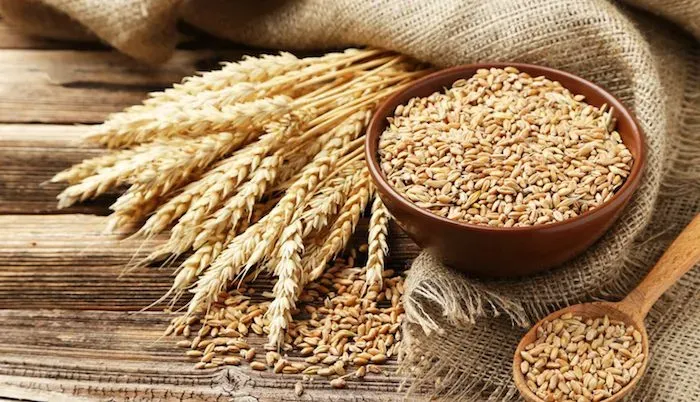
The Vice President, Kashim Shettima has disclosed that the Federal Government had obtained 163 million dollars loan from the African Development Bank to support wheat production in the country. Shettima stated this at the palace of the Emir of Argungu, Alhaji Sumaila Mera, when he paid a condolence visit to the Emirate and family of late Sheikh Abubakar Giro. He re-affirmed the determination of the Tinubu administration to fulfill all its promises to Nigerians, particularly in the agricultural sector. The Vice President also assured that food security would receive serious attention from the government. “We have obtained 163 million dollars loan from the African Development Bank to support wheat production. The scheme would be launched soon. “We need 10,000 hectares of land in Kebbi State. But the scheme would be well executed in Jigawa State with a cultivation of 50,000 hectares of land to boost wheat production.” In his remarks, the Emir of Argungu, Mera, who prayed for the unity and progress of Nigeria, thanked President Tinubu and Vice President Shettima for their support.
Capital market can act as financing tool for PPP projects –Yuguda

The Director-General, Securities and Exchange Commission (SEC) has stated that the Nigerian Capital Market has the capacity and is well positioned to finance Public-Private Partnership (PPP) infrastructure projects in the country. Yuguda made this remark at the 2023 Chartered Institute of Stockbrokers (CIS) National Workshop which was held in Abuja on Thursday. Speaking on the theme; leveraging the capital market to drive public-private partnership for effective national economic growth, Yuguda, citing a World Bank report, pointed out that Nigeria’s current level of public spending on infrastructure is one of the lowest globally and added that this lack of investment has resulted in a significant infrastructure gap, which has adversely affected the quality of infrastructure and limited access to essential services. The SEC DG who was represented by the Executive Commissioner, Corporate Services, Ibrahim Boyi, highlighted that given the current rate of capital expenditure, it would take approximately 300 years to bridge Nigeria’s infrastructure gap. He stressed the need for a new approach to financing infrastructure development in Nigeria to stimulate economic growth and argued that leveraging public-private partnerships is essential, and the capital market can play a crucial role in this regard. The Director-General explained that the capital market, with its patient capital and established project financing options, is well-suited to finance PPP infrastructure projects at various levels. He cited the common model used in many developed countries, where governments and private sector partners raise debt capital for PPP projects through bonds and loans. His words, “This is an infrastructure financing model that is a common choice in many developed nations of the world. Capital markets allow governments and private sector partners to raise debt capital for PPP projects. Governments can issue bonds to finance their share of the project costs while private companies can secure loans or issue corporate bonds for their contributions. The capital market’s ability to provide funding, risk management tools, liquidity, and efficient allocation of resources make it a crucial partner in the success of PPP projects. It allows governments and private sector partners to leverage their strengths and resources to deliver essential public infrastructure and services”. He thereafter commended the CIS for its role in developing the economy by equipping individuals and organizations with the necessary skills and expertise in the financial sector, which is crucial for the success of PPP projects.
Northern Nigeria Development: Riding on Inuwa Yahaya’s wings

“Good governance is the art of putting wise thought into prudent action in a way that advances the well-being of those governed”. – Diane Kalen-Sukra The above submission aptly captures the colour and character of the current leadership of States in the Northern geopolitical zone of Africa’s most populous country, Nigeria. Northern Nigeria is about to begin a journey unprecedented. But predictably a journey of joy and jubilant expectations. Not because of certainty of facts, since no man is certain of the future except the maker of man, the Almighty God. But certainty of expectations because of the man that is leading this journey. He is a man who has not only demonstrated that he breeds brilliant ideas, but has also exhibited consistently his capacity for successful public policy implementation. That man is no other person than Muhammadu Inuwa Yahaya, the Governor of Gombe State and incumbent Chairman of The Northern Governors’ Forum. Inuwa’s antecedents in policy formulation and clinical implementation of same into action which has been very beneficial to his state citizenry is about to impact progressively on the leadership of the Northern Nigerian States. Someone once said that we must eradicate ignorance and illiteracy from our nations and continent to the nearest minimum for us to have a good development. Inuwa Yahaya’s successful education sector reforms in Gombe State is a compass for a rapid transformation of the education system and structure in Northern Nigeria judging by the successes he posted in Gombe State. In his first term as a Governor, more than 300000 (three hundred thousand) out of school children returned joyfully to school with a model learning environment compared to the best schools in the developed not only that, from a comatose education sector and exam success ratio of below 27% , Inuwa’s radical overhaul, including declaration of a state of emergency in the sector, brought back the glory of education in the state. By the end of his third year in office, exam success ratio has increased to 78%. This model will be fascinating to other Northern states if the Governors are ready for same. While not relegating the importance of Quranic education to the background, Inuwa has integrated the two together in a way that both the children and parents are happy with the policy. Although, there are still many Almajiri children on the streets of Northern Nigeria, Inuwa Yahaya is one of the strongest voices on the plan to integrate these children who roam the streets into foster homes where they can be given a fresh orientation for a better lifestyle. The Northern Nigeria is sure to have a huge reduction of the Almajiri population during the era of Inuwa Yahaya. In agriculture, the mainstay of Northern Nigeria, the farmer- herder clashes is another area the region stands to benefit a lot with the incumbent Chairman. Agriculture has been a top agenda on the mind of President Bola Ahmed Tinubu and same with Governor Inuwa Yahaya. I recall during Bola Ahmed Tinubu’s Presidential Campaign trip to Gombe how he eulogized Inuwa Yahaya’s Agricultural Revolution in Gombe State with a promise to imbibe and replicate same on a national level. A tech-driven agricultural hub is evolving already in the Jewel in the Savannah as Gombe is fondly called. Gombe State also prides itself in having the largest grazing reserves in Nigeria with vast hectares of land for herders and other pastoralists.The grazing reserve template can be duplicated in other Northern Nigerian States and serve as a panacea to the archaic nomadic style of cattle grazing. If Inuwa’s template is adopted, transregional migration of herdsmen which often causes infringements and resultant clashes with farmers will be drastically reduced. Let’s look at infrastructure and economic development template in Gombe State and how that will rub off on sister states in the North. Gombe under Governor Inuwa Yahaya came up with the first development plan since the creation of the State. It is a 10 Year Development Agenda tagged DEVAGOM. It has a blueprint for sectoral development of the state with timelines and means of funding, clearly defined. With a development blueprint such as this, and shared experiences, a wide spectrum of cross-sectional development is imminent in Northern Nigeria. Look at the 1000 hectares Muhammadu Buhari Industrial Park in Dadinkowa, Gombe State. This is a theme park for rapid industrialization of the state. It is a business enterprise hub that will fire up development of all sectors taking advantage of the huge economy of scale that comes with such development model. Imagine all the states in the geopolitical zone firing up their development turbines at full speed. Employment galore for citizens will be the concomitant end. A vibrant industrial economy that will catalyse sporadic expansion of the individual state’s economic growth is in sight. The dynamic road network expansion witnessed during Inuwa Yahaya’s first four years in office is highly instructive for other Governors in the subregion. Gombe enjoyed a road network program tagged Network 11-100.Via this agenda, Inuwa is constructing 100km roads in all the eleven local government areas that make up Gombe State. What does this portend for economic growth? First, the rural communities are linked up with good roads thereby making ease of movement a pleasant experience for both traders and travellers especially rural farmers who will like to sell produce to the urban dwellers. The smooth roads also mean a reduction in travel time and increased production turnover. The transportation sector in the subregion is also open to emulation of the Gombe template. Gombe Line, state owned transport company has been vigorously rejigged by Inuwa with regular additional fleet. Inuwa Yahaya has also attracted a few more airlines to the State and also brought in the Federal Might to bear on the state. The State Airport has been put under the Federal Airport Authority to take advantage of more funding. Now, if infrastructure is available and there are no serious investors, it will be a negation of efforts and denied success.
First Bank, ELOY Foundation empower over 1000 women MSMEs

First Bank Nigeria Limited in partnership with the ELOY Awards Foundation has launched the 2023 Edition of the “Eloy Business Shower” designed and dedicated to encouraging, promoting and empowering businesses owned by women across Nigeria. The focus and aim of the awards are to expose women in business to important business skills, networking, and the Eloy Foundation Business Toolkit, which is a collection of business survival information. This will further be executed through the First Bank’s FirstGem 9 percent Loan Scheme created for female owned MSMEs and the SME Connect Initiative. The Business Shower by the ELOY Awards Foundation was held in five states: Lagos, Delta, Anambra, Kano and Osun States from the 1st of July 2023 to the15th of July 2023. According to the Founder, ELOY Awards Foundation, Tewa Onasanya “the ELOY Business Shower was held to support business owners to build sustainable businesses. This year at the second edition of the program, the company hosted 1087 women across the 5 states visited in Nigeria. It was an avenue for these women to gain access to entrepreneurial trainings from experienced businessmen and women, who armed them with tools and information to help them grow their businesses successfully”. The over 2300 women who registered for the program will also be invited to join the ELOY Foundation Network, a network that will continue to give them access to resources to help their businesses grow. Expressing her delight on the recently concluded ELOY Foundation Business Shower, Folake Ani-Mumuney, First Bank’s Group Head, Marketing & Corporate Communications, said, “we commend Eloy Foundation Awards for convening the second edition of its Eloy Business Shower which has impacted over 1000 female business entrepreneurs across the country.” “Female business owners that participated at the event in the 5 cities –Lagos, Delta, Anambra, Kano and Osun States – are encouraged to take advantage of the teachings from the facilitators as these are essential to boosting their contribution to the economic activities in their host state, geopolitical zones and nation at large, whilst sustaining their businesses,” she concluded. Following the huge success of the event, Phase two of the event will begin soon, where ELOY Awards Foundation will enrol 50 women who are small business owners onto the three month ELOY Foundation Sustainable Empowerment Program(SEP), these small business owners will be mentored for a period of three months and they will have access to entrepreneurial trainings every month, mentorship, access to information on affordable finance and 10 of these women considered for a grant to assist them on businesses.