Afreximbank To double Intra-African Trade Financing To $40bn By 2026

Afreximbank To double Intra-African Trade Financing To $40bn By 2026

African Export Import Bank (Afreximbank) is to double its financing of intra-African trade to 40 billion dollars on a revolving basis by 2026. This bank’s intra-African trade financing stood at billion dollars in 2021. Mrs Kanayo Awani, Afreximbank’s Executive Vice President, made the disclosure at the Intra-African Trade Fair 2023 (IATF) Nigeria High Level Business Roadshow in Lagos. The IATF 2023, scheduled for November 9 to Nov. 15, in Egypt, is organised by Afreximbank, African Union Commission and the Africa Continent Free Trade Area (AfCFTA) Secretariat. The event is a platform for businesses to access an integrated African market of over 1.3 billion people with a gross domestic product of over 3.5 trillion dollars created under the AfCFTA. Awani said that Afreximbank was not only spearheading the IATF to support AfCFTA, but was also at the forefront of supporting African trade and had developed several financing and facilitation instruments to support trade and investments. She said the bank was working with AfCFTA Secretariat to put in place AfCFTA Adjustment Fund to facilitate and provide support through financing, technical assistance, grants and compensation funding to AfCFTA state parties and private enterprises. The official said that this would aid adaptation and effective participation in the AfCFTA. “The Board of Afreximbank has approved and committed one billion dollars to support the funding of the initiative and 10 million dollars grant that will facilitate the establishment and operationalisation of the adjustment fund. “We are also partnering with the AfCFTA Secretariat and AU to ensure a successful implementation of the Pan-African Payments and Settlements System (PAPSS), with the view to facilitating the payment and settlements of trade transactions in local currencies. “This will address the challenge of currency inconvertibility and foreign exchange shortages that hamper intra-African trade,” she said. Awani added that Afreximbank was also leveraging digitalisation through the African Trade Gateway – a digital ecosystem created to facilitate intra-African trade. She said that the ecosystem comprised an integrated and function-specific set of platforms that would help to surmount impediments to cross-border trade. According to Awani, to facilitate the movement of goods, Afreximbank developed the Afreximbank African Collaborative Transit Guarantee Scheme to ensure seamless transportation of goods across multiple borders through issuance of a single technology-enabled transit bond. She said the scheme backed by one billion dollars commitment provided by Afreximbank, would lead to cost saving of more than 300 million dollars yearly. “We have also created an African Trade Facilitation Programme (AFTRAF) through which we are forging strong partnerships with African commercial banks to help them finance intra-African trade. “The Bank is also working with the African Association of Automotive Manufacturers (AAAM), African Union and the AfCFTA Secretariat to develop a viable automotive industry in Africa. “In this context, Afreximbank has developed a one-billion-dollar global automotive financing facility for the automotive industry. “We are also providing support in terms of facilitating the development of regional value chains and the implementation of the Continental Automotive Strategy that was adopted by trade ministers early this year.” She added that the bank was working with the International Trade Centre to train African companies including SMEs on how to export under the AfCFTA. “The training programme provides trade and market information to assist the businesses to identify export opportunities, how to comply with all the export requirements under the AfCFTA as well as how to access finance, payment and settlement, among others,” she said. Awani reiterated the bank’s commitment to working with member-countries to position them to take advantage of the AfCFTA. She said that in an effort to support Nigeria’s industrialisation and export development efforts, Afreximbank had invested over 36 billion dollars in the Nigerian economy since its creation in 1993 through its trade and projects financing. Awani said that the support covered a range of sectors and industries, including energy, transport, financial services, healthcare, manufacturing, and trade infrastructure.

Capital market can act as financing tool for PPP projects –Yuguda

Yuguda Tasks Private Sector On Infrastructure Funding

The Director-General, Securities and Exchange Commission (SEC) has stated that the Nigerian Capital Market has the capacity and is well positioned to finance Public-Private Partnership (PPP) infrastructure projects in the country. Yuguda made this remark at the 2023 Chartered Institute of Stockbrokers (CIS) National Workshop which was held in Abuja on Thursday. Speaking on the theme; leveraging the capital market to drive public-private partnership for effective national economic growth, Yuguda, citing a World Bank report, pointed out that Nigeria’s current level of public spending on infrastructure is one of the lowest globally and added that this lack of investment has resulted in a significant infrastructure gap, which has adversely affected the quality of infrastructure and limited access to essential services. The SEC DG who was represented by the Executive Commissioner, Corporate Services, Ibrahim Boyi, highlighted that given the current rate of capital expenditure, it would take approximately 300 years to bridge Nigeria’s infrastructure gap. He stressed the need for a new approach to financing infrastructure development in Nigeria to stimulate economic growth and argued that leveraging public-private partnerships is essential, and the capital market can play a crucial role in this regard. The Director-General explained that the capital market, with its patient capital and established project financing options, is well-suited to finance PPP infrastructure projects at various levels. He cited the common model used in many developed countries, where governments and private sector partners raise debt capital for PPP projects through bonds and loans. His words, “This is an infrastructure financing model that is a common choice in many developed nations of the world. Capital markets allow governments and private sector partners to raise debt capital for PPP projects. Governments can issue bonds to finance their share of the project costs while private companies can secure loans or issue corporate bonds for their contributions. The capital market’s ability to provide funding, risk management tools, liquidity, and efficient allocation of resources make it a crucial partner in the success of PPP projects. It allows governments and private sector partners to leverage their strengths and resources to deliver essential public infrastructure and services”. He thereafter commended the CIS for its role in developing the economy by equipping individuals and organizations with the necessary skills and expertise in the financial sector, which is crucial for the success of PPP projects.

Tinubu attending G20 Summit in India to attract FDI – Presidency

Tinubu moves to attract FDI, attends G20 Summit in India

President Bola Tinubu is attending the G20 Summit holding from September 9-10 in New Delhi, India to attract private capital for the development of the nation’s critical infrastructure, the Presidency has said. Mr. Ajuri Ngelale, Special Adviser to the President on Media and Publicity, who disclosed this at the weekend, said the summit was predicated on the urgent need to attract Foreign Direct Investment into the country. The Group of Twenty (G20) is the premier forum for international economic cooperation. It plays an important role in shaping and strengthening global architecture and governance on all major international economic issues. Ngelale said that the president would focus attention on meetings with business executives of the world’s most valuable companies to discuss investment in the critical sectors of the economy for the creation of employment. “We are focused on engagements that will be dealing with critical sectors of the national economy, involving steel development, electricity generation, transmission and distribution, shipyard building capacity, and several other industries, which we know to be labour intensive. “Mr President will be hosting a CEO roundtable, which will be made up of more than 20 chief executive officers of major industries across multiple sectors of the Indian economy to ensure that we leverage on their interest in investing in the country. “In addition, there will be at least five meetings with the CEOs of five major industries in India, including Jindal Steel and Power Company, among a few others that would have a very important impact on our ability to develop the steel sector in our country,’’ Ngelale said. He said that Tinubu would also meet with the President of Brazil, President da Silva, German Chancellor Olaf Schultz, Indian Prime Minister Narendra Modi, South Korean President Yoon Suk Yeol, and a few other heads of state on the sidelines of the G20. “The G20 is a major event for our country at this time and we are going to ensure that we take maximum advantage of the opportunities presented to bring value to the country. “To create jobs for our people and ultimately, to generate and expand existing revenues in the country to ensure the government can effectively fund and sponsor its programmes and policies across sectors. “When we arrive in India next week, there will be live updates from India, which I will be providing daily to ensure that Nigerians have full access into what our President is doing on their behalf,’’ he said.

Tinubu happy with $3bn NNPCL/Afreximbank’s naira rescue deal

HEDA writes NNPCL, seeks clarity on $3bn naira stabilisation loan 

President Bola Tinubu has expressed happiness with the $3 billion in crude-for-cash funding secured from the African Export-Import Bank (Afreximbank) by the Nigerian National Petroleum Corporation (NNPC) Limited, saying it will give a breather to the foreign exchange market.  The NNPC Limited and Afreximbank recently signed a commitment letter and Term sheet for the facility which is expected to support the federal government in its ongoing fiscal and monetary policy reforms to stabilise the forex market. Sources at the villa said the President was happy that the deal has been able to crash the dollar and allow the Naira to gain some value.  The nation has battled foreign exchange liquidity leading to the steep fall of the Naira since the unification of the foreign exchange windows by the Central Bank of Nigeria in June. The crash in the value affected the economy, triggering price hikes in the country and impacting access to imported raw materials by real industry operators. The effect is exemplified in the July inflation which peaked at 24.08 per cent. The source said the President and his team of economic advisers are hopeful that the deal will help the government breathe fresh air into the sluggard economy, make inflation recede and crash the dollar which has risen to an unprecedented N950 to the $ in the parallel market.  The $3 billion loan according to the oil giant is expected to support immediate disbursement that will enable the NNPC Ltd to support the Federal Government in its ongoing fiscal and monetary policy reforms aimed at stabilising the exchange rate market. The Presidency source added that the “quick and proactive steps taken by the NNPC Limited show that this government has the capacity to turn around Nigeria’s economy positively in a short time. What the government needs right now is for forthright thinking appointees of the president to come up with novel ideas like this to better the economy”. “Nigerians, he said, are impatient with government and as such Tinubu’s government doesn’t need laybacks or people with nothing to offer in the saddles of key leadership positions in government. People are impatient for the government to perform, and as such there are no rooms for trial-and-error ministers and heads of agencies” the source further stated. The deal comes about 17 months after the NNPCL secured a $5bn funding commitment from the African Export-Import Bank (Afreximbank) to finance major investments in Nigeria’s upstream sector. The loan secured by the NNPCL is the fourth transaction involving the oil company and AFREXIM Bank over the last three years. It goes further to consolidate the mutual relationship between the two entities.  Both Nigeria and NNPCL are shareholders in Afreximbank, with the sole purpose of enhancing investments and growing prosperity in Africa. The agreement for the loan which was sealed on Wednesday in Cairo, saw the Group Chief Executive Officer of NNPC Ltd, Mele Kyari signing for the National Oil Company while George Elimbi, Executive Vice President Afreximbank signed for the bank.

Nigeria needs political will to benefit from oil resources – Expert

Nigeria needs political will to benefit from oil resources - Expert

An international oil and gas expert, Alhaji Sadiq Abubakar  Adamu, has urged the federal government to appoint technocrats familiar with the working of the oil and gas industry as minister. In a chat with journalists in Abuja, Adamu said appointing the right caliber of people into strategic positions in the sector would help formulate the right policies and ensure the sector is stirred in the right direction to achieve its full potential. According to him, Nigeria has the capacity and expertise to transform the oil and gas sector. Adamu, who played a leading role in the success recorded by Qatar in the development of its oil industry, stressed that with the right political will, Nigeria can turn the challenge of gas flaring into an advantage. Data from the National Oil Spill Detection and Response Agency (NOSDRA) revealed that between January and November 2022, Nigeria flared an estimated 5.6 billion standard cubic metres of gas valued at $685m. Nigeria’s natural gas is low in Hydrogen Sulphide and Carbon Dioxide impurities, gas flaring is still estimated at nearly $2m/day. According to data, Nigeria generated 22 million tonnes of LNG yearly as of 2020.  The oil and gas expert emphasized the need for the authorities to stop wasting its huge gas resources by converting it into a source of energy to address the perennial power supply challenge. He further stated that Nigeria has huge natural gas potential and is in fact often referred to in geological terms as a gas country with few oil deposits. He said, “Even with the horrors of gas flaring and the few LNG and NGL projects so far developed, Nigeria is yet to tap into two percent (2%) of its proven 192 TCF of natural gas. With global demand currently at 120 TCF and growing, Nigeria could deftly play the go-bridge in this huge demand pool with significant benefits for the nation. All that is needed is the political will and expert deployment of management skills to turn this energy of the future to Nigeria’s fattest revenue cash cow and solid foundation for industrialization.” Adamu, who is a member of the Multi-Billion Dollars RasGas and Qatar natural Gas team, who led the Committee that structured and developed the Qatar  Condensate Refinery, also said, it is time for the country to harness its huge oil and gas deposits for the benefit of the citizenry. The Taraba State born Harvard -trained oil and gas guru, whose sojourn in the industry spans over two decades, began his blossoming career with Mobil Corporation, Virginia, in the United States of America (USA), after his graduating top of his class from the prestigious Harvard University in 1992 with a Masters Degree in Law, has also worked for the multi-national oil and gas firm in several countries including the United Arab Emirate (UAE). He explained that Nigeria needs to urgently utilize her huge gas deposits by initiating policies and innovations that would monetize its enormous unassociated gas and to, as a matter of national urgency, permanently end gas flaming and convert these rich resources to benefit its generations yet to come. According to him, it is only by driving friendly initiatives and also appointing thorough-breed professionals with the requisite skills, exposure, and commitment that the populace will enjoy the natural resources that nature has endowed the country with. A skillful negotiator, Alhaji Adamu, has successfully brokered multi-billion dollar financing for Exxon Mobil projects in several countries across the globe. The legal luminary cum oil and gas technocrat has provided legal support for procurement from the International financing market of more than 15 Billion Dollars for Exxon Mobil projects in Nigeria. Adamu who is the Chairman Board of Directors of Oil Dyanmix Limited, and a Director of Sidler Dynamic Engineering Limited, an International Oil and Gas firm, among several other businesses, commended President Bola Ahmed Tinubu for his decisive actions, saying that such policies would engender growth and development in the oil and gas sector of the economy. He canvassed support for the Administration and said all well-meaning citizens should support the government to deliver on its lofty campaign promises of; jobs creation, building of infrastructure, and social safety nets for the less privileged. The Taraba  State-born oil mogul who is also a philanthropist of repute, has experience in the hydrocarbon development industry, cut across Management, Legal support, Upstream and Midstream, Natural Gas monetization -domestic, International Planning, and Sales.

I’m sad GSK is leaving Nigeria after 51 years- Peter Obi

Obi conveys grief over soldiers' tragic demise in helicopter crash

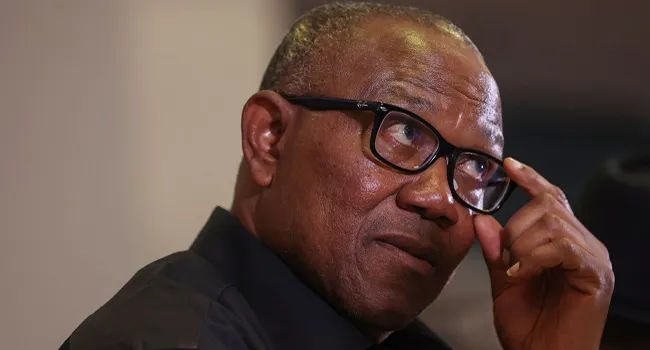
The Labour Party Presidential Candidate in the 2023 election, Mr Peter Obi, has decried the exit of Pharmaceutical giant, GlaxoSmithKline (GSK), from Nigeria after 51 years of operations. Obi, who is also aformer Governor of Anambra State, made this known in his official tweets handle on Saturday morning in Lagos. On Thursday, GlaxoSmithKline (GSK), a British pharmaceutical and biotechnology company, said in the coming months, it plans to exit Nigeria after 51 years of operations. Its Spokesperson, Omongiade Ehighebolo, said in a statement that the challenge in accessing currency was affecting its ability to maintain a consistent supply of medicines and vaccines in the market. GSK has a manufacturing facility in Agbara, on over 25 hectares of land. The company had directly employed no fewer than 400 highly technical workers including pharmacists, microbiologists, biochemists, chemists, dentists, and doctors just to mention, and also employed over 1000 other staff. Obi said the company that indirectly provided jobs and business opportunities for thousands of Nigerians across the nation, regretted that it was now leaving all these behind, and pushing more people back into unemployment. The LP standard bearer said that their reason for leaving portends a gloomy future for the country’s investment climate. He said: “Today, I was saddened to hear that GlaxoSmithKline (GSK), is exiting Nigeria after 51 years of operations. “Their reason for leaving Nigeria is even more disheartening, that they are no longer perceiving any future growth of the country, which will be anchored on productivity.” He said it was painful that the country was at the point in the nation’s journey where multinationals were leaving the country and the local ones were closing down. Obi added that this was the consequence of poor management of the economy, hence, millions were losing their jobs and the poverty index was worsening. He said these multinationals leaving the country, not only create jobs but create immeasurable training that contributed immensely to human capital development. The LP standard bearer recalled his consistent position that “in turning the nation around, it must move the economy from consumption to production. According to him, part of this includes encouraging and supporting local and foreign investments, like GSK, in the country. Obi finally stressed the importance of creating an environment that creates and sustains multinationals to invest in the country was key to the dream of greatness. He said in the new Nigeria that they seek to create, the emphasis on production would encourage investors to stay and expand on its shores.

585 SMEs get N150k livelihood grants each in Kogi

Entrepreneurship: DBN, OEAHD, Empower 200 Vulnerable Women In North East

Kogi has given N150,000 each to 585 beneficiaries in its 21 local government areas to expand their businesses. The beneficiaries, mainly petty traders, artisans and small business owners got the grants after receiving training under the state’s “Livelihood Grants’’ programme on how to expand their businesses. Mr Kehinde Olorunmosunle, Head of Delivery Platform for Social Transfer and Livelihood Grants, told newsmen in Lokoja on Saturday that the beneficiaries were between 18 years and 35 years of age. He described the beneficiaries as agile people that are able to run around and do businesses. “They are petty traders, artisans, hair dressers, bakers, and fashion designers, among others. “The training is meant to continue to remind the beneficiaries on the need to use the money judiciously. “The beneficiaries had earlier been trained on what was expected of them and their businesses before getting the money. “We went into their communities to confirm the authenticity of their various businesses before releasing the grant to them. “Immediately the money was given to them, we also moved into the communities to monitor how they applied the funds,’’ he said. Olorunmosunle advised beneficiaries to use the grants judiciously and not to divert them to frivolities. He expressed appreciation of the Kogi government for the timely release of funds that had enabled Kogi citizens to benefit from the grants. He also commended the Federal Government and the World Bank for the initiative, saying it had yielded tangible results in Kogi. Some of the beneficiaries, Mr Musa Abah, Miss Rejoice Thomas, and Miss Medinat Kabiru thanked the World Bank, and the federal and Kogi governments for the gesture. 

DMO lists N130bn Sukuk to boost capital market

DMO lists N130bn Sukuk to boost capital market

The Debt Management Office (DMO) of the Presidency has announced the listing of N130 billion sovereign Sukuk on the Nigerian Exchange and FMDQ starting on August 8, 2023.This was disclosed in a statement from the Debt Management Office (DMO). The Federal Government has been able to fix 75 roads since the FGN Sukuk initiative started. Some of the roads include Ibadan-Ilorin Road, Kaduna Eastern Bypass, and Loko Oweto Bridge over the River Benue among others.  The listing follows the successful oversubscription of the N100 billion opened in November 2022. This current listing is geared towards accommodating the needs of investors towards the facility.  According to the statement, “The sovereign Sukuk was opened for subscription in November 2022, with an initial of N100 billion however, it garnered immense interest from investors with a remarkable subscription level of N165.25 billion which represents over 165% of the amount offered. To accommodate the need of diverse investors who subscribed to the Sukuk, N130 billion was allocated.  Sukuk bonds are investment certificates representing ownership of the holder in an asset. Since 2017 when the Federal government began issuing sovereign Sukuk, the DMO has raised about N742.55 billion whose proceeds have been used for road construction and other infrastructure projects across the country.  The last DMO issued Sukuk in 2017 had an interest return of 16.47% with a tenor of 7 years. It was used in the construction of roads across the six geopolitical zones of Nigeria.  According to the DMO release, “the listing of the N130 billion sovereign Sukuk on the NGX and FMDQ securities exchange will expand the range of financial offerings available to investors in the capital markets.  “The opportunity to buy and sell the sovereign Sukuk will provide liquidity to investors and promote price discovery,” it noted. 

Sterling Bank, SMEDAN to create Nigeria’s largest SME database

Sterling Bank, SMEDAN to create Nigeria's largest SME database

Sterling Bank Plc, has signed an agreement with the Small & Medium Enterprises Development Agency of Nigeria (SMEDAN) to establish a comprehensive database of Small and Medium Scale Enterprises (SMEs) in Nigeria. This will help in scaling intervention programmes and providing tailored solutions that truly contribute to the growth of SMEs. The signing ceremony took place in Lagos, where the Chief Executive Officer of Sterling Bank, Mr. Abubakar Suleiman, expressed his optimism about the collaboration. Suleiman said genuine collaborations, driven by opportunity rather than regulation, often yield positive outcomes. The CEO sees the partnership as one of those promising ventures, highlighting that no external regulatory pressure compelled their cooperation. He stressed the significance of MOU, while stating the critical role of data in economic development. He stated that the agreement marks the beginning of a journey towards a formalised economy, enabling the government to intervene effectively when necessary. Suleiman also emphasised the importance of SMEs having access to capital based on their historical data. In order to do this, he stated the importance of developing an atmosphere that motivates SMEs to self-report, even if it is just to be eligible for SMEDAN services. Speaking further, Suleiman said that self-reporting is the initial step for small and medium businesses to become auditable institutions. Sterling Bank is committed to dedicating its resources to the success of the MoU and will advocate for government support of SMEs. Suleiman noted that the outcomes of this collaboration would benefit the entire banking industry, not just Sterling Bank. Director General of SMEDAN, Mr Olawale Fasanya, expressed his appreciation for the bank’s initiative and highlighted the MoU’s immense value to SMEDAN’s operations. Fasanya stated the criticality of data to their activities, citing their recent online registration of SMEs. He said that despite registering approximately 3.8 million SMEs through this initiative, the data still requires cleaning. Fasanya emphasized that the availability of accurate data would enable SMEDAN to connect SMEs operating within the same market. Chief Product Officer at Sterling Bank, Mustapha Otaru described the bank’s approach to managing SMEs as an ecosystem and acknowledged that progress is impossible without such partnerships. Otaru said that in addition to providing access to finance, Sterling Bank aims to nurture SMEs and support their growth from micro to corporate levels. The bank achieves this through innovative solutions such as its common facility for fashion entrepreneurs and special bundled offerings. Sterling Bank’s products, according to Otaru, are strategically designed to align with its HEART (Health, Education, Agriculture, Renewable Energy, and Transportation) strategy, which the bank adopted in 2018 to focus its investments on key sectors of the economy. The Head of SME Products at Sterling Bank, Bolanle Tyson, underscored the integral role of SMEs in economic growth. She expressed her enthusiasm for the partnership with SMEDAN, envisioning a lasting collaboration that leverages combined resources to drive economic growth.